


What is the Husqvarna Rancher series?
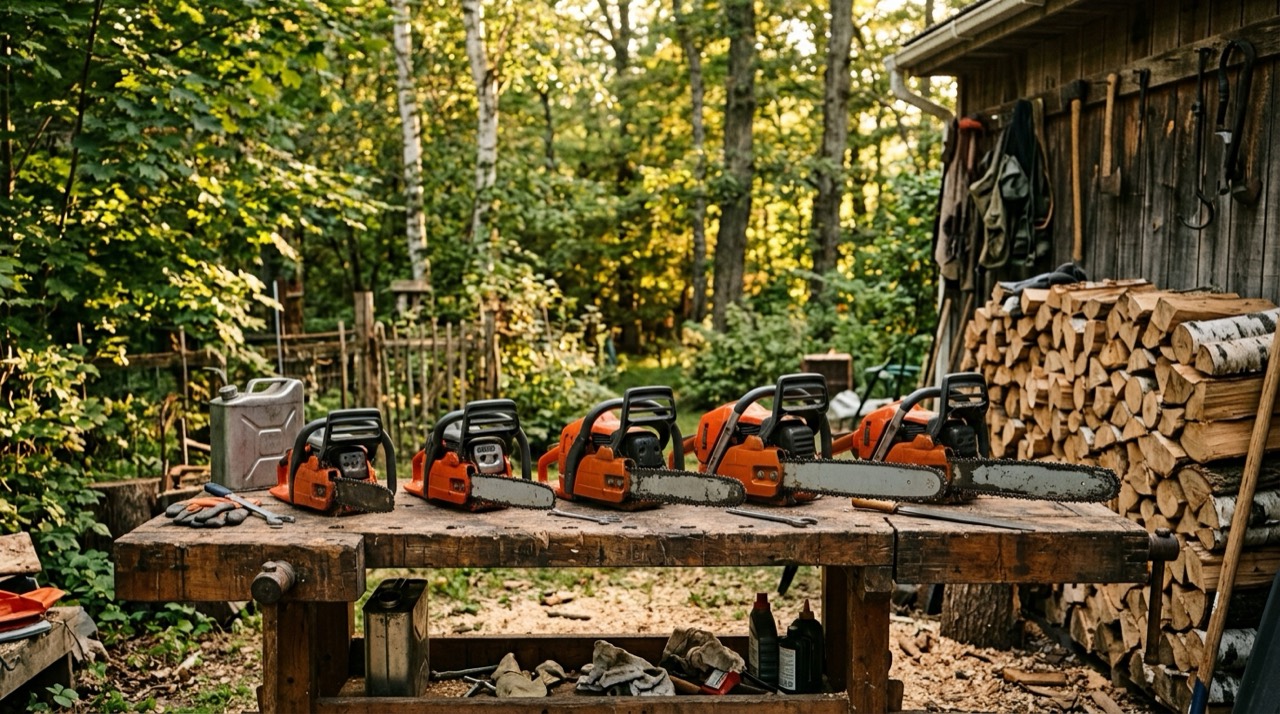
The Husqvarna Rancher series is the brand's all-round, farm-and-firewood chainsaw line, made up of the 440, 450, 455 Rancher, and 460 Rancher. These mid-displacement saws sit between light homeowner models and professional saws, aimed at owners who cut firewood regularly or fell the occasional small tree.
Rancher saws earn their popularity by balancing power, weight, and price. They run X-Torq engines for lower fuel use and emissions, LowVib anti-vibration handles for comfort, and inertia-activated chain brakes for safety. Because they sell through Lowe's and dealers alike, they are easy to buy and resupply — a big part of why they anchor so many Husqvarna versus Stihl decisions. The line has been in production long enough that parts, bars, and chains are easy to find, which keeps older Ranchers running for years.
What makes the 455 Rancher popular?
The 455 Rancher is the best-known saw in the family thanks to a versatile 55.5 cc engine that handles firewood, storm cleanup, and small felling without feeling underpowered. It hits a sweet spot of capability and price that suits most rural homeowners who need one saw to do nearly everything.
Owners report that the 455 Rancher starts reliably, pulls a 20-inch bar through hardwood, and holds up to steady seasonal use. It is heavier than a light homeowner saw, so it rewards good technique and regular breaks, and a sharp chain does far more for cutting speed than brute force on the throttle. For anyone cutting several cords a year, it remains one of the most recommended saws in its class, and it pairs naturally with a solid chainsaw maintenance routine that keeps the air filter clean and the fuel fresh.
How does the 455 Rancher differ from the 460 Rancher?
The 455 and 460 Rancher share a design, but the 460 uses a larger engine and supports longer bars for heavier work. Choose the 455 for general firewood and the 460 when you regularly cut larger trunks or run a longer bar all day. For most homeowners the extra capacity of the 460 is welcome only if the wood is genuinely big, since it also adds weight and fuel use.
The table compares the Rancher models by typical displacement, common bar length, and best use.
| Model | Typical displacement | Common bar length | Best use |
|---|---|---|---|
| 440 | 40-41 cc class | 16-18 inches | Light firewood, limbing |
| 450 | 50 cc class | 18-20 inches | General firewood |
| 455 Rancher | 55.5 cc class | 18-20 inches | Firewood, small felling |
| 460 Rancher | 60.3 cc class | 20-24 inches | Larger trunks, heavier cutting |
What bar length suits the 455 Rancher?
An 18- or 20-inch bar suits the 455 Rancher for most firewood and cleanup, matching the engine's power to a manageable cutting length. Longer bars are possible but ask more of the engine and make the saw harder to control.
Bar length should match both the saw's rating and the wood you cut: a longer bar reaches bigger logs but slows the chain and increases kickback risk if the engine is working hard. A shorter bar, by contrast, is lighter, easier to control, and quicker through smaller firewood. Keep the chain sharp and correctly tensioned, and see the guidance on chainsaw bars before fitting anything longer than the factory setup.
How does the 455 Rancher compare to the 450 and 440?
The 455 Rancher sits a step above the 450 and two above the 440, trading a little extra weight for more cutting power. The 440 suits light firewood and limbing, the 450 handles general firewood, and the 455 adds the muscle for a 20-inch bar and denser hardwood.
Moving up the Rancher family is mostly a trade of weight and fuel use for capacity. The 440 is the lightest and easiest to handle for occasional cutting; the 450 is a genuine all-rounder for someone cutting a few cords a year; and the 455 is the point at which the saw stops feeling stretched by bigger logs and longer bars. The 460 caps the range for heavier trunks. For most rural homeowners the 455 is the "buy once" choice because it comfortably covers everything the 440 and 450 do, plus the occasional larger tree, without stepping into professional-saw weight and cost.
Is the Husqvarna 455 Rancher good for firewood and felling?
The 455 Rancher is an excellent firewood saw and capable of felling small to medium trees, but it is not a dedicated felling saw. Its 55.5 cc engine and 18- to 20-inch bar buck logs and clear storm damage confidently, while large or leaning trees remain a job for a professional.
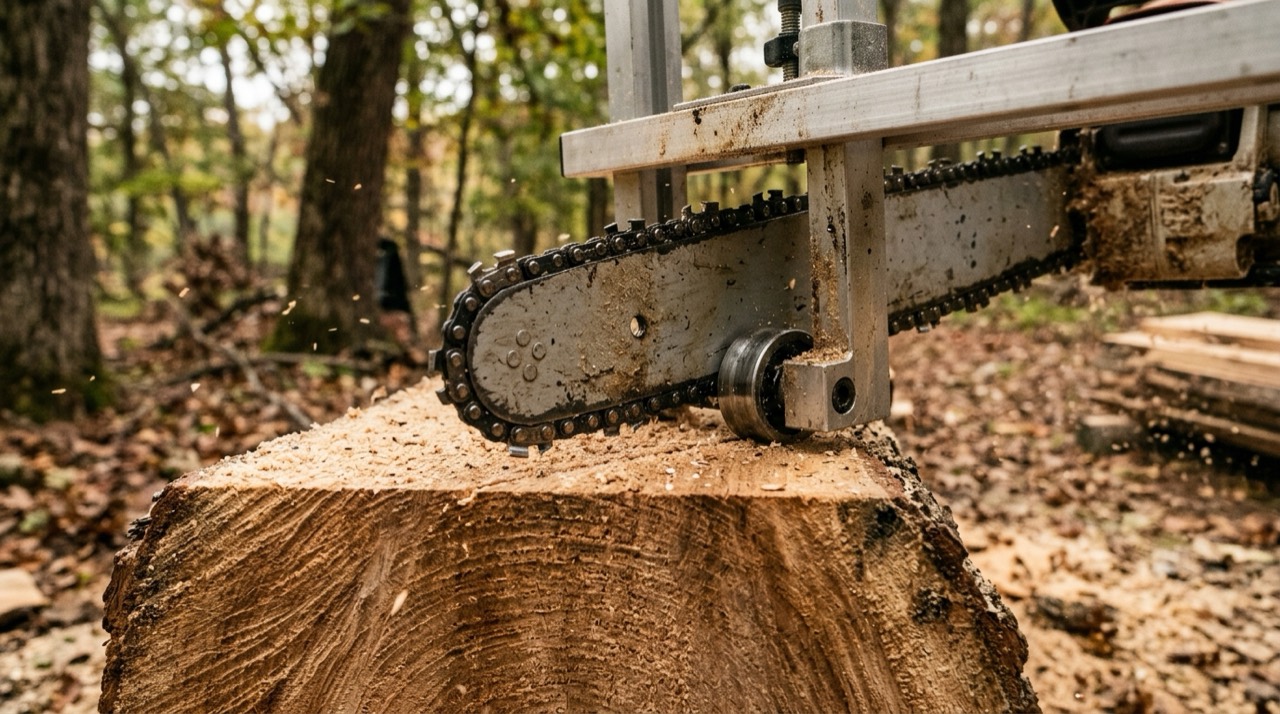
Firewood is the Rancher's home ground: bucking rounds to length is exactly what a 50 to 60 cc saw with a 20-inch bar does best, and the 455 will process several cords a season for years if it is kept sharp and maintained. Felling is where judgment matters more than the saw — the 455 has the power to drop small and medium trees, but dropping anything large, leaning, near structures, or storm-damaged safely takes training and often more saw. Milling is a further stretch; the 455 can handle very light, occasional milling but a dedicated setup wants more displacement, as covered in the chainsaw milling guide. Matched to firewood and cleanup, it is one of the most recommended saws in its class.
How do you start and break in a 455 Rancher?
Start a cold 455 Rancher by engaging the chain brake, setting the combined choke/stop control to full choke, and pulling until it fires, then moving to the half-choke or run position and pulling again. Break a new saw in gently over the first few tanks before sustained heavy cutting.
The cold-start sequence is straightforward:
- Set the saw on flat ground and push the chain brake forward to lock the chain.
- Press the fuel primer bulb several times if fitted.
- Set the control to full choke and hold the saw down with a foot in the rear handle.
- Pull the starter until the engine fires and stalls, then move the control to half choke or run.
- Pull again to start, blip the throttle to idle, and release the chain brake before cutting.
Break-in matters on a two-stroke: for the first two or three tanks, vary the revs, avoid long stretches at full throttle under heavy load, and let the engine warm before working it hard. Using fresh fuel mixed to the manual's ratio from the very first tank protects the engine, and a correctly tensioned, sharp chain lets the saw cut without the operator forcing it.
What are common Husqvarna 455 Rancher problems?
The most common 455 Rancher complaints are hard starting after storage, flooding from over-choking, and lost cutting speed from a dull or badly tensioned chain. Almost all of them trace back to fuel, filter, or chain care rather than a fault in the saw.
The recurring issues and their usual fixes are:
- Hard starting after winter — nearly always stale fuel; drain and refill with fresh mix, or use stabilizer before storage.
- Flooding — caused by over-choking or repeated failed pulls; clear it by running the throttle wide open with the choke off, or dry the spark plug.
- Slow, smoky cutting — usually a blunt chain or one forced through wood; sharpen it and let the saw's weight do the work.
- Bar-oil problems — check the oil level and clean the bar groove and oil holes so the chain stays lubricated.
- Power loss in dusty work — clean the air filter more often, even with Air Injection helping.
None of these point to a weak design; the Rancher's reputation for longevity rests on the fact that its common problems are preventable with routine care.
How do you maintain a Rancher saw?
Maintain a Rancher saw with the same routine that keeps any two-stroke healthy: correct fuel mix, clean air filter, sharp chain, and proper bar oiling. Skipping these is the fastest way to lose power and shorten engine life, and it is also the most common reason a Rancher becomes hard to start.
Mix fuel to the ratio in the manual, empty stale fuel before storage, and clean the air filter often in dusty cutting. Stale fuel is the single most common cause of hard starting after winter, so drain the tank or use a fuel stabilizer if the saw will sit. A sharp, well-tensioned chain cuts faster and safer and reduces strain on the engine, and it throws large chips rather than fine dust when it is doing its job. Felling anything large, leaning, or near structures or power lines is a job for a trained professional, whatever saw you own; these notes are general guidance, not a substitute for training.