


What is a battery chainsaw?
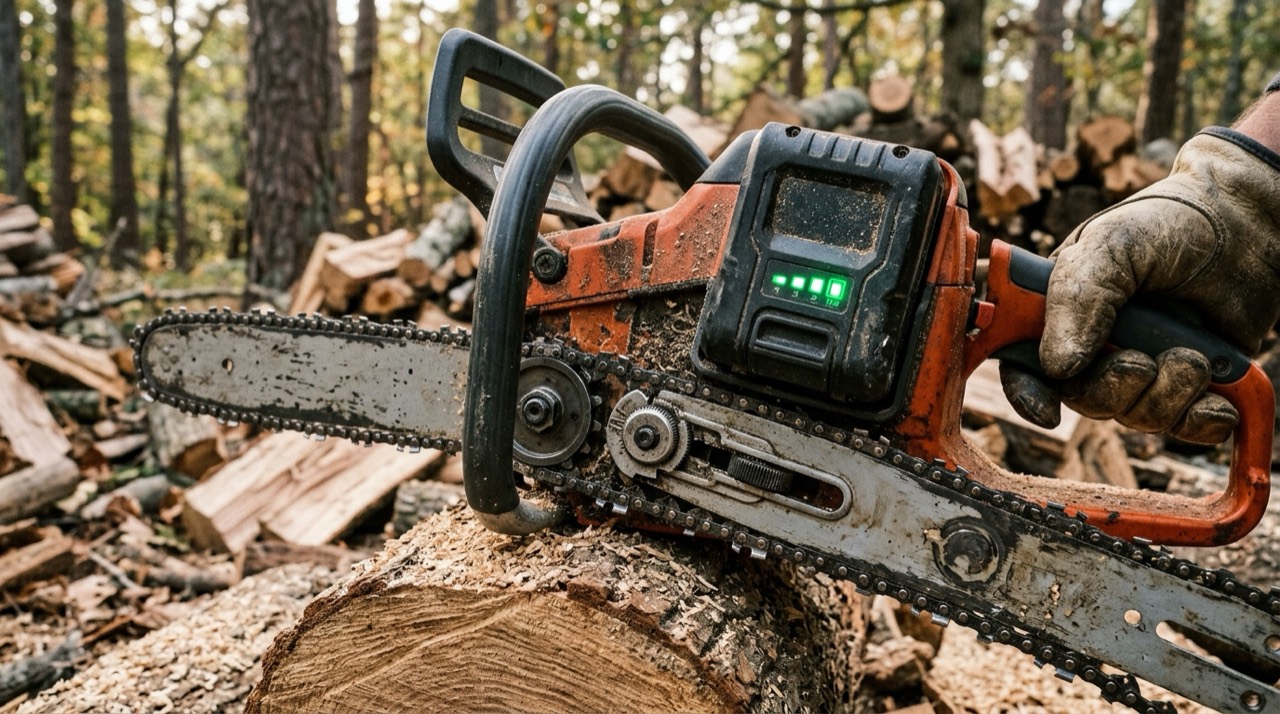
A battery chainsaw is a cordless saw driven by a rechargeable lithium-ion pack instead of petrol or a wall cord, giving you push-button starts, low noise, and no fuel mixing. Modern brushless models handle most homeowner cutting: limbing, pruning, bucking firewood, and clearing storm damage.Battery saws sit between corded electric chainsaws and gas chainsaws. They are more portable than a cord, cleaner and quieter than petrol, and on the better platforms close enough in cutting speed that most owners never miss the engine. The trade-off is runtime and sustained heavy load, which is where gas still leads.
Two changes turned cordless saws from novelties into genuinely useful tools: lithium-ion packs that store far more energy per kilogram than the old nickel-cadmium batteries, and brushless motors that waste less of that energy as heat. Together they closed most of the gap to a small petrol engine, which is why a job that would have demanded a gas saw a decade ago is now routine for a mid-range battery model. If your cutting is measured in an hour here and there rather than full days, the cordless class has quietly become the default choice for homeowners.
How does a battery chainsaw compare with gas and corded electric?
A battery chainsaw is the middle option: more portable and lower-maintenance than gas, and far freer to move than a corded saw, at the cost of limited runtime per charge. Gas wins on sustained power, corded wins on unlimited runtime, and battery wins on everyday convenience.Each of the three saw types answers a different priority, and the honest trade-offs are set out below.
| Saw type | Runtime | Power ceiling | Upkeep | Best for |
|---|---|---|---|---|
| Battery cordless | 30 to 60 min per pack | Small-to-mid gas equivalent | Chain, bar, oil | Portable, intermittent cutting |
| Corded electric | Unlimited on mains | Light-to-mid | Chain, bar, oil | Fixed spots near power |
| Gas petrol | Refuel in seconds | Mid-to-pro | Fuel, plug, filter, carb | Heavy, all-day, remote work |
A corded electric chainsaw never runs flat but tethers you to an extension lead, which rules out most tree and woodlot work. A gas chainsaw roams anywhere and cuts all day, but it demands fuel mixing, cold starts, and real engine servicing. A battery saw splits the difference, and for the majority of homeowners who cut a few times a season, that middle ground is exactly the right place to be. If you are still weighing the engine question, our gas vs cordless chainsaw breakdown compares them head to head.
How much cutting power does a battery chainsaw have?
Cutting power comes from the motor and system voltage, and today's brushless 40V to 80V saws roughly match a small-to-mid gas chainsaw of about 30 to 45cc for limbing and firewood-sized logs. Entry 18V and 20V saws suit branches and light pruning but bog down in hardwood much over 8 inches.Voltage is the headline number, but it is only a proxy for available power. A brushless motor matters just as much: brushless drives run cooler, last longer, and turn more of the battery's energy into chain speed than the older brushed motors found on the cheapest saws. When you compare two cordless saws, favour a brushless motor and a proven battery platform over a big voltage figure on a no-name brand. For all-day felling of large hardwood, a petrol saw still pulls ahead, and that job may belong to a gas chainsaw or a professional.
The clearest way to picture the ceiling is by task rather than by specification. A quality 56V or 80V brushless saw will limb, prune, and buck firewood rounds up to roughly 12 to 16 inches with a confidence that surprises first-time owners, and it will fell a small tree within its bar length. Where it falls behind is the long haul: an hour of continuous milling or dropping full-size hardwood keeps the motor at peak draw, and that is both a runtime problem and a heat problem the battery format handles less gracefully than a petrol engine.
How long does a battery chainsaw run per charge?
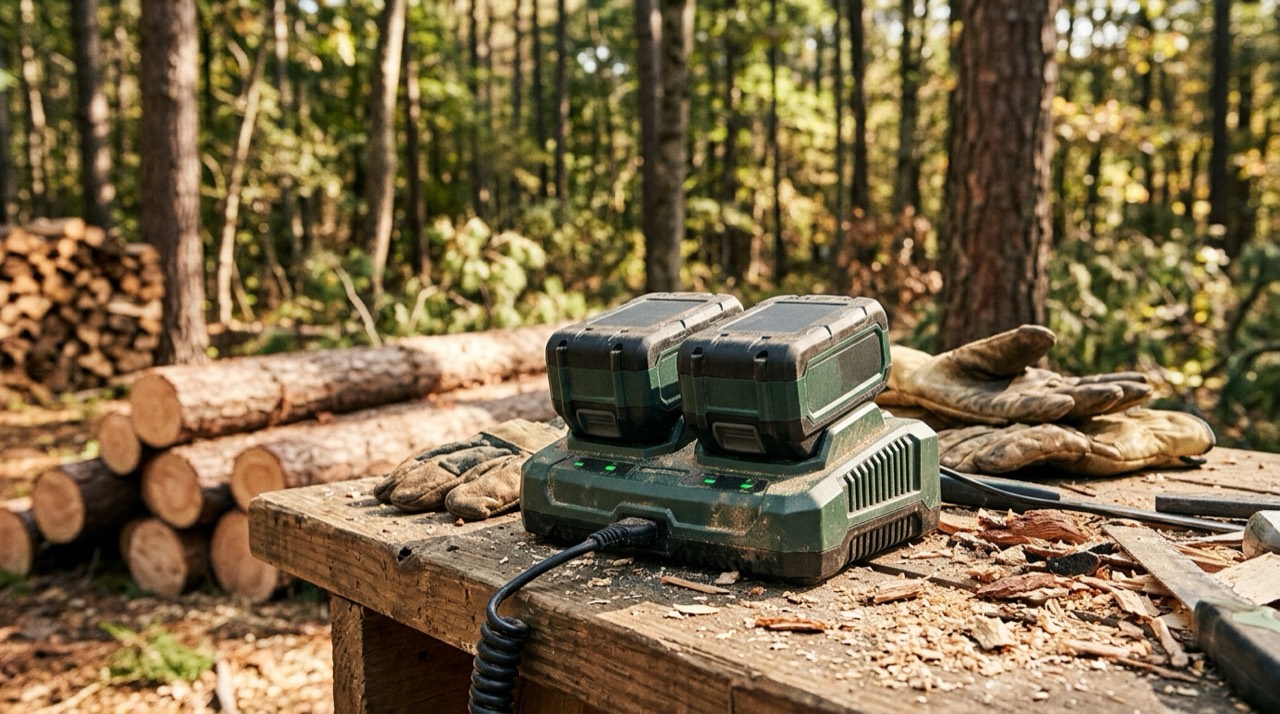
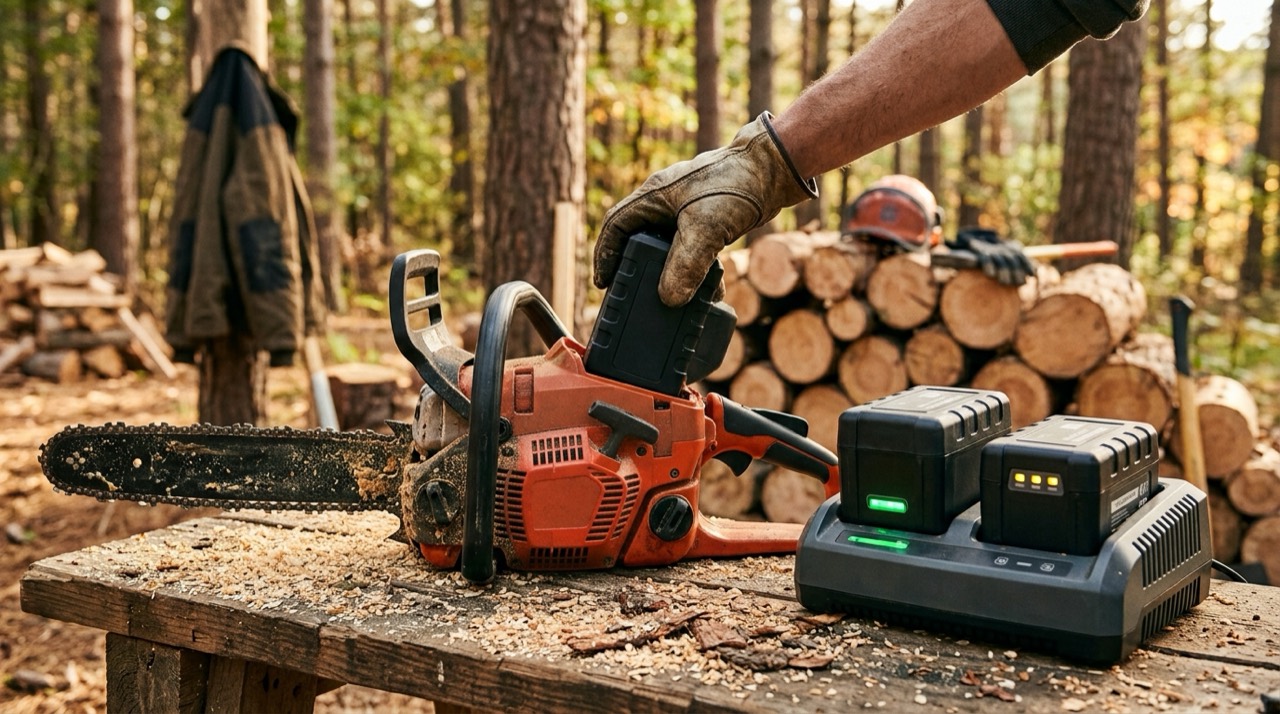
Runtime depends on battery amp-hours and how hard you cut, but a typical 4.0 to 5.0Ah pack on a 40V to 56V saw gives roughly 30 to 60 minutes of light limbing, or enough to buck a wheelbarrow or two of firewood. Continuous cutting through seasoned hardwood drains a pack far faster than intermittent pruning.The honest way to compare runtime is watt-hours, which is voltage multiplied by amp-hours. A 56V 5.0Ah pack (280Wh) simply holds more energy than a 40V 4.0Ah pack (160Wh). Most owners solve runtime by keeping a second charged battery on the bench and swapping, since a fresh pack takes only 30 to 60 minutes to recharge on a rapid charger. Plan for spare packs rather than expecting one battery to last a whole afternoon.
Temperature and chain condition swing runtime as much as the battery rating does. A cold pack in winter delivers noticeably less than its stated capacity until it warms, and a dull or badly tensioned chain forces the motor to work harder for every cut, quietly halving the number of logs you get from a charge. Keeping the chain sharp with regular chainsaw sharpening is the cheapest runtime upgrade there is, well before you spend money on a bigger battery.
What bar length do you need on a battery chainsaw?
Bar length should match your biggest regular cut, and for most cordless owners a 14 to 18 inch bar is the sweet spot: 10 to 14 inches for pruning and small limbs, and 16 to 18 inches for firewood and small tree work. A longer bar draws more current and shortens runtime, so oversizing quietly costs you battery.As a rule of thumb, your bar should be about 2 inches longer than the diameter of the wood you cut most, so you can pass through in a single stroke. If you mostly prune, a compact saw is safer and lighter; if you process firewood, size up. Matching the right chainsaw bar and a sharp chainsaw chain to the job does more for cutting speed than chasing extra voltage.
Which battery voltage should you choose?
Voltage should follow both the job and the tools you already own, because most brands lock their chainsaw to a shared battery platform. The table below shows how the common cordless voltages line up with typical use.| Platform voltage | Typical bar | Best use | Notes |
|---|---|---|---|
| 18V / 20V | 10 to 14 in | Pruning, small limbs | Light and cheap; struggles in hardwood |
| 40V | 14 to 18 in | Firewood, homeowner cutting | The mainstream homeowner sweet spot |
| 56V / 60V | 16 to 18 in | Firewood, small tree work | Near gas-like feel; strong ecosystems |
| 80V | 18 in | Heavy homeowner and semi-pro | Fewer tools share the platform |
If you already own a brand's batteries, staying on that platform is usually smarter than switching for a slightly stronger saw, because a spare pack you already own is worth more than a spec-sheet win.
How do you set up and start a battery chainsaw for the first time?
Setting up a battery chainsaw takes a few minutes: fill the bar-oil reservoir, tension the chain, charge the pack, then start with the chain brake engaged. Unlike a petrol saw there is no fuel to mix or choke to set, so the routine is short but must be repeated every session.Work through these steps before your first cut and at the start of each outing.
- Fill the reservoir with proper bar and chain oil, never engine oil or vegetable oil.
- Check chain tension so the chain snaps back into the chainsaw bar groove yet still turns freely by a gloved hand.
- Insert a fully charged battery and confirm the LED gauge shows a strong charge.
- Engage the chain brake, then press the lockout and trigger briefly to confirm the chain spins and oil flings onto a light surface.
- Reset the brake, take a balanced stance with both hands on the saw, and begin with small, controlled cuts.
The oiler check matters more than beginners expect. A battery saw runs a real bar and chain that will overheat and blue the steel within seconds of running dry, so top up the oil roughly every time you swap the battery. Feeding a sharp chainsaw chain with steady oil does more for clean, fast cutting than any number on the box.
What are the most common battery chainsaw mistakes?
The most common battery chainsaw mistakes are running the bar dry of oil, forcing a dull chain, storing packs fully charged in the heat, and buying a longer bar than the job needs. Each one is easy to avoid once you know to watch for it.The errors that shorten a cordless saw's life or spoil its cutting are listed below.
- Letting the oil reservoir run empty, which burns the bar and chain and wastes battery on friction.
- Pushing hard on a dull chain instead of sharpening it, which overheats the motor and drains the pack.
- Storing batteries fully charged or fully flat in a hot shed, which ages the cells prematurely.
- Oversizing the bar, so every cut draws extra current for reach you rarely actually use.
- Skipping the chain brake between cuts, the single most important habit for controlling kickback.
Avoiding these is mostly routine, not skill. A quick oil top-up, a sharp chain, cool indoor battery storage, and a bar sized to your typical wood will keep a homeowner saw cutting well for years. Build the same simple chainsaw maintenance habits you would give any saw, cordless or not.
What maintenance does a battery chainsaw need?
Maintenance is lighter than gas but not zero: keep the chain sharp, the bar groove clean, and the bar-oil reservoir topped up, because a cordless saw still runs a real bar and chain that need lubrication. There is no spark plug, air filter, carburettor, or fuel system to service.A battery saw still throws a chain, dulls on dirt, and burns a bar dry if you forget the oil. Learn to keep an edge with basic chainsaw sharpening, follow a simple chainsaw maintenance routine, and store the battery indoors at around half charge in cool conditions. Those three habits cover almost everything a cordless saw asks of you.
What safety gear does a battery chainsaw require?
Safety gear is the same as for any chainsaw, because a cordless saw cuts flesh just as fast as a petrol one: wear chainsaw chaps, a helmet with a face screen and hearing protection, cut-resistant gloves, and sturdy boots. The quiet, instant start is its own hazard, so treat the trigger with the same respect you would a running gas saw.Never assume a silent saw is a safe saw. Engage the chain brake whenever you move, keep both hands on the machine, and stand to the side of the cutting line to manage kickback. Proper chainsaw chaps and PPE are non-negotiable, and any large, leaning, or overhead tree work belongs to a trained professional. These guides are general information, not a substitute for hands-on training.