Gas Vs Cordless Chainsaw
Gas Vs Cordless Chainsaw, ranked from aggregated owner ratings and reviews, not first-hand testing. Real pros, cons, and who each pick is best for.

Our Top 3 Picks
Quick Comparison
| Product | Best for | Buy | |
|---|---|---|---|
| EGO Power+ CS1804 (18-inch) | Best Overall | See Amazon | View (paid link) |
| Greenworks 40V 16-inch Brushless | Best Value | See Amazon | View (paid link) |
| Milwaukee M18 FUEL 16-inch (2727-21HD) | Best Premium | See Amazon | View (paid link) |
| Ryobi 40V HP Brushless (18-inch) | Best for Beginners | See Amazon | View (paid link) |
| Makita XCU03 (18V X2 LXT, 14-inch) | Best Compact | See Amazon | View (paid link) |
| Stihl MSA 220 C-B (AP Pro) | Best Heavy-Duty | See Amazon | View (paid link) |
Gas vs Cordless Chainsaws: Which Should You Buy?
The right choice comes down to how much you cut at once: cordless wins for intermittent homeowner work, and gas wins for long, heavy sessions of felling and big-log bucking. Most people who cut a few times a season are better served by a modern battery saw, while high-volume cutters still lean on petrol.When does a cordless chainsaw make sense?
A cordless chainsaw makes sense for pruning, storm cleanup, and processing firewood in sessions rather than all day. It starts at the push of a button, needs no fuel mixing, runs quietly enough for early mornings, and demands far less maintenance. If you already own a brand's batteries, the matching saw is the obvious pick, and today's brushless 56V and 80V models cut close to a small gas saw. Cordless also shines for occasional users, because a battery saw sits ready for months and starts first time, while a rarely-used petrol saw often fights you with stale fuel and a flooded engine. Our best battery chainsaws list covers the strongest cordless options.When is gas still the right call?
Gas is still the right call for all-day felling, large-diameter hardwood, and remote work far from a charger. A petrol saw refuels in seconds, so it never stops to recharge, and mid-to-pro engines sustain heavy load longer than any battery. If you clear acreage, drop full-size trees, or run a saw professionally for hours, a gas chainsaw remains the workhorse. Fuel is also far easier to carry than a shelf of spare batteries when you are working a woodlot a long walk from the nearest power point.How do power and runtime compare?
Power and runtime are where the two designs genuinely diverge, and the table below shows the honest trade-offs.| Attribute | Cordless battery | Gas petrol |
|---|---|---|
| Peak cutting power | Small-to-mid saw equivalent | Mid-to-pro capability |
| Sustained runtime | Limited by pack; swap batteries | Refuel in seconds, run all day |
| Noise and fumes | Quiet, no exhaust | Loud, exhaust fumes |
| Maintenance | Chain, bar, and oil only | Plus fuel, plug, filter, carburettor |
| Starting | Instant push-button | Pull-start, choke, warm-up |
| Best for | Intermittent homeowner cutting | Heavy, continuous, remote work |
How do the two compare on weight and handling?
Cordless and gas saws weigh about the same on paper, but they carry that weight differently, and that changes how tired you get. A battery saw puts its mass in the pack near the rear handle, which keeps the nose light and the balance neutral for overhead limbing, while a gas saw carries the engine forward and vibrates more. For reach work and short cuts the cordless design usually feels lighter in the hands even at a similar scale weight. Over a long felling day, though, a gas saw's constant refuelling beats stopping to swap and charge batteries, and its anti-vibration mounts earn their keep. Match the tool to whether your fatigue comes from reaching overhead or from hours of continuous cutting.Which is better for storm cleanup and emergencies?
For storm cleanup a cordless saw is usually the better first reach, because it starts instantly, needs no fresh fuel, and is quiet enough to run early without waking the street. After a storm the power may be out, which makes a corded saw useless and a charged battery invaluable, so keeping a spare pack topped up is smart insurance. The limit is scale: clearing a single fallen limb or a blocked driveway suits a battery saw perfectly, while a large uprooted tree across a road is a bigger, more hazardous job that leans toward gas and, often, a professional. Whatever the saw, storm-damaged wood is under tension and can spring or roll, so cut with extra caution.What about cost, noise, and upkeep?
Total cost, noise, and upkeep usually favour cordless for lighter users. A battery saw has no fuel bills and far less servicing, though batteries are the main expense and eventually need replacing. Gas costs less per unit of raw power but adds fuel, two-stroke oil, spark plugs, and carburettor care over its life. For neighbourhood-friendly, low-hassle cutting, cordless is hard to beat, and it spares you the emissions and the constant ear-ringing of a two-stroke engine.How do longevity and resale compare?
Longevity differs in kind, not just degree. A well-maintained gas saw can run for decades because its engine is rebuildable, whereas a cordless saw's working life is often tied to how long its battery platform stays supported. Gas saws also hold resale value strongly, particularly Stihl and Husqvarna models with a service history. Cordless saws are only as future-proof as their ecosystem, which is one more reason to buy into a large, established battery system you can count on for spare and replacement packs years from now. Weigh that against the daily convenience of never mixing fuel again.What total cost should you budget for each?
Budget the full running picture, not just the purchase price, because the cheaper saw to buy is not always the cheaper saw to own. A cordless saw front-loads its cost into batteries, then costs very little to run, so a second pack is the main ongoing outlay. A gas saw is often cheaper up front for the power on tap, but fuel, two-stroke oil, plugs, filters, and the occasional carburettor clean add up across its life. Over five seasons of light homeowner use the two often land close, with cordless ahead on convenience and gas ahead on raw cutting per dollar. Decide which kind of cost you would rather live with: periodic battery replacement, or ongoing fuel and engine servicing.Which is quieter and healthier to run?
Cordless is clearly the quieter, cleaner choice, and for health and neighbourly reasons that matters more than buyers expect. A battery saw produces no exhaust fumes, so you are not breathing two-stroke emissions in a closed yard, and it runs at a level that rarely disturbs a street early in the morning. A petrol saw is loud enough to demand hearing protection at all times and vents fumes you should never run in an enclosed space such as a shed or garage. You should still wear hearing and eye protection with a cordless saw, because the chain and cut are still loud, but the overall exposure is far lower. For anyone sensitive to noise or fumes, that alone can settle the choice.How do gas and cordless cope with cold and heat?
Temperature affects both types, but in different ways worth planning for. Cold weather temporarily reduces a battery's capacity until the pack warms, so winter runtime drops and it pays to keep spare packs indoors until you need them. A petrol saw is largely unbothered by cold once running, but a rarely-used engine can be hard to start on stale fuel after months in the shed. In summer heat the roles reverse: batteries dislike being stored or charged hot, while a gas saw runs on regardless. Store cordless packs in a temperature-stable spot indoors, and stabilise or drain a gas saw's fuel over a long layup, and both will start when you need them.How should a first-time buyer decide?
A first-time buyer with typical suburban or small-acreage needs should usually start cordless, because it is safer to learn on, cleaner, and simpler to maintain. Work through this short checklist to settle the question quickly.- Estimate your longest single session: under an hour favours cordless, half a day favours gas.
- Note the largest wood you cut regularly: under 16 inches suits a strong battery saw.
- Check whether you already own a battery platform worth building on.
- Consider how far from power you work, since remote woodlots favour fuel you can carry.
- Weigh your tolerance for engine upkeep against periodic battery replacement.
Step up to gas only if you know you will cut large trees or work long hours away from power. Whichever you choose, the same chainsaw chaps and PPE and safe-use habits apply, and any large, leaning, or overhead tree work belongs to a trained professional.
Full Ranking, Reviewed

Best for Homeowners who want gas-like cutting speed without the fuel
- 18-inch bar and chain for firewood and small tree work
- 56V ARC Lithium brushless motor
- Chain brake with tool-free chain tensioning
- Weather-resistant build with an LED battery gauge
- Cuts close to a 40cc gas saw in hardwood
- Runs on the wide EGO 56V platform shared with mowers and blowers
- Push-button start with low vibration
- Long runtime needs a larger 4.0 to 5.0Ah pack
- Heavier than compact 14-inch cordless saws
Verdict: The CS1804 is the cordless saw most homeowners should buy first: strong 18-inch cutting, an enormous battery ecosystem, and none of the gas hassle.

Best for Budget-focused owners with an existing Greenworks 40V yard kit
- 16-inch bar for limbing and firewood
- 40V brushless motor
- Tool-less chain tensioning with an automatic oiler
- Electronic chain brake
- Low entry price for a brushless saw
- Shares the large Greenworks 40V tool range
- Light enough for short overhead limbing
- Slower than 56V and 80V saws in thick hardwood
- Bundled batteries are often smaller amp-hour packs
Verdict: A sensible value pick if you already own Greenworks 40V tools and cut mostly branches and small firewood.

Best for Tradespeople and pros already on the M18 battery platform
- 16-inch bar with a premium Oregon chain
- POWERSTATE brushless motor
- REDLINK PLUS electronics with an M18 REDLITHIUM HD12.0 pack
- Metal spiked bumper and adjustable oiler
- Job-site build quality and fast chain speed
- Runs on the huge M18 tool platform
- Holds power until the pack is nearly empty
- Premium price, especially with the HD12.0 battery
- 16-inch bar limits big-log work
Verdict: The M18 FUEL is the cordless saw to buy if you live on Milwaukee's platform and want pro durability for limbing and storm work.
Best for First-time chainsaw owners on a homeowner budget
- 18-inch bar and chain
- 40V HP brushless motor
- Tool-less chain adjustment with an automatic bar oiler
- On-board chain-tension access
- Easy to handle and simple to set up
- Affordable within the wide Ryobi 40V range
- Enough power for firewood and cleanup
- Not built for continuous all-day cutting
- Oil cap can seep if the reservoir is overfilled
Verdict: A friendly, forgiving first cordless saw with enough bar length for real firewood work at a homeowner price.
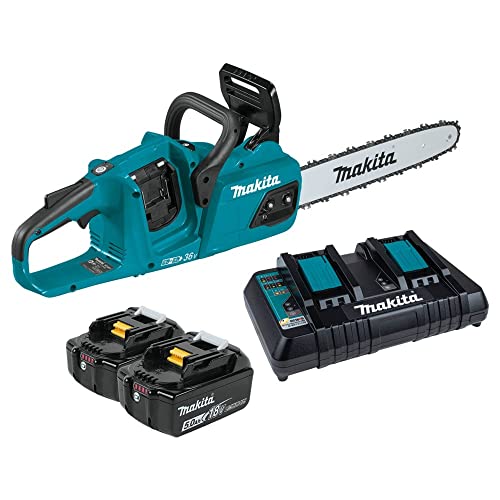
Best for LXT owners who want a light, balanced saw for pruning
- 14-inch bar for pruning and small limbs
- Two 18V LXT batteries combine for 36V power
- Brushless motor with a variable-speed trigger
- Built-in electric brake and tool-less chain adjustment
- Light and well balanced for reach cuts
- Runs on the massive 18V LXT battery range
- Quiet, quick-starting brushless drive
- Needs two charged LXT packs to run
- 14-inch bar is short for large firewood
Verdict: The compact XCU03 is ideal for LXT owners doing pruning and light firewood who value low weight over maximum bar length.

Best for Owners wanting Stihl cutting performance without petrol
- Around a 12 to 16 inch bar depending on configuration
- AP-system brushless EC motor
- Quick Chain Tensioning with Ematic bar lubrication
- Full chain brake and low-kickback chain
- Cuts like a small gas Stihl on the AP Pro platform
- Excellent balance and build quality
- Strong dealer support and parts availability
- Battery and charger are sold separately and add cost
- Shorter bar than some 18-inch rivals
Verdict: The MSA 220 C-B is the pick for buyers who want genuine Stihl cutting feel and dealer backup in a cordless saw.
Frequently Asked Questions
Is a cordless chainsaw as powerful as gas?
A top brushless 56V to 80V cordless saw cuts about as fast as a small-to-mid gas saw for limbing and firewood, but petrol still leads for sustained heavy load and large-diameter felling. For intermittent homeowner cutting the gap is now small; for all-day professional work, gas remains ahead.
Which is cheaper to run over time, gas or cordless?
Cordless is usually cheaper to run for light users, with no fuel bills and minimal servicing, though batteries are the main cost and eventually need replacing. Gas costs less per unit of raw power but adds fuel, two-stroke oil, plugs, and carburettor upkeep over its life.
Do I still need to mix fuel for a battery chainsaw?
No. A battery chainsaw uses no petrol and no two-stroke fuel mix at all. It does still need bar and chain oil in its reservoir to lubricate the cutting chain, but there is no engine fuel to prepare, which removes one of the biggest maintenance chores of a gas saw.
Should a first-time chainsaw buyer choose gas or cordless?
Most first-time buyers should choose cordless. It is safer to learn on, starts instantly, runs quietly, and needs far less maintenance than a petrol engine. Step up to gas only if you already know you will fell large trees or run a saw for hours away from a charger.