

What is a lawn sweeper and how does it work?
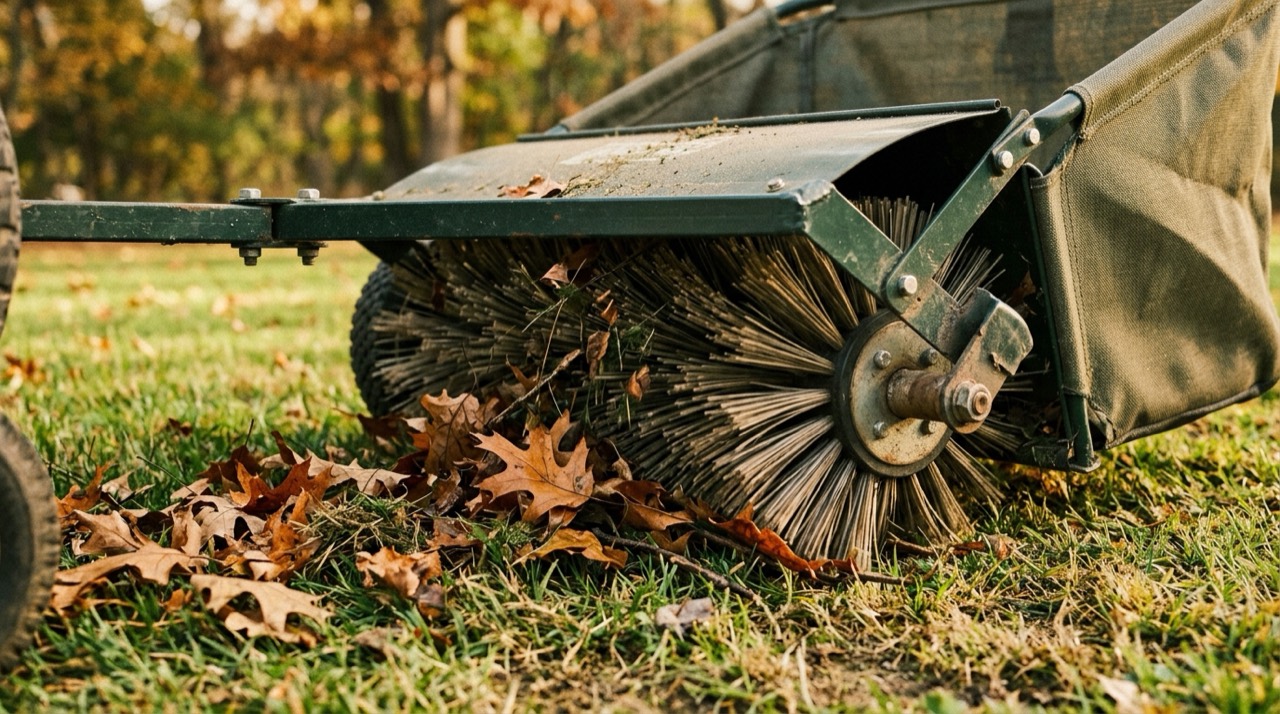
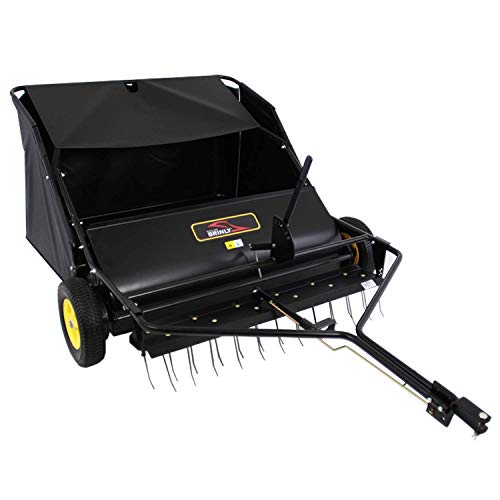
A lawn sweeper is a wheeled yard tool with a spinning bristle brush that flicks leaves, grass clippings, pine needles, and light debris up into a hopper bag as you push it or tow it behind a mower. The wheels drive the brush through gears, so most models need no engine, battery, or cord.Mechanical simplicity is the whole appeal. As the sweeper rolls, its road wheels turn a set of geared brushes several times faster than the wheels themselves; those brushes sweep across the turf and throw debris backward into a fabric hopper. Nothing is powered — you supply the motion, and physics does the collecting. That makes a sweeper quieter, cheaper to run, and far less demanding than raking a lawn by hand or bagging with a mower. For the full range of yard-cleanup tools, start at the trimmers, edgers and blowers hub, and see our best lawn sweeper picks for specific models.
Should you choose a push or tow-behind lawn sweeper?
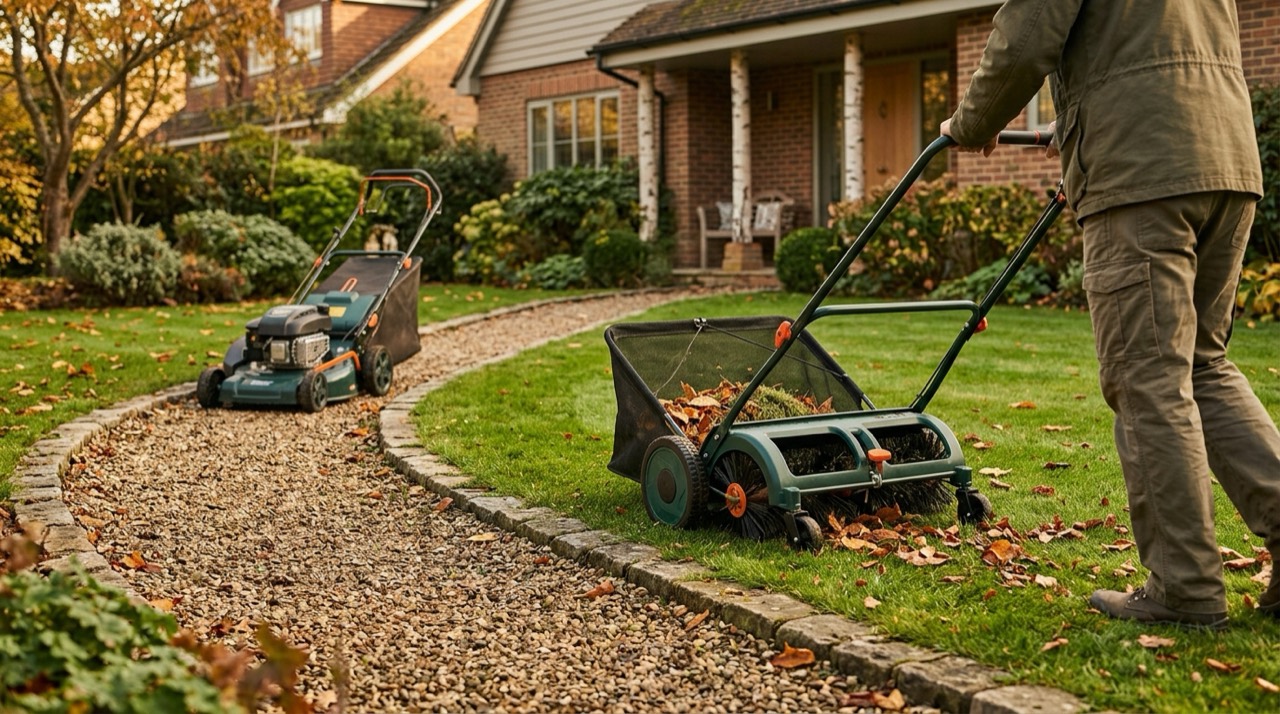
Choose a push lawn sweeper for small-to-medium yards up to roughly a quarter-acre, and a tow-behind sweeper for larger lawns where you already own a riding mower or lawn tractor. Push models cost less and store smaller; tow models clear far more ground per pass with no extra effort from you.The two styles trade off effort against capacity, as compared below.
| Sweeper type | Best for | Typical width | Typical hopper |
|---|---|---|---|
| Push (walk-behind) | Yards up to about ¼ acre | 20–26 inches | Around 7 cubic feet |
| Tow-behind | Large lawns and acreage | 38–50 inches | Around 12–25 cubic feet |
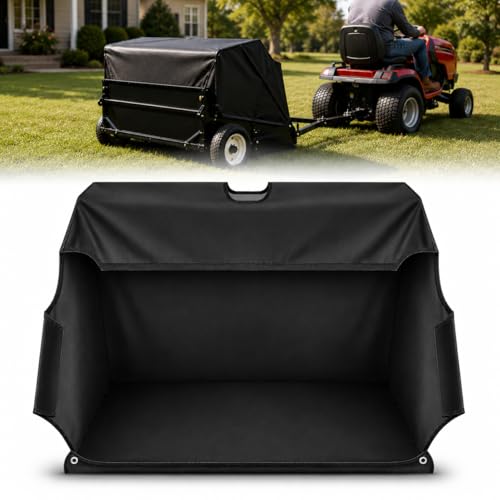
Push sweepers ask for legwork but need no tractor and hang on a garage wall when folded. Tow sweepers hitch to a riding mower or lawn tractor and let the machine do the pulling, so they suit anyone already mowing acreage. If you own a rider, a wide tow sweeper turns a whole afternoon of raking into one or two loops of the yard.
How is a lawn sweeper different from a leaf vacuum?
A lawn sweeper uses a mechanical brush to flick debris into a hopper with no motor, while a leaf vacuum uses a powered fan to suck and usually shred leaves into a bag. Sweepers cover open ground faster and cost less to own; vacuums shred for tighter bagging and lift wet, matted leaves that a brush skips over.Powered lawn vacuums come in two forms. Handheld electric blower-vacuums such as the Sun Joe and Worx TRIVAC models suck and mulch leaves from beds, corners, and small yards, while walk-behind units from brands like Billy Goat, Craftsman, and Troy-Bilt handle bigger cleanups with an engine-driven fan. A brush-style sweeper, by contrast, wins on speed across open turf and needs no fuel or power at all. Many owners keep both: a sweeper for the open lawn and a leaf blower or vacuum for tight spots the sweeper can't reach.
What sweeping width and hopper capacity do you need?
Match sweeping width to your yard and mower, and hopper capacity to how far you want to sweep between empties. Push sweepers run 20–26 inches wide with about a 7-cubic-foot hopper; tow sweepers span 38–50 inches with roughly 12–25 cubic feet, so bigger jobs mean fewer stops.The specifications that decide how much a sweeper collects are listed below.
- Sweeping width sets how many passes a lawn takes; wider is faster but harder to store.
- Hopper capacity sets how long you sweep before emptying; measured in cubic feet.
- Brush height adjustment lets you tune the bristles to grass length and debris type.
- Wheel and hitch design decides whether it pushes easily or tows straight behind a mower.
A tow sweeper roughly as wide as your mower deck lets you sweep and inspect in the same lines you mow. Oversizing the hopper on a tiny yard just adds bulk you have to store, so size the machine to the ground you actually cover.
What can a lawn sweeper pick up besides leaves?
A lawn sweeper handles dry leaves, grass clippings, pine needles, small twigs, acorns, and loosened thatch, provided the material is dry and the brush height is set correctly. It struggles with wet, matted leaves, heavy sticks, and debris pressed flat into the turf, which the brushes ride over instead of lifting.Versatility is a big reason homeowners choose a sweeper over a rake. In spring it clears clippings and lifts thatch that a mower leaves behind; in autumn it gathers leaves and acorns; year-round it tidies pine needles that clog other tools. Large fallen branches, rocks, and soggy leaf mats are the exceptions — pick up sticks by hand first, and send bigger prunings to a wood chipper rather than risking a jammed brush. Keeping the lawn dry before you sweep does more for pickup than any single spec.
How do you keep a lawn sweeper working well?
Keep a lawn sweeper working well by setting the brush just low enough to brush the grass tips, emptying the hopper before it packs solid, and rinsing the brushes clean after sweeping damp material. Store it under cover so the bristles keep their shape and the hopper fabric doesn't rot or fade.Maintenance is minimal but not zero. Check that the brush-height lever moves freely and that the bristles aren't worn flat, since flattened brushes stop lifting debris. On tow models, keep the tires inflated and the hitch pin secure, and glance at the drive belt or gears for grass wrap-up. Fold the sweeper for storage where the manual allows, and hang or stand it off a damp floor. The same care habits that keep a mower running apply here — our lawn mower maintenance guide covers the seasonal routine.
How do you get the best results from a lawn sweeper?
Get the best results from a lawn sweeper by working on a dry lawn, setting the brush to just kiss the grass tips, and sweeping in slightly overlapping straight lines at a steady walking pace. Rushing, sweeping damp turf, or setting the brush too high all leave debris behind.A handful of habits separate a clean sweep from a frustrating one, and none of them costs anything to adopt.
- Wait until the lawn is dry, since even morning dew reduces how much the brush lifts.
- Set the brush height so the bristles graze the grass tips, then test a short pass.
- Overlap each pass by a few inches so you don't leave uncollected strips between rows.
- Keep a steady, unhurried pace, because dense acorns and pine needles need time to flick up.
- Empty the hopper before it packs solid, as a full bag stops collecting entirely.
On a tow model, matching your driving lines to your mowing lines keeps coverage even and predictable. Two slower passes almost always collect more than one fast pass, especially on pine needles and acorns that a hurried brush skips over. Sweeping the same day you mow, once the clippings have dried, folds two chores into a single trip around the yard and keeps the trimmers, edgers and blowers hub tools working together.
What does a lawn sweeper cost to buy and own?
A lawn sweeper is one of the cheapest yard tools to own, because it burns no fuel and needs no power. Push models typically sell in the low-to-mid hundreds of dollars, tow-behind sweepers a little more, and the only recurring cost is an occasional replacement brush set after several seasons.There is no engine to service, no battery to replace, and no cord or charger to manage, so ongoing upkeep is close to zero. Set against a powered leaf vacuum or a bagging mower, the running cost over five or ten years is dramatically lower — you are effectively paying once for the machine and then sweeping for free. The trade-offs are physical effort on a push model and the need for a riding mower or lawn tractor to pull a tow model. Weighed against hiring a lawn service each autumn, most homeowners find a sweeper pays for itself within a season or two. Store it under cover, as covered in our outdoor tool storage guide, and a well-built sweeper lasts many years before anything wears out.
What are the most common lawn sweeper mistakes?
The most common lawn sweeper mistakes are sweeping wet grass, setting the brush too high, moving too fast, and overfilling the hopper. Each one leaves debris behind or shortens the tool's life, and all four are easy to avoid once you recognise the signs.The problems owners run into most often are listed below, with the fix for each.
- Sweeping damp turf — wet leaves mat and skip, so wait for the lawn to dry.
- Brush set too high — debris slides underneath, so lower it until the bristles graze the tips.
- Moving too fast — the brush skips acorns and needles, so slow to a steady walk.
- Overfilling the hopper — a packed bag stops collecting, so empty it before it's solid.
- Forcing sticks and rocks — larger debris jams or bends the brush, so clear it by hand first.
Storing a sweeper outdoors is a quieter mistake that shows up later, because sun and damp warp the bristles and rot the hopper fabric, so pickup fades a season early. Treat the sweeper as a dry-debris tool used on a dry lawn, and most complaints disappear. For the heavy branches a sweeper was never meant to touch, a wood chipper is the right tool for the job.
What safety and setup steps matter with a lawn sweeper?
Set up and use a lawn sweeper safely by locking the hitch pin on tow models, sweeping across slopes rather than straight up and down, and keeping children and pets well clear of the spinning brush. Empty a full hopper carefully, because a packed bag of damp clippings and acorns gets heavy quickly.Most sweeper injuries come from the tow connection and from lifting, not the brush itself. Confirm the hitch pin and clip are seated before you drive off so the sweeper can't swing loose on a turn, and take slopes at a steady, gentle angle to avoid tipping a loaded hopper. Assemble the unit fully per its instructions — a rushed build can leave brushes or wheels loose. This guide is general information, not a substitute for the operator's manual supplied with your sweeper.