
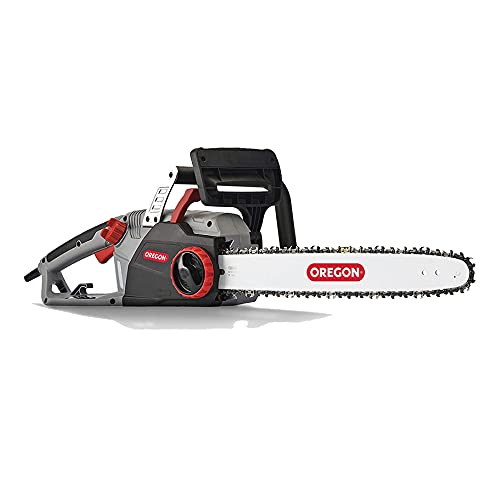


What is a corded electric chainsaw, and who is it for?
A corded electric chainsaw is a plug-in saw driven by a mains-powered motor rather than a petrol engine or a battery, built for pruning, bucking small logs, and cutting firewood within reach of an outlet. It suits suburban homeowners who want steady power, low noise, and almost no upkeep for regular light-to-moderate yard work.Corded power buys one thing neither gas nor battery saws match: unlimited runtime at a constant output for as long as the motor stays plugged in. There is no fuel to mix, no engine to service, and no battery to recharge or replace. The trade-off is the cord, which tethers you to an extension lead and an outlet, so a corded saw is happiest close to the house rather than deep in a woodlot. For quiet cordless freedom, compare our battery chainsaw guide; for heavy off-grid cutting, our gas chainsaw guide is the better starting point. This guide sits inside our wider chainsaws hub so you can weigh every type in one place.
How much power do corded electric chainsaws have?
Corded electric chainsaws are rated in amps, and that amp figure is the clearest signal of cutting power, with most saws drawing 8 to 15 amps from a standard household outlet. Light pruning saws sit at 8 to 10 amps, while 14 to 15 amp models pull through firewood-sized logs with steady, fade-free power.Because the motor draws continuously from the mains, it never loses output the way a battery does as it drains, which is a genuine advantage for long, even cutting sessions. Amps are not the whole story, since bar length and chain sharpness also decide how a saw cuts, but for corded models the amp class is the fastest way to size a saw to your work. The rough classes below map motor rating to the jobs most owners report doing with them.
| Motor rating | Typical use | Example saws |
|---|---|---|
| 8-10 amps | Pruning, limbing, small branches | Sun Joe SWJ599E, WEN 4017 |
| 12 amps | Small firewood and general yard cutting | Greenworks 20222, Craftsman CMECS600 |
| 14-15 amps | Firewood, storm cleanup, thicker logs | Oregon CS1500, WORX WG304.1 |
One quirk of corded saws is the surge of current they draw at the instant the motor spins up, which is why some share a household circuit poorly with other appliances and can trip a breaker on start-up. Better saws use a soft-start that ramps the motor up smoothly to soften that surge and reduce the jolt through the drivetrain. If a saw repeatedly trips the breaker, give it its own circuit and confirm the extension lead is heavy enough before assuming the saw is faulty, since a starved motor draws harder and trips more readily.
What bar length do you need on an electric chainsaw?
Bar length on a corded electric chainsaw should sit a couple of inches longer than the widest log you cut regularly, and most homeowners are well served by a 14 to 18 inch bar. A 16 inch bar is the popular all-rounder, 14 inches keeps a pruning saw light, and 18 inches suits steady firewood work near the house.A longer bar is not automatically better on an electric saw, because the fixed motor power has to drive more chain, which can slow cuts if you oversize the bar. Match the bar to the amps: pair longer 18 inch bars with 14 to 15 amp motors, and keep smaller motors on 14 to 16 inch bars. If you regularly cut wood too wide for an 18 inch bar, that is a sign you have outgrown corded electric and should look at a gas chainsaw. Replacement bars and chains are covered in our chainsaw bars guide.
Bar length is only half of the fitment picture, because every bar also has a chain pitch, gauge, and drive-link count that a replacement chain must match exactly. Pitch is the spacing between rivets, gauge is the thickness of the drive links that ride in the bar groove, and the drive-link count sets the loop length. Note all three from the old chain, the bar stamp, or the manual before buying spares, and our chainsaw chains guide explains how to read them so you fit the right loop.
How far can a corded electric chainsaw reach?
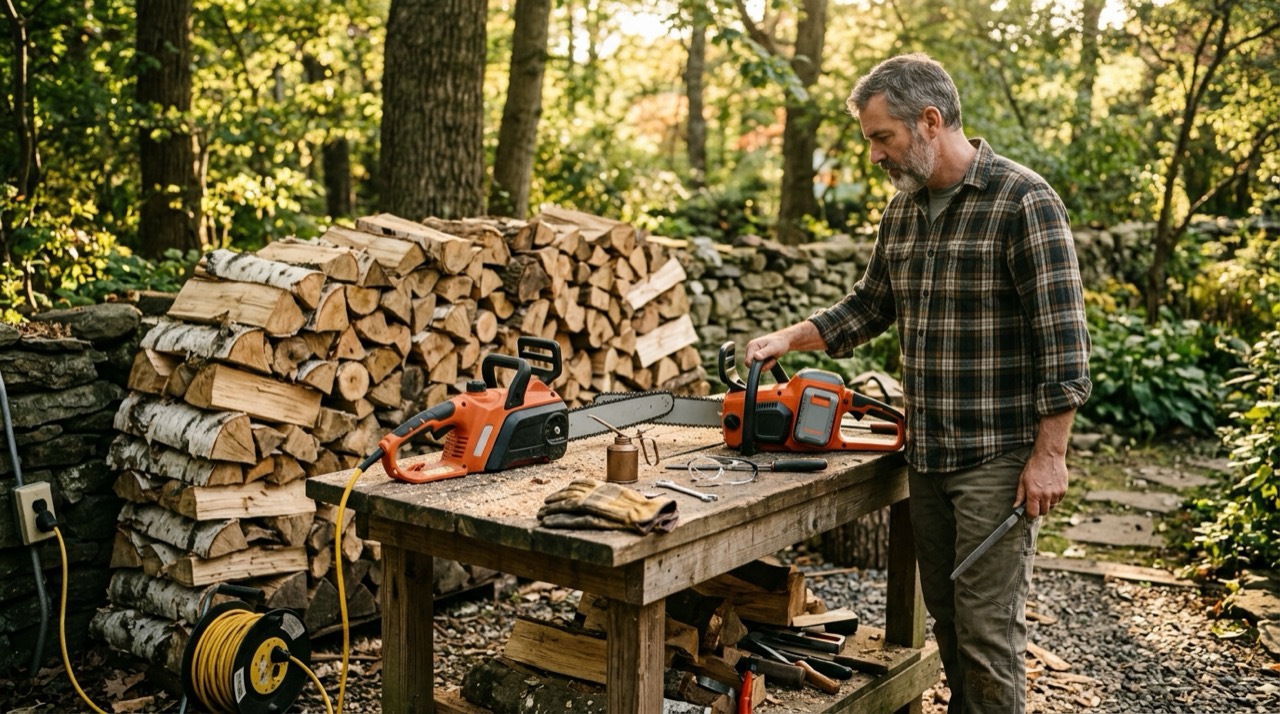
A corded electric chainsaw reaches only as far as its power cord plus a suitable outdoor extension lead, which in practice means working within about 100 feet of an outlet. The saw's own cord is short, so a heavy-gauge extension lead rated for the motor's amp draw does the real work of extending your range.Cord choice matters, because an undersized or overlong lead drops voltage and can make the motor run hot and cut weakly. Use a 12 or 14 gauge outdoor-rated lead, keep the run as short as practical, and plug into a GFCI-protected outlet for shock protection. The cord retainer or a simple loop knot stops the plug pulling apart mid-cut. This tether is the main limit of corded saws, and if your trees are spread across a large block, a battery chainsaw removes the cord entirely.
How do you start a corded electric chainsaw and make your first cut?
Starting a corded electric chainsaw takes seconds because there is no engine to prime or pull: you connect the cord, release the chain brake, press the safety lock-off, and squeeze the trigger. The real skill sits in the setup and the cut, not the start, so work the sequence below until it becomes habit.- Check the chain tension and top up the bar and chain oil before you plug in, since both are easier and safer to set with the saw unpowered.
- Connect the saw's plug to a correctly gauged outdoor extension lead and secure the pair with the cord retainer or a simple loop knot.
- Plug the lead into a GFCI-protected outlet, then drape the cord behind you and to the side of your cutting arm so it trails away from the bar.
- Set your footing, grip the saw with both hands and thumbs wrapped, and disengage the chain brake.
- Press the safety lock-off button, squeeze the trigger to bring the chain to full speed, then lower the moving chain into the wood; never begin a cut with the chain already resting on the log.
- Let the saw's weight and a sharp chain do the work, because forcing a corded saw only bogs the motor and slows the cut.
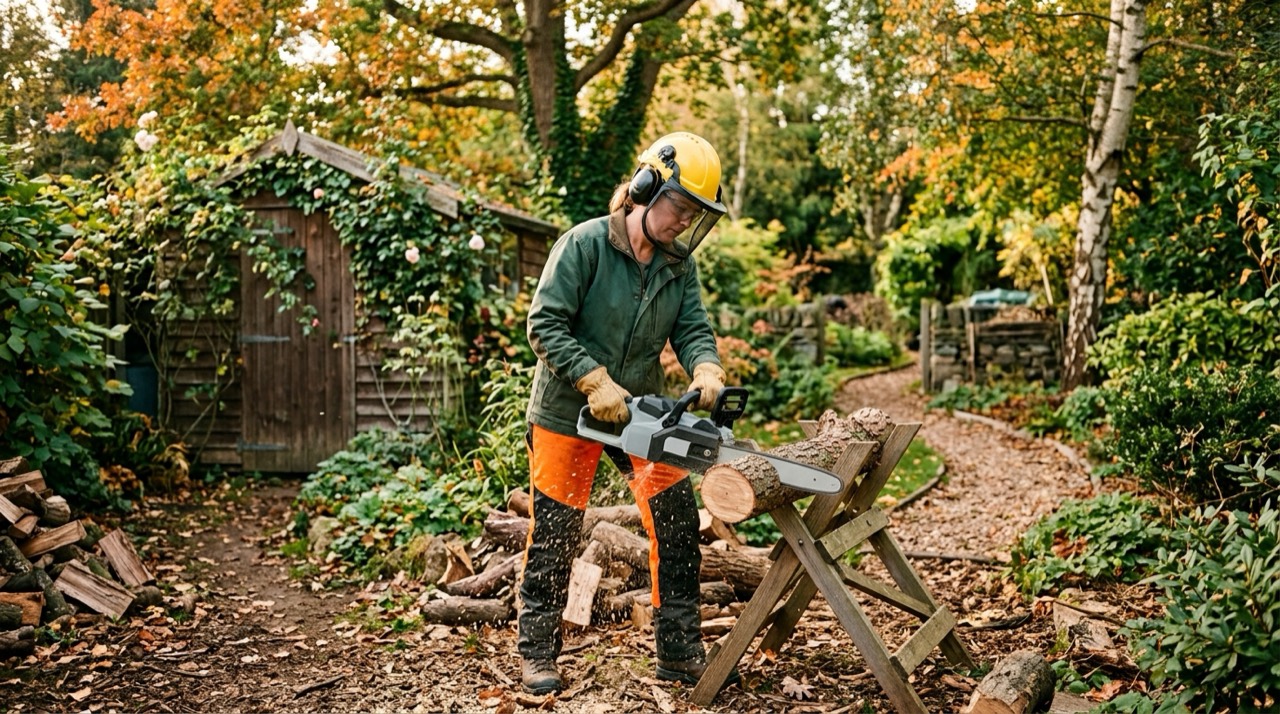
Making that first cut on a log resting on a stand rather than on the ground keeps the bar out of the dirt and away from your legs. Dirt dulls a chain faster than wood ever will, so a sawhorse or log stand pays for itself in fewer sharpenings and cleaner cuts.
What maintenance does a corded electric chainsaw need?
Corded electric chainsaws need far less maintenance than gas saws, with no fuel, spark plugs, or air filters to manage, so upkeep comes down to the chain, the bar, and the oil. Keep the chain sharp and correctly tensioned, top up the bar and chain oil reservoir, and wipe the saw down after use.The bar and chain still need lubrication exactly as they do on a gas saw, so check the automatic oiler is feeding oil and never run the saw dry. A sharp chain does more for cutting speed than any motor spec, and our chainsaw sharpening guide walks through filing it. Use the bar and chain oil the manufacturer specifies, and see our chainsaw maintenance guide for the full routine. Because there is no engine to seize from stale fuel, a corded saw also stores well between seasons.
What goes wrong with corded electric chainsaws, and how do you fix it?
Most corded electric chainsaw problems trace back to three things: a dull or badly tensioned chain, a starved oiler, or an undersized extension lead, and none of them is an engine fault. Working out which of the three is at play resolves the great majority of poor-cutting complaints without any spare parts.Run down this list when a corded saw cuts poorly or behaves oddly:
- The saw cuts slowly or throws fine dust instead of chips: the chain is dull and needs sharpening, or you are forcing an oversized bar on a modest motor.
- The bar and chain run hot or the chain smokes: the oiler is empty or blocked, or the chain is over-tensioned and binding against the bar.
- The chain sags or throws off the bar: tension is too loose, so re-tension a warm chain to the maker's spec and inspect the bar groove for wear.
- The saw bogs down or the breaker trips under load: the extension lead is too thin or too long and voltage is dropping, or the saw is sharing a circuit with other appliances.
- The saw will not run at all: confirm the safety lock-off is pressed, the chain brake is released, and every cord connection is fully seated before you suspect the motor.
Because there is no carburettor, fuel system, or spark plug, a corded saw has far fewer failure points than a gas one, and an hour spent sharpening the chain and fitting the right lead clears most faults. Our chainsaw maintenance guide covers tensioning and oiler checks step by step.
How do you use a corded electric chainsaw safely?
Using a corded electric chainsaw safely demands the same protective gear as any saw, plus careful cord management so the lead never crosses the cutting path. Wear cut-resistant gloves, eye and ear protection, sturdy boots, and cut-retardant chaps, because an electric chain is just as sharp and fast as a gas one.Keep the extension cord behind you and to the side, never let it drape where the chain can reach it, and unplug the saw before clearing a jam or checking the chain. Kickback, where the bar snaps up toward your face, is still a hazard, so hold the saw with both hands and cut with the part of the bar the manual specifies. Felling large, leaning, or dead trees and any work near power lines belongs to a trained professional, and this guide is general information, not a substitute for training. Start with proper chainsaw chaps and PPE.
How long does a corded electric chainsaw last?
A well-kept corded electric chainsaw commonly gives many years of homeowner service, because the mains motor has no fuel system to gum up, no pull-start to wear, and no battery to fade over charge cycles. Lifespan is set far more by chain and bar care than by the motor itself.The motor's brushes are the part most likely to wear over a long life, and on saws with replaceable brushes that is a cheap fix rather than a reason to bin the tool. The bar and chain are consumables that will be replaced several times across the saw's life, which is normal and inexpensive; our chainsaw bars guide explains when a worn bar is past saving. Storing the saw dry and clean with the chain lightly oiled, in a dust-free spot such as proper outdoor tool storage, keeps the switch gear and motor reliable between seasons.
Cost of ownership stays low across that lifespan. There is no petrol, two-stroke oil, filter, or spark plug to buy, so recurring spend is limited to bar and chain oil, the occasional replacement chain, and a sharpening file. That running-cost advantage, more than any single spec, is why corded electric remains the value pick for suburban cutting.
Corded electric, battery, or gas: which should you pick?
Choose corded electric for steady, low-cost power on light-to-moderate jobs near the house, battery for quiet cordless freedom around the yard, and gas for heavy cutting far from an outlet. The right pick is set by where you cut and how much wood you process, not by which technology is newest.Corded saws are the cheapest to buy and run, with no batteries to replace, but the cord limits range. If your cutting is spread across a large property or you value going anywhere, a battery chainsaw is worth the higher price, while serious firewood and felling still favour a gas chainsaw. Once you have settled on corded, our best electric chainsaw picks narrow the field to a handful of proven saws.