Chainsaws: Types, Buying Guides, Chains, Bars, Sharpening & Safe Use
Gas, battery and electric chainsaws plus pole saws, chains, bars, sharpening, milling and maintenance — how to choose the right saw and run it safely. Authoritative manufacturer specifications, sizing parameters, and sub-category master breakdown.
- 12
- Sub-Categories
- 24
- In-Depth Guides
- 102
- Products Reviewed
- Aug 2026
- Last Reviewed

Recommended Products


Sub-Category Micro Hubs
In-depth technical analyses, material specifications, and comparative evaluation.
Gas Chainsaws
Detailed evaluation of anatomical parameters, safety standards, and practical recommendations for gas chainsaws.
Battery Chainsaws
Detailed evaluation of anatomical parameters, safety standards, and practical recommendations for battery chainsaws.
Electric Chainsaws
Detailed evaluation of anatomical parameters, safety standards, and practical recommendations for electric chainsaws.
Pole Saws
Detailed evaluation of anatomical parameters, safety standards, and practical recommendations for pole saws.
Top-Handle & Arborist Saws
Detailed evaluation of anatomical parameters, safety standards, and practical recommendations for top-handle & arborist saws.
Mini Chainsaws
Detailed evaluation of anatomical parameters, safety standards, and practical recommendations for mini chainsaws.
Chainsaw Chains
Detailed evaluation of anatomical parameters, safety standards, and practical recommendations for chainsaw chains.
Chainsaw Bars
Detailed evaluation of anatomical parameters, safety standards, and practical recommendations for chainsaw bars.
Chainsaw Sharpening
Detailed evaluation of anatomical parameters, safety standards, and practical recommendations for chainsaw sharpening.
Chainsaw Maintenance
Detailed evaluation of anatomical parameters, safety standards, and practical recommendations for chainsaw maintenance.
Chainsaw Brands
Detailed evaluation of anatomical parameters, safety standards, and practical recommendations for chainsaw brands.
Chainsaw Milling
Detailed evaluation of anatomical parameters, safety standards, and practical recommendations for chainsaw milling.
Chainsaws here span every power source and job size — gas chainsaws for felling and firewood, battery chainsaws for quiet yard work, and corded electric chainsaws for light cutting near the house. Start by matching power source and bar length to your heaviest regular cut.
Power source is the first fork in the road. Gas saws still lead on raw cutting power and off-grid runtime, which is why they dominate felling, storm cleanup and serious firewood work. Battery saws have closed much of the gap for limbing, pruning and bucking small rounds, and they start instantly with almost no maintenance. Corded electric saws are the cheapest way to cut, but the cord ties you to an outlet, so they suit trimming close to the house.
Reach and portability drive the next choice. A pole saw puts a small bar on the end of a shaft so you can prune high branches with both feet on the ground. A mini chainsaw — usually a 4-to-6-inch one-handed battery saw — handles brush, small limbs and camp tasks. Professional climbers and tree crews reach for top-handle and arborist saws, which are compact enough to run one-handed aloft but demand real training to use safely.
The table below matches common jobs to the saw class that handles them most comfortably. Bar length is the working guide; the general rule is a bar roughly two inches longer than the wood you cut most often.
| Job | Best-fit saw | Typical bar | Why |
|---|---|---|---|
| Felling medium-large trees, firewood | Gas chainsaw | 18–24 in | Sustained power, no cord or recharge |
| Limbing, pruning, small firewood | Battery chainsaw | 12–16 in | Instant start, quiet, low upkeep |
| Light cutting near an outlet | Electric chainsaw | 14–18 in | Lowest cost, plug-in convenience |
| High branches from the ground | Pole saw | 8–12 in | Reach without a ladder |
| Brush, camp, one-handed tasks | Mini chainsaw | 4–6 in | Light, packable, simple |
| Climbing / in-tree work | Top-handle saw | 12–16 in | Compact, balanced for aloft use |
If you are cross-shopping specific models, each guide links to a "best" money page — for example, the best gas chainsaws round-up — so you can move from category to shortlist without wading through spec sheets.
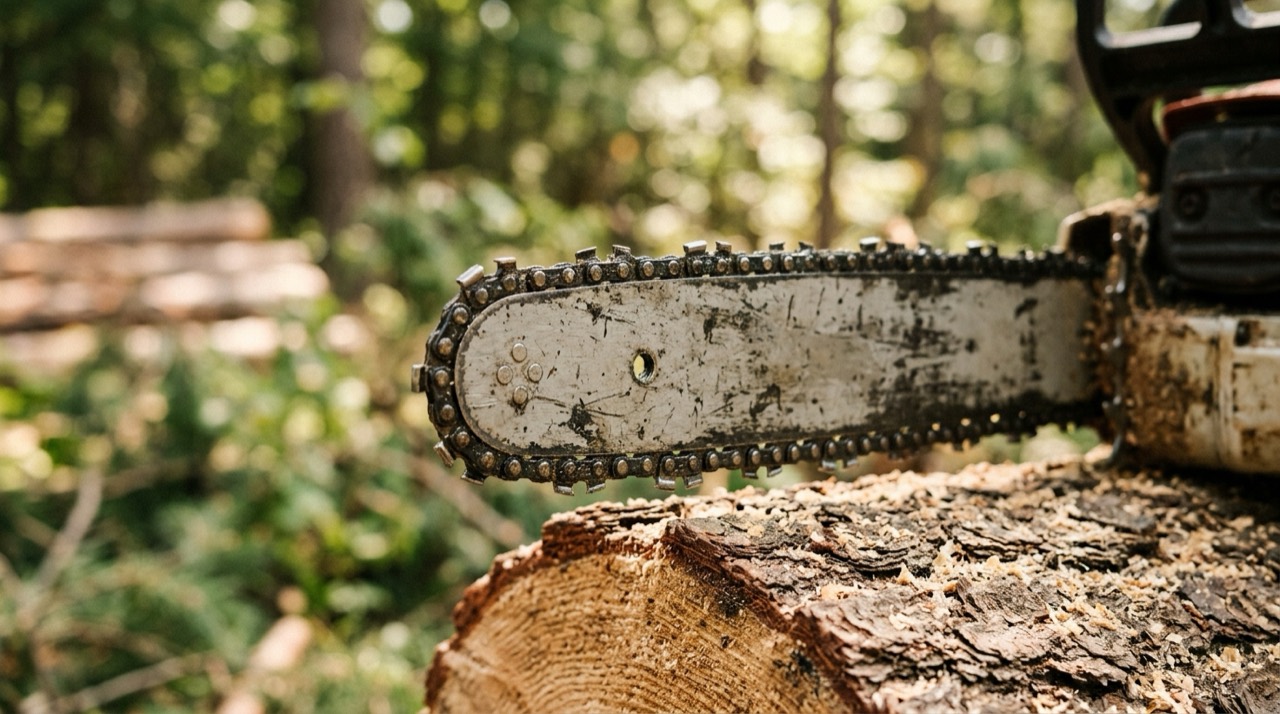
A chainsaw is only as good as its cutting parts and upkeep. The chain does the actual work, and matching its pitch, gauge and drive-link count to your saw matters more than brand. The guide bar carries that chain and needs regular flipping, cleaning and oiling to wear evenly. A sharp chain is a safe chain, so chainsaw sharpening — by file or grinder — is the single habit that most improves cutting.
Routine chainsaw maintenance covers the rest: air filter, spark plug, bar-oil reservoir, chain tension and fuel freshness. For buyers weighing ecosystems and service networks, our chainsaw brands overview compares the major names on parts availability and support rather than hype. And if you want to turn logs into slabs, chainsaw milling explains the rigs, bars and ripping chains that make it possible.
Chainsaws cause serious injuries every year, and kickback — when the bar tip contacts wood and snaps back toward the operator — is the leading cause. Protective equipment is not optional. Cut-retardant chaps, a helmet with face and hearing protection, and gloves belong on every job; our safety gear and accessories pillar covers the full kit. Read your saw's manual, keep the chain sharp and correctly tensioned, and never cut with the bar tip. When a cut is beyond your training — anything overhead, under tension, or in a climbing situation — hiring a professional is the sound choice.
Match bar length to your typical cut, not your biggest one: a bar about two inches longer than the wood you cut most often gives a clean single pass without the extra weight and kickback risk of an oversized bar. Buy for the everyday job.
Bar length sets how thick a log you can cut in one pass, but a longer bar also means more weight, more chain to keep sharp, and more engine or motor needed to pull it. Powering a long bar with a weak engine bogs the cut and overheats the drivetrain. The three power ratings you actually compare are engine displacement on gas saws (measured in cc), and voltage plus amp-hours on battery saws.
- Gas displacement (cc): roughly 30–40cc suits limbing and small firewood, 40–50cc is the all-round homeowner range, and 50–60cc-plus is felling and milling territory.
- Battery voltage: higher voltage (typically 40V–80V) drives longer bars and cuts harder wood; 18V/20V saws are best kept to pruning and small limbs.
- Battery amp-hours (Ah): amp-hours set runtime, not power. A 4Ah pack cuts longer per charge than a 2Ah pack of the same voltage.
The gas chainsaws guide breaks the cc ranges down by job, and the battery chainsaws guide explains how voltage and amp-hours trade off against runtime.
For most homeowners cutting a few limbs, storm debris and small firewood near the house, a battery chainsaw is the easier first saw: it starts on a button, needs no fuel mixing, and asks far less maintenance. Choose gas when runtime, raw power or off-grid work rules the job.
The honest trade-off comes down to how much you cut and where. Battery saws have closed most of the gap for limbing, pruning and bucking small rounds, and they win outright on noise, fumes and instant starting. Their limits are runtime and sustained power under load — a big felling or firewood session means swapping and recharging packs. Gas saws keep going as long as you keep mixing fuel, and they hold power through long, heavy cuts, which is why felling, milling and storm cleanup still lean on them.
| Factor | Battery saw | Gas saw |
|---|---|---|
| Starting | Push-button, instant | Pull-cord, choke, warm-up |
| Best for | Pruning, limbing, small firewood | Felling, milling, big firewood |
| Runtime | Limited by pack; swap to extend | Refuel and keep cutting |
| Upkeep | Chain and bar only | Chain, bar, fuel, filter, plug |
| Noise / fumes | Low, none | High, exhaust |
If you already own batteries in a tool brand's ecosystem, staying in that system saves money — one charger and pack set serves several tools. The electric chainsaws guide covers the corded option, which is cheaper still for light cutting within reach of an outlet.
A chainsaw's purchase price is only the start; the running cost is chains, bar oil, fuel or charging, and periodic parts. Gas saws cost more per year to feed and service, while battery saws shift the cost forward into packs that eventually need replacing.
Budget for the consumables the saw uses regardless of brand. A guide bar and chain wear out and need replacing on any saw, and bar-and-chain oil is used every time you cut. Learning to sharpen extends chain life dramatically, which is why our chainsaw sharpening guide pays for itself quickly.
- Bar and chain oil: consumed on every tank or charge; the reservoir is topped up each refuel.
- Chains: a chain can be sharpened many times before it is replaced, so a file kit is cheaper than buying new chains.
- Gas-specific: two-stroke oil for the fuel mix, plus air filters and spark plugs over time.
- Battery-specific: packs lose capacity over years of charge cycles and are the main long-term replacement cost.
Regular chainsaw maintenance is what keeps those costs low — a clean air filter, correct chain tension and fresh fuel prevent the expensive failures. Comparing service networks and parts availability across the major names in our chainsaw brands overview also matters, because a cheap saw with no local parts support can cost more in the long run.