Best Chainsaw Sharpener
Best Chainsaw Sharpener, ranked from aggregated owner ratings and reviews, not first-hand testing. Real pros, cons, and who each pick is best for.

Our Top 3 Picks
Quick Comparison
| Product | Best for | Buy | |
|---|---|---|---|
| Stihl 2-in-1 Easy File | Best Overall | See Amazon | View (paid link) |
| Husqvarna Chainsaw File Kit | Best Value | See Amazon | View (paid link) |
| Timberline Chainsaw Sharpener | Best Premium | See Amazon | View (paid link) |
| Oregon 620 Bench Grinder | Best Heavy-Duty | See Amazon | View (paid link) |
| Dremel A679 Chainsaw Sharpening Kit | Best Compact | See Amazon | View (paid link) |
| Granberg File-N-Joint | Editor's Pick | See Amazon | View (paid link) |
How to choose the best chainsaw sharpener
The best chainsaw sharpener is the one that matches how much you cut and how precise you want to be: a 2-in-1 hand file for quick field touch-ups, a bar-mounted or bench guide for accuracy, or an electric grinder for speed across many chains. Match the tool to your chain's pitch before anything else.The picks above span every family of sharpener, from a pocket file to a mounted grinder. The sections below explain the types, how to match one to your chain, and what each costs to run, so the ranking makes sense for your own workload.
What types of chainsaw sharpener are there?
Chainsaw sharpeners fall into four families, each trading speed against how much metal it removes. Knowing which family you want narrows the choice faster than comparing individual models.- Plain round files with a flat guide: the cheapest option, filing one tooth at a time by hand.
- 2-in-1 file tools: file the top plate and lower the depth gauge together with built-in angle guides.
- Bar-mounted filing jigs: clamp to the bar and steer a round file at a repeatable angle.
- Powered rotary and bench grinders: use an abrasive wheel or stone for fast, consistent grinding.
What features separate a good chainsaw sharpener from a poor one?
A good chainsaw sharpener holds the file or wheel at a repeatable angle, matches your exact chain pitch, and removes the least metal needed to restore the edge. A poor one relies entirely on a steady hand, fits only one pitch you may not run, or grinds so hard it overheats the teeth.The features worth checking before you buy are listed below.
- Angle control: built-in guides or adjustable stops that fix the top-plate angle so every tooth matches.
- Pitch compatibility: files, stones, or wheels available for the pitch your saw actually uses.
- Depth-gauge provision: a way to lower the rakers, either built into a 2-in-1 tool or with a separate flat file.
- Cold cutting: hand files and carbide guides cut without heat, while grinders need a light touch to avoid bluing.
- Build and grip: a comfortable holder you can use for a full chain without fatigue.
- Portability: light enough to carry into the field if you sharpen away from the bench.
A tool that nails the angle and matches your pitch beats a more expensive one that does neither.
How do 2-in-1 files, bar-mounted guides, and bench grinders compare?
The three main sharpener families trade speed against control and chain life: a 2-in-1 file is fast and gentle but hand-guided, a bar-mounted guide is the most accurate by hand, and a bench grinder is fastest but removes the most metal. The table below lines them up on the factors that decide most purchases.| Factor | 2-in-1 file | Bar-mounted guide | Bench grinder |
|---|---|---|---|
| Speed per chain | Fast | Moderate | Fastest |
| Angle consistency | Good | Excellent | Excellent |
| Metal removed | Least | Least | Most |
| Damage repair | Limited | Limited | Best |
| Portability | Pocketable | Packable | Bench-bound |
| Typical cost | Low | Medium | High |
For one saw and routine touch-ups, the 2-in-1 file wins on simplicity; for many chains or rock-struck edges, the grinder earns its bench space. The bar-mounted guide is the middle path for owners who want grinder-like accuracy without heat.
Which chainsaw sharpener suits your workload?
The right sharpener tracks how often you cut and how many chains you keep. Occasional users are well served by a hand file, regular firewood cutters benefit from a guided tool, and anyone maintaining several saws or rock-struck chains saves time with a grinder. The table below lines up our picks by type, power, and the buyer each suits.| Sharpener | Type | Powered? | Best for |
|---|---|---|---|
| Stihl 2-in-1 Easy File | 2-in-1 file | No | Fast, consistent field touch-ups |
| Husqvarna Chainsaw File Kit | File and guide | No | Budget hand filing |
| Timberline Chainsaw Sharpener | Bar-mounted carbide | No | Precision without a grinder |
| Oregon 620 Bench Grinder | Electric bench grinder | Yes | Many chains and heavy damage |
| Dremel A679 Sharpening Kit | Rotary attachment | Yes | Owners with a Dremel already |
| Granberg File-N-Joint | Bar-mounted file guide | No | Grinder-like accuracy by hand |
Which sharpener matches your chain pitch?
Every sharpener must match your chain's pitch, because a file, stone, or wheel of the wrong size grinds the wrong edge. Hand files come in fixed diameters, while 2-in-1 tools, rotary stones, and grinding wheels are sold in versions for specific pitches, so read the number stamped on your chain first.If you run more than one saw, check whether they share a pitch before buying, as mixed pitches mean more than one file or wheel. Our chainsaw chains guide shows where to find the pitch and gauge markings on a chain.
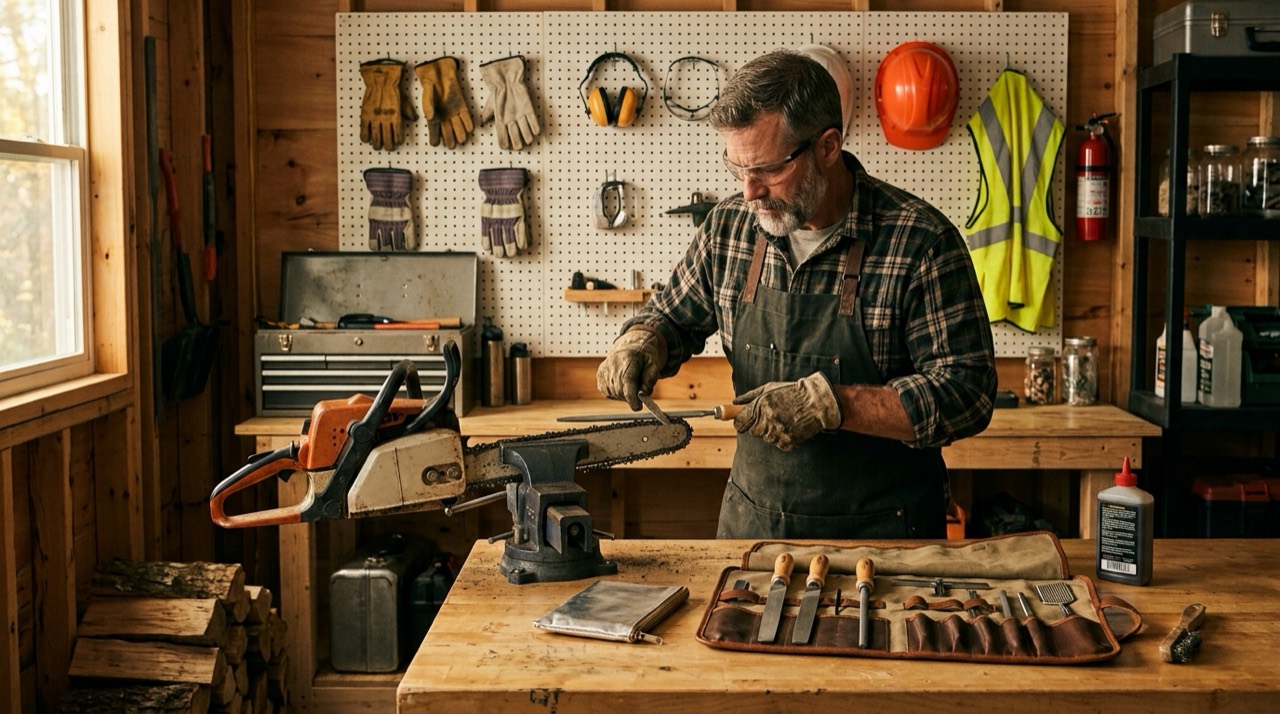
How do you use a 2-in-1 chainsaw file?
Use a 2-in-1 file by resting its guide plate flat across the cutter and the depth gauge, aligning the guide marks with the bar, and pushing both round files and the flat file across in one stroke. It sharpens the top plate and lowers the raker together, which is what makes it so quick.The routine runs as follows.
- Secure the saw, put on gloves, and engage the chain brake.
- Lay the tool's guide across a cutter so the guide lines run parallel with the bar.
- Push the tool forward along the marked angle two or three times, lifting on the return.
- Move to the next cutter facing the same way and repeat with equal strokes.
- Flip the saw and sharpen the cutters facing the other direction.
- Because the flat file trims the depth gauge as you go, no separate raker step is usually needed.
Buy the version matched to your chain pitch, as a 2-in-1 tool is not adjustable across pitches.
How do you set up an electric bench grinder safely?
Set up a bench grinder by mounting it solidly, fitting the wheel that matches your pitch, and dialling the top-plate angle, tilt, and depth stop to your chain's witness marks before you grind. Taking light passes keeps the teeth cool and stops the wheel bluing the steel.Work through it in order.
- Bolt the grinder to a bench or wall so it cannot shift under load.
- Fit and dress the grinding wheel sized for your chain pitch.
- Set the top-plate angle, wheel tilt, and depth stop to match the chain's original grind.
- Clamp the chain in the vise and line the wheel up to the first cutter.
- Grind every cutter facing one way with light, brief passes, then rotate the chain and reset for the other side.
- Lower the depth gauges last, either with the machine or a flat file.
Wear eye protection, as grinding throws sparks and metal dust; our hearing and eye protection guide covers suitable gear.
Which chainsaw sharpener is best for a beginner?
The best sharpener for a beginner is a 2-in-1 file or a round file with a flat guide, because both fix the filing angle and depth-gauge height so there is little to judge by eye. They are cheap, hard to damage a chain with, and teach the feel of a correct stroke.Start with light, frequent touch-ups rather than waiting until the chain is badly dull, since a nearly sharp chain needs only a few strokes per tooth and is far more forgiving to learn on. Keep the strokes equal, mark your first cutter, and check the depth gauges every few sharpenings. Once the angle feels natural, a bar-mounted guide adds precision, and a bench grinder is worth it only when the volume of chains or damage repair justifies it. Whichever you choose, confirm it matches your chain pitch first, using the markings explained in our chainsaw chains guide.
How much does a chainsaw sharpener cost to run?
A hand file is the cheapest sharpener to own and run, lasting for several sharpenings before it dulls and needs replacing, while electric grinders cost more upfront and wear through grinding wheels over time. Bar-mounted guides sit in the middle, using standard files but adding the jig.Factor in consumables when you compare: files, grinding wheels, and carbide cutters all wear out. The full range of files, guides, and stones is covered in our sharpening files and tools guide.
What safety gear do you need to sharpen a chain?
Sharpening a chain needs cut-resistant gloves and a still, powered-down saw, because the teeth cut skin even when they cut wood poorly. Remove the battery or pull the spark-plug boot, engage the chain brake or clamp the bar, and work on a stable surface before you start.Start with a good pair of work gloves, and keep your chainsaw chaps and PPE ready for the cutting afterwards. For the full method and file-size chart, see our chainsaw sharpening guide.
Full Ranking, Reviewed

Best for Owners who want quick, consistent field sharpening
- Two round files and a flat file combined in one holder
- Sharpens the top plate and lowers the depth gauge in one stroke
- Built-in angle guides remove the guesswork on filing angle
- Sold in versions matched to specific chain pitches
- Sets tooth and depth gauge together for even results
- Foolproof filing angles for beginners
- Light and packable for sharpening in the field
- Must buy the version that matches your chain pitch
- Files eventually wear and need replacing
Verdict: The simplest way to get a consistent edge without a machine, which is why it is a go-to field sharpener for most owners.

Best for Budget-minded owners learning to hand file
- Round file, flat file, and a combination filing guide in one kit
- Guide sets both the filing angle and the depth-gauge height
- Round file matched to a common chain pitch
- Compact pouch for the truck or workshop
- Inexpensive and simple to use
- Everything needed for hand filing in one pack
- Easy to carry into the field
- Round file must match your exact chain pitch
- Slower than a powered grinder for many chains
Verdict: A low-cost, complete hand-filing kit that teaches good angles, ideal for learning to sharpen without spending much.
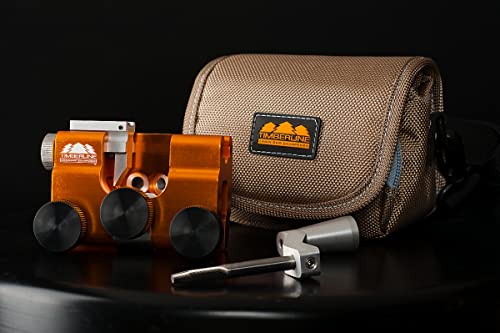
Best for Owners who want precision without an electric grinder
- Clamps to the bar and guides a tungsten-carbide cutter
- Cuts the tooth cold, avoiding heat damage to the steel
- Carbide cutters sold for specific chain pitches and angles
- Delivers a precise, repeatable edge on every tooth
- Very consistent, precise cutting edges
- No heat, so no risk of bluing or softening the teeth
- Forgiving for users who struggle with a free-hand file
- Slower than an electric grinder
- Carbide cutter and pitch-specific parts add cost
Verdict: A precision hand tool that grinds cold and repeatable edges, worth the outlay for owners who want accuracy without a bench grinder.
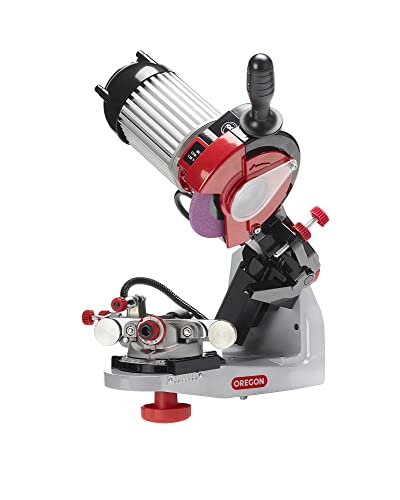
Best for Heavy users and anyone sharpening many chains
- Bench- or wall-mounted electric grinder
- Adjustable top-plate, tilt, and depth settings
- Hydraulic self-centering vise holds the chain
- Grinding wheels available for different chain pitches
- Fast and consistent across many chains
- Reshapes badly damaged or rock-struck chains
- Repeatable angles once it is set up
- Removes more metal, shortening chain life if overused
- Can overheat and blue the teeth if rushed
- Bulky and the highest cost here
Verdict: A serious bench grinder for high-volume sharpening and damage repair, more machine than occasional users need but a time-saver for heavy cutters.
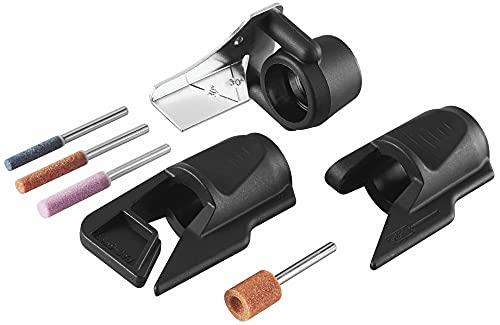
Best for Owners who already own a Dremel rotary tool
- Attachment and grinding stones for a Dremel rotary tool
- Guide sets the correct top-plate filing angle
- Stones sized for common chain pitches
- Compact and cordless when paired with a battery Dremel
- Faster than a hand file
- Small and portable
- Uses a rotary tool many owners already have
- Easy to remove too much metal or overheat a tooth
- Needs a steady hand for consistent angles
Verdict: A quick, compact grinding option for anyone who owns a Dremel, best used with a light touch to avoid burning the teeth.

Best for Precision filers who want grinder-like accuracy by hand
- Clamps to the bar and guides a standard round file
- Adjustable for top-plate angle, down angle, and depth
- Files every tooth at the same repeatable angle
- Works with round files sized to your chain pitch
- Repeatable, accurate hand filing
- Removes only as much metal as a file
- No electricity or grinding wheels needed
- Slower to set up than a 2-in-1 file
- Fiddly to dial in the first time
Verdict: A bar-mounted guide that brings machine-like consistency to hand filing, a favourite of owners who want precision without heat.
Frequently Asked Questions
What is the best tool to sharpen a chainsaw?
For most owners, a 2-in-1 file tool such as the Stihl Easy File is the best all-round chainsaw sharpener, because it files the tooth and the depth gauge together at the correct angles. Heavy users or those repairing rock-struck chains are better served by an electric bench grinder.
Is it worth buying an electric chainsaw sharpener?
An electric chainsaw sharpener is worth it if you run several saws, sharpen many chains, or often need to rebuild edges damaged by dirt or rock. For occasional cutting, a hand file is cheaper, more portable, and removes less metal, so the chain lasts through more sharpenings.
Can you sharpen a chainsaw with a Dremel?
Yes, a Dremel rotary tool fitted with a chainsaw sharpening attachment and the right stone can sharpen a chain quickly. Use a light touch and matched stone size, because a rotary tool removes metal fast and can overheat a tooth, bluing and softening the steel if you press too hard.
Do 2-in-1 chainsaw sharpeners work?
Yes, 2-in-1 chainsaw sharpeners work well and are among the easiest tools for consistent hand sharpening. They hold two round files and a flat file so the top plate and depth gauge are set together at built-in angles, which removes most of the guesswork for beginners.