String Trimmers, Hedge Trimmers, Edgers & Leaf Blowers
Trimmers, brush cutters, edgers and blowers for a finished yard — line sizes, gas vs battery, and the right tool for each edging and clean-up job. Authoritative manufacturer specifications, sizing parameters, and sub-category master breakdown.
- 7
- Sub-Categories
- 14
- In-Depth Guides
- 54
- Products Reviewed
- Aug 2026
- Last Reviewed

Recommended Products


Sub-Category Micro Hubs
In-depth technical analyses, material specifications, and comparative evaluation.
String Trimmers
Detailed evaluation of anatomical parameters, safety standards, and practical recommendations for string trimmers.
Brush Cutters
Detailed evaluation of anatomical parameters, safety standards, and practical recommendations for brush cutters.
Hedge Trimmers
Detailed evaluation of anatomical parameters, safety standards, and practical recommendations for hedge trimmers.
Lawn Edgers
Detailed evaluation of anatomical parameters, safety standards, and practical recommendations for lawn edgers.
Leaf Blowers
Detailed evaluation of anatomical parameters, safety standards, and practical recommendations for leaf blowers.
Backpack Blowers
Detailed evaluation of anatomical parameters, safety standards, and practical recommendations for backpack blowers.
Lawn Sweepers & Vacuums
Detailed evaluation of anatomical parameters, safety standards, and practical recommendations for lawn sweepers & vacuums.
This category covers the finishing tools that give a mown lawn a clean edge and a tidy surface: string trimmers and brush cutters for growth a mower misses, hedge trimmers for shrubs, edgers for borders, and blowers for clean-up. Match the tool to the cut.
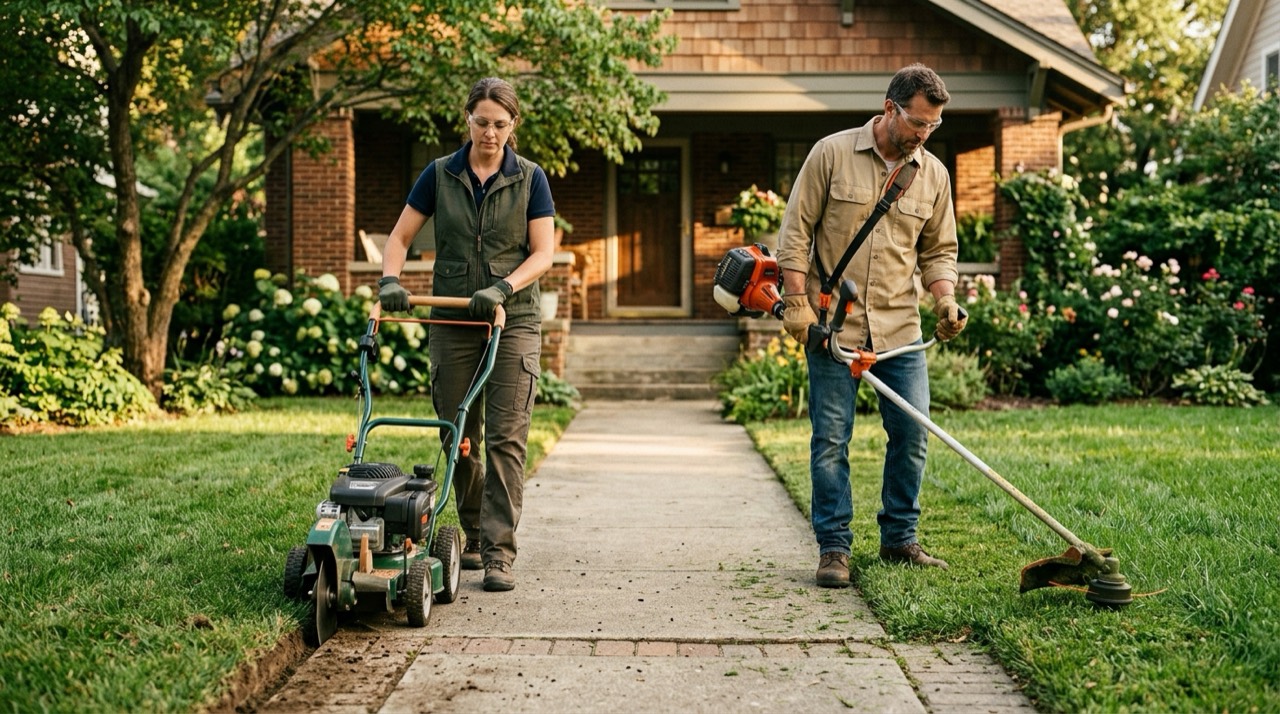
Cutting tools split by what they cut and how tough it is. A string trimmer spins a nylon line to whip down grass and light weeds around fences, trees and beds. When the growth turns woody — saplings, thick brush, dense brambles — a brush cutter swaps that line for a metal blade. Hedge trimmers use a reciprocating blade to shape bushes and formal hedges, a completely different job from trimming grass.
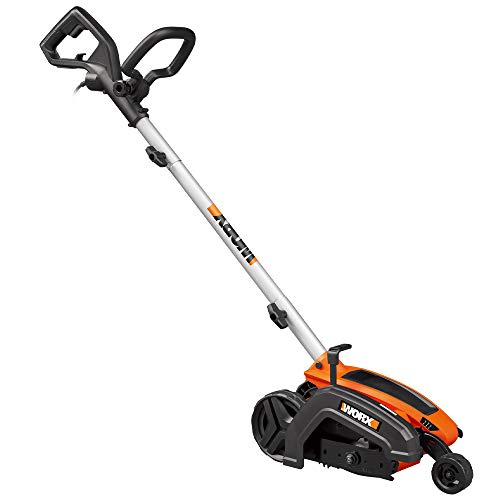
Edges and clean-up finish the picture. A dedicated lawn edger cuts a crisp vertical line between turf and pavement that a trimmer can only approximate. Then a leaf blower or, for big properties, a backpack blower moves clippings, leaves and debris off hard surfaces — while a lawn sweeper or vacuum collects and bags it instead of just moving it.
The table pairs common yard tasks with the tool built for them. Reaching for the wrong one — a string trimmer on saplings, say — wastes line and strains the motor.
| Task | Right tool | Cutting head |
|---|---|---|
| Grass along fences, beds, trees | String trimmer | Nylon line |
| Saplings, thick brush, brambles | Brush cutter | Metal blade |
| Shaping shrubs and hedges | Hedge trimmer | Reciprocating blade |
| Crisp border between lawn and path | Lawn edger | Vertical steel blade |
When you are ready to compare specific models, each guide links through to a money page — for instance, the best string trimmers shortlist.
Clean-up tools divide into moving debris and collecting it. A handheld leaf blower is the go-to for driveways, decks and small yards; its output is rated in CFM (air volume) and MPH (air speed), and you want both healthy for wet, matted leaves. On larger lots, a backpack blower carries the weight on your shoulders and puts out far more air for far longer, which spares your arm on long sessions. When you would rather gather leaves and clippings than push them around, a lawn sweeper or vacuum rolls behind you or self-propels, brushing debris into a hopper you empty once.
Power source runs across all of these. Battery models are quiet, fume-free and fine for typical suburban clean-up; gas models — especially backpack blowers — still win on raw airflow and endurance for acreage and pro-level work.
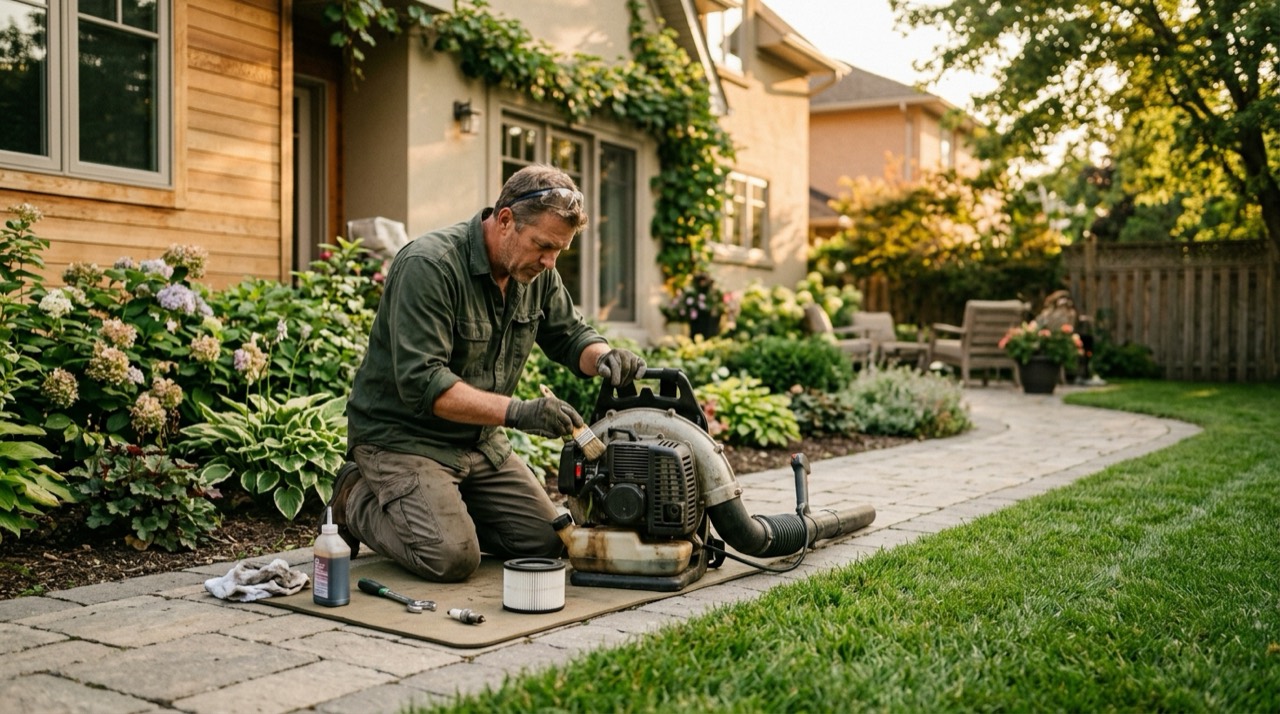
Trimmers and brush cutters throw debris at speed, so eye protection is non-negotiable and long trousers, closed shoes and gloves are strongly advised; brush-cutter blades add kickback risk on hard stems. Blowers are loud enough to damage hearing over time, so wear ear protection on longer runs — our hearing and eye protection guide covers suitable gear. Upkeep is light but real: keep trimmer line fresh and correctly wound, clean the air filter on gas units, sharpen or replace hedge and brush blades, and clear grass build-up from vents and guards so the motor stays cool.
The two specs that most affect how a string trimmer handles are line diameter and shaft type: thicker line cuts tougher growth but needs more power, and a straight shaft reaches under shrubs and suits taller users while a curved shaft is lighter and easier for light trimming. Match both to your yard.
Line diameter is measured in inches or millimetres, and the right size depends on the job and the machine's power.
- 0.065–0.080 in line: light-duty, for grass and soft weeds around a tidy suburban yard.
- 0.080–0.095 in line: the general-purpose range for mixed grass and heavier weeds.
- 0.095–0.110 in-plus line: thick, tough growth on larger properties, usually on gas or high-voltage machines.
Shaft and feed style matter for comfort. A straight shaft gives more reach and is favoured for brush and edging; a curved shaft is lighter and closer-in for quick grass work. Feed systems vary too — bump-feed advances line with a tap on the ground, while automatic feed does it for you. When growth turns woody, no line will do, and a brush cutter with a metal blade takes over, as the string trimmers guide explains.
CFM (cubic feet per minute) measures how much air a blower moves, and MPH (miles per hour) measures how fast that air travels. CFM does the heavy work of moving large piles and wet leaves, while MPH dislodges stuck debris — you want both healthy, not just a big MPH number.
Buyers often chase the headline MPH figure, but high air speed with low volume just pushes a thin jet of fast air that scatters leaves rather than moving them in bulk. Volume is what clears a driveway of matted, wet leaves in one sweep.
| Job | What to prioritise |
|---|---|
| Dry leaves, small yard, decks | Moderate CFM and MPH; a handheld is plenty |
| Wet, matted leaves | Higher CFM to move the mass |
| Loosening debris from cracks, gravel | Higher MPH to dislodge it |
| Large property, long sessions | High CFM sustained — a backpack blower |
For big lots, a backpack blower carries the weight on your shoulders and sustains far more airflow than a handheld leaf blower for far longer. When you would rather collect leaves than move them, a lawn sweeper or vacuum brushes them into a hopper instead.
Battery tools are the right default for most suburban yards — quiet, fume-free and instant-start — while gas still wins for acreage, all-day use and the highest airflow. Corded electric is the cheapest for light work within reach of an outlet, but the cord limits range.
The decision follows yard size and session length, the same as it does for mowers. A battery platform also lets one set of packs power a whole family of tools, which lowers the effective cost of each.
- Battery: best for typical clean-up and trimming; size the pack and voltage to the run time you need.
- Gas: best for large properties and professional-length sessions, especially backpack blowers and heavy brush cutters, at the cost of noise, fumes and fuel mixing.
- Corded electric: lowest cost and weight for small yards, tethered to an outlet.
Whichever power source you pick, the safety and upkeep basics stay the same: eye protection against thrown debris, hearing protection for loud runs, fresh trimmer line, and clear vents so the motor stays cool. Our hearing and eye protection guide covers the gear, and matching the right hedge trimmer or lawn edger to the task keeps every tool working within its design.