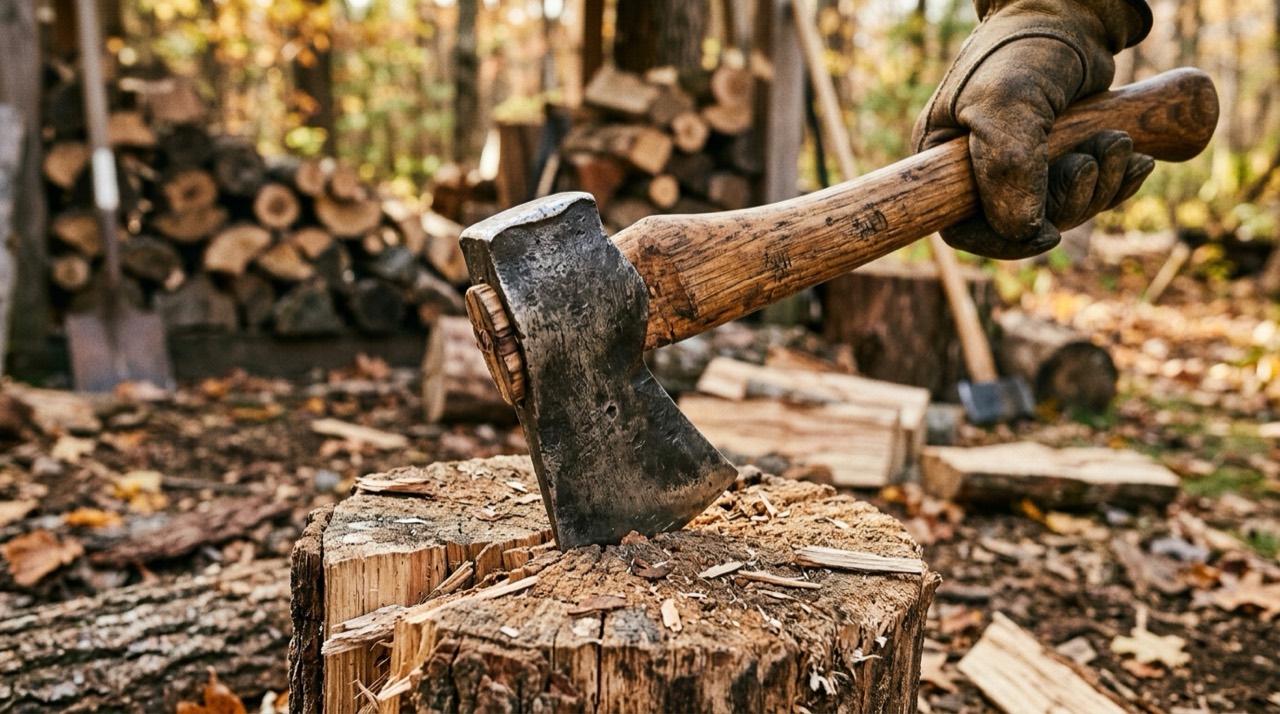


What is a hatchet, and how does it differ from a camp axe?
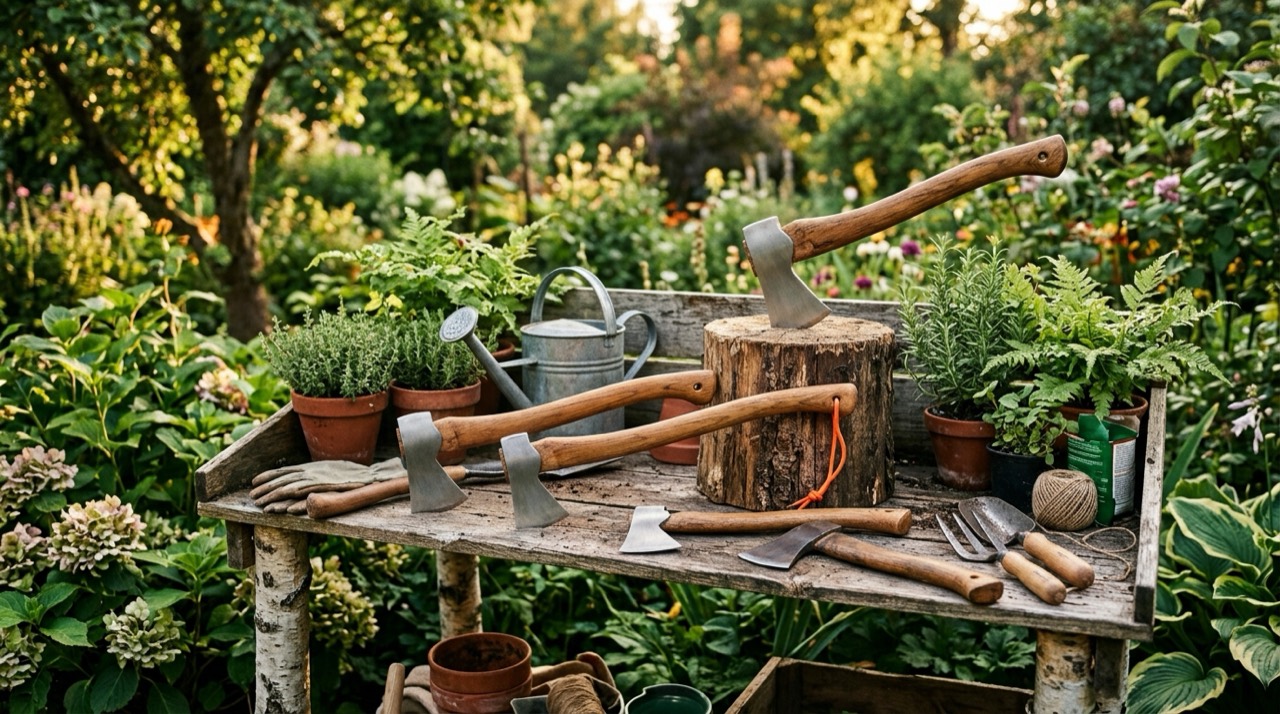
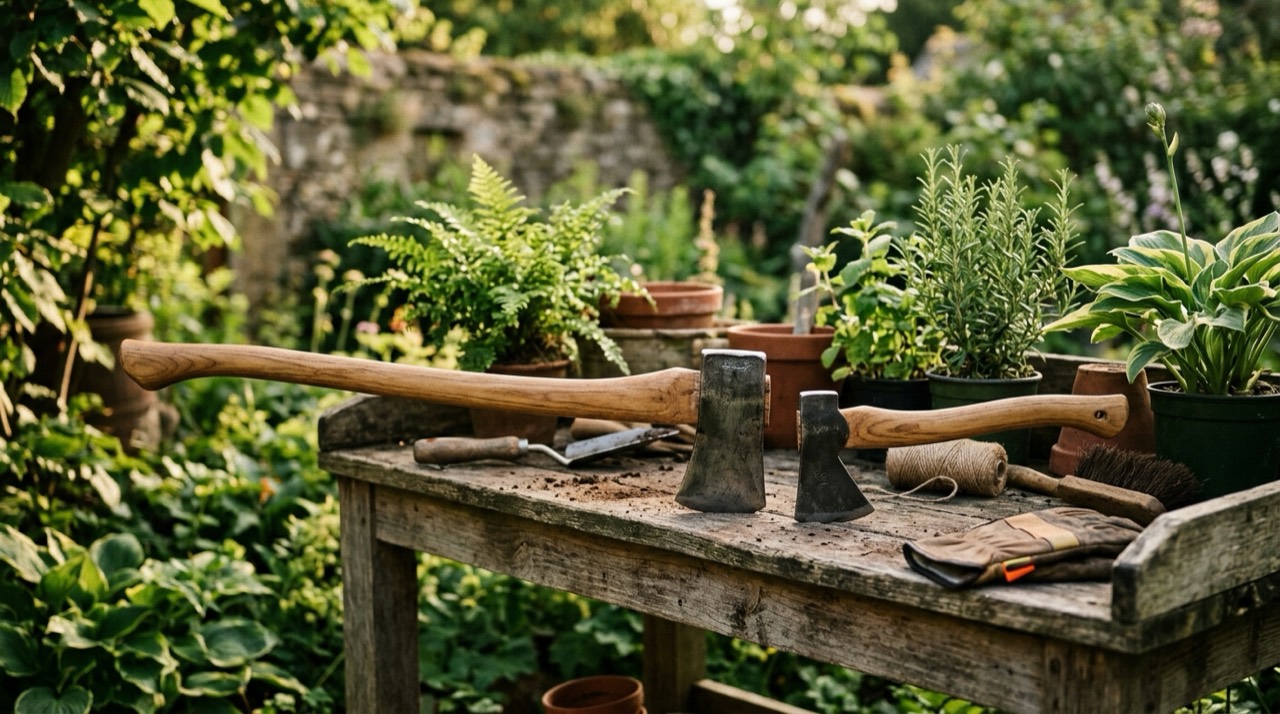
A hatchet is a short, one-handed chopping tool with a 9-to-16-inch handle and a head weighing under about 1.5 pounds, built for splitting kindling, carving, and light camp chores. A camp axe (or boy's axe) runs 18 to 26 inches and needs two hands for heavier wood.The whole family sits on a spectrum of size and power. A hatchet is the smallest swung tool; a camp axe is the mid-size do-it-all; a full splitting axe or maul is the two-handed workhorse for seasoned firewood. Choosing between them is really a choice about how much wood you process and how far you carry the tool. The table below compares the three by size, grip, and best job.
| Tool | Typical length | Head weight | Grip | Best for |
|---|---|---|---|---|
| Hatchet | 9-16 in | 1-1.5 lb | One hand | Kindling, carving, camp chores |
| Camp / boy's axe | 18-26 in | 1.5-2.25 lb | One or two hands | Splitting rounds, limbing, felling small trees |
| Splitting axe / maul | 28-36 in | 3-8 lb | Two hands | Bucked firewood, big rounds |
Most people who search for a "hatchet" actually want a general camp tool, so this guide covers both hatchets and short camp axes. For the bigger stuff, send yourself to the wood processing and splitting pillar.
How much should a hatchet head weigh?
Head weight of about 1 to 1.5 pounds suits most campers, giving enough momentum to split kindling without wearing out your arm on a long trip. Lighter heads carve better; heavier heads bite deeper.Weight is the single attribute that changes how a hatchet feels in the hand. A roughly 1-pound head, like the one on a Gransfors Bruks Wildlife Hatchet, favours control, feathersticks, and precise carving. A 1.25-to-1.9-pound head, closer to an Estwing Sportsman's Axe, drives through knotty kindling and small rounds with fewer strokes. Backpackers weigh the whole tool, not just the head, so a compact 1.3-pound package beats a 2.5-pound one on a multi-day walk.
What handle length works best around camp?
A 13-to-14-inch handle is the sweet spot for a camp hatchet, long enough for real chopping leverage yet short enough to pack and control with one hand. Shorter handles trade power for portability.Handle length sets your reach and your safety margin. A 9-to-10-inch handle (a Gerber Pack Hatchet or Fiskars X5) rides easily in a pack lid and excels at fine work, but the short arc keeps your hand close to the edge. A 13-to-14-inch handle adds swing speed and keeps a missed stroke away from your leg. A 16-to-19-inch camp axe adds still more power for splitting, at the cost of pack space. Match the length to the wood you expect and the distance you carry it.
Which handle material lasts longest, hickory, steel, or composite?
Three handle materials dominate, and each trades durability against feel. The options that turn up on quality hatchets are listed below.- Hickory (Husqvarna, Gransfors Bruks): the traditional choice, springy and shock-absorbing, and it can be re-hung when it wears, but a missed overstrike can crack it.
- Composite FiberComp (Fiskars): near-indestructible and weatherproof, with a shock-dampening hollow shaft, though a broken handle cannot be replaced.
- One-piece forged steel (Estwing): effectively unbreakable through the eye, wrapped in stacked leather or nylon, but it transmits more shock to the hand.
Wood feels best and is easiest to service; composite is the most carefree; forged steel is the toughest for abuse. If you value long-term repairability, keep some sharpening files and handle tools on hand for a wooden-hafted hatchet.
What steel and grind hold an edge in the field?
Most quality hatchets use a medium-to-high carbon steel head that takes a keen edge and re-sharpens easily in the field, paired with a slightly convex grind that resists chipping in wood. Carbon steel needs a wipe of oil to stop rust.Edge geometry matters as much as the metal. A thinner, flatter grind carves and slices cleanly; a more convex "axe" grind survives glancing blows off knots and frozen wood. Hand-forged Swedish heads from Gransfors Bruks and Husqvarna arrive shaving-sharp with a convex bevel, while a Fiskars X7 uses a hardened, low-friction-coated edge that holds up with minimal care. Whatever the steel, the edge only stays useful if you touch it up, so pair the tool with a file and stone from the sharpening files and tools guide.
What camp jobs can a hatchet actually handle?
A hatchet handles the small, repetitive cutting tasks around a campsite, and the jobs it does well are listed below.- Splitting kindling and quartering small rounds for a fire.
- Carving feathersticks, tent pegs, and pot hooks.
- Driving stakes and pegs with the flat poll on the back of the head.
- Limbing and bucking wrist-thick branches for firewood.
A hatchet is the wrong tool for felling large or leaning trees, clearing storm damage, or any overhead work; those jobs belong to a chainsaw and often a trained professional. For quick camp cutting beyond hand-tool scale, a mini chainsaw or the tools in the firewood tools guide cover the gap. Keep the hatchet for what a short blade does safely.
How do you use and store a hatchet safely?
Use a hatchet with a solid chopping block, your body clear of the swing arc, and gloves and eye protection on, then sheath the edge and store the tool dry. Most hatchet injuries come from splitting on the ground with a hand in the path.Safe technique is simple but non-negotiable. Kneel or set the wood on a low block so a missed stroke buries in wood, not your leg, and split kindling with the "contact" or baton method, resting the edge on the wood and tapping both down together. Wear cut-resistant work gloves and eye protection, keep the edge covered with its sheath in transit, and wipe carbon-steel heads with oil before storage so they do not rust. These are general safety notes, not a substitute for hands-on instruction.
What are the parts of a hatchet called?
A hatchet has a head and a handle, and knowing the named parts makes buying, sharpening, and re-hanging far easier. The main components you will see referenced on any quality hatchet are listed below.- Bit and edge: the sharpened cutting wedge that does the chopping; the very tip is the toe, the lower corner the heel.
- Cheek: the flat side of the head behind the edge that acts as a splitting wedge as it drives into the wood.
- Poll: the flat butt on the back of the head, used for light hammering on models built and rated for it.
- Eye: the hole through the head that the handle passes through and wedges into, the part that fails on a badly hung tool.
- Beard: the extended lower edge on some carving hatchets that lets you choke up for close, controlled work.
- Haft: the handle itself, whether hickory, composite, or forged steel, ending in a swelled knob that stops your hand slipping off.
Learning these terms pays off the first time you shop for a replacement handle or follow a sharpening guide, because every spec sheet and every entry in the sharpening files and tools guide uses them.
What is the poll on the back of a hatchet for?
The poll is the flat steel butt opposite the edge, and on a hatchet it is used for light hammering, driving tent stakes and wooden wedges, and tapping a second piece of wood when batoning. Not every poll is hardened for striking, so check before you pound on it.A forged one-piece Estwing and most dedicated camp hatchets have a poll built to take blows, while a thin carving hatchet or a hollow-handled model can crack or mushroom if you hammer with it. Never strike hardened steel against the poll; use it only on wood, stakes, or soft pegs, and keep the edge pointed safely away while you hammer. For anything heavier than a peg, reach for a real mallet rather than risk damaging the eye and handle.
How do you carry and pack a hatchet on the trail?
Carry a hatchet with the edge fully covered by a sheath, packed so the blade cannot shift or work loose against your gear or your body. A sheathed head inside the pack is safest for walking, while a belt sheath suits short moves around camp. Follow these steps to carry one safely.- Fit the leather or nylon sheath and check it snaps or clips shut over the whole edge.
- Pack the hatchet head-down and inboard, against the frame side of the pack, so a slip cannot drive the edge toward your spine.
- Keep it away from soft, puncturable gear such as sleeping pads, water bladders, and insulation.
- For belt carry, ride it on your hip or the back of your waist, never the front of your thigh, and remove it before you sit or drive.
- Re-check the sheath after any scramble or fall, because a loose blade working around inside a pack is a common cause of cuts.
A dedicated edge cover also keeps the carbon-steel bit dry and rust-free; store the sheathed tool with the rest of your gear as covered in the outdoor tool storage guide.
Is a hatchet or a folding saw better for camp wood?
For cutting branches to length a folding saw is faster, safer, and lighter, while a hatchet is better for splitting those lengths into kindling and for carving. Many campers carry both, or pair a saw with a fixed-blade knife for batoning, and leave the hatchet home on ultralight trips.The two tools cut in different directions: a saw removes material across the grain to buck a branch, and a hatchet splits along the grain to make kindling. A bow saw or folding pruning saw cuts wrist-thick limbs with far less risk of a glancing blow, packs flat, and weighs less than most hatchets. Where the hatchet wins is splitting a bucked round into fire-ready pieces and shaping pegs or feathersticks. If your trips are all about processing standing deadwood, a saw plus knife often replaces the hatchet entirely; if you split and carve at a fixed camp, the hatchet still earns its place.
Which hatchet or camp axe is right for you?
Match the tool to your trips: a light one-hand hatchet for backpacking and kindling, a mid-size camp axe when you split more wood at a base camp. Weight, handle length, and how far you carry it decide the pick.For ranked, real-world picks across budgets, see the best hatchets and camp axes roundup. If you are still torn between a compact hatchet and a longer camp axe, the axe vs hatchet comparison walks through the decision. And when your needs outgrow a swung hand tool, step up to a full splitting axe or maul.