


What are bypass loppers used for?
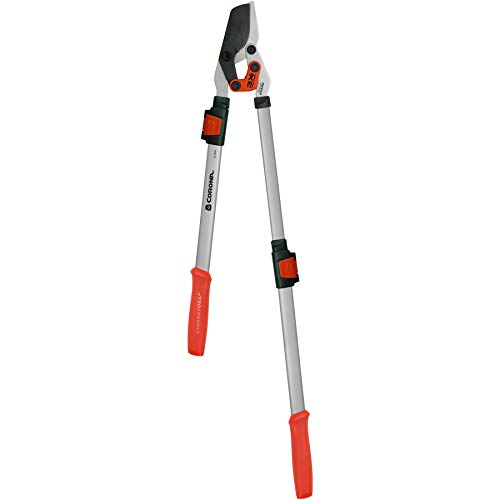
Bypass loppers are used for pruning living branches up to about two inches thick on trees, shrubs, roses, and hedges. Their two curved blades pass each other like scissors, severing the branch cleanly without crushing, which leaves a tight wound at the branch collar that seals and heals quickly.
That clean cut is why bypass loppers are the everyday choice for living wood. They can slip right up to a stem or trunk and cut flush to the collar, something an anvil lopper cannot do because its flat plate stops the blade short.
What branches are bypass loppers best for?
Bypass loppers are best for living, green branches where a clean wound matters, which covers most ornamental and productive pruning. The scissor cut heals fast and leaves no crushed tissue for disease to enter, so it suits the plants gardeners most want to keep healthy.
The jobs bypass loppers do best are listed below.
- Roses and cane fruit, cutting to an outward-facing bud for shape and airflow.
- Fruit trees, thinning and shaping living wood so cuts callus cleanly.
- Ornamental shrubs, removing whole stems at the base to keep the plant open.
- Light hedge renovation, taking out thick living stems that shears cannot manage.
For finger-thick stems within these jobs, hand pruners give more control, and the two tools are often used together.
How close can bypass loppers cut to the trunk?
Bypass loppers can cut right up to the branch collar, the swollen ring where a branch meets the trunk, which is exactly where the cut should be. The moving blade slips past the fixed one and reaches the collar without stopping against a plate, so you can leave the collar intact for the tree to seal over while removing the whole branch. Do not cut flush into the trunk, which removes that collar and slows healing.
When should you not use bypass loppers?
Avoid bypass loppers on hard, dry deadwood, which can twist or stick the blades and knock the two edges out of alignment. For brittle dead branches, storm cleanup, and the woodpile, an anvil or ratchet lopper is the better tool because its crushing action powers through without harming a living plant. The full trade-off is covered in our anvil vs bypass loppers comparison.
How do you keep bypass loppers cutting cleanly?
Keep bypass loppers sharp on the beveled blade only, oil the pivot, and cut within the rated capacity so the blades never tear. A dull or overloaded bypass lopper crushes instead of slicing, defeating the point of the scissor cut, and a loose pivot lets the blades separate mid-cut. For picks, see the best loppers roundup, and pair the tool with work gloves for safe pruning.
How do bypass loppers compare to anvil loppers?
Bypass loppers and anvil loppers differ in cutting action, and that one difference decides which wood each suits. Bypass blades pass each other like scissors for a clean cut that heals, so they suit living wood, while anvil blades crush the branch onto a flat plate, powering through dead wood but bruising live stems.
The practical result is that a bypass lopper is the tool for anything you want to keep growing, and an anvil lopper is the tool for anything already dead. Bypass heads also cut flush to a branch collar, while anvil heads stop short and leave a stub. Many gardeners own both, reaching for the bypass on the plants and the anvil on the woodpile; the full trade-off is in our anvil vs bypass loppers comparison.
A worked example: pruning an overgrown rose
Picture an overgrown rose with canes up to about an inch thick. Bypass loppers are the right tool because the canes are living wood, and every cut needs to heal cleanly to keep the plant healthy. Start by removing dead and crossing canes low in the bush, then thin the crowded centre so light and air reach in, and finally shorten the strongest canes to an outward-facing bud so new growth heads outward rather than into the middle. Cutting to the bud with a clean scissor slice, rather than crushing the cane with an anvil head, is what leaves a wound the rose seals over in days, and it is why bypass loppers are the default for jobs like this.

