



Where should you cut a branch with loppers?
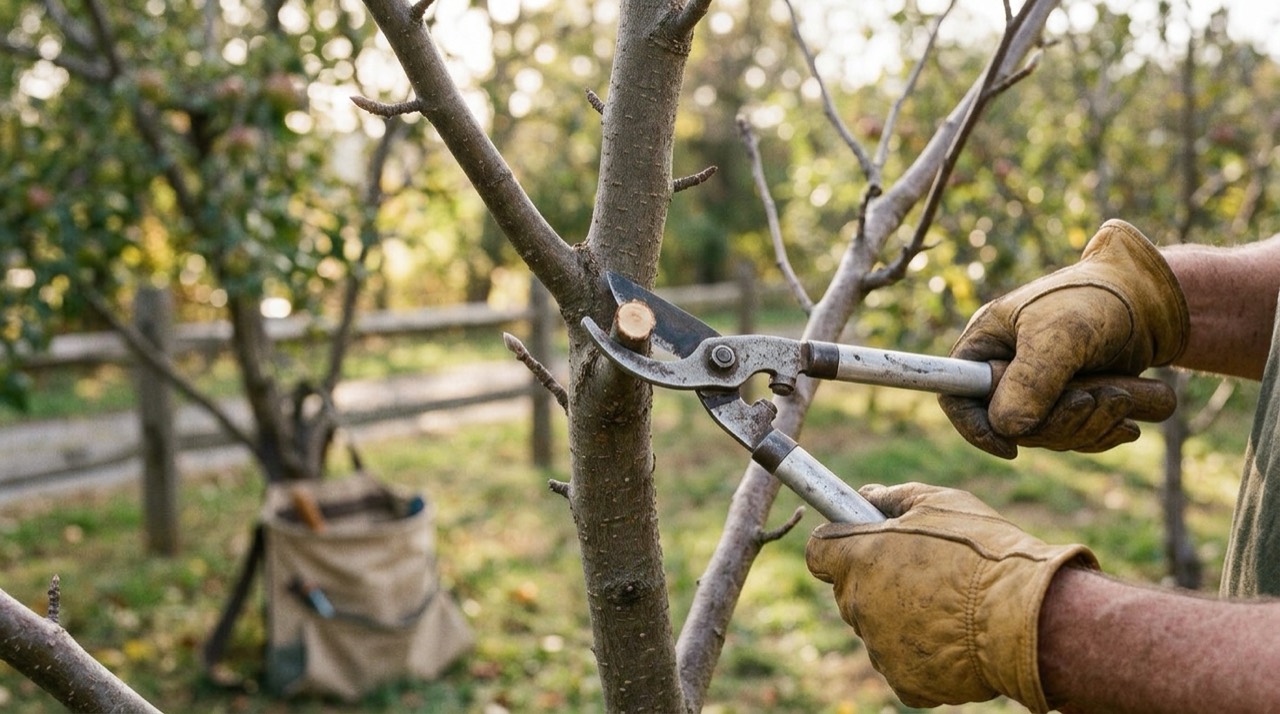
Cut just outside the branch collar, the slightly swollen ring where the branch meets the trunk or a larger limb, leaving the collar intact so the tree can seal the wound. Cutting flush to the trunk removes that collar and slows healing; leaving a long stub gives disease a foothold.
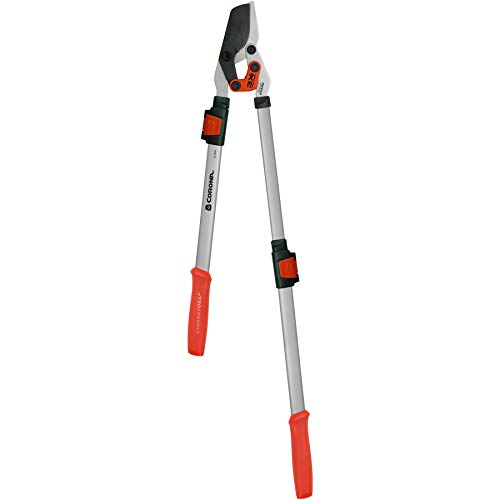
Bypass loppers make this cut best, because their scissor blades slip right up to the collar and sever cleanly. Position the branch deep in the throat of the head where the leverage is greatest, and let the geared or compound mechanism close the cut rather than twisting the tool. For finger-thick twigs, hand pruners give more control; for anything a lopper cannot close on, use a pruning saw.
How do you avoid tearing bark and leaving stubs?
Avoid tearing and stubs by cutting within the tool's capacity, keeping the blade sharp, and supporting the branch as it falls. A dull or overloaded lopper crushes and rips the bark instead of slicing, and an unsupported heavy branch tears a strip of bark down the trunk as it drops.
A few habits keep cuts clean.
- Cut within the rated capacity; force a fatter branch with a saw, not the loppers.
- Keep the bypass blade sharp so it slices rather than crushes.
- On a heavier limb, undercut slightly or take it in shorter sections so it cannot peel bark as it falls.
- Angle the cut just above an outward-facing bud when shortening a stem, so new growth heads outward.
Sharp, correctly sized cuts heal fastest, so keep the edge maintained with the right sharpening files and tools.
What is the three-cut method for heavier branches?
Use the three-cut method on any branch heavy enough to tear bark as it falls: undercut first, then remove the weight with a top cut further out, then trim the stub back to the collar. The sequence stops the falling branch from ripping a strip of bark down the trunk, which is the most common serious wound in home pruning.
Work the three cuts in order.
- Make an undercut about a third of the way through the underside of the branch, six to twelve inches out from the collar.
- Make the second cut from the top, an inch or two further out than the undercut, until the branch drops; the undercut stops the bark tearing past it.
- Trim the remaining stub back to just outside the branch collar with a clean final cut.
Loppers handle the final trimming cut well once the weight is gone, but the first two cuts on a branch near the top of their range are often better made with a pruning saw, which will not spring under the load.
How do you avoid spreading disease when pruning?
Avoid spreading disease by removing diseased wood first, cutting well back into healthy tissue, and disinfecting the blades between plants or between diseased cuts. Pruning tools carry spores and bacteria from one wound to the next, so a clean blade is as much a plant-health tool as a sharp one.
Sensible habits limit the spread.
- Cut diseased branches back to at least several inches into healthy wood, past any visible staining.
- Wipe or dip the blades in a disinfectant such as diluted household bleach or isopropyl alcohol between diseased cuts and between plants.
- Prune in dry weather where you can, since many diseases spread most readily in the wet.
- Bag and remove diseased prunings rather than composting them or leaving them under the plant.
Dry the blades and re-oil the pivot after using any disinfectant, because bleach in particular corrodes steel if left on, undoing the care covered in our sharpening files and tools guide.
How do you shape a shrub or hedge with loppers?
Shape a shrub with loppers by removing whole overgrown or crossing stems at their base, rather than shearing the outline, which keeps the plant open, healthy, and natural. Loppers are a thinning tool, not a shearing tool; for a tight formal face, use garden and hedge shears or a hedge trimmer instead.
Work through a shrub in a sensible order.
- Remove dead, damaged, and crossing stems first, cutting them low inside the plant.
- Thin crowded growth so light and air reach the centre.
- Shorten the longest stems to an outward-facing bud to steer new growth outward.
- Step back often to read the shape before taking off more.
Removing no more than about a quarter to a third of the growth in a season keeps most shrubs vigorous.
How much should you prune in one session?
Remove no more than about a quarter to a third of a plant's living growth in a single season, because harder pruning stresses the plant and can trigger a flush of weak, water-sprout regrowth. The limit protects the plant's ability to feed itself, since the leaves you cut away are what power next year's recovery.
Dead, damaged, and diseased wood does not count toward that budget, so take all of it off whenever you find it. On living wood, prioritise: clear the deadwood and crossing stems first, then thin crowded growth, and only then shorten for shape, stopping once you approach the third mark even if the plant is not yet the size you want. A badly overgrown shrub that needs heavier renovation is better cut back over two or three seasons than butchered in one, which gives it time to rebuild leaf area between cuts and keeps it from throwing the weak, congested regrowth that follows a hard single-season chop.
When is the best time to prune with loppers?
Prune most deciduous trees and shrubs with loppers in late winter while they are dormant, when the structure is visible and the plant will push fresh growth in spring. Time it wrong and you can remove the coming season's flowers or leave a wound going into hard frost.
The general timing that suits most gardens is set out below.
- Late winter or early spring: shape dormant deciduous trees and most shrubs before bud break.
- After flowering: prune spring-blooming shrubs once the flowers fade, so you keep next year's buds.
- Any time: remove dead, damaged, or diseased wood as soon as you spot it.
- Avoid heavy pruning in autumn, when wounds heal slowly and rot can set in.
Species vary, so check the plant, but dead and hazardous wood always comes off first regardless of season.
When should you stop and reach for a saw or a pro?
Stop using loppers and switch to a saw once a branch exceeds about two inches, and call an arborist for large, high, or leaning limbs and any work near power lines. Forcing an oversized branch springs the blades or twists the head, and overhead limbs bring falling-wood and ladder hazards that hand tools do not solve.
Wear work gloves and eye protection for every session, watch for tensioned limbs that can whip when cut, and keep your free hand clear of the blade path. For branches just past lopper range, a pruning saw or manual pole pruner is the right next tool. This is general guidance, not a substitute for trained tree work; when a limb is big enough to hurt someone, hire a professional.
Should you seal or paint pruning cuts?
Leave most pruning cuts open to the air rather than painting or sealing them, because current practice is that a clean cut at the branch collar heals faster on its own than under a wound dressing. Sealants were once routine, but they can trap moisture and disease against the wound rather than keeping them out.
The clean, correctly placed cut does the protective work that a dressing was meant to. Make the cut just outside the collar with a sharp bypass blade, keep it within the tool's capacity so the wound is smooth rather than crushed, and prune at the right time of year so the plant is ready to seal it. There are narrow exceptions in some regions, such as painting oak or elm cuts to deter disease-carrying insects during their active season, so check local advice for those species. For everyday garden pruning, a good cut and no dressing is the safer default, and your effort is better spent keeping the sharpening files and tools handy so every cut is clean in the first place.