Best Loppers
Best Loppers, ranked from aggregated owner ratings and reviews, not first-hand testing. Real pros, cons, and who each pick is best for.

Our Top 3 Picks
Quick Comparison
| Product | Best for | Buy | |
|---|---|---|---|
| Fiskars PowerGear2 Bypass Lopper | Best Overall | See Amazon | View (paid link) |
| Corona SL 4364 DualLINK Bypass Lopper | Best Value | See Amazon | View (paid link) |
| Felco 211-60 Lopper | Best Premium | See Amazon | View (paid link) |
| Spear & Jackson Razorsharp Ratchet Anvil Lopper | Best for Beginners | See Amazon | View (paid link) |
| Tabor Tools GG12 Anvil Lopper | Best Heavy-Duty | See Amazon | View (paid link) |
| Fiskars Extendable Bypass Lopper | Editor's Pick | See Amazon | View (paid link) |
How do you choose the best loppers?
Choose loppers by matching the head type to your wood, the mechanism to your grip strength, and the handle length to your reach. A geared bypass lopper is the best single tool for most gardeners because live pruning is the common job and a clean scissor cut heals fastest; an anvil or ratchet lopper earns its place on dead wood.
The picks below are selected from manufacturer specs and aggregated owner feedback, not first-hand lab testing. No prices are shown here because they change constantly through the Amazon listing.
Bypass or anvil: which cut do you need?
Head type is the first decision. Bypass loppers slice past each other like scissors for a tight cut on living branches, so they suit healthy trees, shrubs, and roses. Anvil loppers crush the branch onto a flat plate, which suits dry deadwood but bruises live stems. Most buyers want a bypass lopper as their main tool.
Ratchet loppers sit inside the anvil family. Their stepped mechanism multiplies force so a modest squeeze cuts a two-inch dead branch, which is a real advantage for anyone with arthritis or limited hand strength.
Which mechanism matches your grip strength?
Match the mechanism to your hands: single pivot for strong hands and light work, compound or geared for thick live wood with less effort, and ratchet for limited grip or hard deadwood. The mechanism decides how much of the cutting force comes from the tool rather than your grip, which matters more than raw blade size for most buyers.
The three mechanisms differ in a predictable way, described below.
- Single pivot: one bolt and one lever action, lightest and cheapest, but every bit of force comes from your hand. Best for green wood under an inch and quick jobs.
- Compound or geared: extra linkages, as in the Fiskars (paid link) PowerGear2 and Corona DualLINK, route your squeeze through a mechanical advantage so a fatter branch cuts with the same effort. The best default for a lot of live pruning.
- Ratchet: the Spear & Jackson Razorsharp head bites deeper with each squeeze and locks between strokes, so a light hand can sever a two-inch dead branch in stages. Slower, but the kindest on tired or arthritic hands.
If you are unsure, a geared bypass lopper is the safe middle: far less tiring than a single pivot, faster than a ratchet, and clean on live wood.
How much cutting capacity and reach do you need?
Cutting capacity and reach should match your typical branch and your typical height. Rated capacity runs from about one inch on basic loppers to roughly two inches on geared and compound models; cut within that figure, because forcing a fatter branch springs the blades. Handle length adds both leverage and reach, and telescoping handles stretch to around 37 inches for canopy work.
The reach and capacity that suit each job are set out below.
| Handle length | Typical reach | Best for |
|---|---|---|
| 15-18 in | Close, precise | Roses and shrubs in tight beds |
| 24-28 in | Everyday | General pruning of trees and hedges |
| 30-32 in | Extended | Thicker branches and more leverage |
| 28-37 in telescoping | Overhead | High branches without a ladder |
Beyond a lopper's reach or capacity, step up to a pole pruner or pruning saw rather than overreaching.
What handle material and weight should you look for?
Pick the lightest handle that still holds its shape under load, because weight is what tires your arms long before the blade gives out. Handle material sets the balance between weight, strength, and corrosion resistance, and it matters most on the long and telescoping loppers you hold out from your body.
The common handle materials trade off as follows.
- Aluminum: light and rust-proof, the usual choice for long and extendable handles like the Corona SL 4364 and the Fiskars extendable lopper.
- Tubular steel: strong and cheap, as on many anvil and ratchet loppers, at the cost of extra weight.
- Composite: Fiskars uses a hardened composite that stays light and rigid and never corrodes.
- Forged alloy: Felco pairs an aluminum-alloy handle with a serviceable head for a light tool that lasts decades.
Cushioned grips and shock-absorbing bumpers matter as much as the material once you are making dozens of cuts, since they take the jolt out of each closing stroke and keep your wrists comfortable through a long session.
What build features make a lopper last?
Build quality shows in the blade steel, the coating, and whether the parts are replaceable. A hardened high-carbon or SK-5 steel blade holds an edge through a season of cutting, and a low-friction, non-stick coating helps it shed sap and shrug off rust. Replaceable blades and a serviceable pivot, as on a Felco, let you rebuild the tool rather than bin it.
The features that separate a lasting lopper from a throwaway one are listed below.
- Blade steel: hardened high-carbon or SK-5 keeps a working edge longer.
- Coating: a non-stick, low-friction finish cuts sap drag and corrosion.
- Pivot bolt: an adjustable bolt keeps bypass blades meeting cleanly for years.
- Replaceable parts: swappable blades and springs extend the tool's working life.
Keeping those parts clean and oiled, covered in our sharpening files and tools guide, matters as much as the original spec.
How do the top loppers compare?
The table below compares the picks by head type, mechanism, and the wood each suits, so you can shortlist before reading the verdicts.
| Model | Head type | Mechanism | Best for |
|---|---|---|---|
| Fiskars PowerGear2 Bypass Lopper | Bypass | Geared | All-round live pruning |
| Corona SL 4364 DualLINK Lopper | Bypass | Compound, extendable | Value and reach |
| Felco 211-60 Lopper | Bypass | Single pivot | Buy-it-for-life repairability |
| Spear & Jackson Razorsharp Ratchet Lopper | Anvil | Ratchet | Limited grip strength |
| Tabor Tools GG12 Anvil Lopper | Anvil | Compound | Dry, dead, hardwood |
| Fiskars Extendable Bypass Lopper | Bypass | Geared, telescoping | Reaching high branches |
Which pick suits your job?
Each pick is built around one kind of work, so start from the job you do most and the shortlist narrows itself. Matching the tool to the task beats buying the most expensive model, because a repairable premium lopper is wasted on someone who only clears deadwood, and a heavy anvil lopper frustrates a rose grower.
The picks map to jobs as follows.
- Everyday live pruning: the Fiskars PowerGear2 geared bypass lopper is the do-everything default, cutting clean to about two inches.
- Reach on a budget: the Corona SL 4364 DualLINK adds telescoping reach and a replaceable blade without a premium price.
- Buy-it-for-life: the Felco 211-60 lets you replace every wear part, so a single tool can serve for decades.
- Limited grip strength: the Spear & Jackson Razorsharp ratchet anvil multiplies a light squeeze through hard, dry wood.
- Deadwood and storm cleanup: the Tabor Tools GG12 compound anvil crunches through brittle hardwood the bypass heads would stall on.
- High branches: the Fiskars extendable bypass lopper stretches to about 37 inches for canopy work without a ladder.
Two loppers, a geared bypass for live wood and an anvil or ratchet for dead, cover almost every garden between them.
How do you care for your loppers?
Protect the investment by cleaning, oiling, and sharpening the lopper on a simple routine, since the tool that lasts is the one that is maintained, not the one that cost the most. A lopper left sappy and damp dulls and rusts within weeks, while a maintained mid-priced model outcuts a neglected premium one.
Keep the care short and regular: wipe the blades after each use, remove sticky sap and any rust, add a drop of light oil to the pivot and blade, and tighten the pivot bolt until the head cuts firmly without binding. Touch up the bevel whenever the cut starts to tear rather than slice, filing only the beveled face of a bypass blade. Store the loppers dry and closed, ideally under cover as our outdoor tool storage guide describes, and the same tool will still be cutting cleanly many seasons from now.
Which loppers should you buy?
Pick the Fiskars PowerGear2 as a do-everything bypass lopper, the Corona SL 4364 for reach on a budget, and the Felco 211-60 if you want a repairable tool for life. Add the Spear & Jackson ratchet if grip strength is a concern, the Tabor Tools GG12 for dead wood, and the Fiskars extendable model for high branches.
Whatever you choose, pair it with proper work gloves and eye protection, keep the blade sharp with the right sharpening files and tools, and read the loppers guide for cutting technique and safe use.
Full Ranking, Reviewed

Best for All-round pruning of live branches up to about two inches
- Patented PowerGear2 mechanism that owners report multiplies leverage through the cut
- Hardened, low-friction coated bypass blade rated for green wood up to around two inches
- Lightweight yet rigid composite handles, roughly 26 to 32 inches depending on model
- Fully hardened steel blade reviewers say holds an edge through a full season
- Gear mechanism makes thick live cuts noticeably easier than a single-pivot lopper
- Clean bypass cut suits healthy trees, shrubs, and roses
- Coated blade sheds sap and resists rust with little upkeep
- Bypass head is not the tool for hard, dry deadwood
- Gears add a little weight over a basic single-pivot lopper
Verdict: The most broadly recommended bypass lopper for home pruning, blending easy geared cutting with a clean, plant-friendly cut.
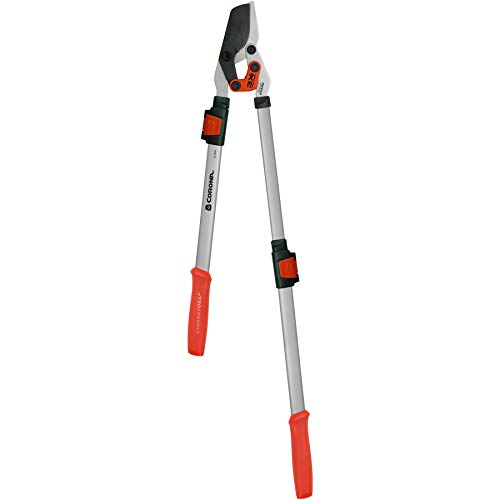
Best for Value-focused buyers who want reach and a replaceable blade
- DualLINK compound linkage that increases cutting power on thicker branches
- Forged, replaceable bypass blade made from resharpenable steel
- Telescoping aluminum handles that extend reach for higher branches
- Shock-absorbing bumpers that cushion the end of each cut
- Extendable handles reach higher without a ladder
- Replaceable, resharpenable blade extends the tool's life
- Compound linkage eases cutting of thicker live wood
- Telescoping handles add weight and a little flex at full extension
- Heavier than a fixed short lopper for close, precise work
Verdict: A well-priced extendable bypass lopper that adds reach and a serviceable blade without the premium of a pro tool.

Best for Buyers who want a repairable, buy-it-for-life bypass lopper
- Swiss-made forged head with fully replaceable blades and parts
- Hardened cutting blade for clean bypass cuts up to around one and a half inches
- Lightweight aluminum-alloy handles, about 24 inches on the 211-60
- Sap groove and adjustable pivot that owners maintain for many years
- Every wear part is replaceable, so the tool can last decades
- Precise, clean cut prized by professional gardeners
- Light in the hand despite forged, serviceable construction
- Premium price sits well above mass-market loppers
- Moderate rated capacity, so very thick wood needs a saw
Verdict: The pick for buyers who want a hand-serviceable bypass lopper they can rebuild rather than replace.

Best for Gardeners with limited grip strength cutting tough or dead wood
- Ratchet mechanism that cuts thick branches in stages to multiply force
- Hardened carbon-steel anvil blade with a non-stick coating
- Lightweight tubular-steel handles with cushioned grips
- Anvil action suited to dry and dead wood up to around two inches
- Ratchet lets weaker hands cut branches a plain lopper cannot
- Non-stick coating helps the blade shed sap and resist rust
- Comfortable grips and modest weight ease long sessions
- Stepped ratchet cutting is slower than a single squeeze
- Anvil head bruises live stems, so keep it for deadwood
Verdict: A forgiving ratchet anvil lopper that lets limited grip strength power through dead wood without brute force.

Best for Powering through dead, dry, and hardwood branches
- Compound-action anvil head that boosts force for thick deadwood
- SK-5 carbon-steel blade with a non-stick coating, rated to about two inches
- Lightweight steel handles, roughly 30 inches, with ergonomic grips
- Flat anvil plate that supports the branch for a chopping cut
- Compound anvil head crunches through brittle, dry hardwood
- Long handles add leverage for the toughest branches
- Coated SK-5 blade is easy to wipe clean and resharpen
- Crushing anvil cut is wrong for delicate live pruning
- Longer handles are less nimble in dense shrubs
Verdict: A strong, affordable anvil lopper for deadwood and storm cleanup, where crushing power beats a clean scissor cut.

Best for Reaching high branches without a ladder
- Telescoping handles that extend from about 28 to 37 inches for reach
- Geared bypass head for easier cutting of thick live wood
- Hardened, coated bypass blade for clean live-wood cuts
- Locking extensions so handle length stays put mid-cut
- Extra reach tackles canopy branches from the ground
- Geared head keeps thick cuts manageable at full extension
- Clean bypass cut is kind to living trees
- Longer, heavier tool tires the arms overhead
- Full extension reduces control compared with a short lopper
Verdict: A telescoping geared bypass lopper that safely extends your reach into the canopy while keeping cuts clean.
Frequently Asked Questions
What size branch can loppers cut?
Loppers cut branches from about half an inch up to roughly two inches, depending on the head and mechanism. Basic single-pivot loppers handle green wood to about an inch, while geared and compound models reach nearer two inches. Cut within the rated capacity, and switch to a pruning saw for anything thicker.
Are bypass or anvil loppers better?
Bypass loppers are better for living plants because they slice cleanly and the cut heals well. Anvil loppers are better for dead wood because their crushing action powers through brittle branches. Most gardeners buy a bypass lopper first and add an anvil or ratchet lopper for the woodpile.
Do more expensive loppers cut better?
Price mainly buys repairability, better steel, and a smoother mechanism rather than a dramatically bigger cut. Premium loppers like Felco let you replace every wear part, so they last decades. A mid-priced geared lopper cuts nearly as well; the extra money buys longevity and serviceability.
Should I choose ratchet loppers?
Choose ratchet loppers if grip strength, arthritis, or hard deadwood makes a normal squeeze difficult. The stepped mechanism multiplies force so a light squeeze cuts a two-inch dead branch. The trade-off is slower, staged cutting, so keen gardeners often keep a fast geared bypass lopper as well.