Anvil Vs Bypass Loppers
Anvil Vs Bypass Loppers, ranked from aggregated owner ratings and reviews, not first-hand testing. Real pros, cons, and who each pick is best for.

Our Top 3 Picks
Quick Comparison
| Product | Best for | Buy | |
|---|---|---|---|
| Fiskars PowerGear2 Bypass Lopper | Best Overall | See Amazon | View (paid link) |
| Corona SL 4364 DualLINK Bypass Lopper | Best Value | See Amazon | View (paid link) |
| Felco 211-60 Lopper | Best Premium | See Amazon | View (paid link) |
| Spear & Jackson Razorsharp Ratchet Anvil Lopper | Best for Beginners | See Amazon | View (paid link) |
| Tabor Tools GG12 Anvil Lopper | Best Heavy-Duty | See Amazon | View (paid link) |
| Fiskars Extendable Bypass Lopper | Editor's Pick | See Amazon | View (paid link) |
Anvil vs bypass loppers: which should you choose?
Choose bypass loppers for living plants and anvil loppers for dead wood. Bypass blades slice past each other like scissors for a clean cut that heals, so they suit pruning healthy trees, shrubs, and roses. Anvil blades crush the branch onto a flat plate, which powers through dry deadwood but bruises live stems.
The picks below span both head types so you can match the tool to the wood you actually cut. Selections come from manufacturer specs and aggregated owner feedback, not first-hand testing, and prices are omitted because they move constantly on the Amazon listing.
When do bypass loppers win?
Bypass loppers win on living wood. Their two curved blades pass each other and sever the branch cleanly without crushing, leaving a tight wound at the branch collar that seals and heals fast, which is exactly what a living tree or shrub needs. That clean cut is why bypass is the default for rose and shrub pruning and most everyday garden work.
Bypass loppers also cut closer to a stem or trunk, because the moving blade can slip right up to the branch collar rather than stopping against a plate. Keep bypass blades sharp and cut within capacity; a dull bypass blade twists and tears instead of slicing.
When do anvil loppers win?
Anvil loppers win on dead, dry, and hard wood. The single blade drives down onto a flat anvil, splitting brittle branches with a chopping action that a bypass blade would struggle to match, and the plate stops a hard, round branch rolling off the edge. That makes anvil loppers the tool for storm cleanup, the woodpile, and firewood-sized deadwood.
Ratchet anvil loppers extend that advantage to anyone with limited grip. Their stepped mechanism multiplies force so a light squeeze crushes through a two-inch dead branch. The catch is that anvil loppers bruise living stems and cannot cut flush to a collar, so they are a poor choice for delicate live pruning.
What about ratchet and compound loppers?
Ratchet and compound describe the mechanism, not the cut, so they sit on top of either an anvil or a bypass head. A ratchet head cuts in stages and locks between squeezes, multiplying force for hard deadwood or weaker hands, and it is most common on anvil loppers. A compound or geared head, such as Fiskars (paid link) PowerGear or Corona (paid link) DualLINK, routes force through extra linkages and appears on both types.
Match the mechanism to your need: a ratchet anvil for tough dead branches with minimal effort, a geared bypass for a lot of clean live pruning. Neither mechanism changes the core rule that bypass suits living wood and anvil suits dead wood, which the loppers guide covers in full.
How does each head type affect plant health?
Bypass loppers protect plant health because a clean scissor cut seals fast, while anvil loppers can harm live plants because a crushed wound heals slowly and invites dieback and disease. The difference is not cosmetic: on living wood the quality of the wound decides whether the branch collar seals over cleanly or rots back into the stem.
A bypass blade parts the fibres with a slicing action, leaving a smooth face the tree can callus over, the same reason surgeons prefer a scalpel to a blunt edge. An anvil blade crushes the fibres against its plate, so the wound is ragged and bruised even when the branch is fully severed, and that bruised tissue is slower to seal and easier for fungi and bacteria to colonise. On dead wood none of this matters, because there is no living tissue to protect, which is exactly why the anvil head is the right tool there and the wrong one on a live rose cane.
Which head type suits your specific job?
Pick the head type from the job, since most gardens need a bypass lopper for living plants and benefit from an anvil lopper for the woodpile. Working from the task rather than the tool avoids the common trap of using one lopper for everything and crushing live stems it should have sliced.
The jobs map to head types as follows.
- Roses and fruit trees: bypass, for a clean cut that heals and cuts close to the bud or collar.
- Ornamental shrubs and hedges: bypass, to thin living stems without bruising them.
- Storm cleanup and deadwood: anvil, to power through brittle, dry branches.
- Firewood-sized dead limbs: anvil or a saw, backed by proper firewood tools for the pile.
- Tough dead wood with limited grip: ratchet anvil, to multiply a light squeeze through the cut.
Can you get by with just one type of lopper?
You can manage with one lopper, and for most gardeners that one should be a geared bypass model, but a second anvil lopper pays off the moment you cut much dead wood. The bypass head is the safer single choice because using it on dead wood only risks the tool, whereas using an anvil head on live wood risks the plant.
If your pruning is almost all living trees, shrubs, and roses, a bypass lopper such as the Fiskars PowerGear2 does nearly everything, and you can saw the occasional dead branch. If you clear storm debris, split a lot of brittle wood, or lack the grip for a plain squeeze, an anvil or ratchet lopper such as the Tabor Tools GG12 or the Spear & Jackson Razorsharp becomes the more-used tool. Owning both is not overkill, because each does one job the other does badly, and together they cover the full range from a live rose cane to a dry two-inch deadwood branch.
How do you maintain each head type?
Maintain a bypass lopper by sharpening only its beveled outer blade and keeping the flat face flat, and an anvil lopper by sharpening both bevels of its single blade and keeping the plate straight. The maintenance differs because the two heads cut in fundamentally different ways, and treating them the same ruins the cut.
The routine for each head is set out below.
- Bypass: file only the beveled outer face at the factory angle, take one light pass on the flat inner face to lift the burr, then check the blades still pass with no gap.
- Anvil: file both bevels of the wedge-shaped blade evenly so the edge stays centered over the plate, and file out any nicks in the anvil plate so the blade seats fully.
- Both: wipe off sap, remove rust, oil the pivot, and tighten the pivot bolt until the head is firm but smooth.
The full step-by-step for either head, plus the right files, lives in our sharpening files and tools guide.
How do anvil and bypass loppers compare?
The table below sets the two head types side by side on the attributes that decide the job, including how each handles cut capacity and wood condition.
| Attribute | Bypass loppers | Anvil loppers |
|---|---|---|
| Cutting action | Two blades slice past each other | One blade crushes onto a flat plate |
| Best wood | Living, green branches | Dead, dry, brittle branches |
| Cut quality | Clean, heals well | Crushed, can bruise live stems |
| Typical cut capacity | About 1 to 2 in of green wood | About 1 to 2 in of dry deadwood |
| Cutting near the collar | Cuts close and flush | Stops short, leaves a stub |
| Effort on hard deadwood | Blade can stick or twist | Powers through, especially ratchet |
| Best for | Everyday live pruning | Woodpile and storm cleanup |
Which type of lopper should you buy?
Buy a bypass lopper first, because live pruning is the more common and more delicate job, and add an anvil or ratchet lopper for dead wood. If you mostly tidy living trees, shrubs, and roses, a geared bypass lopper like the Fiskars PowerGear2 does almost everything. If you clear a lot of deadwood or lack grip strength, an anvil or ratchet model is the better second tool.
For the full ranked shortlist, see our best loppers roundup, and read the loppers guide for handle length, safe use, and cutting technique. When branches outgrow a lopper, step up to a pruning saw or pole pruner.
Full Ranking, Reviewed

Best for All-round pruning of live branches up to about two inches
- Patented PowerGear2 mechanism that owners report multiplies leverage through the cut
- Hardened, low-friction coated bypass blade rated for green wood up to around two inches
- Lightweight yet rigid composite handles, roughly 26 to 32 inches depending on model
- Fully hardened steel blade reviewers say holds an edge through a full season
- Gear mechanism makes thick live cuts noticeably easier than a single-pivot lopper
- Clean bypass cut suits healthy trees, shrubs, and roses
- Coated blade sheds sap and resists rust with little upkeep
- Bypass head is not the tool for hard, dry deadwood
- Gears add a little weight over a basic single-pivot lopper
Verdict: The most broadly recommended bypass lopper for home pruning, blending easy geared cutting with a clean, plant-friendly cut.
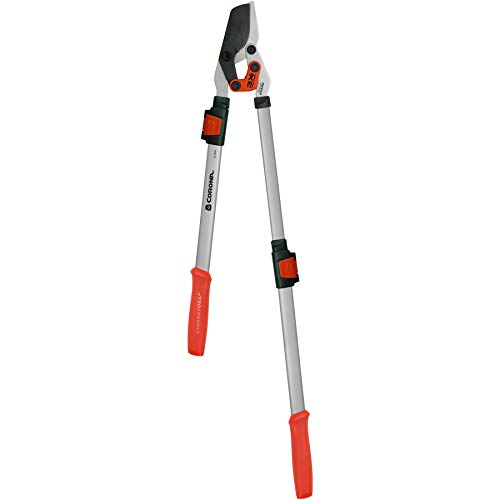
Best for Value-focused buyers who want reach and a replaceable blade
- DualLINK compound linkage that increases cutting power on thicker branches
- Forged, replaceable bypass blade made from resharpenable steel
- Telescoping aluminum handles that extend reach for higher branches
- Shock-absorbing bumpers that cushion the end of each cut
- Extendable handles reach higher without a ladder
- Replaceable, resharpenable blade extends the tool's life
- Compound linkage eases cutting of thicker live wood
- Telescoping handles add weight and a little flex at full extension
- Heavier than a fixed short lopper for close, precise work
Verdict: A well-priced extendable bypass lopper that adds reach and a serviceable blade without the premium of a pro tool.

Best for Buyers who want a repairable, buy-it-for-life bypass lopper
- Swiss-made forged head with fully replaceable blades and parts
- Hardened cutting blade for clean bypass cuts up to around one and a half inches
- Lightweight aluminum-alloy handles, about 24 inches on the 211-60
- Sap groove and adjustable pivot that owners maintain for many years
- Every wear part is replaceable, so the tool can last decades
- Precise, clean cut prized by professional gardeners
- Light in the hand despite forged, serviceable construction
- Premium price sits well above mass-market loppers
- Moderate rated capacity, so very thick wood needs a saw
Verdict: The pick for buyers who want a hand-serviceable bypass lopper they can rebuild rather than replace.

Best for Gardeners with limited grip strength cutting tough or dead wood
- Ratchet mechanism that cuts thick branches in stages to multiply force
- Hardened carbon-steel anvil blade with a non-stick coating
- Lightweight tubular-steel handles with cushioned grips
- Anvil action suited to dry and dead wood up to around two inches
- Ratchet lets weaker hands cut branches a plain lopper cannot
- Non-stick coating helps the blade shed sap and resist rust
- Comfortable grips and modest weight ease long sessions
- Stepped ratchet cutting is slower than a single squeeze
- Anvil head bruises live stems, so keep it for deadwood
Verdict: A forgiving ratchet anvil lopper that lets limited grip strength power through dead wood without brute force.

Best for Powering through dead, dry, and hardwood branches
- Compound-action anvil head that boosts force for thick deadwood
- SK-5 carbon-steel blade with a non-stick coating, rated to about two inches
- Lightweight steel handles, roughly 30 inches, with ergonomic grips
- Flat anvil plate that supports the branch for a chopping cut
- Compound anvil head crunches through brittle, dry hardwood
- Long handles add leverage for the toughest branches
- Coated SK-5 blade is easy to wipe clean and resharpen
- Crushing anvil cut is wrong for delicate live pruning
- Longer handles are less nimble in dense shrubs
Verdict: A strong, affordable anvil lopper for deadwood and storm cleanup, where crushing power beats a clean scissor cut.

Best for Reaching high branches without a ladder
- Telescoping handles that extend from about 28 to 37 inches for reach
- Geared bypass head for easier cutting of thick live wood
- Hardened, coated bypass blade for clean live-wood cuts
- Locking extensions so handle length stays put mid-cut
- Extra reach tackles canopy branches from the ground
- Geared head keeps thick cuts manageable at full extension
- Clean bypass cut is kind to living trees
- Longer, heavier tool tires the arms overhead
- Full extension reduces control compared with a short lopper
Verdict: A telescoping geared bypass lopper that safely extends your reach into the canopy while keeping cuts clean.
Frequently Asked Questions
Which is better, anvil or bypass loppers?
Bypass loppers are better for living plants because they slice cleanly and the cut heals well. Anvil loppers are better for dead wood because their crushing action powers through brittle branches. Neither is universally better; most gardeners keep a bypass lopper for live pruning and an anvil lopper for deadwood.
Can anvil loppers cut live branches?
Anvil loppers can cut live branches, but they crush and bruise the stem rather than slicing it, which slows healing and can cause dieback. For living wood, a bypass lopper is the better choice. Reserve anvil loppers for dead, dry, or brittle branches where crushing does no harm.
Why do bypass loppers cut cleaner than anvil loppers?
Bypass loppers cut cleaner because two blades pass each other and sever the branch like scissors, leaving a smooth wound. Anvil loppers press a single blade onto a flat plate, crushing the fibres as they cut. The scissor action is gentler on living tissue and seals faster.
Do anvil loppers cut thicker branches than bypass?
Anvil loppers often feel more powerful on hard, dry deadwood because the crushing action and supporting plate drive through brittle fibres, and ratchet anvils multiply that force. On living wood, a geared bypass lopper cuts a similar capacity cleanly. Rated capacity for both tops out around two inches.