


What is a gas chainsaw, and who is it for?
A gas chainsaw is a handheld saw driven by a two-stroke petrol engine, built for cutting firewood, felling trees, and clearing storm damage where no power outlet reaches. It suits rural property owners, farmers, landscapers, and anyone who cuts seasoned hardwood for hours at a stretch.Gas power buys two things battery and corded saws still struggle to match: sustained cutting power and unlimited runtime from a tank of fuel. If your work takes you deep into a woodlot or through a full cord of oak, that independence matters. Lighter jobs such as pruning, small logs, and occasional suburban cleanup are often better served by a battery chainsaw, and this guide sits inside our wider chainsaws hub so you can compare every type in one place.
Every gas saw runs on a petrol and two-stroke oil mix rather than straight fuel, and most start with a pull cord, so there is a small learning curve to fuelling, starting, and storing one that battery owners never face. In return you get a tool that keeps working when the power is out and the nearest outlet is a mile away.
How much engine power (cc) do you actually need?
Engine displacement, measured in cubic centimetres (cc), decides how much wood a saw can pull through before the chain bogs down. Homeowners trimming branches manage on 30-40cc, regular firewood cutters want 45-55cc, and felling large hardwood or milling calls for 60cc and up.Buying more cc than you need adds weight and fuel use, while too little leaves you forcing an underpowered saw through cuts it was never designed for. The rough classes below map engine size to the work most owners report doing with them.
| Engine size | Typical use | Example saws |
|---|---|---|
| 30-40cc | Limbing, small trees, light firewood | Stihl MS 170, Echo CS-310 |
| 45-55cc | All-round firewood and property work | Husqvarna 455 Rancher, Stihl MS 271 |
| 60cc and up | Felling large hardwood, milling, storm work | Husqvarna 460 Rancher, Echo CS-590 |
What bar length matches your cutting jobs?
Bar length should sit a couple of inches longer than the widest log you cut regularly, so the saw clears the trunk in a single pass. Most homeowners are well served by a 16-18 inch bar, 20 inches suits serious firewood, and 24 inches and beyond is felling and milling territory.A longer bar is not automatically better, because it needs more engine power to drive the extra chain, adds weight at the nose, and is harder to control. The common bar lengths and their sweet spots are listed below.
- 14-16 inches: pruning, small-diameter firewood, and light limbing.
- 18-20 inches: general firewood and most backyard tree work.
- 24 inches and up: felling large trunks and running an Alaskan-style chainsaw mill.
How much do gas chainsaws weigh, and does it matter?
Gas chainsaws typically weigh 10-15 pounds as a bare powerhead, before bar, chain, and fuel, which is noticeably more than a comparable battery saw. Weight matters most when you cut overhead, work for long sessions, or carry the saw over rough ground.Anti-vibration mounts and a balanced body reduce the fatigue that raw weight causes, so two saws of the same weight can feel very different after an hour. If you have wrist or shoulder issues, favour a lighter powerhead and take frequent breaks rather than muscling through. As a rule, homeowner saws are lighter and cheaper but built for lighter duty cycles, while professional saws pack more power into a similar or lower weight using magnesium parts, which is part of what you pay extra for.
What fuel and oil mix does a gas chainsaw use?
Most gas chainsaws run on a 50:1 mix of unleaded petrol and two-stroke oil, though some older or budget saws specify 40:1, so always follow the ratio printed on your saw rather than guessing. Getting the mix wrong is the fastest way to damage the engine or foul the plug.Two-stroke engines have no separate oil sump, so the oil that lubricates the piston and bearings must travel with the fuel. Too little oil starves those parts and can seize the engine, while too much oil fouls the spark plug and leaves the saw smoking and hard to start. Buy a quality two-stroke oil, measure it rather than eyeballing it, and shake the can before every fill.
Fuel freshness matters as much as the ratio. Pump petrol containing ethanol absorbs moisture and goes stale within weeks, gumming the carburettor, which is why many owners choose ethanol-free fuel or add a stabiliser and mix only what they will use in a month. Keep bar and chain oil topped up separately, because it lubricates the bar and chain and is never mixed into the fuel.
How do you start a gas chainsaw, including a flooded one?
Starting a cold gas chainsaw follows a fixed sequence: engage the chain brake, set the choke, prime the bulb if fitted, then pull the cord until the engine fires. A flooded saw instead needs the choke off and several clearing pulls. Doing the steps in order prevents most no-start frustration.Follow these steps to start a cold saw safely:
- Place the saw on flat ground, engage the chain brake, and hold it firm with a foot in the rear handle or a hand on the front handle.
- Press the primer bulb several times if your saw has one, then set the choke to the full cold-start position.
- Pull the starter cord in short, brisk tugs until the engine coughs or briefly fires.
- Push the choke to the half or run position and pull again until it starts, then blip the throttle to settle the idle.
- Release the chain brake only once the engine is running and you are ready to cut.
If you smell fuel and the saw will not fire, it is likely flooded. Turn the choke off, hold the throttle wide open, and pull the cord repeatedly to clear the excess fuel; removing and drying the spark plug helps in stubborn cases.
What maintenance does a gas chainsaw need?
Gas chainsaws need routine upkeep that electric saws avoid: mixing fresh two-stroke fuel, cleaning the air filter, checking the spark plug, topping up bar oil, and keeping the chain tensioned and sharp. Skip these and starting gets harder and cutting slows.The single most common cause of a saw that runs badly is stale or wrongly mixed fuel, so buy fuel in small amounts and use the ratio printed on your saw. Our chainsaw maintenance guide walks through the full service routine, and keeping the chain sharp does more for cutting speed than extra cc ever will. Always run the bar and chain oil the manufacturer specifies.
What are the most common gas chainsaw problems, and how do you avoid them?
The most common gas chainsaw problems are hard starting, a chain that will not cut straight, and a saw that bogs down under load, and nearly all of them trace back to stale fuel, a dull chain, or a clogged air filter. Each is cheap to prevent with routine care.The recurring faults owners run into, and their usual fixes, are set out below.
- Hard or no starting: usually stale or wrongly mixed fuel, or a fouled spark plug. Drain old fuel, refill with fresh mix, and fit a clean plug.
- Cutting slowly or making dust instead of chips: the chain is dull. Sharpen it, covered in our chainsaw sharpening guide, or fit a fresh one.
- Chain cutting in a curve: uneven cutter length or a worn bar. Even up the cutters and check the chainsaw bar for wear.
- Engine bogging under load: a clogged air filter or a chain tensioned too tight. Clean the filter and reset tension so the chain moves freely by hand.
- Bar oil not reaching the chain: an empty oil tank or a blocked oiler port. Keep the tank full and clear the port.
Working through these in order solves the large majority of field problems without a trip to the dealer.
How should you store a gas chainsaw between seasons?
Storing a gas chainsaw for more than a month calls for emptying or stabilising the fuel, cleaning the bar and chain, and keeping the saw dry, because leftover fuel is the single biggest cause of a saw that will not start next season. Ten minutes of prep saves a spring carburettor clean.The safest long-term routine is to run the saw dry after your last cut, so no fuel is left to gum the carburettor, or to add a fuel stabiliser if you must leave the tank filled. Wipe the bar and chain, apply a light coat of oil to bare metal to stop rust, and slip on the scabbard. Store the saw somewhere dry and out of reach of children, ideally in a rack or case covered in our outdoor tool storage guide. A saw put away clean, dry, and empty starts easily when you need it again, and this small habit does more for lifespan than any single part.
What safety gear does running a gas saw demand?
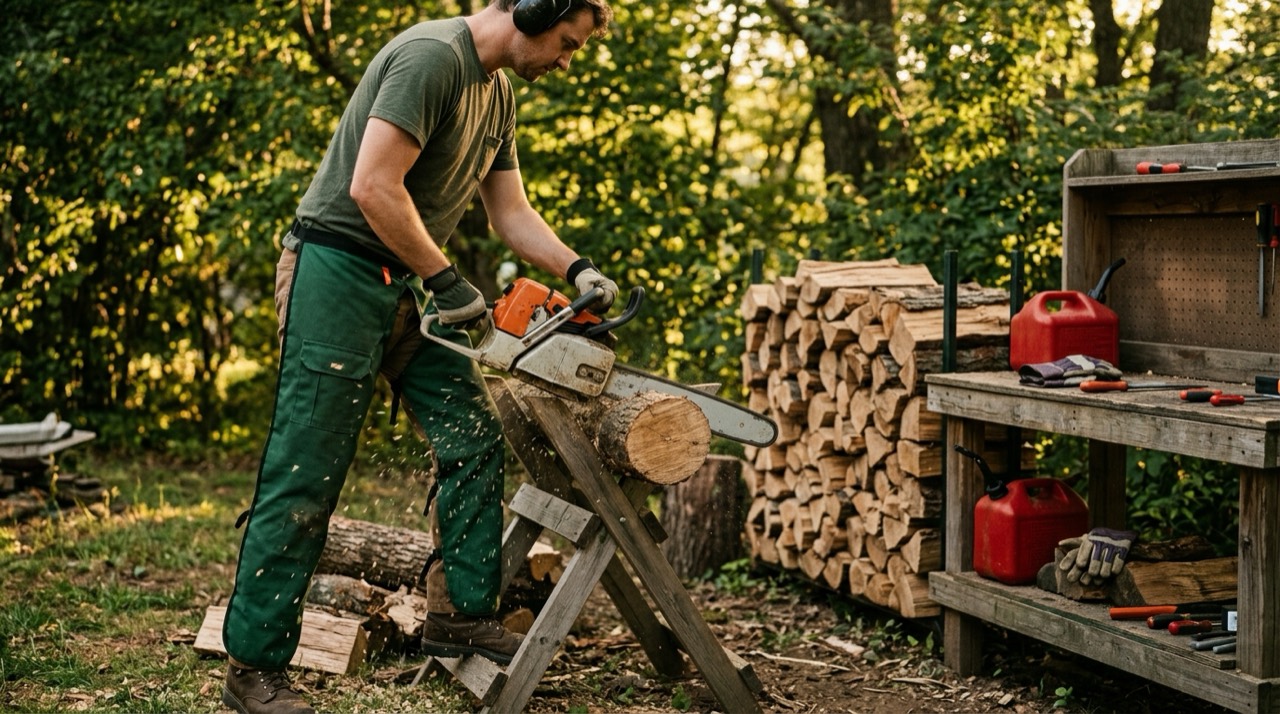
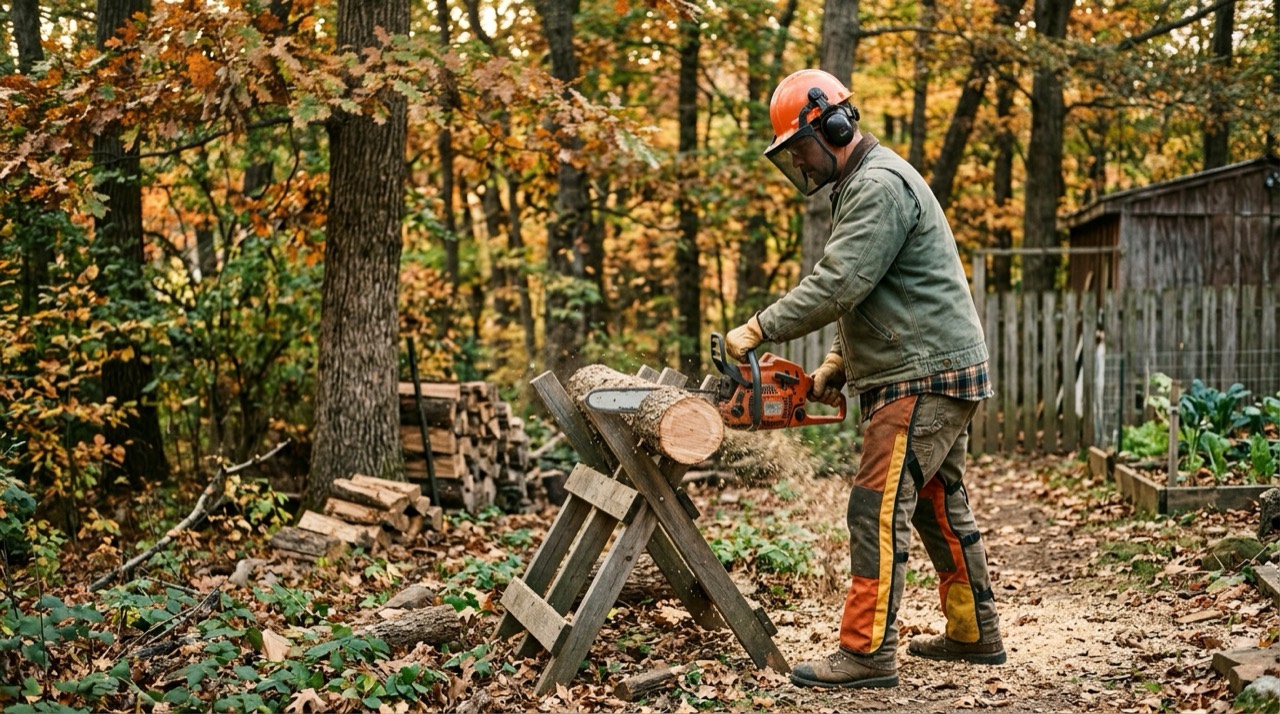
Running a gas chainsaw safely demands cut-retardant chaps, a helmet with a face screen and ear defenders, cut-resistant gloves, and sturdy boots, because a spinning chain and engine noise are both hazards. Kickback, where the bar snaps up toward your face, causes many of the worst injuries.Keep both hands on the saw, cut with the part of the bar the manual specifies, and never work directly above your head or on a ladder. Felling large, leaning, or dead trees and any work near power lines belongs to a trained professional, and this guide is general information, not a substitute for hands-on training. Start with proper chainsaw chaps and PPE.
How do you match a gas chainsaw to your property?
Matching a gas chainsaw to your property means sizing the saw to your land and the wood on it: a small suburban block needs far less saw than a wooded acreage, and storm-prone areas justify more power for occasional heavy work. The wrong size either strains or sits idle.Common property types and the saws that suit them are described below.
- Small suburban yard: mostly limbing and small logs, well served by a 30-40cc saw or even a battery chainsaw for quiet, low-maintenance work.
- Large lot with a few mature trees: a 45-50cc saw with an 18-inch bar handles pruning and the odd fallen tree without being tiring.
- Rural acreage cutting regular firewood: a 50-55cc saw is the all-round workhorse, balancing power against weight for cords of hardwood.
- Woodland, felling, or milling: a 60cc-plus saw earns its keep, and heavy milling work pushes toward the largest engines.
If storm cleanup is your main worry, size for the occasional big job but keep the saw light enough to control, and keep firewood tools on hand for processing what you cut.
Should you choose gas, battery, or corded?
Choose gas when you need power and runtime far from an outlet, choose battery for quiet, low-maintenance suburban work, and choose corded electric for light jobs close to the house. Most owners end up matching the tool to the acreage and the wood they cut.If you are weighing the trade-offs, our electric vs gas chainsaw comparison breaks down cost, power, and upkeep side by side, and our best gas chainsaw picks narrow the field to a handful of proven saws.