





What does bar and chain oil do, and why can't you skip it?
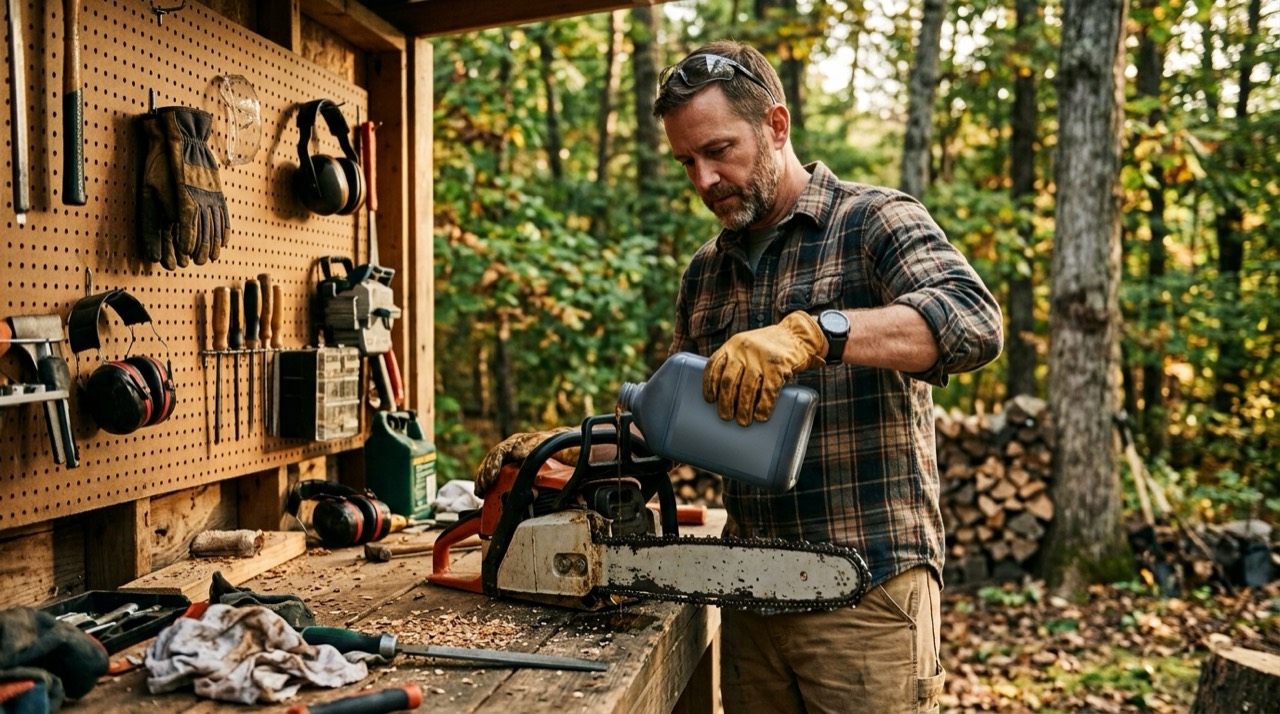
Bar and chain oil lubricates the chain as it races around the guide bar, cutting friction and heat between the drive links and the bar groove. Without it the chain overheats, wears the bar rails, stretches, and can seize, so a chainsaw pumps fresh oil onto the chain continuously as it runs.Every chainsaw has an automatic oiler that feeds oil from a dedicated reservoir onto the bar, separate from the fuel or battery. Because that oil is thrown off the chain as it spins, it is a true consumable you top up constantly, which is why this belongs alongside your bar oil, chain oil, and fuel supplies rather than as an afterthought. Running the bar dry is one of the fastest ways to ruin both a chain and a guide bar.
The oil does three jobs at once: it forms a film that lets the drive links slide in the groove, it carries away the heat that friction generates at the bar rails and nose sprocket, and it flushes fine sawdust out of the groove so it cannot pack and dam the oil flow. A dry chain shows the consequences quickly — the bar rails turn blue, the chain stretches as it heats, and the nose sprocket can weld itself solid. Because the system is total-loss, meaning every drop is thrown into the cut rather than recirculated, there is no reserve to fall back on if you forget to refill; the film only exists while fresh oil is arriving.
What makes a good bar and chain oil?
A good bar and chain oil is tacky, meaning it clings to the fast-moving chain instead of flinging off, and it has a viscosity matched to the temperature it will run in. Tackifier additives are the key feature, because they keep a film on the chain at high speed where thin oils simply spray away.The oil must also flow cleanly through the oiler and resist gumming in the pump. Manufacturers such as Stihl, Husqvarna, and Oregon sell purpose-made bar oils with these properties, and their tack and flow are why a dedicated bar oil outperforms whatever oil happens to be in the shed. The qualities that matter most are listed below.
- Tackiness: additives that make the oil cling to the chain and resist fling-off.
- Viscosity: thick enough to protect, thin enough to pump in the cold.
- Cleanliness: flows without gumming the oiler or clogging the bar groove.
- Adhesion under load: keeps a film at the bar nose, where speed and heat peak.
Tack is the property you can feel: rub good bar oil between finger and thumb and it strings out rather than dripping like engine oil, and that stringiness is what keeps it on a chain moving many metres per second. Viscosity is the second lever, and it is why the same brand often sells summer and winter grades. A quality bar oil balances the two so it stays on the chain in high summer heat yet still crawls through the pump on a frosty morning.
Can you use motor oil instead of bar and chain oil?
Motor oil is a poor substitute for bar and chain oil and should only ever be an emergency stopgap. It lacks the tackifiers that keep oil on a spinning chain, so it flings off quickly, lubricates less, and throws a fine oil mist into the air and onto the ground.In a genuine pinch some owners run motor oil for a short job, but it wears the bar faster, wastes oil, and is not designed for total-loss lubrication where every drop ends up in the environment. Purpose-made bar oil is inexpensive and formulated for exactly this job, so it is the right long-term choice. Never treat motor oil as a permanent replacement.
Used motor oil is worse still and should never go in the reservoir: it carries fine metal particles and combustion grit that act like a mild grinding paste on the bar rails and oiler pump, and it spreads spent, contaminated oil across whatever you are cutting. If you are ever caught out, fresh motor oil for one short job will not destroy the saw, but it is a stopgap, not a plan — refill with real bar oil at the first chance.
Can you use vegetable oil, and how do bio and petroleum oils compare?
Vegetable-based bar oils sold for chainsaws work well and are biodegradable, while plain cooking oil from the kitchen is too thin and turns sticky as it oxidises. Purpose-made bio oil is the right choice near water, orchards, and parks; kitchen oil is not a substitute.Petroleum bar oil is the traditional choice and offers strong tack and value, while vegetable-based bio oils are biodegradable and better for sensitive areas. Because all bar oil ends up in the environment, the bio option appeals to owners who cut where runoff matters. Vegetable-based oils can cost more and may gum if a saw sits unused for a long time with oil in the system, so drain or run the saw before long storage. The two families compare as follows.
| Oil type | Strengths | Best for |
|---|---|---|
| Petroleum bar oil | High tack, low cost, long shelf life | General cutting and firewood |
| Vegetable-based bio oil | Biodegradable, low toxicity | Orchards, parks, and work near water |
Regulations in some regions now require biodegradable bar oil for professional work on public and sensitive land, so if you cut for hire it is worth checking local rules. For the home user the practical difference is small day to day; the main caution with bio oil is storage, because it can oxidise and gum an idle saw faster than mineral oil.
Does the season change which bar oil you use?
Season matters, because oil thickens in the cold and thins in the heat, which changes how well the oiler can pump it. Many brands sell a lighter winter grade that flows in freezing temperatures and a heavier summer grade that resists fling-off in the heat.If you cut year-round in a climate with real winters, matching the oil grade to the season keeps the chain properly fed. In mild climates a single all-season bar oil is usually fine. Either way, check that oil is actually reaching the chain by holding the running saw over a light surface and watching for a thrown line of oil. Cold, thick oil is a common reason a winter chain looks starved even though the reservoir is full — the pump simply cannot move honey-thick oil through a cold hose, so a thinner winter grade or letting the saw warm up first solves it.
How do you adjust the automatic oiler?
Adjust the oiler using the screw on the underside or side of the saw, usually marked with a plus and minus or an oil-drop symbol, turning toward plus for more oil on long bars and dry hardwood and toward minus for small work. Make small changes and re-check the oil line each time.Set the oiler correctly with these steps:
- Warm the saw briefly so the oil is at working viscosity, then stop it.
- Find the oiler screw — often reached from underneath, sometimes needing a screwdriver through a small port.
- Turn a quarter-turn toward plus for a long or hard-cutting bar, or toward minus for a short bar or fine work.
- Restart, hold the bar nose a hand's width above a light surface, and rev briefly to check the thrown oil line.
- Aim for a clear line of oil flicked onto the surface; increase until the chain always looks wet in the cut without flooding.
A good rule is that a tank of fuel or a battery charge should roughly empty the oil reservoir; if oil is left over every time, turn the oiler up, and if the chain ever runs dry before the fuel does, turn it up further or suspect a blockage.
Why is the chain running dry or the oiler not feeding?
A chain that smokes, discolours, or runs dry usually points to a starved oiler, and the cause is nearly always a blockage, empty or wrong-grade oil, or a set-too-low pump rather than a failed saw. Work through the cheap, common causes before assuming the pump is dead.Check these in order when the chain is not getting oil:
- Oil level: confirm the reservoir actually has oil and the cap vent is not blocked, which can create a vacuum that stops flow.
- Oiler setting: make sure the adjuster has not been wound down to minimum.
- Bar groove and oil holes: clean packed sawdust from the groove and the small oil-feed holes where the bar meets the saw.
- Oil viscosity: in the cold, swap to a winter grade or let the saw warm up before blaming the pump.
- Bar maintenance: flip the bar regularly and clean the nose sprocket, covered in our chainsaw maintenance guide.
Most "broken oiler" complaints turn out to be a packed bar groove or a blocked cap vent, both of which take minutes to clear and save a chain and bar from ruin.
How much bar and chain oil should a chainsaw use?
A chainsaw uses roughly one reservoir of bar oil for every tank of fuel or battery charge, because the oiler feeds continuously while the chain spins. If your saw empties its oil far slower than that, or the chain looks dry and discolours, the oiler may be blocked or set too low.Most saws have an adjustable oiler you can turn up for long bars or dry hardwood and down for small work. Keep the oil topped up every time you refuel, keep the bar groove and oil hole clean, and see our chainsaw maintenance guide for cleaning a sluggish oiler. A well-oiled chain also cuts and lasts better, which pairs with keeping it sharp in our chainsaw sharpening guide. Before long storage, run the reservoir low or use a storage-friendly oil so it cannot gum the pump over months of sitting, and always store the saw with the bar cover on to keep grit out of the oiled groove.