

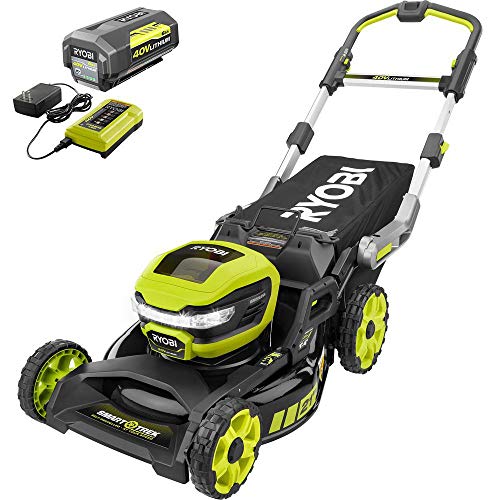

What is a battery lawn mower, and who is it for?
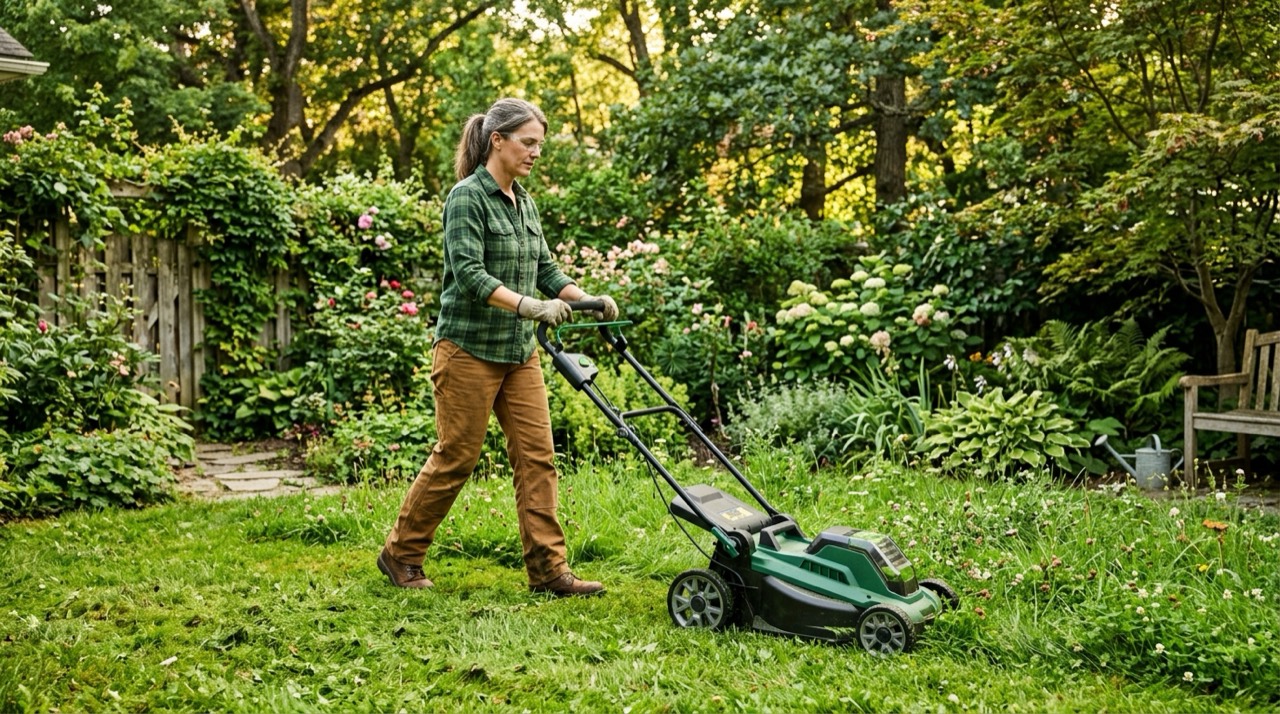
A battery lawn mower is a walk-behind mower driven by a rechargeable lithium-ion battery and an electric motor, giving you cordless cutting with no petrol, no fumes, and a fraction of the noise of a gas mower. It suits homeowners with small to medium lawns who want push-button starting, low upkeep, and a quiet Saturday morning.For most suburban yards up to roughly half an acre, a modern battery mower now does everything a gas mower once did, and it does it with far less fuss. There is no fuel to mix or store, no pull cord, no spark plug, and no oil to change. You charge a pack, clip it in, and squeeze the handle. The trade-offs are runtime, which is capped by the battery, and the up-front cost of the pack, so the technology fits people who value convenience and quiet over the unlimited runtime of petrol. This guide sits inside our wider lawn mowers hub, where you can weigh every mower type side by side.
How long does a battery lawn mower run on one charge?
A battery lawn mower typically runs 30 to 70 minutes on a single charge, enough to cut most small and medium lawns before the pack needs topping up. Actual runtime depends on grass height and thickness, deck size, and how much power the motor is drawing, so tall or wet grass drains a battery faster.Runtime is the number that decides whether a cordless mower fits your yard, and it is set by the battery's watt-hours rather than voltage alone. A rough guide is that many 40V to 60V mowers cover a quarter to a third of an acre per fully charged pack. The table below maps typical lawn sizes to the battery capacity and setup most owners find comfortable, so you can size a mower before you shop.
| Lawn size | Typical battery setup | Rough runtime | What suits it |
|---|---|---|---|
| Up to 1/8 acre | One 4Ah pack | 30-40 min | Compact push mower |
| 1/8 to 1/4 acre | One 5-6Ah pack | 40-55 min | 20-21 in push or self-propelled |
| 1/4 to 1/2 acre | One 7.5Ah or two packs | 55-70+ min | 21-22 in self-propelled |
| Over 1/2 acre | Two packs plus a spare | Swap to extend | Consider a riding mower |
Keeping a charged second pack is the simplest way to mow a bigger lawn without waiting.
What deck size do you need for your yard?
Deck size, the cutting width of the mower, should scale with your lawn: 14 to 16 inches for a small courtyard, 20 to 21 inches for a typical suburban yard, and 21 to 22 inches when you want to finish a larger lawn in fewer passes. A wider deck cuts more grass per pass but is heavier and drains the battery faster.Bigger is not automatically better on a battery mower, because a wide deck asks more of the motor and the pack. Match the deck to the lawn so you are not hauling a heavy 22-inch mower around a small garden or making twice the passes with a 16-inch deck on a big block. Cutting width also affects storage, since many cordless mowers fold upright and a smaller deck stores in less space. If your lawn is large enough that deck size and runtime both become a struggle, step up to a zero-turn mower or a ride-on.
Push or self-propelled: which battery mower suits you?
Choose a push battery mower for small, flat lawns and a self-propelled model for larger yards, slopes, or anyone who would rather not shove a mower around. Self-propelled mowers drive their own wheels, so you walk behind and steer while the mower pulls itself, at the cost of extra weight, price, and a little battery drain.Push mowers are lighter, cheaper, and simpler, which makes them ideal for a flat quarter-acre or smaller. Self-propelled models earn their keep on hills, long runs, and heavier decks, where pushing a 60-pound mower gets tiring fast. Decide honestly how big and how hilly your lawn is before paying for drive you may not need.
What should you look for when buying a battery lawn mower?
The features worth checking on a battery lawn mower are the motor type, deck material, cutting-height range, cutting modes, and how the battery is carried, because these separate a mower that lasts a decade from a throwaway. The voltage on the box and the sticker price tell you very little on their own.Run down this short list before you buy, since each item shapes how the mower cuts and how long it lasts:
- Brushless motor: runs cooler, lasts longer, and draws less from the pack than an older brushed motor, so it stretches runtime.
- Deck material: a steel deck shrugs off knocks and lasts for years, while a well-braced polymer deck is lighter and rust-proof; a thin, flexing plastic deck is the warning sign.
- Cutting-height range: look for a wide span, ideally from around 1 inch up to 4 inches, so you can scalp in early spring and mulch high through summer.
- Single-lever height adjustment: one lever that lifts all four wheels together is far quicker than adjusting each wheel by hand.
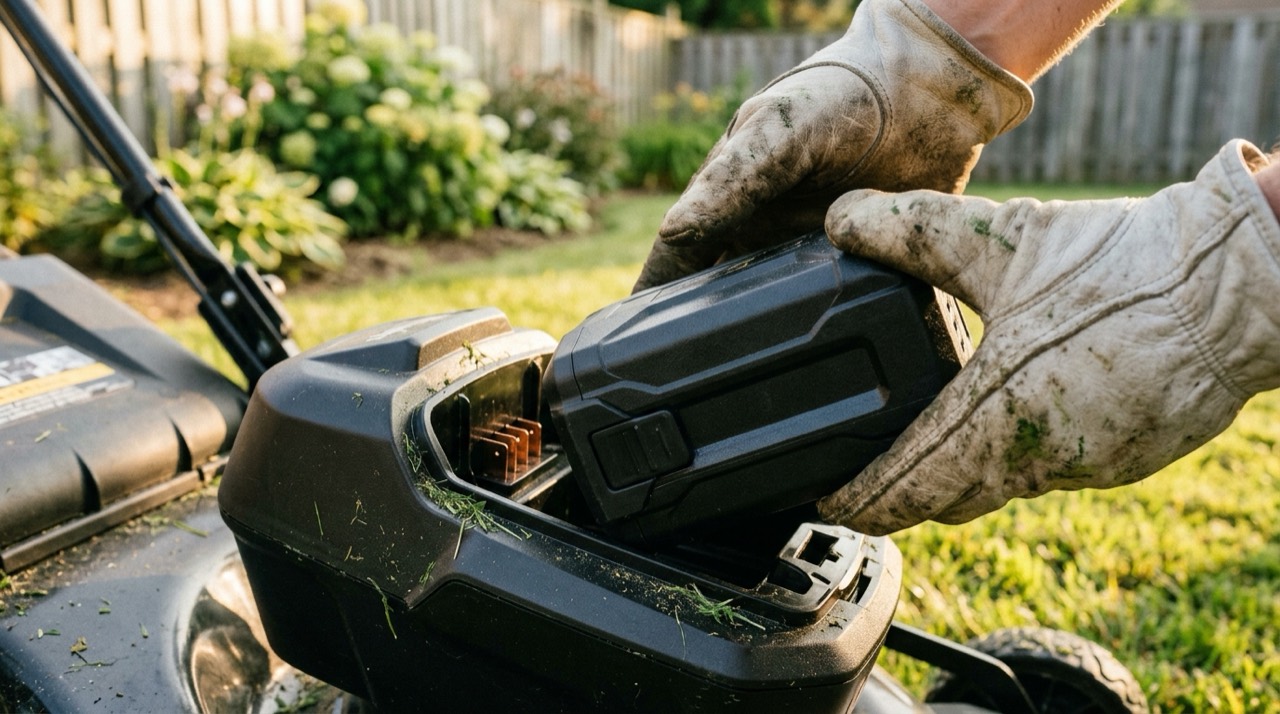
- Dual battery ports: two bays let a second pack take over automatically, doubling runtime without you stopping to swap.
- Wheel size and folding handle: larger rear wheels roll over rough ground, and a fold-flat handle saves space in a crowded outdoor tool storage area.
Weigh these against the capacity of the included battery, not the voltage badge, and you will spot the genuinely good mowers quickly. A mower that pairs a brushless motor and a rigid deck with a decent pack will out-cut a flimsier rival on a bigger number every time.
Should you mulch, bag, or side-discharge your clippings?
Mulch when the grass is dry and you cut often, bag when the lawn is overgrown or you want a tidy finish, and side-discharge when the grass is very tall and would clog a sealed mulching deck. Most battery mowers offer all three as a 3-in-1 system, so you can switch to suit the day.Mulching chops clippings small and drops them back into the lawn, where they break down and return nitrogen that feeds the grass and saves you emptying a bag. It works best when you remove no more than a third of the blade height at a time, so it rewards frequent mowing. Bagging collects the clippings for a clean, striped finish and is the better choice for the first cut of spring, for leaf-strewn autumn lawns, or when the grass has grown long between mows. Side-discharge throws clippings out to the side and is the least tidy option, but it lets the mower power through tall, thick growth that would bog down a closed mulching deck. Switching modes on a cordless mower usually means fitting or removing a plug and the bag rather than any tools, so it takes only a moment, which means it is worth matching the mode to the grass on the day rather than leaving the mower set one way all season.
How much maintenance does a battery lawn mower need?
Battery lawn mowers need far less maintenance than gas mowers, because there is no engine, oil, fuel, spark plug, or air filter to service. Upkeep comes down to the blade, the deck, and looking after the battery, which makes cordless mowers the lowest-fuss walk-behind option.Keep the blade sharp and balanced, since a dull blade tears grass and makes the motor and battery work harder, and clean grass build-up from under the deck after mowing so airflow and mulching stay effective. The battery itself lasts longest when you store it around half charge in a cool, dry place and avoid leaving it flat for months. There is no winterising ritual, no stale fuel to drain, and no carburettor to gum up, so a cordless mower starts first time in spring. Our lawn mower maintenance guide covers blade sharpening and deck care for every mower type.
How do you get the most runtime from each charge?
Getting the most runtime from a battery mower comes down to reducing how hard the motor has to work, since a straining motor empties the pack fastest. A few simple habits can add several minutes to every charge and let a single pack finish a lawn it would otherwise fall just short on.Follow these steps to stretch each charge as far as it will go:
- Sharpen the blade so it slices rather than tears, because a dull blade forces the motor to drag through the grass and drains the battery faster.
- Mow when the grass is dry, as wet clippings are heavier, clump under the deck, and load the motor.
- Raise the cutting height in tall or thick growth, then drop it on a second pass, rather than scalping the lawn in one heavy cut.
- Keep to a steady walking pace so the motor is not repeatedly surging to clear bogged-down grass.
- Clean built-up clippings from under the deck after each mow so airflow stays free and the blade spins without resistance.
- Let the pack cool for a few minutes after a hard mow before you recharge it, which protects its capacity over the long run.
Combined, these habits noticeably extend how much lawn one charge covers, and they keep the cut cleaner into the bargain. For a genuinely large lawn, none of them replaces the simplest fix of all, which is carrying a charged second pack.
How do you use a battery lawn mower safely?
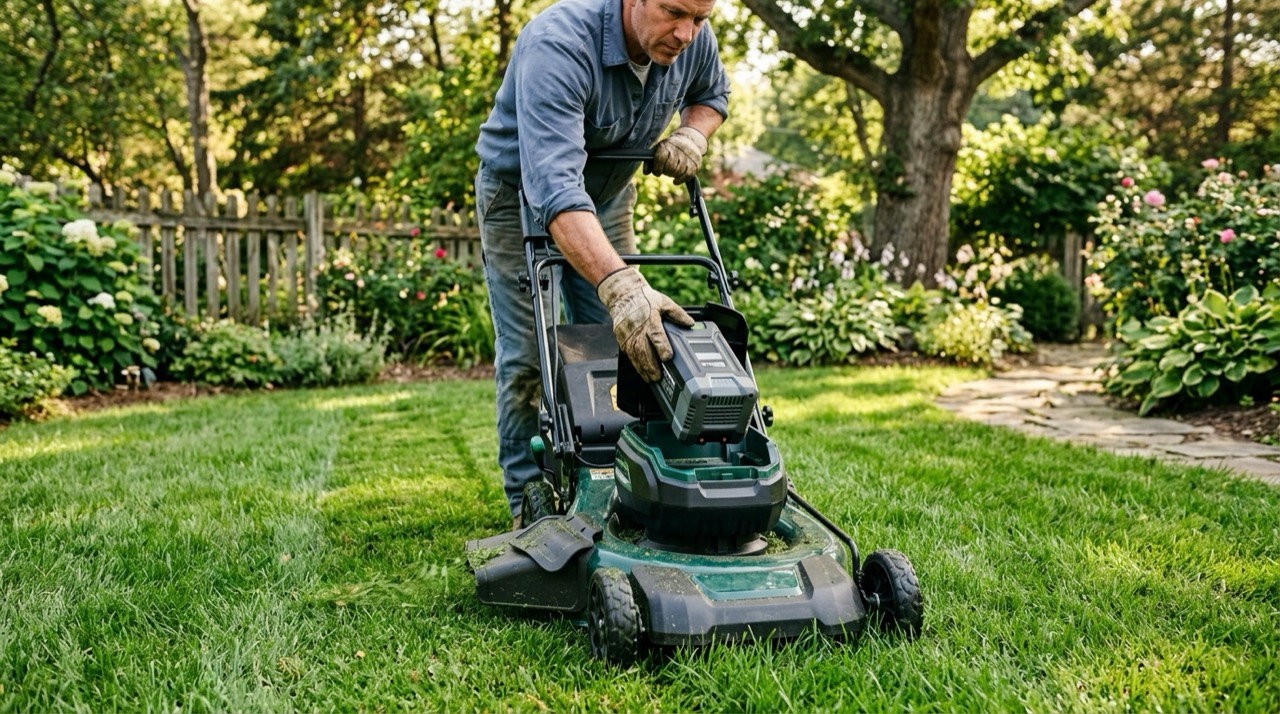
Using a battery lawn mower safely means treating the blade with the same respect you would on any mower, because a cordless mower is quiet and easy to start, which can lull you into dropping your guard. Remove the safety key or battery before you ever reach under the deck, clear a jam, or check the blade.Wear sturdy closed shoes, eye protection, and hearing protection for longer sessions, and keep children and pets well clear of the cutting area. Pick up stones, sticks, and toys before mowing so the blade cannot throw them, and mow across slopes rather than up and down to keep your footing. Because the mower can restart instantly at the handle, never leave it unattended with the battery and safety key installed. Basic work gloves and hearing and eye protection are worth having on hand. This guide is general information, not a substitute for the owner's manual.
What commonly goes wrong with a battery lawn mower?
The problems owners hit most with battery mowers are shrinking runtime, a mower that cuts out under load, a pack that will not charge, and ragged or clumped cutting, and nearly all of them trace back to the battery, the blade, or the grass rather than a broken motor. Most are quick to fix once you know the cause.Match the symptom to its usual cause and the fix that follows:
- Runtime keeps falling: the pack is ageing, or you are cutting tall, wet grass on a low deck; try a higher cut, a dry lawn, and eventually a fresh battery.
- Mower cuts out in thick grass: the motor's overload protection is tripping, so raise the deck, slow down, and take a narrower bite of grass.
- Battery will not charge: it was likely stored flat and dropped below the charger's minimum voltage; a recovery mode may wake it, but a deeply discharged pack can be beyond saving.
- Grass looks ragged or clumps: the blade is dull or the deck is packed with clippings, so sharpen the blade and clear the underside.
- Mower will not start at all: the safety key may be out or the battery not fully seated, so check both before assuming a fault.
Because a cordless mower has no fuel, oil, or spark plug, the list of things that can fail is short, which is a large part of its appeal. When a fault falls outside this list, the owner's manual and the maker's support line are the right next step rather than dismantling the mower yourself.
Battery, gas, or corded electric: which mower should you pick?
Choose a battery mower for quiet, low-maintenance cutting on a small-to-medium lawn, a gas mower for unlimited runtime on large or rough ground, and a corded electric mower for a tiny yard where a trailing cable is not a nuisance. The right pick is set by lawn size, runtime needs, and how much you value silence and low upkeep.Battery mowers have closed most of the gap with petrol for suburban lawns, and they win outright on noise, fumes, and starting. Where they still trail is sustained runtime, so a large or hilly acre-plus block may still favour a gas lawn mower, while a fully hands-off lawn points to a robot lawn mower. For a small flat lawn on a budget, a corded electric mower is cheaper still. Once you have settled on cordless, our best battery lawn mower picks narrow the field to a handful of proven models.