


What oil and fuel does a chainsaw need?
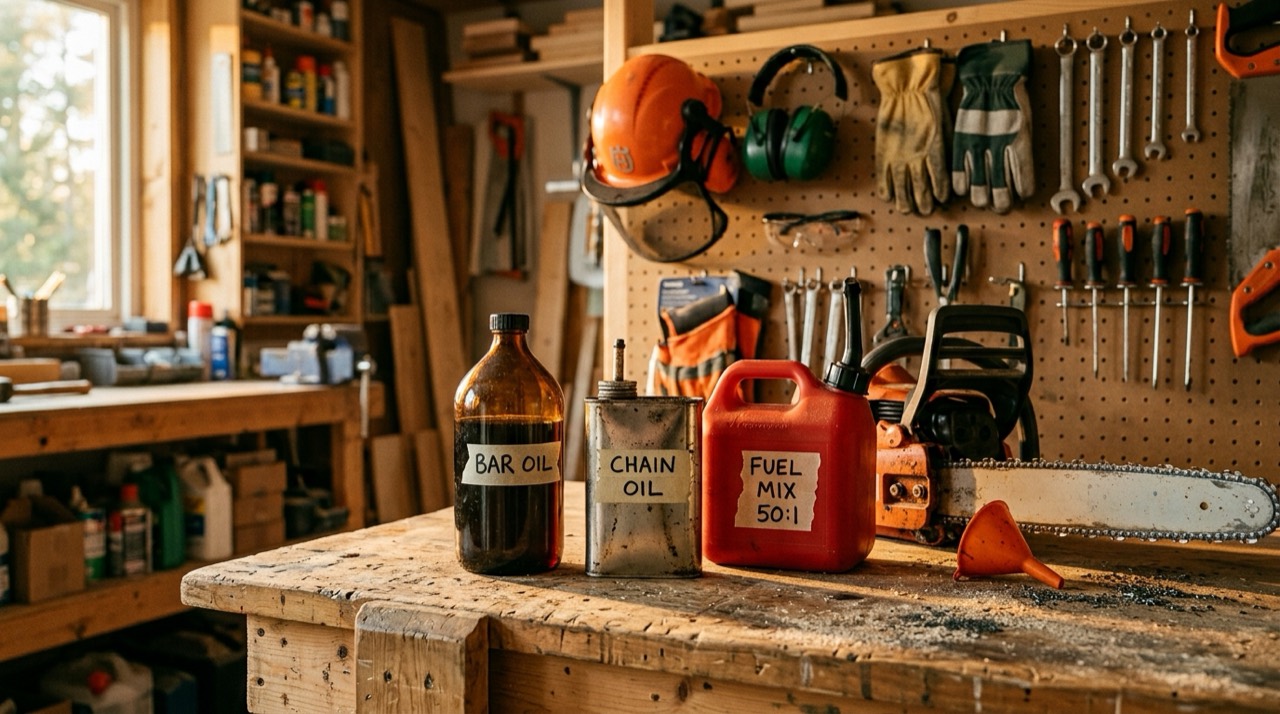
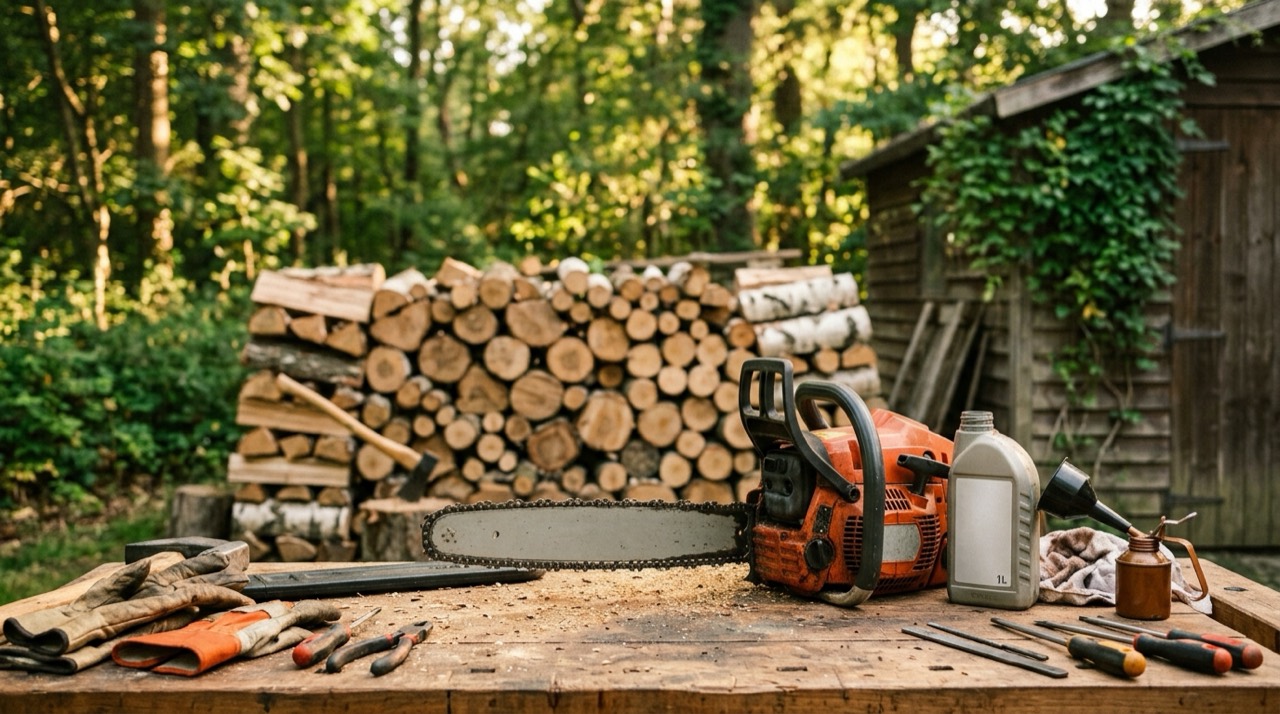
A chainsaw needs two consumables: bar and chain oil to lubricate the moving chain and guide bar, and — on gas models — a petrol-and-two-stroke-oil fuel mix to run the engine. Battery and corded electric saws need only the bar oil. Get both right and the saw cuts cooler, lasts longer, and starts reliably.
The two things every gas chainsaw burns through are listed below, in the order they affect cutting:
- Bar and chain oil — a sticky lubricant fed automatically onto the bar to cool the chain and cut friction.
- Two-stroke fuel — unleaded petrol pre-mixed with two-stroke engine oil at the ratio your saw's manual specifies, commonly 50:1.
What is bar and chain oil and why not use any oil?
Bar and chain oil is a lubricant blended with a tackifier — a stringy additive that makes the oil cling to a chain spinning at highway speeds instead of flinging off. That tack is the whole point: it keeps a film between the chain, the bar rails, and the drive sprocket so the cutters glide and the steel stays cool.
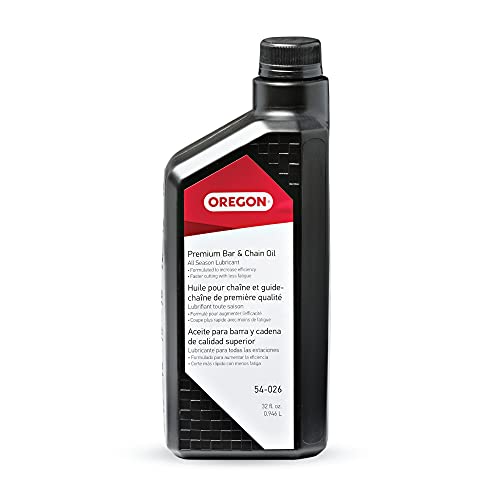
Plain motor oil, vegetable oil, or used engine oil lacks that tack, slings off within seconds, starves the guide bar and chain of lubrication, and — with waste oil — sprays contaminants across your yard. Purpose-made bar oil is cheap, so it is the only sensible choice for regular cutting. Our best bar and chain oil picks compare the leading options.
What weight or viscosity of bar oil do you need?
Match bar-oil viscosity to the temperature you cut in. A summer-grade oil is roughly an SAE 30 weight so it stays thick and tacky in the heat; a winter grade thins to about an SAE 10 so it still flows below freezing. Many products are sold as all-season or multi-grade blends that cover both.
Running summer oil in a hard frost leaves the pump struggling and the bar dry; running thin winter oil in high summer lets it sling off. If you cut year-round in a cold climate, keep a winter-grade or synthetic bar oil on the shelf and switch with the seasons.
How does a chainsaw's automatic oiler work?
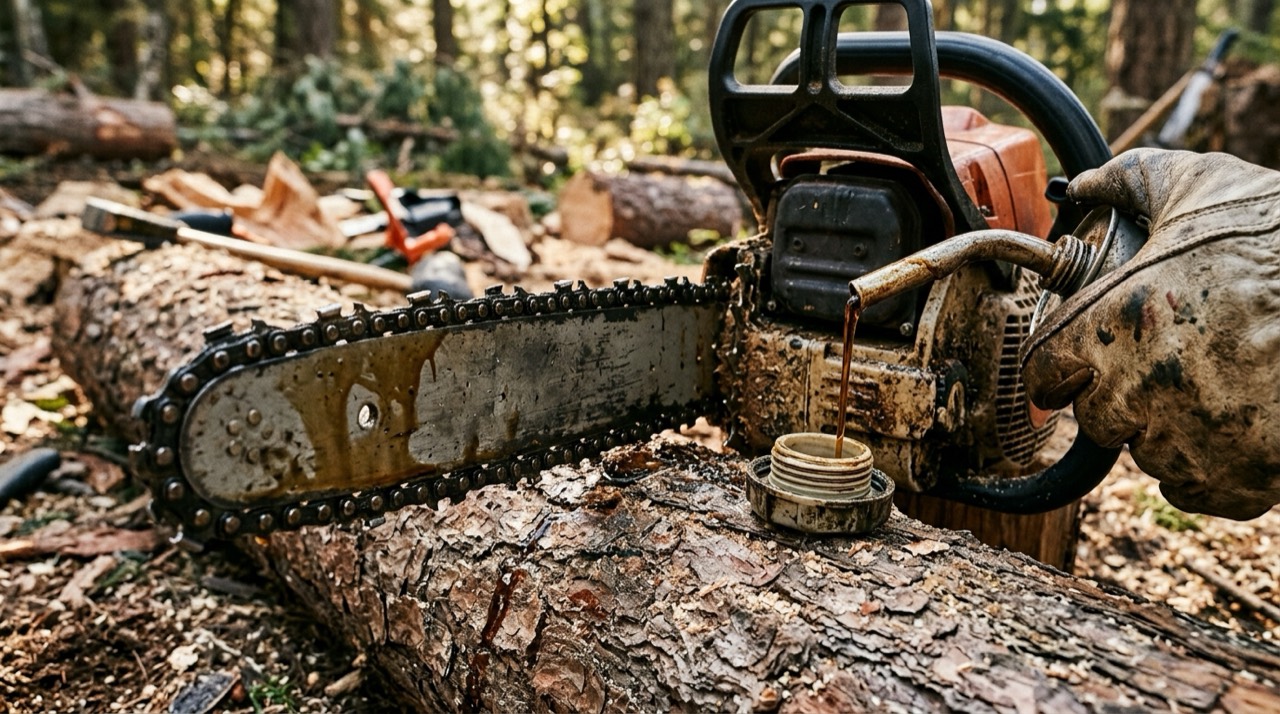
A chainsaw's automatic oiler is a small pump, driven off the running engine or motor, that draws bar oil from its own tank and pushes it through an oil hole onto the bar so lubrication scales with how hard the saw is working. When the chain turns, the pump turns; when you idle, oil flow drops. That is why a healthy saw lays down more oil under load and less at rest.
Inside the saw, a worm gear or plunger driven by the crankshaft or clutch drum meters the oil, sends it down a passage to a port where the bar bolts on, and the bar's own oil groove carries it out to the rails and around the nose. Understanding that path explains the two habits that keep an oiler healthy: keep the bar groove and oil hole clean so oil can actually reach the chain, and keep the tank from running dry so the pump never sucks air. Many saws have a fixed-rate oiler, while mid-range and pro saws add an adjustment screw — usually marked with a minus and plus — that raises or lowers the flow.
The oil and fuel tanks are deliberately sized to empty at close to the same rate, which is the single most useful fact about running a saw: when you stop to add fuel, add oil at the same time and neither tank ever runs out mid-cut. A brand-new saw, or one that has just had the bar off, needs a moment to prime — run it at a fast idle for a few seconds and watch for oil reaching the bar before you start cutting.
How do you set and check the chainsaw oiler?
Check the oiler before every session by revving the saw with the bar aimed at a light surface and looking for a thrown line of oil; adjust the flow to suit the bar length and the wood. A longer bar, dry hardwood, and hot weather all call for more oil, while a short bar on soft green wood needs less. Follow these steps to set and verify oil flow:
- Fill the bar-oil tank and let the saw idle for a few seconds to prime the pump.
- Hold the running saw so the bar tip points at a stump, a board, or a sheet of light cardboard about a hand's width away.
- Rev the saw to bring the chain up to speed for a second or two.
- Look for a distinct line of oil spray flicked onto the surface — that is a working oiler.
- If there is no line, stop and check the tank level, the oil hole, and the bar groove for blockage before you cut.
- On a saw with an adjuster, turn the flow up for a long or dry bar and down for short, light work, then re-test.
A saw that throws no oil after these checks should not be used until the fault is found, because a dry bar overheats the chain and bar within a single cut. Keeping the chain sharp reduces the load on the oiler, since a dull chain forces the bar harder into the wood and generates more heat.
How do you mix two-stroke chainsaw fuel?
Mix unleaded petrol with a quality two-stroke oil at the ratio printed in your saw's manual — most modern Stihl and Husqvarna saws call for 50:1 when using the maker's own oil. Measure the oil, add it to fresh fuel in an approved can, and shake before filling.
The chart below shows the common ratios in both US and metric measures:
| Mix ratio | Petrol | Two-stroke oil (US) | Two-stroke oil (metric) |
|---|---|---|---|
| 50:1 | 1 US gal / 1 L | 2.6 fl oz | 20 ml |
| 40:1 | 1 US gal / 1 L | 3.2 fl oz | 25 ml |
| 32:1 | 1 US gal / 1 L | 4.0 fl oz | 31 ml |
| 25:1 | 1 US gal / 1 L | 5.1 fl oz | 40 ml |
Never run straight petrol in a two-stroke chainsaw — with no oil in the fuel, the engine can seize within minutes. The best oil for a 2-stroke engine guide compares the top synthetic and mineral oils, and the gas chainsaw guide covers fuelling and starting.
What gas and two-stroke oil should you buy?
Use fresh, ethanol-free petrol where you can find it, or pump fuel of at least 89 octane with no more than 10% ethanol (E10). Pair it with a two-stroke oil rated JASO FD or ISO-L-EGD — the cleanest-burning grades for air-cooled handheld engines. Skip E15 and E85, which can damage two-stroke fuel systems, and skip TCW outboard oils, which are made for water-cooled engines.
Ethanol attracts moisture and degrades within about 30 days, gumming carburettors on saws, string trimmers and leaf blowers alike. If your saw sits for weeks between jobs, canned pre-mixed fuel such as TruFuel or VP Small Engine Fuels solves it: ethanol-free, correctly mixed, and stable for years unopened.
What is ethanol-free fuel and where do you find it?
Ethanol-free fuel is petrol with no added ethanol, which matters because ethanol is the ingredient that ruins small two-stroke engines fastest. Most pump petrol in North America is E10 — up to 10% ethanol — and while a saw will run on fresh E10, the ethanol draws water out of the air, separates over a few weeks, and leaves gum and corrosion in the carburettor. Ethanol-free "pure gas" avoids that entirely and stores far better.
You can buy ethanol-free petrol three main ways, and each suits a different owner:
- Dedicated pumps at some fuel stations and marinas, often sold as "recreational" or "pure" fuel; these are the cheapest source if one is near you.
- Canned pre-mixed fuel such as TruFuel and VP Small Engine Fuels, already blended to 50:1 with synthetic oil and stable for years — ideal for a saw used a few times a season.
- Small-engine "premium alkylate" fuels sold in cans, which also cut the fumes and harsh exhaust of ordinary petrol.
Whichever you use, avoid E15 (15% ethanol) and E85 outright — both are formulated for cars, not handheld two-stroke tools, and can damage seals, lines, and the carburettor. The same ethanol rule protects every two-stroke tool in the shed, from the saw to the backpack blowers and trimmers.
How much bar oil and fuel does a chainsaw use?
Expect a chainsaw to empty its bar-oil tank at roughly the same rate it empties its fuel tank — top up both at every refuel. A correctly set automatic oiler leaves a fine line of oil spray when you rev the saw over a light surface; if it does not, stop and check the oiler before cutting. Many saws have an adjustment screw that raises or lowers oil flow, so turn it up for a long or dry bar and down for lighter work.
Running out of bar oil mid-cut overheats the chain and bar, ruins the cutters, and can discolour the bar rails. Keeping the chain sharp and the oiler flowing are the two habits that make a bar and chain last.
How should you store chainsaw fuel and oil safely?
Store petrol and mixed fuel in approved, clearly labelled containers, in a cool, shaded, well-ventilated place away from any ignition source, living space, or heater. Petrol vapour is heavier than air and highly flammable — treat it with respect.
For end-of-season storage, either run the saw dry or add a fuel stabiliser, since stale ethanol fuel is the top cause of spring starting trouble. Keep bar oil sealed to stop dust and water contamination, and wipe up spills — oil on a floor is a slip hazard. Basic chainsaw maintenance and safe fuel handling go hand in hand.
What are the most common bar-oil and fuel mistakes?
The mistakes that cost owners a bar, a chain, or an engine are nearly all avoidable, and most come from cutting corners on the two consumables. Knowing them in advance is the cheapest insurance a saw owner can buy. The usual errors are listed below:
- Running straight petrol in a two-stroke saw, which strips the engine of lubrication and can seize the piston within minutes.
- Substituting used motor oil for bar oil, which lacks tack, sprays contaminants around, and is illegal to dispose of that way in many areas.
- Leaving ethanol pump fuel in the tank for months, so the carburettor gums up and the saw will not start next season.
- Ignoring the oiler check and cutting with a dry bar, which blues the bar rails and wrecks the chain in one job.
- Over-oiling the fuel mix — a richer ratio than the saw specifies — which fouls the plug, smokes, and drops power without adding protection.
- Storing petrol in unlabelled drink bottles, a serious poisoning and fire hazard in any household.
Avoiding these is mostly discipline: mix to the maker's ratio, keep the oiler flowing, and never let stale fuel sit. Pairing good fuel habits with the right chainsaw chaps and PPE keeps both the saw and the operator out of trouble.
How do you dispose of old chainsaw fuel and oil?
Take old fuel and used oil to a household hazardous-waste facility or an auto-parts store that accepts them — never pour either down a drain, onto the ground, or into household rubbish. Small-engine fuel that has gone stale but is only lightly degraded can sometimes be diluted into a car's tank at a low ratio, but mixed two-stroke fuel is safest taken to a proper collection point.
Used bar oil that has dripped and been caught, and any oil-soaked absorbent, is treated the same way as used motor oil at a recycling centre. Bag oily rags in a sealed metal container rather than leaving them loose, because oil-soaked cloth can heat as it oxidises. Handling the leftovers responsibly is part of the same safe-fuel routine covered across the safety gear and accessories hub.
Which oil and fuel suit your saw and your job?
Match the oil and fuel to how you actually use the saw rather than buying the most expensive of everything. A weekend homeowner, a regular firewood cutter, and an arborist working over gardens each have different needs, and the right choice saves both money and grief. The common scenarios break down as follows:
- Occasional homeowner: a standard petroleum bar oil and a can of pre-mixed ethanol-free fuel remove all mixing and stale-fuel worry for a saw used a few times a year.
- Regular firewood cutter: mix your own fuel from fresh ethanol-free petrol and a good two-stroke oil for the lowest cost per litre, and keep a gallon of all-season bar oil on the shelf; see the firewood tools guide for the wider kit.
- Cold-climate cutter: run a winter-grade or synthetic bar oil so the oiler still flows below freezing, and store fuel indoors so it is not ice-cold at start-up.
- Arborist or gardener near plants and water: choose a biodegradable vegetable-based bar oil so the oil mist that lands on soil and produce breaks down quickly.
- Battery or electric saw owner: skip the fuel entirely and keep only bar oil topped up, as covered in the battery chainsaws and electric chainsaws guides.
Whatever the job, the bar oil is general lubrication guidance and the fuel ratio is set by your saw's manufacturer — follow the manual first, handle petrol as the flammable liquid it is, and keep the oiler proven before every cut.