

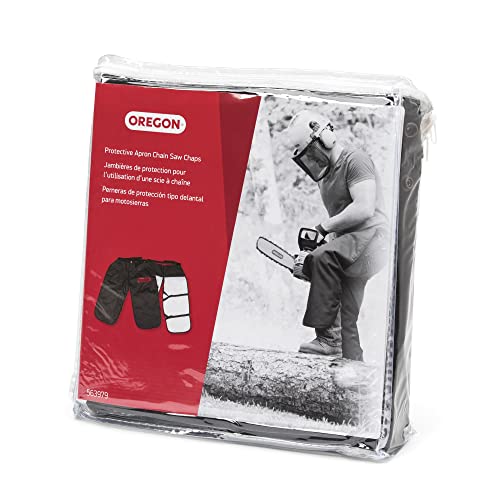

Where can you buy chainsaw chaps?
Chainsaw chaps are sold both online and in person, and the best source depends on whether you want the widest choice or hands-on fitting. Online marketplaces and forestry-supply specialists carry the broadest range of lengths, coverage styles, and brands, while local stores let you check the fit before buying.
Which retailers stock chainsaw chaps?
Common sources include online retailers such as Amazon and dedicated arborist- and forestry-supply shops, big-box home-improvement stores like Home Depot and Lowe's, and rural outlets such as Tractor Supply and farm co-ops. Chainsaw dealers that sell Stihl and Husqvarna saws usually stock matching branded chaps and can advise on sizing.
What to check before you buy
Wherever you shop, confirm the chaps are certified to ASTM F1897 (or EN ISO 11393 outside North America), choose apron or full-wrap coverage to suit your work, and measure from waist to boot top for the right length. Our best chainsaw chaps roundup compares proven options on exactly these points.
Buy the rest of the kit together
Buying chaps is a good moment to complete your protection. Add a helmet with a face shield, hearing and eye protection, and cut-resistant gloves in the same order so you're fully equipped before the saw starts, and see the full chainsaw chaps and PPE guide for how the layers fit together.
Should you buy chainsaw chaps online or in a store?
Buy online for the widest selection of lengths, coverage styles and brands, and buy in a store when you'd rather check the fit and length in person before committing. Both routes carry certified chaps; they trade choice against hands-on fitting.
Online marketplaces and forestry-supply specialists list the broadest range, including full-wrap and less common lengths that local shops may not stock, and make it easy to compare certification and coverage. A local home-improvement or farm store, or a chainsaw dealer, lets you hold the chaps, judge the weight, and confirm the length reaches your boot before paying. If you're unsure of your size or new to chaps, in-person fitting is reassuring; if you know your waist-to-boot measurement, online usually wins on choice and price.
How much should you expect to pay for chainsaw chaps?
Certified chainsaw chaps span a wide price range, from affordable apron models to pricier full-wrap and premium pairs, but even the budget end buys genuine protection as long as the ASTM F1897 or EN ISO 11393 mark is present. You pay more for coverage, durability and comfort, not for a higher grade of certification.
At the lower end, a basic certified apron chap protects the front leg zone for a modest outlay. Spending more generally buys wider or full-wrap coverage, lighter or tougher fabric, sturdier buckles, and longer service life. What you should never do is chase a lower price on an uncertified "chainsaw-style" wrap with no standard on the label — that's unregulated fabric, not PPE. Because chaps are consumable and retired after any chain contact, factor eventual replacement into the cost.
What sizes and lengths of chaps can you buy?
Chaps are mostly sold with one adjustable waist and a choice of leg lengths, typically ranging from around 32 to 40 inches, so the length is the size that actually determines fit. The waist strap spans a wide range, which is why a single pair can be shared among users.
Before buying, measure from your belt line to the top of your boot and pick the length closest to that figure; if you fall between options, size up so the chaps fully cover the boot rather than leaving a gap at the shin. Some brands also offer different coverage styles — apron front or full wrap — at each length. Confirm both the length and the coverage suit your work, using our best chainsaw chaps roundup to compare proven options.
Is it safe to buy used chainsaw chaps?
Buying used chainsaw chaps is risky, because you can't verify their history — a pair that has taken a chain hit, soaked up bar oil, or degraded with age may look fine while offering little real protection. The protective fibers give no obvious outward sign that they're spent.
Since chaps are consumable safety gear whose life ends with damage rather than a date, a secondhand pair could already be at or past the end of its protective life. If you do consider used chaps, inspect them closely for cuts, matting, oil saturation, worn patches, and failing buckles, and confirm a current certification mark is present — but when protection is in any doubt, buy new. Given how modestly priced certified chaps are against the cost of a leg injury, new is almost always the safer economy.

