Chainsaw Chaps Vs Pants
Chainsaw Chaps Vs Pants, ranked from aggregated owner ratings and reviews, not first-hand testing. Real pros, cons, and who each pick is best for.

Our Top 3 Picks
Quick Comparison
| Product | Best for | Buy | |
|---|---|---|---|
| Husqvarna Technical Apron Wrap Chaps | Best Overall | See Amazon | View (paid link) |
| Oregon Yukon Chainsaw Chaps | Best Value | See Amazon | View (paid link) |
| Labonville Full-Wrap Chainsaw Chaps | Best Premium | See Amazon | View (paid link) |
| SwedePro Chainsaw Chaps | Best Heavy-Duty | See Amazon | View (paid link) |
| Forester Chainsaw Apron Chaps | Best for Beginners | See Amazon | View (paid link) |
| Husqvarna Functional Apron Wrap Chaps | Editor's Pick | See Amazon | View (paid link) |
Chainsaw Chaps vs Protective Trousers: How to Choose
Chainsaw chaps and protective trousers protect the same legs to the same standard; they differ in coverage, comfort and convenience. Chaps strap over your clothes in seconds and cost less. Trousers are worn all day, fit closer, and can't gap — but they run hotter and pricier.
When are chainsaw chaps the better choice?
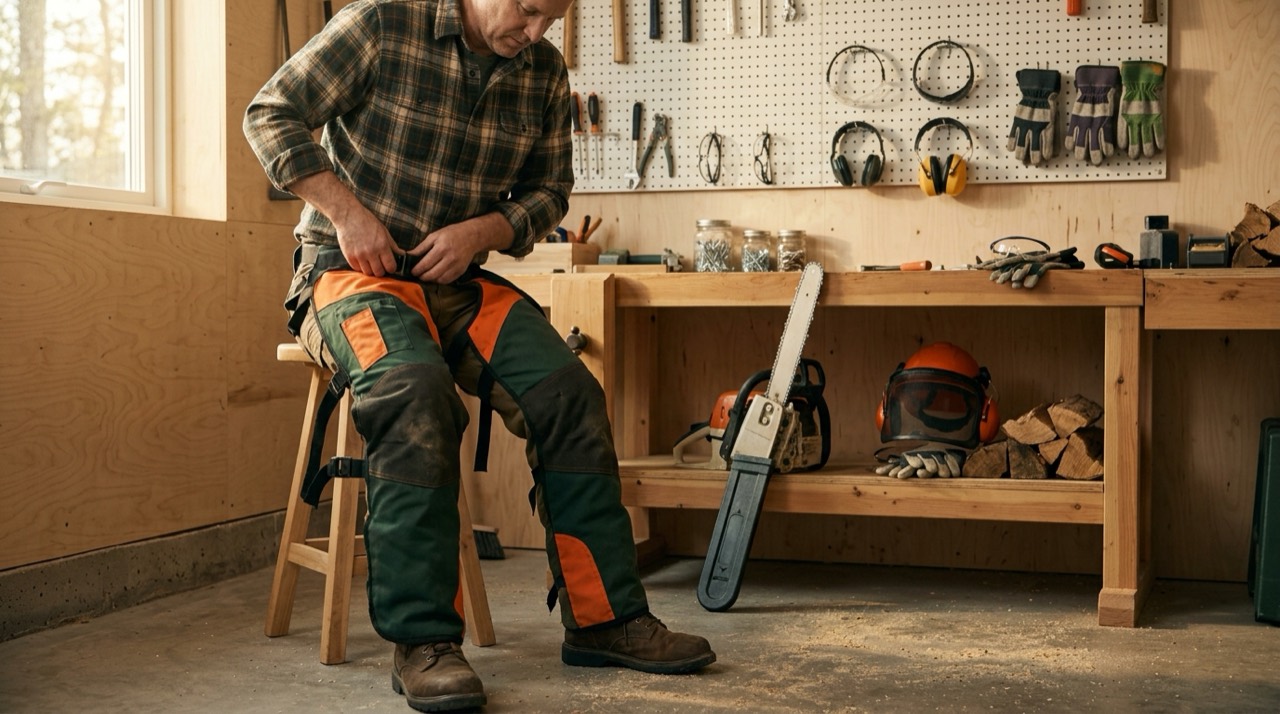
Chaps win for occasional and shared use. They pull on over jeans in under a minute, adjust to fit several people, pack flat in a truck, and cost far less — ideal for a homeowner cutting firewood a few times a year. The comparison table below lines up the recommended picks on both sides.
The table sets each recommended garment against its type, coverage, and the user it suits:
| Product | Type | Coverage | Best for |
|---|---|---|---|
| Husqvarna Technical Apron Wrap Trousers | Trousers | Type A front | All-day comfort |
| Arbortec Breatheflex Pro Trousers | Trousers | Type A, breathable | Working arborists |
| Clogger Zero Trousers | Trousers | Type A, ventilated | Hot climates |
| Oregon Yukon Chaps | Chaps | Apron front | Budget quick-on use |
| Forester Apron Chaps | Chaps | Apron front | First-time buyers |
| Labonville Full-Wrap Chaps | Chaps | Full wrap | Frequent firewood cutting |
Do chaps and trousers protect the same leg zone?
Coverage, not format, is what really varies. Apron chaps and Type A trousers both protect the front and inner leg — the zone hit in almost every cutting accident — while full-wrap chaps and Type C trousers add protection around the back. So the real decision is front-only versus all-round, not chaps versus trousers.
A Type A trouser and an apron chap guard the same area, and a full-wrap chap can actually cover more of the leg than a basic Type A trouser. Decide the coverage class you need for your work first, then pick whichever format — strap-on chap or full trouser — delivers that coverage in a way you'll wear comfortably.
How much do chaps and trousers cost to run?
Chaps are the cheaper entry and the cheaper habit: one adjustable pair fits several users and packs into any truck, so a household or crew can share a single set. Trousers cost more up front, are sized per person, and, being a full garment worn against the skin, get laundered and worn out faster.
Both are consumables that must be retired after any chain contact, so budget for replacement rather than treating either as a one-time buy. For a few cuts a year, a shared set of chaps is the economical route; for regular solo cutting, a personal pair of trousers you'll actually keep wearing usually earns its higher price.
When do protective trousers win?
Trousers suit anyone cutting for hours or pushing through brush. Because they are a full garment, they can't ride up, twist, or leave a gap at the back, and breathable pro models stay cooler than their bulk suggests. Arborists and daily users almost always choose trousers for that consistent coverage and freedom of movement.
Do chaps and trousers meet the same safety standard?
Both must meet the same leg-protection standard to count as PPE — ASTM F1897 and UL in North America, or EN ISO 11393 in Europe and Australia. The certification is identical; only the garment format changes. A certified chap and a certified trouser stop a chain the same way, by jamming the sprocket with pulled fibers.
How do you choose between chaps and trousers step by step?
Choose by working through how often you cut, how much you move, and how hot you run, in that order — frequency and movement decide coverage, and heat decides which certified format you'll actually keep wearing. The safety standard is identical either way.
Run through this quick decision path:
- Estimate how often you cut: a few times a year points to chaps, weekly or daily points to trousers.
- Judge how much you move: stationary bucking suits apron chaps, limbing and slope work favour trousers or full-wrap chaps.
- Factor the climate: in heat, prioritise a ventilated trouser or a light apron chap over heavy wrap coverage.
- Count the users: one shared, adjustable set of chaps fits a household, while trousers are sized per person.
- Confirm certification on whatever you pick — ASTM F1897 and UL, or EN ISO 11393 — before anything else.
Follow the path and the format usually chooses itself; the certification mark is the one point that is never optional.
Are chaps or trousers more comfortable in hot weather?
Apron chaps are generally cooler than trousers in hot weather, because they cover only the front of the leg and strap over clothing you can otherwise keep light. Protective trousers wrap the leg fully, so they trap more heat unless they're built specifically to ventilate.
The gap narrows with modern pro trousers. Breathable, ventilated models such as the Arbortec Breatheflex Pro and the Clogger Zero use moisture-wicking fabric and vent panels to stay wearable through long, warm sessions, and many working arborists accept a little extra heat for coverage that never gaps. For a homeowner doing occasional summer firewood cutting, though, an apron chap over normal trousers is the cooler and cheaper route. If you routinely overheat, that discomfort matters: gear you peel off mid-job protects nothing, so pick the format you'll keep on in your actual climate.
Do chaps or trousers move better for climbing and limbing?
Protective trousers move better for climbing and active limbing, because they're a fitted garment that flexes with the leg, while chaps can shift or catch when you're constantly changing position. This is why arborists and daily cutters almost always choose trousers.
Chaps are designed to strap over clothing for quick, ground-level use, and they do that job well when you're standing at a log. The moment you're squatting, kneeling on slopes, or moving through brush, an apron chap can twist, ride, or leave a gap at the back that a full trouser never does. Slim, articulated pro trousers with stretch panels are cut for exactly this kind of movement. For a top-handle or arborist saw used off the ground, trousers or full-wrap chaps are the sensible choice; a basic apron chap is best kept for stationary work.
How long do chaps and trousers last before replacement?
Both chaps and trousers last for years if they avoid chain contact and are cared for, but their working life ends instantly the moment the fibers are cut — damage, not the calendar, sets the replacement point. Frequent wearers simply reach that point sooner.
Trousers, worn against the skin as a full garment, are laundered and abraded more often, so they wear through at the shell and knees faster than chaps that only go on for the cut. Chaps, being lighter and worn over clothing, often outlast trousers in calendar terms for an occasional user. Either way, retire the garment after any chain nick, oil saturation, failing stitching, or worn patches, and inspect it before every session. Budget both as consumable safety gear rather than a one-time buy, and pair replacement with routine chainsaw maintenance so your saw and your protection stay ready together.
Which is safer for a moving worker — where do the gaps appear?
For a worker who moves, trousers are safer in practice because they can't ride up, twist, or open the rear gap that apron chaps leave, delivering the same certified protection more consistently across every position. The standard is equal; the reliability of coverage is not.
The vulnerability with chaps is geometry, not certification. An apron chap protects the front and sides, so a saw swinging behind the calf during limbing or on a slope can reach unprotected skin, and a loosely strapped chap can shift the protected zone out of place. A full trouser, or a full-wrap chap, closes that rear gap and stays put as you crouch and climb. For stationary cutting where the bar stays in front, a well-fitted apron chap has no meaningful gap; for constant movement, the consistent wrap of a trouser is the safer bet. Finish either choice with a helmet, gloves and hearing protection.
Which should a first-time buyer get?
Start with certified apron chaps if you cut occasionally — they are the cheapest route to real protection and fit almost anyone. Step up to trousers once you are cutting weekly, working on slopes, or overheating in chaps. Whichever you pick, finish the kit with a helmet, gloves, and hearing protection, and match your gear to the chainsaw you run.
Full Ranking, Reviewed

Best for Homeowners and part-time users who want proven, well-fitting apron protection
- Multi-layer protective apron front certified to ASTM F1897 and UL
- Adjustable waist and quick-release leg buckles for a secure fit
- Offered in several lengths (around 32 to 40 inches) to match your inseam
- Water- and oil-repellent polyester outer shell
- Trusted brand with a wide published size range
- Comfortable weight for longer sessions
- Meets the US ASTM F1897 leg-protection spec
- Apron style leaves the back of the calf unprotected
- Costs more than bare-minimum budget chaps
Verdict: Based on published specs and owner feedback, the best-balanced apron chaps for most homeowners — protective, comfortable, and easy to size.
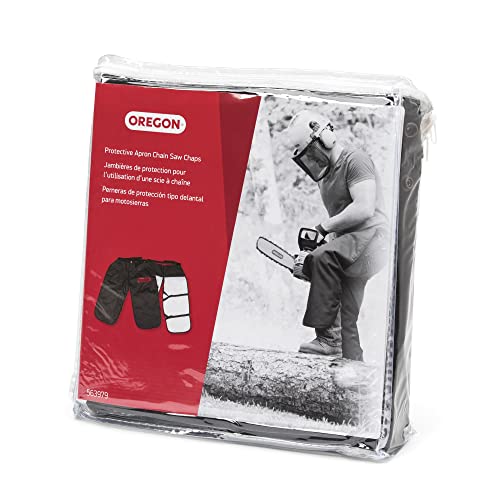
Best for Budget-minded owners who still want a certified, name-brand chap
- Apron-style leg protection built to the ASTM F1897 standard
- Around a 36-inch length that suits most average-height adults
- Adjustable waist strap fitting up to roughly a 42-inch waistline
- Durable high-denier polyester front panel
- Low price for genuine certified protection
- Simple one-size-adjustable fit
- From a well-known cutting-accessory brand
- Front-only apron coverage
- Basic padding is warmer than lighter premium chaps
Verdict: Reviewers report these are the sensible value pick — certified apron protection at close to the lowest price a trusted brand offers.

Best for Firewood cutters and landowners who want full wrap-around coverage
- Full wrap-around design protecting the front and back of the lower leg
- Several layers of ballistic cut-retardant fiber
- Made in the USA with heavy-duty stitching and hardware
- Sized by length for a tailored, gap-free fit
- Full-wrap coverage the calf, not just the front
- Reputation for durable, made-in-USA construction
- Sized by length for a precise fit
- Heavier and warmer than apron chaps
- Premium price versus basic apron models
Verdict: Based on specs and long-standing owner feedback, a premium full-wrap choice for anyone who cuts firewood regularly and wants rear-leg cover.

Best for Frequent users who prioritise maximum coverage over light weight
- Wrap-style coverage with multiple cut-retardant layers
- Heavier-duty build aimed at regular, demanding cutting
- Certified to the ASTM F1897 leg-protection standard
- Reinforced buckles and webbing straps
- Substantial protective coverage for heavy use
- Rugged hardware and stitching
- Favoured by some regular pro users
- Among the heaviest and hottest to wear
- Overkill for occasional light cutting
Verdict: Reviewers report these suit high-frequency cutters who want maximum coverage and durability and accept the extra weight that comes with it.

Best for First-time buyers who need certified protection at the lowest price
- Apron-style front protection meeting the ASTM F1897 standard
- One-size-adjustable waist and leg straps
- Around a 35 to 37-inch length for average heights
- Lightweight polyester shell that stows and packs easily
- Very affordable entry into certified chaps
- Light and easy to pack in a truck
- Simple adjustable fit for most adults
- Front-only apron coverage
- Basic materials versus pro-grade chaps
Verdict: Based on specs and owner feedback, the cheapest sensible way for a first-time user to get genuinely certified leg protection.
Best for Occasional users who want Husqvarna quality below the Technical line's price
- Apron protective layers certified to ASTM F1897
- Lighter and more affordable than the Technical range
- Adjustable waist and two leg buckles
- Polyester outer that sheds bar oil and water
- Husqvarna build at a mid-range price
- Lighter feel for occasional cutting
- Sheds oil and water well
- Thinner and less padded than the Technical line
- Apron front-only coverage
Verdict: Reviewers report this is the value Husqvarna option — certified apron protection for occasional users who do not need the Technical range.
Frequently Asked Questions
Are chainsaw chaps or pants safer?
Neither is inherently safer for the zone it covers — certified chaps and certified trousers stop a chain the same way and to the same standard. Trousers cover more consistently because they can't ride up or gap, so for all-day or moving work they offer more reliable protection in practice.
Can you wear chainsaw chaps over regular pants?
Yes — that's exactly how chaps are designed to be worn. They strap over your normal trousers or jeans in under a minute and adjust to fit different people, which is why they suit shared and occasional use. Just fasten every buckle so nothing twists or gaps.
Are chainsaw protective trousers hot to wear?
They're warmer than strap-on chaps because the protective layers wrap your legs fully. Breathable, ventilated models like the pro trousers above are built to reduce heat and stay wearable through long sessions, but in hot climates many occasional users still prefer the cooler feel of apron chaps.