


How do chainsaw chaps work?
Chainsaw chaps stop a chain by jamming the saw rather than by blocking the cutter. The moment a moving chain tears through the chap's outer shell, it snags the loose fibers packed underneath. Those fibers are pulled out in long strands and instantly wrap the drive sprocket and clutch, stalling the chain in a fraction of a second.
Why chaps stall the chain instead of resisting it
Stopping a chainsaw by brute strength isn't practical, so chaps use the saw's own motion against it. The pulled fibers act like a rope thrown into gears, choking the drive. This is why chaps are single-use in the contact zone: once the fibers have deployed, that section is spent and the garment must be replaced.
What chaps can and can't do
Chaps sharply cut the odds of a serious leg wound, but they aren't armor. They protect only the areas they cover, they can be defeated by an extreme cut, and they're tested mainly against gas saws — some battery and electric chainsaws drive the chain in ways that may reduce the stalling effect. They also do nothing against kickback toward your face or hands.
Getting the full benefit
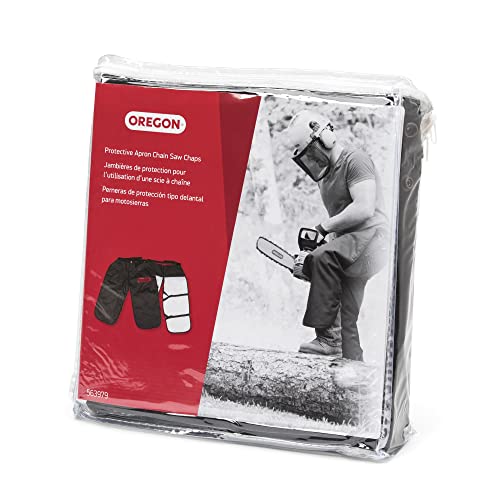
Chaps only work when they fit and cover the right zone, so size them from waist to boot and pick apron or wrap coverage for your work. Wear them every time, alongside a helmet, gloves and hearing protection, and replace them after any contact.
How fast do chainsaw chaps stop the chain?
Chainsaw chaps stop the chain in a fraction of a second — fast enough that the cutter is jammed before it can pass through the protective layers into the leg. The stall happens almost the instant the fibers are grabbed and pulled into the sprocket.
Speed is the whole point. A chain travelling at the saw's running speed only needs to be interrupted for a moment to prevent a deep wound, so the fibers are engineered to extract and clog the drive the instant contact begins. There's no winding-up delay: the chain snags the loose strands, drags them into the sprocket and clutch, and chokes the drive in one continuous motion. That near-instant reaction is exactly why the fibers must be loose, clean, and undamaged to work.
Do chainsaw chaps work the same on every saw?
Chaps don't work identically on every saw, because they were designed and tested mainly against gas saws, whose clutch lets the chain stall when the fibers jam the sprocket. Some battery and electric chainsaws drive the chain more directly and may keep pulling.
On a gas saw, jamming the sprocket lets the clutch slip and the chain stops. A direct-drive cordless saw can keep forcing the chain against the clogged fibers, and some run at higher no-load speeds than a lower-rated chap was tested against. Chaps still add meaningful protection with these saws and should always be worn, but check the maker's guidance, because some state their chaps aren't rated for the fastest electric models. Never treat a quiet battery saw as safe to run bare-legged — it cuts flesh just as fast as a gas saw.
What happens to chaps after they stop a chain?
Once chaps stop a chain, the fibers in the contact zone have pulled out and are spent, so the garment must be replaced — that section will not stop a chain a second time. Chaps are single-use where they've done their job.
You'll see the deployed fibers dragged out around the cut, often tangled or matted, and the shell torn open. There's no way to repack or repair the protective layers, and no home fix restores the pull-and-jam action. That's why chaps are treated as consumable safety gear: a pair that has saved a leg has done exactly what it was built to do, and the right response is to retire it and buy a new certified pair before the next cut.
Why does fit determine whether chaps work?
Fit determines whether chaps work because the fibers can only protect the zone they actually cover, and chaps that are too short, loose, or twisted move that zone away from the area at risk. A perfect fabric on a badly fitted chap still leaves skin exposed.
Size chaps from the waist to the boot top so no shin is left bare, choose apron or wrap coverage to match where your bar travels, and fasten every strap so the chaps can't shift mid-cut. Loose buckles let the protected front rotate off the leg; over-long chaps drag and can trip you. Getting fit right is as important as buying certified fabric, and it's why the full PPE guide treats sizing as a safety step, not a comfort preference.

