


Which chainsaw brands are worth buying?
Stihl, Husqvarna, and Echo lead the gas chainsaw market, while EGO, DeWalt, Makita, Greenworks, and Ryobi lead battery models. The best brand for you depends on whether you value a dealer network, a battery platform you already own, or the lowest price at a big-box store.
Chainsaws split into two brand camps. The traditional gas-engine makers — Stihl and Husqvarna above all — built their names on two-stroke powerheads sold and serviced through specialist dealers. The cordless newcomers — EGO, DeWalt, Makita, Greenworks, and Ryobi — sell battery saws that share power packs with the rest of their tool range. Echo sits between the two, offering pro-grade gas saws at homeowner prices through both dealers and big-box stores. Knowing where a brand sits tells you a lot about the ownership experience before you ever pull a trigger.
Is Stihl the best chainsaw brand?
Stihl is the most recognized chainsaw brand and the usual benchmark for gas saws, with a lineup that runs from the light MS 170 to the pro-grade MS 500i. The German company sells only through servicing dealers, never online or in big-box aisles, which is its defining quirk.
That dealer-only model is the trade-off at the heart of owning a Stihl. You cannot add an MS 271 Farm Boss to an online cart; you buy it assembled, fueled, and started by a dealer who also handles warranty work. Owners consistently praise Stihl starting behavior and resale value, and the brand's mid-range farm-and-ranch saws are among the most common on rural properties. Stihl runs a 50:1 two-stroke mix like most modern brands. If you want a saw you can service locally for decades, the dealer network is a feature, not a bug.
How does Husqvarna compare to Stihl?
Husqvarna is Stihl's closest rival and the other name that defines the category, best known for the Rancher series and the Husqvarna versus Stihl matchup that buyers agonize over. Unlike Stihl, Husqvarna sells through big-box retailers such as Lowe's as well as dealers, so the saws are easier to buy on a weekend.
The Swedish brand shares a lot of design thinking with Stihl on paper: comparable displacement, anti-vibration handles, and inertia-activated chain brakes. Reviewers tend to give Husqvarna a slight edge on raw power per model and Stihl an edge on out-of-the-box tuning, but the honest answer is that both build excellent saws and brand loyalty runs deep. Husqvarna also owns several other outdoor brands, so its engineering turns up under badges beyond its own.
Which brands make the best budget gas chainsaws?
Echo offers the best value in gas chainsaws, pairing pro-grade engines like the CS-400 and CS-590 Timber Wolf with a long consumer warranty. Craftsman, Poulan Pro, and Remington fill the entry-level tier for occasional users who want the lowest upfront price.
Echo is the value pick most often recommended by people who cut for a living but sell to homeowners, and its saws are stocked at Home Depot as well as dealers. Below Echo, the true budget brands trade durability and vibration control for price, which is fine for a handful of cuts a year but frustrating for regular firewood work. If you cut more than a few cords a season, spending up to an Echo or a Rancher usually pays off in fewer headaches. Match the saw to the chainsaws you actually need rather than the sticker price alone.
Which brands lead battery chainsaws?
EGO, DeWalt, Makita, Greenworks, and Ryobi lead cordless chainsaws, and the smartest move is to buy into a battery platform you already own. A brand's battery ecosystem matters more than any single saw, because the pack you buy powers your trimmer, blower, and mower too.
EGO's 56V system and its CS1804 battery chainsaw is a common top pick for homeowners, while DeWalt and Makita appeal to tradespeople already invested in 20V/60V or 18V/36V tool lines. Ryobi's 40V range wins on price and breadth, and Greenworks spans homeowner 40V and pro 80V. Battery saws cut cleanly, start instantly, and run quietly, but runtime and recharge time are the real limits — a spare charged pack is essential for a full afternoon of cutting.
Where do Makita, Greenworks, and Milwaukee fit among chainsaw brands?
Makita, Greenworks, and Milwaukee round out the cordless field below the big three, each aimed at a buyer already committed to its battery platform. Makita leans professional, Greenworks spans homeowner and pro voltages, and Milwaukee sells to trades on its M18 system.
Makita's 18V and paired-battery 36V (LXT) saws suit contractors who already carry Makita drills and grinders, and the brand has a strong reputation for build quality. Greenworks is unusual in offering two tiers — an affordable 40V homeowner range and an 80V Pro range that competes with entry gas saws — so the badge alone does not tell you the class. Milwaukee's M18 FUEL chainsaw is a favourite among electricians, plumbers, and utility crews who never want a second battery system on the truck. None of these is a bad saw; the deciding question is again which battery chainsaw platform you want to standardize on, because the pack, not the powerhead, is the expensive long-term commitment.
Are cheap big-box chainsaw brands worth buying?
Cheap big-box brands like Poulan Pro, Remington, Craftsman, and Worx are worth it only for very light, occasional use. They cut the same wood as premium saws for a fraction of the price, but skimp on anti-vibration, air filtration, and part availability, which shortens their working life under heavy use.
The honest way to read the budget tier is by hours, not dollars. A sub-$150 saw that sees an afternoon of storm cleanup once a year can last many seasons; the same saw asked to buck several cords of hardwood every winter will fatigue the owner's hands and often the engine within a year or two. Vibration is the hidden cost — a cheap saw with no anti-vibration mounts is genuinely tiring and can contribute to hand-arm strain over long sessions. Parts are the other trap: filters, bars, and chains for a discontinued big-box model can be hard to source in two years, whereas a Stihl or Husqvarna dealer stocks consumables for saws a decade old. If you cut more than a few times a season, stepping up to an Echo, a Rancher, or a Farm Boss usually costs less per year of ownership than replacing a worn-out bargain saw.
How do chainsaw brand warranties compare?
Chainsaw brand warranties run from about one year to five, with Echo, EGO, and Ryobi offering the longest consumer coverage while Stihl leans on dealer service rather than headline length. The table below lists typical published consumer terms; commercial use is usually covered far more briefly, so confirm your model's exact terms before buying.
| Brand | Typical consumer warranty | Notes |
|---|---|---|
| Echo | Up to 5 years (consumer gas) | Long coverage is a signature selling point |
| EGO | Up to 5 years tool, 3 years battery | Strong for a cordless brand |
| Ryobi | 3 years (tool and battery) | Covers the wider 40V range |
| Stihl | 1–2 years consumer, dealer-backed | Service relationship matters more than length |
| Husqvarna | 2–4 years consumer (varies) | Longer with brand fuel or oil on some models |
| DeWalt / Makita | 3 years typical | Tied to the wider cordless platform |
Read a warranty as a floor, not a promise of trouble-free life. Coverage rarely includes wear items like bars, chains, and spark plugs, and it is usually void if the engine is run on stale or wrongly mixed fuel — which is, in practice, the most common cause of a dead two-stroke. Registering the saw and keeping proof of correct bar oil and fuel purchases protects a claim.
Which chainsaw brands share bars and chains?
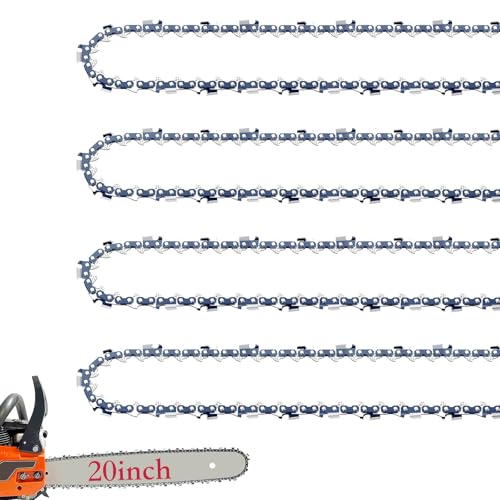
No major brand freely shares bars and chains with another, but the underlying chain standards are common, so many aftermarket makers fit multiple brands. Bar mount pattern, chain pitch, gauge, and drive-link count must all match your specific saw, regardless of the badge on the powerhead.
Chain itself is largely made by a handful of specialists — Oregon and Carlton supply chain that fits Stihl, Husqvarna, Echo, and most cordless saws once pitch and gauge match, and Stihl and Husqvarna also sell their own branded chain. The practical rule is to match four numbers — pitch, gauge, drive-link count, and bar-mount type — rather than shopping by brand. Guide bars are less interchangeable because the mount slot and oil-hole pattern differ between makers, though popular saws are widely served by aftermarket bars. Before buying either, check the guidance on matching chainsaw bars and chainsaw chains to your exact model, and keep a spare loop of the correct chain so a dull or damaged one never ends a job.
Which chainsaw brand holds its value best?
Stihl and Husqvarna hold resale value best, because their dealer networks, long parts support, and strong reputations keep used saws in demand. A well-kept Stihl Farm Boss or Husqvarna Rancher often sells second-hand for a healthy share of its original price years later.
Resale is worth factoring into the true cost of ownership, especially on premium gas saws. Budget big-box saws depreciate almost to nothing because buyers can get a new one cheaply and parts support is short-lived. Cordless saws are a middle case: the powerhead holds some value, but used batteries are the weak point, since a pack that has lost capacity is worth little and buyers know it. Whatever the brand, the levers that protect resale are the same — clean the air filter, run fresh correctly mixed fuel, keep the chain sharp, and store the saw dry with the bar oiled. A documented maintenance habit is the single biggest factor in what a used saw fetches.
How do you choose a chainsaw brand?
Choose a chainsaw brand by working through four practical questions, listed below in priority order.
- Consider dealer and parts access — a nearby Stihl or Husqvarna dealer makes service painless.
- Check your existing battery platform — staying on one system saves the cost of duplicate packs.
- Compare warranty length — Echo's consumer warranty and EGO's coverage are category strengths.
- Confirm parts and bar availability — popular brands keep chains, bars, and filters on the shelf.
Brand reputation is a useful shortcut, but the specific model and how you will maintain it matter more. A well-kept budget saw outlasts a neglected premium one, so factor in your willingness to clean filters, sharpen the chain, and follow a maintenance routine.
What safety gear matters, whatever brand you buy?
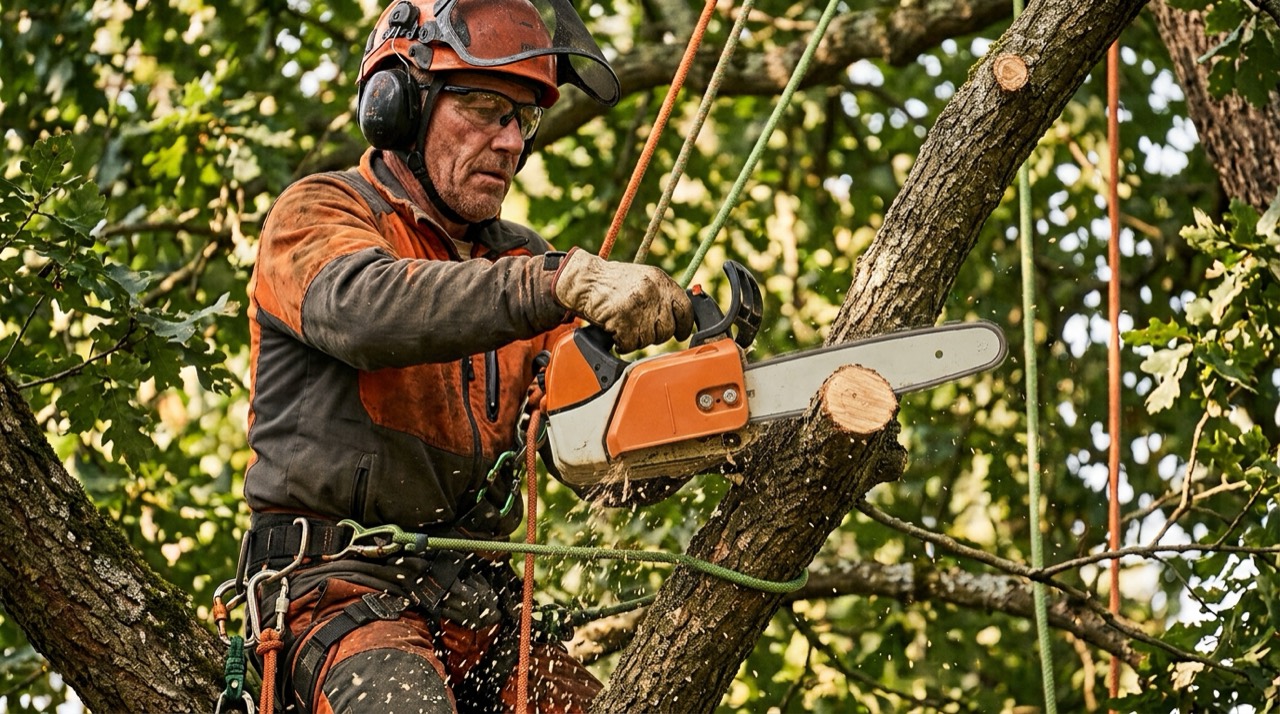
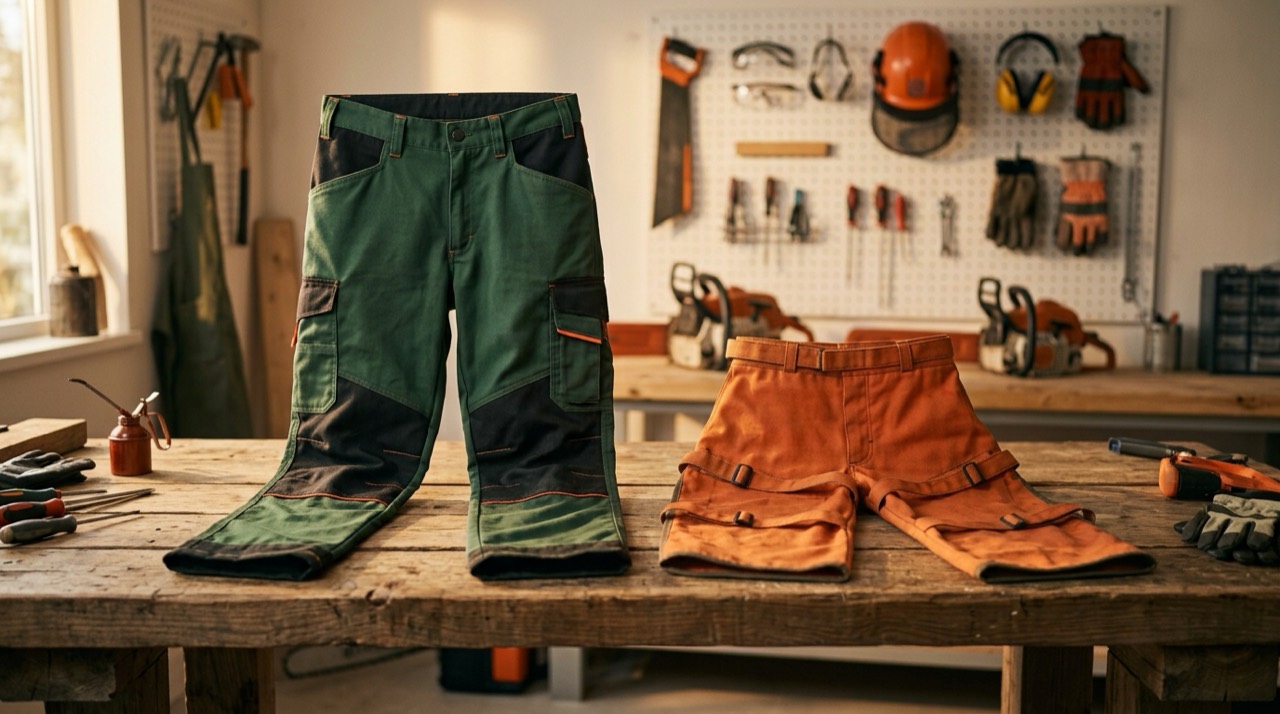
Every chainsaw, from the cheapest Ryobi to the priciest Stihl, demands the same protective gear, because the chain does not care which badge is on the powerhead. Chaps, a helmet system, gloves, and hearing protection are non-negotiable.
Cut-resistant chainsaw chaps and PPE can stop a moving chain, a helmet with a face screen and earmuffs guards your head and hearing, and steady footing prevents most kickback injuries. Felling large, leaning, or storm-damaged trees, and any work near power lines or above shoulder height, belongs to a trained professional regardless of how capable your saw is. Treat brand marketing as a guide to build quality, not a substitute for training and protective equipment.