
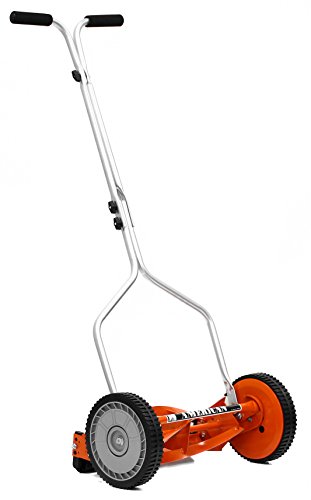

What is the difference between a push mower and a reel mower?
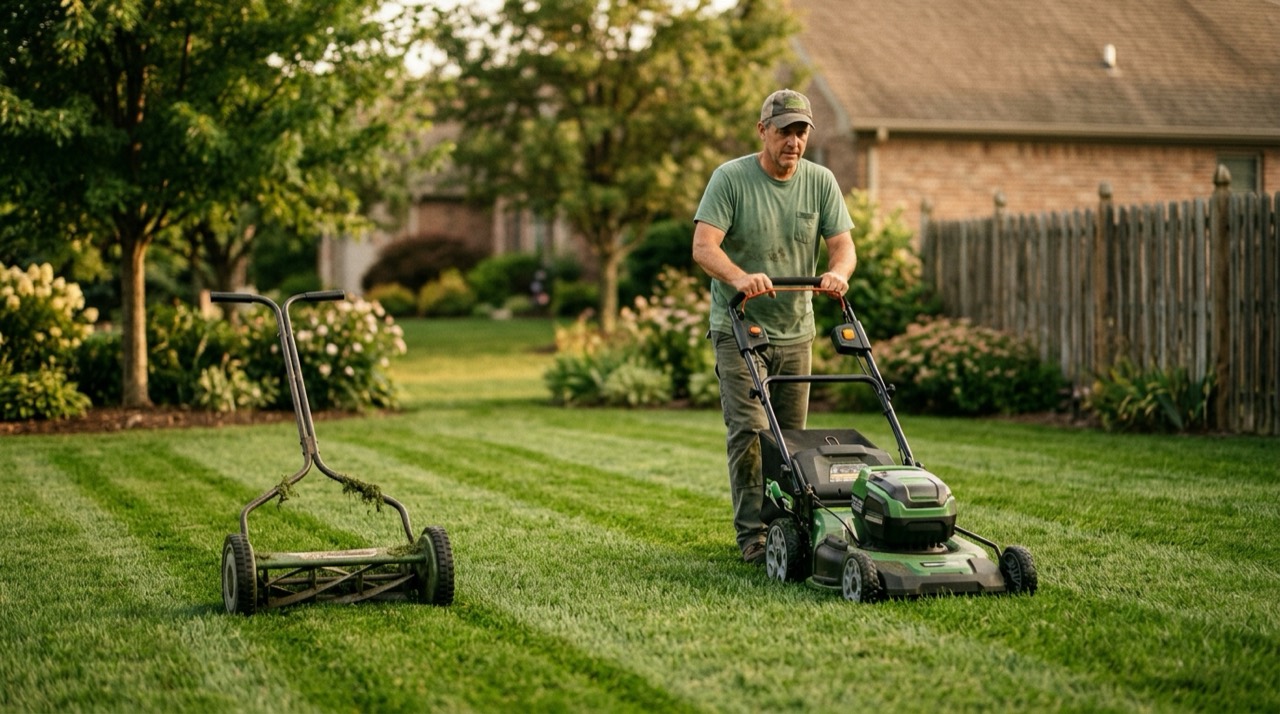
A push mower is any walk-behind mower you propel yourself, while a reel mower is a specific human-powered type whose spinning cylinder of curved blades scissors grass against a fixed bar. Every reel mower is a push mower, but most modern push mowers are powered rotary machines.The confusion is worth clearing up because "push mower" covers two very different tools. One is the classic manual reel mower — no engine, no cord, no battery, just gears that spin a blade cylinder as you walk. The other is a powered walk-behind rotary mower that you still push (or that self-propels) but that cuts with a single blade spinning under a deck. This guide sits inside the wider Lawn Mowers hub and focuses on both the quiet manual reels and the human-powered end of the rotary range.
How does a reel mower cut grass?
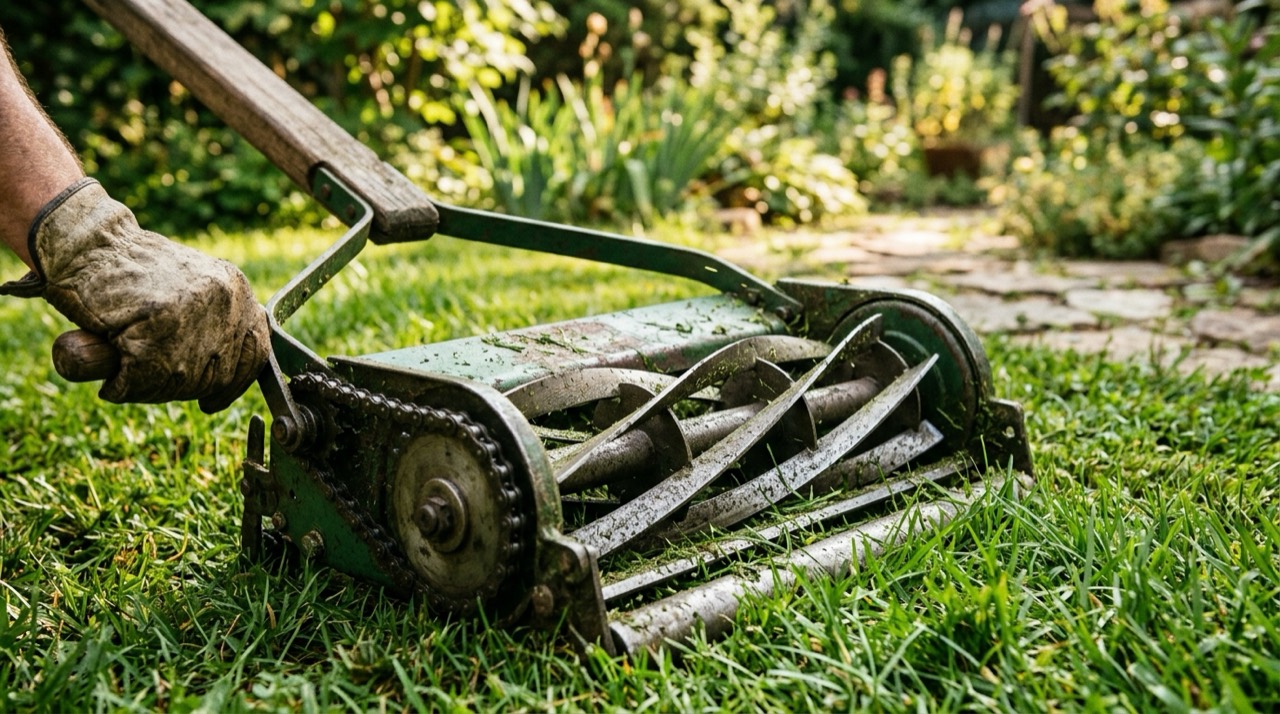
A reel mower cuts with a scissor action: five to seven helical blades on a rotating cylinder pass across a stationary bed knife, shearing each blade of grass cleanly. Turning the wheels spins the reel through a gear set, so cutting speed depends only on how fast you walk.That scissor cut is the reel mower's headline advantage. A rotary blade tears the grass tip off by impact, which browns and frays; a sharp reel slices it, leaving a cleaner edge that many owners say greens up faster and looks like a putting green. The trade-off is that the cut quality collapses the moment the reel dulls or the grass grows too tall — a reel has no brute force to fall back on.
How wide a cut do you need?
Cutting width sets how many passes a lawn takes, and manual reel mowers run narrow — typically 14 to 20 inches, against the 21 inches common on powered mowers. A 14-inch reel suits tight courtyards and strips between beds; a 16-inch is the all-round home size; an 18 to 20-inch reel covers a mid-size lawn with fewer laps.Width is a balance, not a "bigger is better" call. A wider reel clears more ground per pass but is heavier to push and harder to steer around obstacles, and on bumpy ground a wide cylinder scalps high spots. For most homeowners choosing between models on the best push and reel mowers list, 16 to 18 inches is the sweet spot: enough width to finish a small lawn quickly without becoming a chore to maneuver.
How many blades should a reel mower have?
Blade count controls cut fineness: more blades on the reel means more cuts per foot of travel and a smoother finish. Home reel mowers carry four to seven blades; five is the common all-round count, while seven-blade reels are aimed at fine, low-cut turf.The reason is geometry. Each time a reel blade meets the bed knife it makes one cut, so a seven-blade reel spinning at the same speed as a four-blade reel makes more cuts over the same distance, leaving shorter clippings and a manicured look. Four-blade reels are lighter, cheaper, and easier to push, and they handle slightly taller grass; seven-blade reels reward you with golf-green smoothness but demand shorter, more frequent mowing.
Which grass types suit a reel mower?
Reel mowers cut best on fine-bladed grasses kept short — Bermuda, zoysia, bentgrass, centipede, and fine fescues mowed at an inch or two. Coarse, tall, or wiry lawns fight back, so St. Augustine, tall fescue, and any grass left to grow long are poor matches for a manual reel.Grass-type fit is the single most common reason people love or hate their reel mower. If you keep a short, dense, warm-season lawn and mow twice a week in the growing season, a reel is a joy. If your grass grows fast and tall, or the yard is full of dandelions and clover stalks the reel will simply ride over, a powered mower is the honest answer. Weigh it up on our reel mower versus a powered rotary comparison before you buy.
What cutting height should you set on a reel mower?
Set a reel mower to the height your grass prefers, which for the fine warm-season lawns reels love is usually three-quarters of an inch to two inches, and follow the one-third rule: never remove more than a third of the leaf in a single pass.Height and mowing frequency are linked. A reel has a limited height range, so a lawn kept at an inch needs mowing twice a week in peak growth to stay inside the one-third rule; let it jump to three inches and the reel will bog down, fold the grass, and skip the tall stems entirely. Set the height with the mower on a hard, flat surface and measure from the ground to the bed knife on both sides so the cut stays level side to side. Raising the cut in high summer helps the lawn hold moisture and shade its own roots, while dropping it a notch as growth slows keeps warm-season turf tidy through the shoulder seasons. If your grass routinely outruns a twice-weekly cut, that is a clear signal the lawn suits a powered mower better than a manual reel.
When is a powered push mower the better choice?
A powered walk-behind mower wins whenever the lawn is large, hilly, tall between cuts, or full of tough weeds. Its spinning blade drives through growth a manual reel would jam on, and a self-propelled model carries itself up slopes and across bigger yards without wearing you out.Powered push mowers split into gas, corded electric, and battery. Cordless models have taken over the homeowner middle ground because they start instantly, run quietly, and share batteries with other tools — the trade-offs and top picks live on our battery lawn mower guide. Choose a manual reel for a small, level, fine lawn and the exercise; choose powered for everything harder.
How much effort is a reel mower to push?
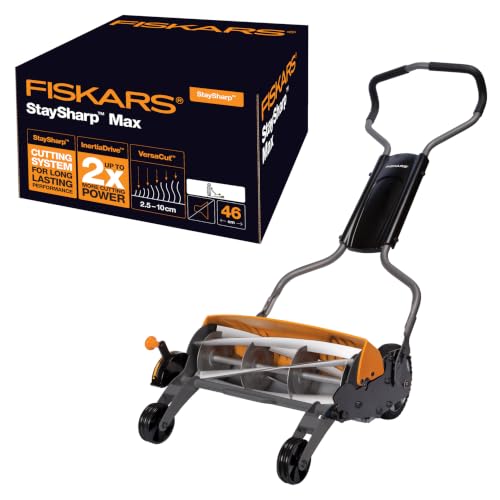
A reel mower on short, dry, level grass is easy to push — lighter than most people expect, because the gears spin freely and there is no engine weight. Effort climbs steeply on tall grass, damp turf, thick thatch, or any slope, where the reel loads up and you feel every blade.Modern designs soften this. Some reels use a momentum ("inertia") drive that stores energy in the reel so it powers through short bursts of thicker grass, and better wheel bearings roll more freely than the hardware-store specials of the past. Even so, treat a reel mower as light exercise on the right lawn, not a labor-saving machine on the wrong one.
How long does a reel mower last, and what does it cost to own?
A well-kept reel mower routinely lasts twenty years or more, because it has no engine, no electronics, and only a handful of moving parts to wear. Beyond the purchase price it costs almost nothing to run, with no fuel, oil, spark plugs, or batteries to buy.That longevity is the reel's quiet economic argument. The only recurring costs are a tube of lapping compound every year or two and, eventually, a replacement bed knife or set of wheel bearings, parts that long-standing makers like American Lawn Mower and Fiskars still stock. A powered mower, by contrast, carries fuel or electricity costs, consumable filters and plugs on gas engines, and a battery pack that fades after a few hundred charge cycles. Over a decade on a small lawn, a reel is comfortably the cheapest tool to own, which is a real part of the value case rather than a green talking point. Store it dry and keep the edge sharp and the same machine can outlast several powered mowers bought over the same span.
What maintenance does a push or reel mower need?
A reel mower needs very little: keep the blades sharp, the bed knife adjusted so it just kisses the reel, and the moving parts lightly oiled. A powered push mower adds blade sharpening, and for gas engines oil changes, spark plugs, and air filters. Full routines are on our lawn mower maintenance guide.Because a reel has almost nothing to go wrong, a well-kept unit lasts decades. The one job people skip is reel-to-bed-knife adjustment; get that contact right and the mower cuts paper cleanly, get it wrong and it merely folds the grass over. Sharpening a reel is usually a once-a-season backlapping job rather than a workshop grind.
How do you store a reel or push mower between seasons?
Store a reel mower clean, dry, and lightly oiled, ideally hung on a wall or stood where the cutting cylinder cannot rust or be knocked. A powered push mower needs the same plus fuel and battery care, since stale fuel and a flat pack cause most spring starting trouble.A short end-of-season routine pays off:
- Brush and wipe grass off the reel, bed knife, wheels, and deck so damp clippings do not hold moisture against the metal.
- Wipe a light film of oil over the reel blades and bed knife to keep rust off through the off-season.
- On gas mowers, either drain the fuel or add stabiliser and run the engine briefly, and change the oil before storage.
- On battery mowers, remove the pack and store it part-charged in a cool, dry place rather than left on the charger.
- Hang or stand the mower off a damp floor, with the cutting edge turned away from where hands and feet pass.
A machine put away clean and dry starts the new season sharp and ready, which is far easier than reviving a rusted reel or a gummed-up carburettor. Deeper engine and blade routines live on our lawn mower maintenance guide.
Is a reel mower safe to use?
Reel mowers are among the safest powered-yard alternatives, but the blades are still sharp and the cylinder can pinch fingers, so treat them with respect. Never clear a jam or adjust the bed knife with the mower "live" and your hands near the reel, and keep children and pets clear while you mow.Safety still matters even without an engine. Wear closed shoes and gloves, pick up sticks and stones first so the reel does not fling them or jam, and store the mower with the cutting edge away from where hands reach. For powered push mowers the stakes are higher — always stop the blade and remove the battery or disconnect the spark plug before you tip the deck, unclog the chute, or touch the blade. These guides are general information, not a substitute for the operator's manual that came with your machine.