
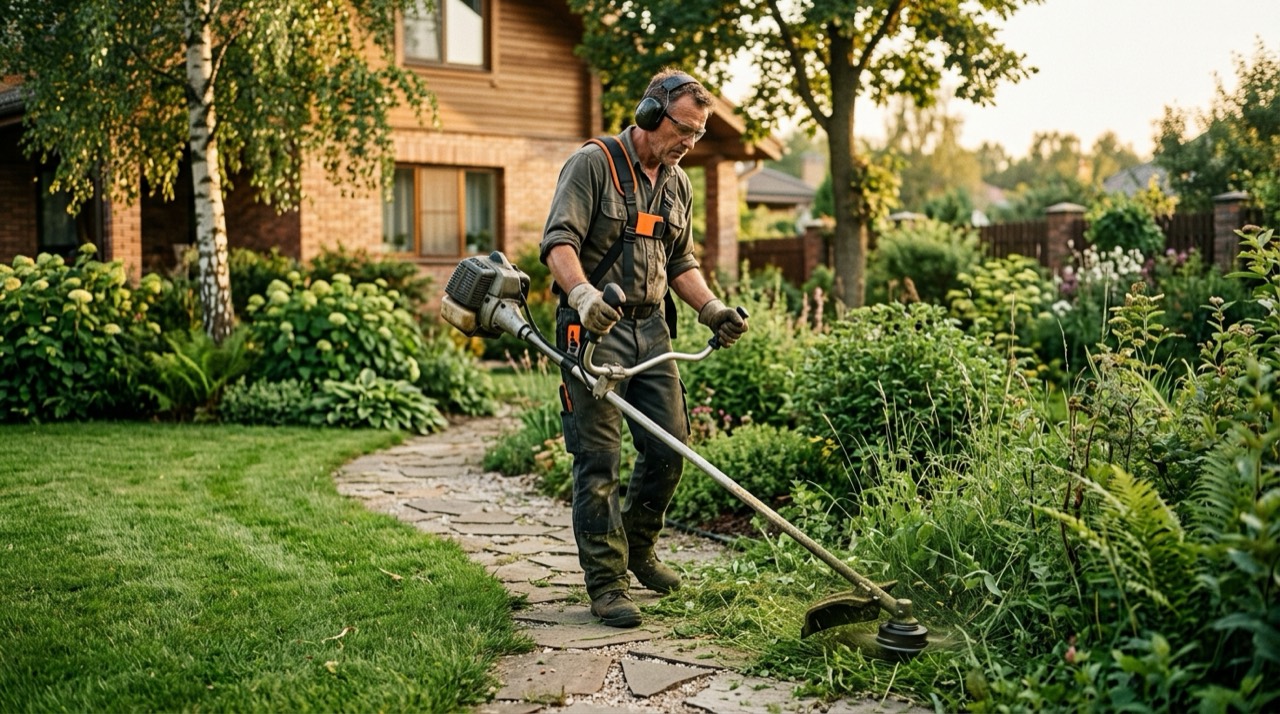


What is a brush cutter, and what does it cut?
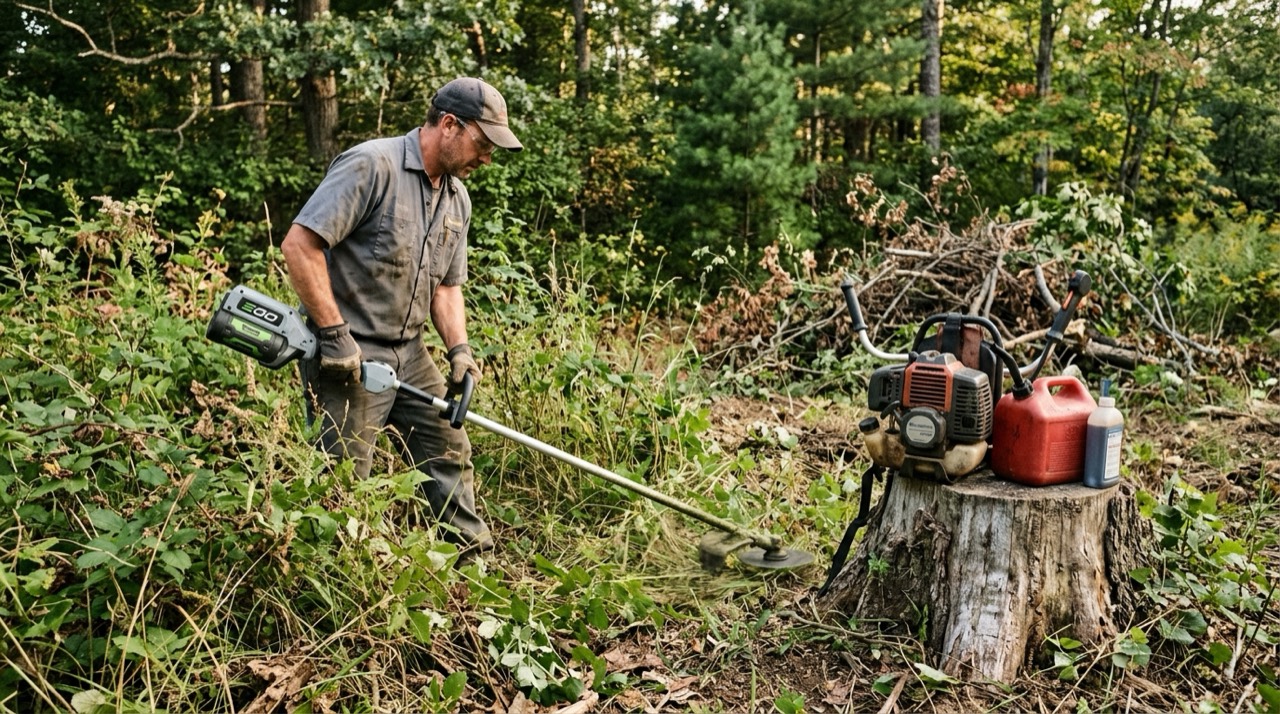
A brush cutter is a straight-shaft outdoor power tool that swings a metal blade or heavy line to clear vegetation a string trimmer cannot handle: thick weeds, tall grass, brambles, woody brush, and saplings up to a few inches across. It suits anyone reclaiming overgrown ground, clearing fence lines, or maintaining paddocks and trails.Brush cutters bridge the gap between a lightweight trimmer and a chainsaw. Fitted with a grass blade they scythe dense weeds and reeds; fitted with a three-tooth or saw blade they chew through woody stems and small trunks. Because they carry a rigid metal blade rather than only nylon line, they demand a harness, a proper guard, and more respect than a trimmer. This guide sits inside our wider trimmers, edgers, and blowers hub, where you can weigh every cutting tool for your yard.
How is a brush cutter different from a string trimmer?
A brush cutter has a solid straight drive shaft, a gearhead, and mounts a rigid metal blade, so it cuts woody growth and saplings; a string trimmer spins flexible nylon line and is built for grass and soft weeds. Many machines accept both, but the brush cutter is the heavier-duty configuration.The core differences are the drive shaft, the cutting head, and the control setup. Brush cutters use a straight solid shaft that transmits more torque than a trimmer's curved or flexible shaft, a bike-style handlebar for two-handed control, and a harness to carry the weight. If your work is mostly lawn edges and light grass, a string trimmer is lighter, cheaper, and easier to handle; step up to a brush cutter only when a trimmer bogs down in brush.
Which brush cutter blade do you need?
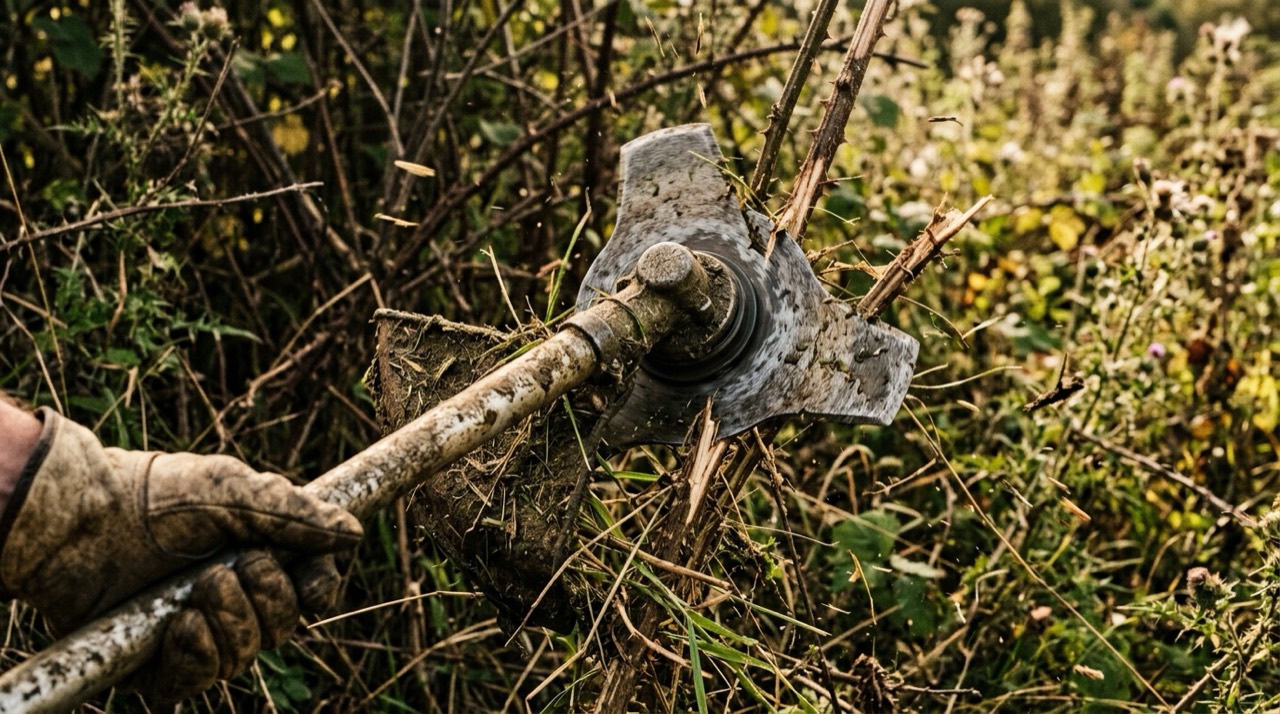
Match the blade to the material: a multi-tooth grass or weed blade for dense grass and reeds, a two- or three-tooth brush knife for woody weeds and brambles, and a toothed circular saw blade for saplings and small trees up to roughly three to four inches. The blade, not the engine, decides what you can safely cut.Grass blades slice soft, fibrous growth cleanly and are the safest, lowest-thrust option. Brush knives and tri-blades tackle tougher woody stems but push back harder on contact. Saw blades cut small trunks like a chainsaw would but carry the highest kickback risk. We compare every blade type in depth in our dedicated brush cutter blade guide, linked from the best brush cutter picks below.
Should you choose a gas or battery brush cutter?
Choose a gas brush cutter for all-day clearing, dense brush, and remote ground with no power nearby; choose a battery model for quiet, low-maintenance work on smaller jobs near home. Gas still leads on sustained power and runtime, while battery wins on convenience, noise, and simplicity.Gas brush cutters, from mid-size 25cc trimmers with a blade to 45cc professional clearing saws, hold power through heavy brush and run as long as you keep mixing fuel. Battery brush cutters and multi-head systems from brands like EGO and Greenworks start at a button, produce no fumes, and skip oil mixing, but a charge limits how long you clear before swapping packs. We break the choice down fully in our gas versus battery comparison further down this hub.
What handle and harness setup suits heavy cutting?
Heavy brush cutting calls for a bike-style handlebar (also called a bull-horn or U-handle) and a shoulder harness, because they spread the machine's weight and let you sweep the blade in a controlled arc. A loop handle suits lighter grass-blade work and tight spaces around obstacles.Bike handlebars give two balanced grips for the wide, level sweeps that clearing demands, while a harness transfers weight off your arms onto your shoulders and hips so you can work longer without fatigue. Professional clearing saws add a padded double harness with a quick-release. Always hook the machine to the harness and set the blade to hang just above the ground at rest, so the tool is balanced before you ever squeeze the throttle.
How much engine power or voltage do you need?
Match power to the toughest material you will cut. Around 25 to 28cc (or an entry battery platform) handles grass blades and light brush; 30 to 36cc suits regular woody weeds and saplings; and 40cc and up is professional clearing-saw territory for dense scrub and small trees. Buying more power than your ground needs mostly adds weight.Engine displacement and battery voltage are only half the story: the gearhead ratio, shaft stiffness, and blade choice matter just as much for real cutting force. A homeowner clearing seasonal weeds rarely needs a 45cc machine, while anyone reclaiming acreage or cutting saplings will appreciate the extra torque. When the work moves beyond a few inches of trunk, switch to a chainsaw or a mini chainsaw rather than forcing a brush cutter.
What safety gear and technique does a brush cutter demand?
A brush cutter throws debris and, with a metal blade, can kick sideways on contact, so wear a face shield or goggles, hearing protection, gloves, long trousers or chaps, and sturdy boots. Blade thrust, where the spinning blade bounces off a hard object toward you, is the main hazard to understand and avoid.Blade thrust happens when the blade contacts wood or metal in the wrong part of its arc; cut with the left-front section of the blade (roughly the eight-to-eleven-o'clock zone on a counter-clockwise blade) and never the right side, which throws the machine back at you. Keep bystanders at least fifty feet away, clear rocks and wire first, and let the blade stop before you set the tool down. Kit up with chaps and PPE, work gloves, and hearing and eye protection. Felling leaning trees or work near power lines belongs to a trained professional, not a brush cutter.
How do you set up and start a brush cutter for the first time?
Set up a brush cutter by fitting the correct guard for your blade, mounting and balancing the blade, hooking the machine to a properly adjusted harness, and mixing fresh fuel or charging the pack before you ever squeeze the throttle. A few minutes of setup prevents most first-day problems.Work through the setup in order so nothing is missed:
- Read the machine’s manual and confirm which blades and guards it approves, then fit the metal-blade guard rather than the trimmer-line deflector before the blade goes on.
- Mount the blade squarely on the gearhead thrust washer, add the retaining plate and nut, lock the shaft with the supplied pin, and tighten fully; confirm the blade spins true with no wobble.
- Clip the machine to the harness and adjust the straps so the blade hangs just above the ground when the tool rests at your side, balanced rather than nose-heavy.
- For a gas model, mix fresh two-stroke fuel at the ratio printed on the machine (commonly around 50:1) with a quality oil, then prime and choke-start on the ground; for a battery model, seat a fully charged pack.
- Start the engine or motor with the blade clear of the ground and everyone at least fifty feet away, let it settle to idle, and confirm the blade stops turning when you release the throttle.
Never start a brush cutter with the blade touching soil, gravel, or a fence, and never rest a running machine on the ground where the blade can snag and lurch. If the blade keeps spinning at idle, the idle speed or clutch needs adjusting before you cut. Our chaps and PPE guide covers the protection to have on before this first start.
How do you maintain a brush cutter so it lasts?
Maintain a brush cutter by keeping the blade sharp and true, the air filter and spark plug clean, the gearhead greased, and the fuel fresh, checking each item every few uses. Simple routine care is the difference between a machine that lasts a decade and one that dies in two seasons.The core tasks, from every-use to seasonal, are set out below:
- Before each use: check the blade for cracks, bent or missing teeth, and lost carbide; confirm it is tight and spins true; and clear grass packed around the gearhead.
- Every few tanks: clean or replace the foam air filter, inspect the spark plug, and check every fastener and the harness clip for tightness.
- Periodically: add the manufacturer’s grease to the gearhead grease port, and inspect the anti-vibration mounts and throttle cable for wear.
- Seasonally: drain or stabilise old fuel, replace a worn plug and filter, and store the machine clean and dry.
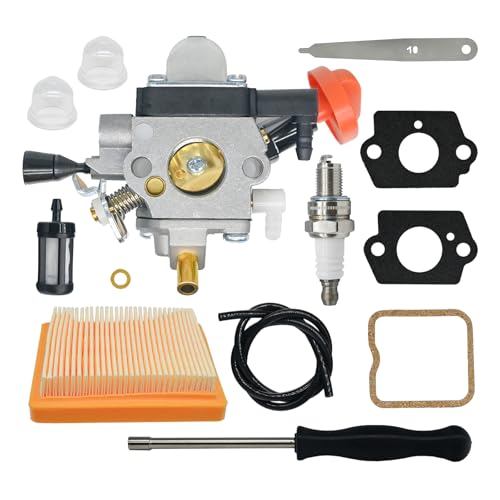
A gas brush cutter’s biggest enemy is stale fuel: ethanol-blended petrol left in the tank over winter gums the carburettor and causes hard starting, so run the tank dry or add a stabiliser before storage. Keep spare files and a fresh plug on hand, as covered in our sharpening files and tools guide, and store the machine off the ground in a dry space per our tool storage guide.
What brush cutter mistakes cause the most trouble?
The most common brush cutter mistakes are cutting with the wrong part of the blade, skipping the harness, fitting an unapproved blade, and forcing the tool through wood it cannot handle. Each one either damages the machine, tires you out, or risks a serious injury from blade thrust.The errors that catch out new owners most often are:
- Cutting on the right side of the blade, which throws the machine back at you instead of feeding cut material away; always cut with the left-front of the arc.
- Running without a harness, so your arms carry the full weight and control fades as you tire.
- Fitting a heavy saw blade to an underpowered machine or using the wrong guard, which overloads the engine and raises kickback risk.
- Hitting hidden rocks, wire, and fence posts because the ground was not cleared and scanned first, which both wrecks blades and causes the hardest thrusts.
- Letting grass and sap pack around the gearhead until it overheats, or leaving stale fuel in the tank over winter.
Slow, deliberate sweeps with the correct blade beat forcing the machine every time. If the blade bogs down or bounces, stop and reassess the material rather than pushing harder, and move up to a chainsaw once stems pass a few inches across.
Gas, battery, or a string trimmer — which should you buy?
Buy a gas brush cutter for serious, sustained clearing of brush and saplings, a battery brush cutter for quieter low-maintenance work on smaller overgrowth, and a string trimmer if your real job is grass and light weeds. Most buyers simply match the machine to the toughest thing they need to cut regularly.If you are still deciding, start with our best brush cutter picks for proven machines across gas and battery, and read the string trimmer guide if a lighter tool would do. Whichever you choose, budget for the harness and PPE from the start, because a bladed brush cutter is only as safe as the setup around it.