


What does a wood chipper actually do?
A wood chipper reduces branches, limbs, and woody prunings into small chips or mulch by feeding them through a rotating disc or drum fitted with hardened blades. Most homeowner machines are chipper/shredders that also grind leaves and soft twigs into finer mulch through a second chamber.Two jobs live inside one word. The chipper side takes solid branches up to the machine's rated diameter and cuts them into coarse chips you can spread on paths or add to a compost pile. The shredder side pulls in leafy, softer material — hedge clippings, corn stalks, small twigs — and hammers it into a finer mulch. Machines sold as "chipper/shredder" combine both, which is why they dominate the backyard market. If you only ever deal with fallen leaves, a dedicated shredder or even a leaf blower with a vacuum-mulch mode may be enough; if you routinely clear storm-fallen limbs, a true chipper matters. We compare the two directly on the wood shredder vs wood chipper page.
How big a branch can a wood chipper handle?
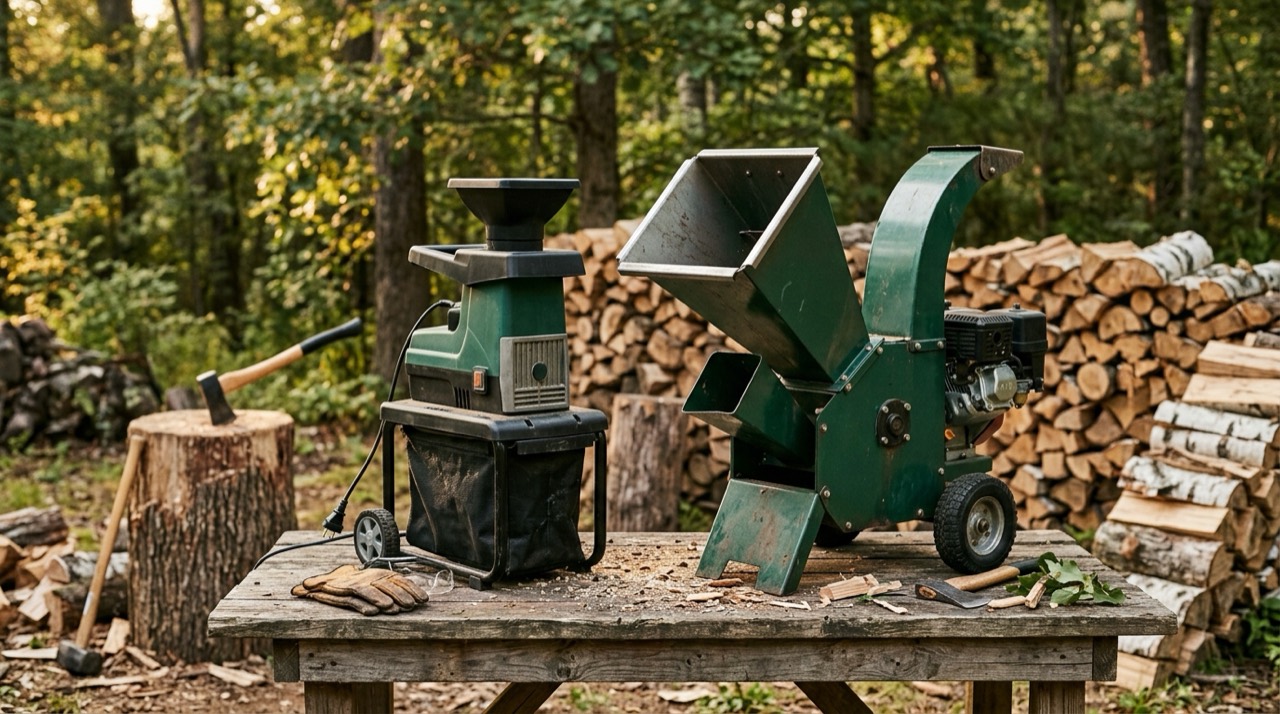
Branch capacity is the single most important spec, ranging from about 1.5 inches on plug-in electric chipper/shredders to 3 inches or more on gas models. The rated diameter is a maximum for green, straight hardwood — feed anything at the limit slowly, and expect knots and forks to stall a small machine.Published capacity assumes fresh, reasonably straight wood. Dry, seasoned branches are harder and can bog a motor, and a Y-shaped fork counts as its widest point, not the single branch it grew from. Based on manufacturer specs and owner feedback, most suburban users are well served by a 1.5-to-2-inch machine, because anything thicker is usually firewood headed for a log splitter rather than the chip pile. The four common classes are compared below.
| Class | Typical branch limit | Power | Best for |
|---|---|---|---|
| Electric chipper/shredder | ~1.5-1.75 in | 14-15 amp motor | Suburban yards, quiet operation |
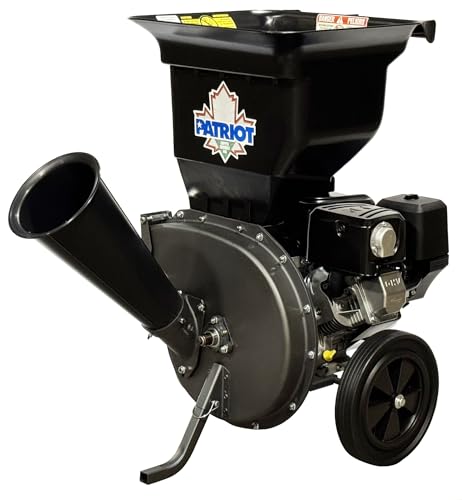
| Small gas chipper/shredder | ~2.5-3 in | 200-224 cc | Large lots, mixed debris |
| Tow-behind gas chipper | ~3-4 in | 6.5-14 hp | Acreage, heavy limb clearing |
| Dedicated leaf shredder | Leaves and twigs only | 10-13 amp motor | Fall cleanup, compost prep |
Should you buy a gas or electric wood chipper?
Electric chipper/shredders suit small, quiet, low-volume jobs, while gas machines handle bigger branches and long runtimes away from an outlet. The choice follows your property size and how far the debris sits from power.Electric models start on a switch, need no fuel or oil changes, and run quieter, so neighbours and lungs both benefit — but a cord tethers you to roughly 100 feet of an outlet and the branch limit stays modest. Gas models chip thicker limbs, run anywhere, and shrug off long sessions, at the cost of pull-starting, ethanol-free fuel, seasonal storage prep, and real noise. For a full trade-off with our current picks, see the best wood chippers buying guide.
What can you feed a wood chipper, and what must stay out?
Feed only woody, vegetative material: green branches within the size limit, twigs, hedge trimmings, and dry leaves. Keep out stones, soil-caked roots, metal, plastic, palm fronds, and anything wet enough to clog the chute — these dull blades, jam the rotor, or turn into projectiles.Root balls hide grit that wrecks knives, and long vines or wet grass wrap the shaft and stall the machine. Wet leaves are the most common clogging culprit, so let them dry before shredding. For thick trunks beyond the rated diameter, cut them to length with a gas chainsaw and split them for firewood instead of forcing the chipper.
How do you keep a wood chipper cutting well?
Sharp, correctly set blades and a clear discharge screen keep a chipper turning branches into clean chips instead of chewing and jamming. Fresh fuel or a healthy motor, plus a clean air filter on gas engines, complete the short maintenance list.Chipper knives and shredder flails dull with use; many are reversible or resharpenable, so flip or file them before they start tearing rather than slicing. A dull knife forces the motor to work harder, produces ragged chips, and jams far more often, so treat blade care as the highest-value maintenance you do. Clear the discharge screen whenever chip flow slows, and check that fasteners stay tight against the vibration these machines produce. Gas engines want stabilised, ethanol-free fuel and off-season storage prep so the carburettor does not gum up.
What does it cost to own and run a wood chipper?
A wood chipper costs from roughly a few hundred dollars for a corded electric chipper/shredder to well into four figures for a tow-behind gas machine, and the sticker price is only the start — blades, fuel or electricity, and engine upkeep all add to the lifetime cost.Running costs split cleanly by power source. A corded electric machine draws only household electricity and needs almost nothing beyond occasional blade care, so its cost of ownership stays low. A gas chipper/shredder adds fresh stabilised fuel, periodic oil changes, an air filter, and a spark plug, plus the off-season storage prep any small engine needs. The consumable that matters most on either type is the cutting edge: chipper knives and shredder flails are usually reversible or resharpenable, but a replacement set is a real line item once the edges are gone. Factor in your own time, too. If a machine sits idle eleven months a year, the honest cost per hour of use can rival simply hiring a mulching contractor for the one weekend you actually need it.
Should you buy a wood chipper or hire one?
Buy a wood chipper if you clear brush every season, and hire one only for a single large cleanup, because a day-rate rental or a mulching contractor almost always costs less than owning a machine that would otherwise sit idle most of the year.The decision mirrors the one many owners face with a gas log splitter: occasional heavy jobs favour renting, while regular use favours owning. A one-off storm that drops a tree's worth of limbs is a rental job — you pay for a day, return the machine, and store nothing. A property that generates prunings, hedge waste, and fallen limbs through the year rewards ownership, because the per-use cost falls every time you roll the machine out. Be honest about frequency. Buyers routinely overestimate how often they will chip, then watch an expensive gas machine gather dust. If your real pattern is one big cleanup a year, a rental or a contractor with a professional chipper is both cheaper and safer than owning a machine you rarely practise on.
How do you set up and store a wood chipper?
Set a wood chipper on firm, level ground with clear space around the discharge, then after every session clean the chutes, check the fasteners, and store the machine dry under cover so blades and engine survive the off-season.Good setup and storage follow a short routine, listed in order below.
- Position the machine on firm, level ground with room to stand to the side of the infeed and clear space beyond the discharge.
- Chock the wheels if the ground slopes, and confirm the blades and screen are clean and tight before starting.
- After use, let it cool, then clear packed chips and leaf residue from the chutes and screen.
- Check that vibration has not loosened any fasteners, and wipe down the cutting area.
- For gas machines, stabilise the fuel or run the tank dry before long storage; for all machines, store the tool dry.
Keeping the machine under cover — a shed, garage, or dedicated outdoor tool storage — stops rust forming on the blades and protects the engine, and a clean screen means the next session starts without a jam.
What are the most common wood chipper mistakes?
The most common wood chipper mistakes are feeding material too fast, sending wet leaves through the shredder, forcing branches beyond the rated diameter, and running with dull blades — every one of them causes jams, poor chips, or an outright hazard.The mistakes worth avoiding are listed below.
- Overfeeding: cramming branches faster than the rotor can clear them bogs the machine and invites a jam.
- Wet leaves: damp, matted leaves clog the shredder chamber and stall the motor.
- Oversized or forked wood: a limb at or above the rated limit, or a Y-shaped fork, stops a small machine and strains a large one.
- Dull blades: worn knives tear instead of slice, produce ragged chips, and jam far more often.
- Wrong chute: branches belong in the chipper inlet and leaves in the shredder hopper, not the reverse.
- Reaching in: putting a hand toward the infeed to clear or push material is the mistake behind the most serious injuries.
Avoid these and most of what frustrates or endangers new owners simply never happens.
What safety gear and technique does a wood chipper demand?
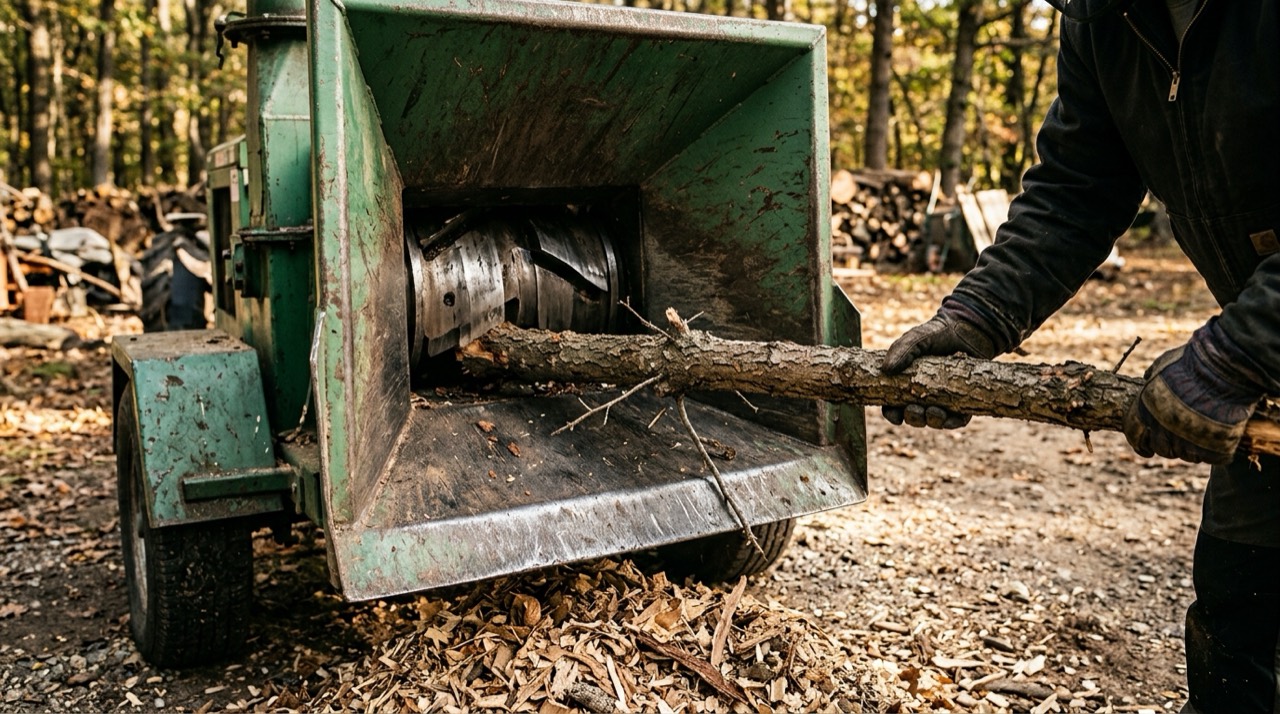
A wood chipper is among the most dangerous tools a homeowner can own and demands full personal protective equipment plus disciplined feeding technique. Wear hearing and eye protection, snug work gloves without loose cuffs, and never wear dangling drawstrings, scarves, or jewellery near the hopper.Feed branches from the side of the chute, never with your hands over the opening, and use a push stick or let a longer branch push the short one through. Keep children and pets well clear, stand where you can reach the shut-off, and never reach in to clear a jam while the machine is running. The infeed can grab material — and anything caught with it — faster than you can react. Large limbs, leaning trees, and any overhead work belong to a trained arborist, not a backyard chipper; these guides are general information, not a substitute for hands-on training.