
Best Wood Chipper
Best Wood Chipper, ranked from aggregated owner ratings and reviews, not first-hand testing. Real pros, cons, and who each pick is best for.

Our Top 3 Picks
Quick Comparison
| Product | Best for | Buy | |
|---|---|---|---|
| Sun Joe CJ603E | Best Overall | See Amazon | View (paid link) |
| WEN 41121 | Best Value | See Amazon | View (paid link) |
| Landworks Mini Electric Wood Chipper | Best Compact | See Amazon | View (paid link) |
| Patriot CSV-3100B Electric Chipper/Shredder | Best Premium | See Amazon | View (paid link) |
| Champion 100137 3-Inch Gas Chipper/Shredder | Best Heavy-Duty | See Amazon | View (paid link) |
| YARDMAX YW7565 Chipper/Shredder | Editor's Pick | See Amazon | View (paid link) |
How do you match a wood chipper to your workload?
Match the machine to the thickest branch you regularly cut and the volume you produce, not to the biggest number on the box. A 1.5-to-1.75-inch electric chipper/shredder covers most suburban pruning, while 3-inch gas machines earn their keep only on large lots and after storms.Start by walking your property and noting the widest branches you actually clear in a normal year. Branch diameter is the busiest buying question, and honest sizing saves money: everything thicker than the rated limit is really firewood for a log splitter, not chipper feed. Then weigh how much material you make — a few bags of prunings a season needs far less machine than weekly acreage cleanup.
Which power source fits your yard — electric, gas, or tow-behind?
Electric chipper/shredders win for small, quiet, low-maintenance jobs; gas wins for bigger branches and cordless reach; tow-behind chippers suit acreage. The right pick follows property size and how far the debris sits from an outlet.Electric machines start instantly, skip fuel and oil, and stay quiet enough for close suburban lots, but a cord limits range and the branch capacity stays modest. Gas machines chip thicker limbs and run anywhere, at the cost of pull-starting, ethanol-free fuel, and seasonal storage — the same upkeep our gas log splitter guidance covers. Tow-behind chippers only make sense on acreage with a garden tractor to move them.
What separates a good chipper/shredder from a frustrating one?
Feed-chute design, blade quality, a jam-clearing function, and an easy-out screen decide daily satisfaction more than raw power. A machine that clogs and needs tools to clear will sit unused in the shed. The attributes worth checking are listed below.- Feed design: a chute that self-feeds branches beats one you must force
- Blade type: reversible, resharpenable knives outlast stamped single-use blades
- Jam clearing: a reverse function or tool-free screen turns a clog into a two-minute fix
- Mobility: pneumatic wheels roll over lawn and gravel that hard casters snag on
- Collection: an included bag or bin saves raking chips off the ground
How do our wood chipper picks compare?
The six picks below span quiet electrics to 3-inch gas machines. Use the table to line up branch capacity against power source before reading each full review, and remember these figures are published maximums for green wood, not tested guarantees.| Model | Type | Branch limit (published) | Best for |
|---|---|---|---|
| Sun Joe CJ603E | Electric | ~1.7 in | Best overall suburban pick |
| WEN 41121 | Electric | ~1.5 in | Lowest-cost occasional use |
| Landworks Mini | Electric | ~1.6 in | Compact storage |
| Patriot CSV-3100B | Electric | ~2.5 in | Durable dual chip and shred |
| Champion 100137 | Gas | ~3 in | Heavy-duty large lots |
| YARDMAX YW7565 | Gas | ~3 in | Premium gas build |
How is branch capacity rated, and what is the real limit?
Branch capacity is published as a maximum diameter for green, straight hardwood, so the real working limit is smaller once you feed dry, knotty, or forked wood. Treat the number on the box as a ceiling you rarely touch, not an everyday figure.Manufacturers rate capacity under ideal conditions: fresh, straight, single-stem hardwood fed at the right speed. Seasoned wood is harder and can bog a motor a full size below its rating, and a forked branch counts as its combined width where the limbs meet, not the single stem it grew from. Grit, side shoots, and an off-centre feed all lower the practical limit further. For sizing, assume you will comfortably handle wood a little under the rated figure and reserve the maximum for occasional, careful cuts. Anything consistently beyond that limit is really firewood bound for an electric log splitter, not chipper feed — forcing it only jams the machine or strains the engine.
What do reduction ratio and chip size tell you?
Reduction ratio describes how much the machine shrinks a pile — a 16:1 ratio turns sixteen bags of brush into one of chips — while chip size, set by the blades and any screen, decides whether the output suits paths or garden beds.A higher reduction ratio means less material to haul, bag, or spread, which matters most if you process real volume. Gas machines with a dedicated shredder chamber often publish higher ratios than compact electrics, because the shredder side packs soft material tightly. Chip size is a separate question: chipper knives set against a fixed anvil produce coarse chips good for walkways and slow-rotting tree rings, while a finer shredder screen yields a mulch that breaks down quickly on beds. If a uniform, fine texture matters for decorative beds, look for a machine that accepts a finer discharge screen, or plan to run material through twice.
How much maintenance will each power source need?
Electric chipper/shredders need little beyond keeping the blades sharp and the screen clear, while gas machines add engine upkeep: oil changes, a clean air filter, a spark plug, and stabilised fuel before storage. Blade care is the shared, highest-value task on both.Plan the maintenance by type before you buy, because the machine you dread servicing is the one that sits unused. The recurring tasks are compared below.
| Task | Electric | Gas |
|---|---|---|
| Blade sharpen or flip | Yes | Yes |
| Clear discharge screen | Yes | Yes |
| Engine oil change | No | Yes |
| Air filter and spark plug | No | Yes |
| Stabilised fuel and storage prep | No | Yes |
Reversible or resharpenable knives are worth paying for, since a serviceable edge extends the machine's life at low cost. Keep a spare set of blades and, on gas units, handle fuel the same careful way the bar oil, chain oil and fuel guidance describes for other small engines.
How much should you spend on a wood chipper?
Spend to match your workload, not the biggest number available: a corded electric covers most suburban pruning for a few hundred dollars, a gas chipper/shredder costs more and earns it only on large lots, and tow-behind machines belong on acreage.Money spent above your real needs rarely pays back, so anchor the budget to how much and how thick you actually chip. The rough bands are set out below.
- Entry electric: lowest cost, ~1.5-inch branches, right for light, occasional pruning.
- Mid electric: sturdier build and larger capacity (up to ~2.5 inches on machines like the Patriot (paid link) CSV-3100B), for owners who chip regularly but want no engine.
- Gas chipper/shredder: a clear step up in price and capability, justified by 3-inch limbs and cordless range on large lots.
- Tow-behind gas: the top band, sensible only with acreage and a tractor to move it.
A machine you use every season justifies spending up; one that will sit idle does not, and renting may serve you better.
Which pick suits which buyer?
Match the pick to your yard: the Sun Joe CJ603E suits most suburban lots, the Patriot CSV-3100B suits heavier electric use, and the Champion 100137 or YARDMAX YW7565 suit large lots and storm cleanup where 3-inch capacity and cordless range matter.Reading the comparison table above against your own workload is the fastest route to the right machine. A close-together suburban block with modest prunings rewards a quiet electric that starts on a switch. An owner who both chips branches and shreds heavy leaf loads, but still wants electric convenience, is the natural fit for a larger-capacity plug-in. Anyone clearing fallen limbs across a large property, or facing storm debris, needs the branch capacity and cordless runtime only a gas machine provides — and should budget for the fuel, oil, and hearing and eye protection that come with it. Whatever the pick, size for your typical branch and route genuinely oversized wood to a gas chainsaw and splitter instead.
What safety features should a wood chipper have?
Every chipper you consider should have a wide safety hopper, an included tamper or push tool, and a clearly reachable shut-off. A chipper pulls material in faster than you can pull back, so treat guarding and feeding discipline as buying criteria, not extras.Wear hearing and eye protection and snug work gloves every time, and never reach into the hopper while the rotor spins. Feed from the side, keep bystanders clear, and leave large, leaning, or overhead limbs to a trained arborist. No feature replaces disciplined technique, and no backyard machine makes felling work safe.
Full Ranking, Reviewed

Best for Suburban homeowners clearing branches up to about 1.7 inches
- 15-amp electric motor that starts on a switch with no fuel or pull cord
- Rated for green branches up to roughly 1.7 inches thick
- Reduction ratio published around 16:1 for a compact chip pile
- Wide safety hopper with an included tamper for controlled feeding
- Quiet enough for close-together suburban lots
- No fuel, oil, or off-season winterising to manage
- Light enough for one person to reposition
- Limited to smaller branches than any gas machine
- Needs an outlet or heavy-gauge extension cord within reach
Verdict: For the branch sizes most suburban yards actually produce, the CJ603E covers the job without gas-engine upkeep.

Best for Budget-minded owners with light, occasional pruning waste
- 15-amp motor sized for casual, intermittent chipping
- Rated for branches up to about 1.5 inches
- Onboard collection bag to catch the mulch
- Wheeled base for moving around a small yard
- Among the lower-cost entries from an established tool brand
- Collection bag keeps cleanup simple
- Corded operation with minimal maintenance
- Smaller branch limit than premium electrics
- Motor can bog on dense, dry hardwood
Verdict: A sensible first chipper for occasional light pruning, provided you respect its modest branch limit.

Best for Small yards and tight storage where footprint matters
- Compact electric motor built for small-space storage
- Rated for branches up to about 1.6 inches
- Lightweight frame that rolls easily on wheels
- Instant corded start with no engine to maintain
- Stores in a corner of a small shed or garage
- Simple to move and set up single-handed
- No fuel handling or seasonal prep
- Suited to light, intermittent use rather than volume
- Small hopper slows feeding of leafy debris
Verdict: The right call when storage space, not chipping capacity, is your binding constraint.
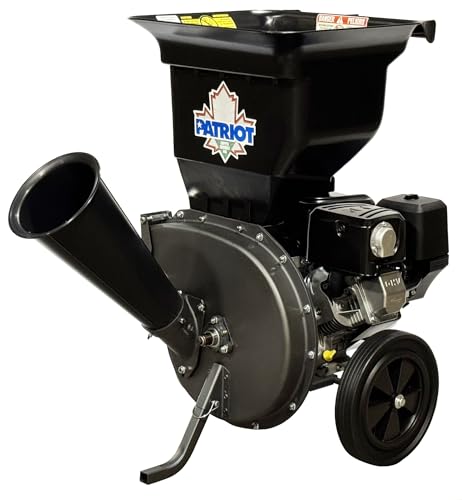
Best for Owners wanting a durable electric that both chips and shreds heavily
- Electric motor driving a separate chipper chute and shredder hopper
- Rated for branches up to about 2.5 inches, high for an electric
- Design aimed at reducing clogs in the shredder chamber
- Replaceable, resharpenable blades on a US-assembled build
- Larger branch capacity than most plug-in chippers
- Handles both chipping and heavy leaf shredding
- Serviceable blades extend the machine's life
- Heavier and pricier than basic electric chippers
- Still tethered to an outlet within cord reach
Verdict: A step up for owners who want electric convenience without giving up branch capacity or build quality.

Best for Large lots and storm cleanup with branches up to 3 inches
- 224cc gas engine for continuous, off-grid runtime
- Chips branches up to about 3 inches in diameter
- Separate shredder hopper for leaves and soft debris
- Reduction ratio published around 20:1
- Handles far bigger limbs than any plug-in model
- Runs anywhere without a cord
- Dual chipper and shredder chambers in one machine
- Requires fuel, oil changes, and off-season storage prep
- Loud enough that hearing protection is mandatory
Verdict: The pick when branch size and cordless range matter more than noise and engine upkeep.

Best for Owners who want gas power in a heavier-built chassis
- 208cc engine driving a dual chipper and shredder system
- Chips branches up to about 3 inches
- Steel construction and larger wheels for rough ground
- Reduction ratio published around 15:1
- Solid frame that stands up to repeated heavy sessions
- Big wheels roll over lawn and uneven ground
- Chips and shreds without swapping tools
- Heavy to move without the wheels on level ground
- Carries the usual gas fuel and maintenance burden
Verdict: A well-built gas alternative for buyers who plan to lean on the machine season after season.
Frequently Asked Questions
What size wood chipper is best for a typical suburban yard?
A 1.5-to-1.75-inch electric chipper/shredder suits most suburban yards, because the branches homeowners actually clear rarely exceed that. Step up to a 3-inch gas machine only if you regularly cut thicker limbs or clear storm damage across a large lot.
Are electric wood chippers powerful enough to be worth it?
Electric chipper/shredders are worth it for the branch sizes most homeowners produce, roughly up to 1.5 to 2.5 inches depending on the model. They start on a switch, run quietly, and skip fuel and oil, but a cord limits range and they will bog on wood beyond their rating.
Can I put branches straight from the tree into a chipper?
Green branches within the machine's rated diameter feed best, so fresh cuts are ideal. Shake off soil first, avoid root balls and grit that dull blades, and trim side shoots so a branch feeds straight rather than jamming at a fork.
Do wood chippers need much maintenance?
Electric chippers need little beyond keeping the blades sharp and the discharge screen clear. Gas models add engine care: oil changes, a clean air filter, and stabilised ethanol-free fuel with off-season storage prep. Sharp, correctly set blades matter most on either type.