


What size wood chipper do I need for my property?
The size wood chipper you need is set by the thickest branch you routinely cut and how much material you produce, not by the largest branch you can imagine. Match capacity to your real workload and you avoid both an underpowered machine and an oversized one you rarely justify.Small suburban yards are well served by a 1.5-to-1.75-inch electric chipper/shredder. The branches homeowners actually clear — prunings, hedge waste, storm twigs — rarely exceed that, and an electric starts on a switch, runs quietly, and needs no fuel. If you occasionally hit something thicker, it is usually firewood for a log splitter rather than chipper feed.
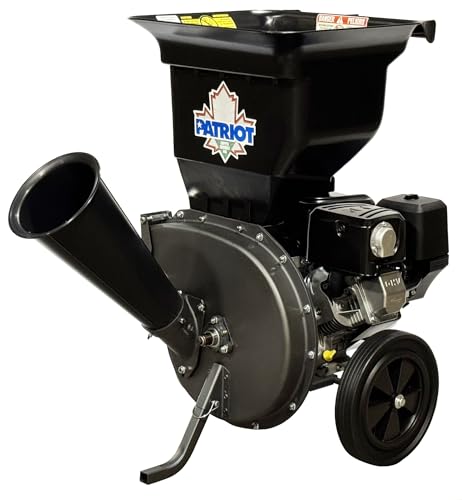
Large lots and rural blocks justify a 2.5-to-3-inch gas chipper/shredder. Gas power handles bigger limbs, runs cordless anywhere on the property, and copes with long sessions, in exchange for fuel, oil changes, and noise. Choose this size if you clear fallen limbs or process a lot of brush each season.
Acreage and heavy storm cleanup call for 3-inch-plus tow-behind chippers, matched to a garden tractor to move them. Remember that rated capacity assumes green, straight hardwood; dry wood and forked branches effectively lower it. Size for your typical branch, not the rare oversized one, and cut anything beyond the machine's limit with a chainsaw instead.
Why is the real branch limit lower than the rated size?
The real branch limit is lower than the rated size because manufacturers rate capacity for green, straight, single-stem hardwood, while dry, knotty, or forked wood is harder to cut and bogs the machine below its published maximum. Treat the rating as a ceiling, not a daily figure.Seasoned wood loses moisture and hardens, so a limb a machine chips easily when green may stall it once dry. A forked branch counts as its combined width where the limbs meet, not the single stem, and knots concentrate tough grain that resists the knives. Feeding at the very limit also demands a slow, careful pace, because pushing a maximum-diameter branch fast simply jams the rotor. For sizing, assume comfortable everyday work a little under the rated figure and reserve the maximum for occasional cuts, so the machine you choose is not permanently working at its edge.
How do yard size and waste volume change the chipper you need?
Yard size and waste volume change the chipper you need as much as branch thickness does: a small yard making a few bins of prunings needs far less machine than acreage generating brush every week, even if the branch diameters are similar.Volume drives duty cycle. A compact electric that chips a Saturday's prunings comfortably would overheat or frustrate an owner feeding it all day, where a gas machine's continuous runtime pays off. Conversely, a large-capacity gas chipper is wasted money on a small suburban block that produces little. Weigh three things together — the thickest branch you routinely cut, how much material you make in a year, and how far it sits from an outlet. A cord-free gas machine earns its keep on a big property, while a quiet electric suits close-together lots. Sizing on volume as well as diameter keeps you from buying either an underpowered or an over-large machine.
When is a wood chipper the wrong size for the job?
A wood chipper is the wrong size when it is too small to feed your routine branches without stalling, or so large it sits idle and overpowered for a small yard. Both mismatches waste money and, in the undersized case, tempt unsafe forcing of oversized wood.A worked example shows the trap. An owner of a small suburban block who buys a 3-inch gas machine to be safe ends up with a loud, fuel-hungry chipper that rarely meets a branch near its limit and demands upkeep for little benefit. The opposite error — a tiny electric on an acreage of storm-fallen limbs — leads to forcing wood beyond the rating, jams, and the temptation to reach in. Anything consistently beyond the machine's limit is firewood for a gas chainsaw and a splitter, not chipper feed. Size honestly to your typical workload, and rent a larger machine for the rare oversized job rather than buying up.
Should you size up for occasional storm cleanup?
Do not size up your everyday chipper for the rare storm; rent a larger machine, or hire a contractor, for one-off heavy cleanup instead. Buying a big gas chipper for a once-a-decade event means paying for and maintaining capacity that sits idle almost every day.A storm that drops major limbs is exactly the job for a day-rate rental with real capacity and a professional's discharge reach. For your normal year, buy the machine that matches your routine branches and volume, and treat catastrophic cleanup as a separate, temporary need. Sizing your purchase to the worst day rather than the typical one is how owners end up with an over-large, under-used machine — and a limb beyond any homeowner chipper still belongs to a gas chainsaw and a trained arborist, not forced feeding.