


How does a wood chipper shredder work?
A wood chipper shredder works by feeding material into a spinning rotor with two cutting systems, then ejecting the reduced material through a discharge chute. Sharp knives handle branches on the chipper side, and blunt flails grind leaves and soft debris on the shredder side.The chipper chute leads to angled knives mounted on a heavy disc or drum. As a branch feeds in, each knife slices across the grain, shaving off chips whose size depends on the blade setting and feed speed. The rotor's mass carries momentum through knots and forks, which is why the disc is heavy and why the machine bogs if you feed too fast.
The shredder hopper leads to a different set of tools — flails, hammers, or on some machines a cutting line — that beat and tear soft material instead of slicing it. Leaves, twigs, and hedge clippings are torn into a fine mulch and forced through a screen that sets the output size. The two systems share one engine or motor but stay in separate chambers so each does its own job.
Both outputs leave through a discharge chute, thrown clear by the rotor. That same infeed force that makes the machine efficient also makes it dangerous, so every design pairs the cutting parts with a deep hopper and a shut-off. Understanding this two-system layout explains why branch capacity and leaf-shredding ability are rated separately, and why matching each to your yard matters before you buy, as the wood chipper buying guide sets out in detail.
What are the main parts of a chipper shredder?
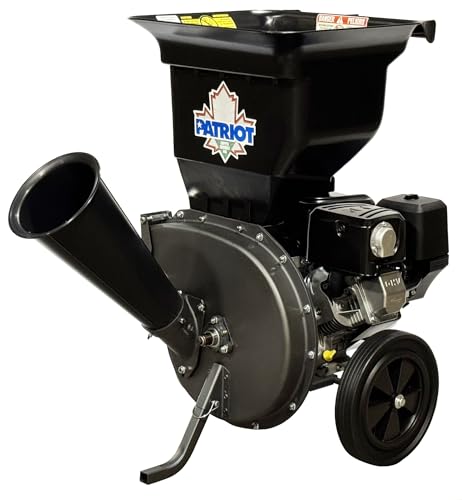
A chipper shredder is built from a feed hopper and chipper chute, a heavy rotor carrying knives and flails, a sizing screen, a discharge chute, and an engine or motor to drive it all. Each part maps to one stage of turning brush into chips or mulch.The core components are listed below.
- Chipper chute: the angled inlet that guides a branch onto the knives.
- Shredder hopper: the wider top opening that feeds leaves and soft debris onto the flails.
- Rotor disc or drum: the heavy spinning mass that carries the cutting tools and stores the momentum that powers through knots.
- Knives and flails: sharp knives slice branches, while blunt flails, hammers, or line tear soft material.
- Screen: sets how fine the shredded output is before it can exit.
- Discharge chute: throws finished chips and mulch clear of the machine.
Understanding which part does what makes it obvious why branches and leaves need separate inlets and why the rotor is deliberately heavy.
How does feed speed change the way a chipper works?
Feed speed changes both chip size and how hard the machine works: fed slowly, the knives take clean, consistent chips and the rotor keeps full speed; fed too fast, the wood bogs the rotor, produces ragged output, and jams.The rotor stores energy in its mass and gives it up as it cuts. Present wood at a steady, moderate rate and each knife pass shaves a chip while the rotor recovers speed between cuts. Cram material in faster than the rotor can clear it, and the stored energy drains, the engine or motor labours, and the cut degrades or stops altogether. This is why makers warn against overfeeding, and why the machine tells you its limit through the drop in engine note. Listening for that drop, and pausing to let the rotor recover, is the single habit that keeps a chipper cutting cleanly and avoids most jams.
What is the difference between a disc and a drum chipper?
A disc chipper mounts its knives on a heavy flywheel-like disc, while a drum chipper carries them on a wide rotating cylinder; disc designs dominate homeowner machines, and drum designs appear on larger commercial chippers. Both slice branches, but the geometry differs.On a disc chipper, angled knives sit on a thick steel disc spinning beside the feed chute, and the disc's mass carries momentum through tough wood — the layout in most backyard chipper/shredders. A drum chipper uses a full-width cylinder studded with knives, which self-feeds aggressively and suits high-volume commercial work but is heavier and hungrier. For a homeowner sizing a machine, the practical point is that the disc-and-flail combo in a chipper/shredder is what handles a mixed suburban waste stream, as the wood chipper buying guide explains. The dangerous grabbing force is common to both, so the same feeding discipline applies whatever the rotor shape.