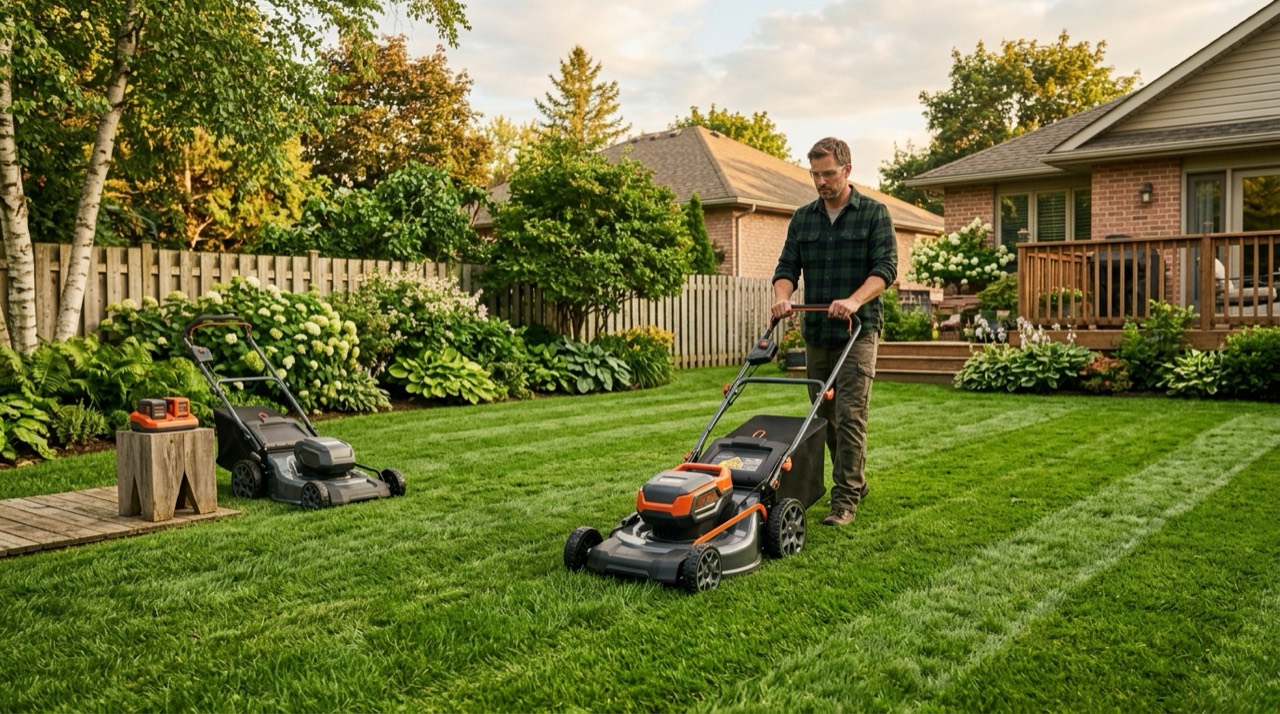
Lawn Mowers: Gas, Battery, Robot, Riding & Zero-Turn Buying Guides
Every mower class from push mowers to zero-turns and robots — sizing to your yard, cutting decks, batteries, and season-long maintenance. Authoritative manufacturer specifications, sizing parameters, and sub-category master breakdown.
- 8
- Sub-Categories
- 16
- In-Depth Guides
- 83
- Products Reviewed
- Aug 2026
- Last Reviewed

Recommended Products


Sub-Category Micro Hubs
In-depth technical analyses, material specifications, and comparative evaluation.
Gas Lawn Mowers
Detailed evaluation of anatomical parameters, safety standards, and practical recommendations for gas lawn mowers.
Battery Lawn Mowers
Detailed evaluation of anatomical parameters, safety standards, and practical recommendations for battery lawn mowers.
Electric Lawn Mowers
Detailed evaluation of anatomical parameters, safety standards, and practical recommendations for electric lawn mowers.
Robot Lawn Mowers
Detailed evaluation of anatomical parameters, safety standards, and practical recommendations for robot lawn mowers.
Riding Mowers & Tractors
Detailed evaluation of anatomical parameters, safety standards, and practical recommendations for riding mowers & tractors.
Zero-Turn Mowers
Detailed evaluation of anatomical parameters, safety standards, and practical recommendations for zero-turn mowers.
Push & Reel Mowers
Detailed evaluation of anatomical parameters, safety standards, and practical recommendations for push & reel mowers.
Lawn Mower Maintenance
Detailed evaluation of anatomical parameters, safety standards, and practical recommendations for lawn mower maintenance.
Lawn mowers here run from hand-powered reel mowers to ride-on tractors and robots. The right pick is set mostly by lawn size and terrain: walk-behind mowers suit small-to-mid yards, while riding mowers and zero-turn mowers earn their keep past half an acre.
Yard size is the deciding factor, and it maps cleanly onto mower class. Small, flat lawns are well served by a push or reel mower — the reel type cuts with no engine, no fuel and no charging. Mid-size yards are the sweet spot for walk-behind battery, electric and gas mowers. Large properties are where sitting down pays off, and hands-off owners increasingly hand the whole job to a robot mower.
Use lawn area as the starting point, then adjust for slopes, obstacles and how much you enjoy the walk. The ranges below are practical guides, not hard limits.
| Lawn size | Best-fit mower | Notes |
|---|---|---|
| Up to ~1/8 acre, flat | Push or reel mower | Cheapest, quietest, most exercise |
| 1/8–1/2 acre | Battery or gas walk-behind | Self-propelled helps on slopes |
| Any size, hands-off | Robot mower | Mows daily on its own; higher upfront cost |
| 1/2–2 acres | Riding mower / tractor | Faster, comfortable, bagging options |
| 1+ acre, open, complex | Zero-turn mower | Fastest around obstacles; steep-slope limits |
Ready to shortlist? Each guide links to a money page such as best battery lawn mowers so you can compare current models directly.
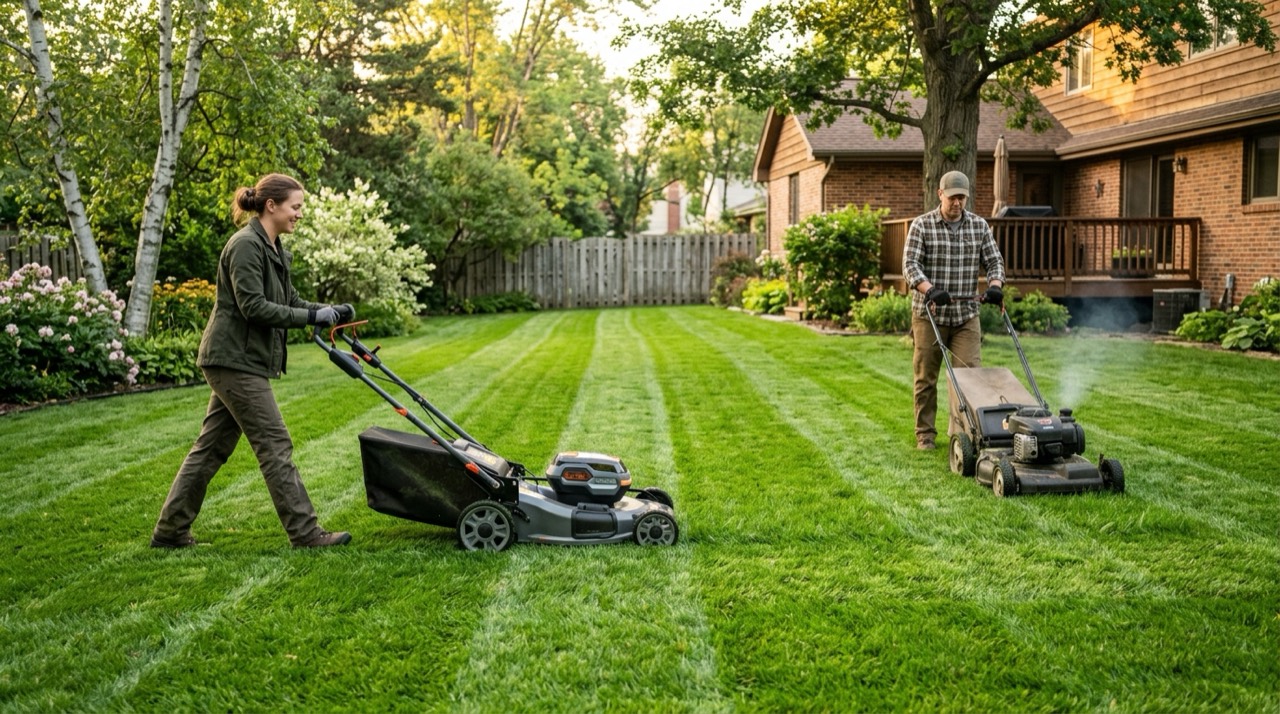
Power source shapes cost, noise, upkeep and how far you can mow before stopping. Gas mowers deliver the longest uninterrupted runtime and the most power for tall, wet or thick grass, at the price of fuel, oil changes and noise. Battery mowers have become the default for most suburban lawns — quiet, push-button start, no fumes — provided you size the battery to your yard. Corded electric mowers cost the least and never need charging, but the cord limits range to small lawns. Robot mowers flip the model entirely: they cut a little every day and return to charge themselves, trading a higher purchase price for near-zero weekly effort.
Every mower cuts better and lasts longer with a little upkeep, and the tasks vary by type. Gas mowers need seasonal oil changes, air-filter and spark-plug service, fresh fuel and a clean deck. Battery and electric mowers skip the engine chores but still want a sharp, balanced blade and a clear deck. Robot mowers need blade swaps, clean sensors and firmware updates. The one job common to nearly all of them is blade sharpening — a dull blade tears grass instead of slicing it, leaving brown, frayed tips. Our lawn mower maintenance guide walks through the seasonal checklist for each mower type.
Safety runs alongside upkeep. Mowers throw debris, and their blades keep spinning briefly after shutoff. Wear closed shoes and eye protection, clear the lawn of stones and toys before you start, and never reach under the deck until the blade has fully stopped and the mower is off or unplugged. On slopes, mow across the face with a walk-behind and up-and-down with a riding mower, always staying within the manual's stated slope limits.
Cutting width — the deck size — sets how much lawn you clear per pass, so a wider deck finishes a given lawn in fewer passes and less time. Walk-behind decks typically run 14–22 inches, while riding and zero-turn decks span 30–60-plus inches for large properties.
A wider deck is not automatically better. On a small or obstacle-filled lawn, a large deck is harder to steer around beds and trees and may not fit through a gate, so the theoretical time saving disappears. Match deck width to both lawn area and how open the space is.
| Deck width | Mower class | Best-fit lawn |
|---|---|---|
| 14–16 in | Push / reel | Small, tight, flat |
| 18–22 in | Walk-behind, self-propelled | Small to mid, some obstacles |
| 30–42 in | Riding mower | Half-acre to two acres |
| 42–60+ in | Zero-turn | Open acreage |
For most suburban lawns a walk-behind in the 18–22 inch range balances speed against maneuverability. The riding mowers and zero-turn mowers guides cover the wider decks, and the push and reel mowers guide the narrow ones.
Mulching is the default for a healthy lawn: it chops clippings fine and drops them back to feed the soil, saving bagging time. Bag when the grass is long, wet or full of leaves and you want a manicured finish; side-discharge for fast cutting of tall or overgrown grass.
Each mode suits a different situation, and most modern mowers switch between them with a plug or chute.
- Mulching: returns nitrogen to the soil and skips disposal, but works best when you mow often enough to remove only the top third of the blade.
- Bagging: gives the cleanest look and clears leaves and debris, at the cost of stopping to empty the catcher.
- Side-discharge: powers through tall, thick or overgrown grass without clogging, but scatters clippings across the lawn.
The rule that protects the lawn is the "one-third rule": never cut more than a third of the grass height at once. Removing more stresses the turf and leaves clumps that smother the grass beneath. In peak growing season that can mean mowing more than once a week.
A well-maintained mower commonly lasts 8–10 years or more, with the engine or battery, blade and deck being the parts that determine its life. The running cost is fuel or charging, blade sharpening, and — on gas mowers — seasonal oil, filter and plug service.
Longevity comes down to upkeep more than price. A gas engine that gets its oil changed and fuel kept fresh outlasts one that is neglected; a battery that is stored cool and partly charged holds capacity far longer than one left flat in a hot shed. The single habit that most affects cut quality across every mower type is a sharp, balanced blade, because a dull blade tears grass and leaves brown, frayed tips that invite disease.
- Gas mowers: budget for fuel, oil changes, air filters, spark plugs and occasional carburettor cleaning.
- Battery and electric mowers: almost no engine cost, but packs are the long-term replacement item.
- Robot mowers: blade swaps, clean sensors and firmware updates keep them cutting reliably.
Our lawn mower maintenance guide sets out the seasonal checklist for each type, and the robot lawn mowers guide explains the different upkeep a hands-off machine needs. Spending a little on maintenance each season is what turns a mower into a decade-long tool rather than a five-year one.