
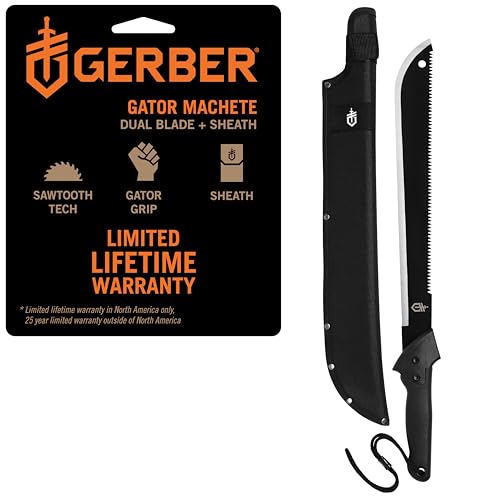

What is a machete used for?
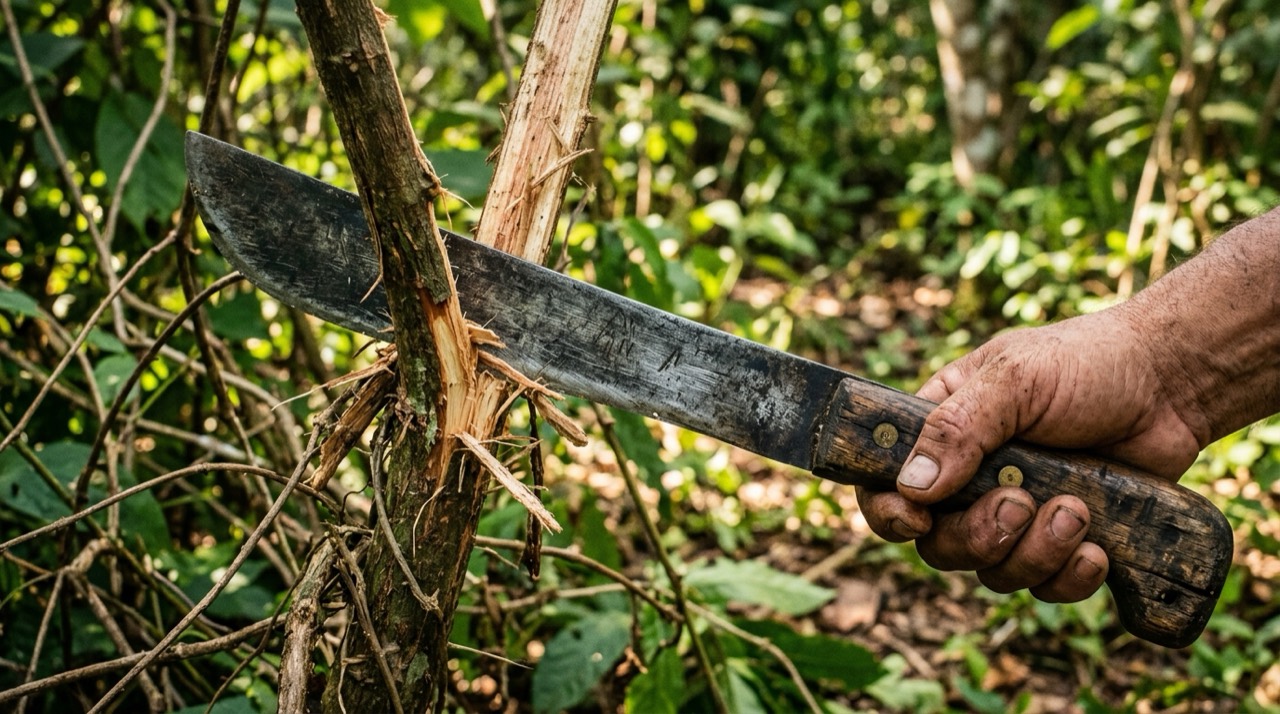
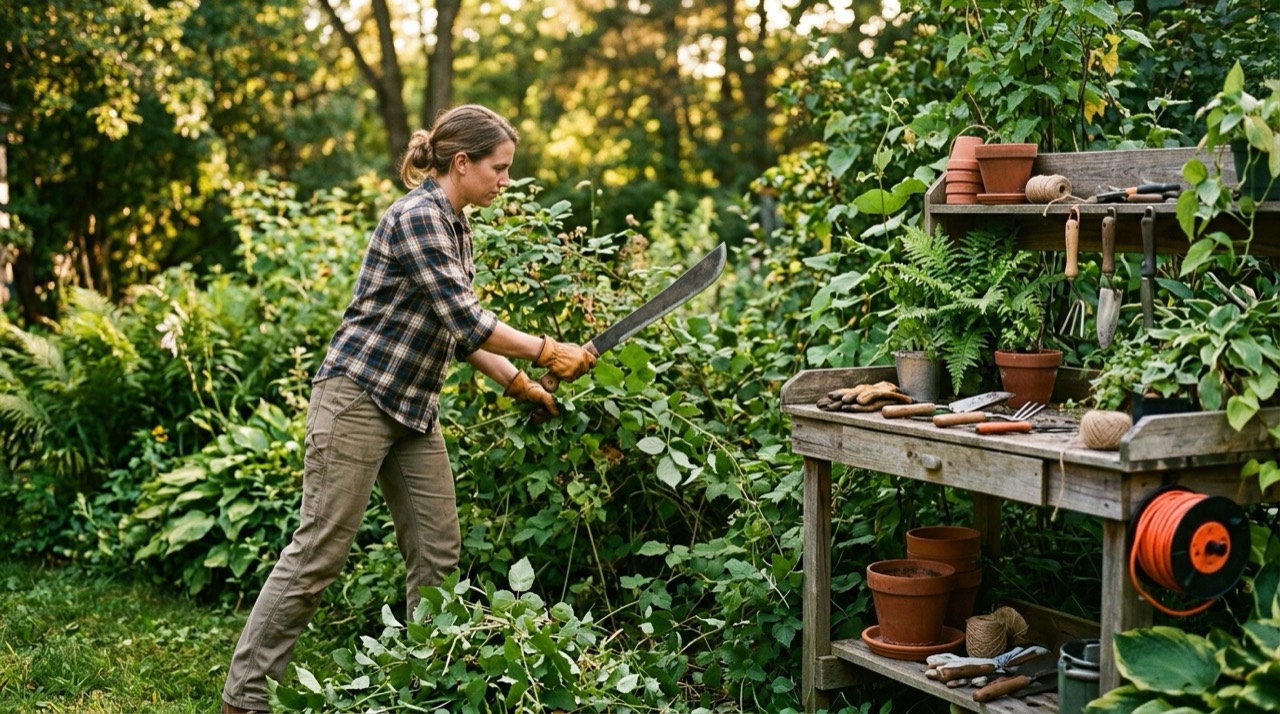
A machete is a long, single-edged blade built to clear brush, vines, saplings, and overgrown grass with a swinging chop rather than a sawing cut. Landowners, gardeners, and trail crews reach for one to open up ground that a string trimmer or hand pruners cannot reach.
Beyond clearing paths and knocking back blackberry and brambles, a machete limbs thin branches, cuts cane and reeds, chops kindling, harvests garden crops, and even doubles as a rough digging tool. It is deliberately simple: one edge, one handle, and enough blade length to sweep through vegetation in a single stroke. Where growth turns woody and thick, a dedicated brush cutter or an axe does the job with less effort, but for fast, low-cost clearing across mixed ground, few tools match a machete.
Which machete blade style suits your work?
The blade profile decides how a machete behaves in the cut. Latin blades handle all-round clearing, bolos and kukris carry weight forward for chopping, and parangs and pangas bite hardest in dense, woody growth. Match the shape to the vegetation you cut most often.
The main machete profiles and what each does best are listed below.
- Latin (bush) machete — a straight, even-width blade that slices grass, vines, and light brush with a fast, whipping stroke; the most common all-round pattern.
- Bolo — a blade that bulges toward the tip to shift weight forward, which adds chopping power for cane, saplings, and heavier stems.
- Kukri — a forward-angled, recurved blade that drives the edge down hard on impact, chopping well above its size.
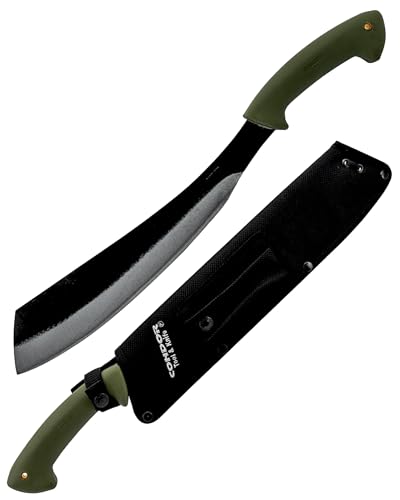
- Parang — a curved, thick-spined blade from Southeast Asia, built to power through woody jungle growth and green wood without binding.
- Panga — a broad, weight-forward African pattern with a deep belly for chopping and a hooked tip for pulling cut brush clear.
Most buyers clearing a yard or trail are best served by a latin or bolo blade; a kukri or parang earns its place when the growth is consistently woody.
What blade length should you choose?
Blade length trades reach for control. Long blades of 22 to 28 inches whip through tall grass, reeds, and light brush at arm's length; a mid-length 18-inch blade is the all-round standard; short 10- to 14-inch blades give control in tight brush and pack small for camping and trail work.
A longer blade covers more ground per swing but demands room and a controlled arc to stay safe. A shorter blade is slower over open ground yet far easier to steer around fences, plants you want to keep, and your own legs. Weight and balance matter as much as length: a heavier, tip-weighted blade chops, while a lighter, even blade slices and is less tiring over a long session. If you only buy one machete for mixed clearing, an 18-inch blade with a moderate weight forward is the safest starting point, and you can add a longer or shorter blade later as your ground demands.
Does machete steel matter — carbon vs stainless?
Steel choice sets the trade-off between edge and upkeep. Carbon steels such as 1075, 1084, and 1095 take a keen edge, absorb repeated impact, and re-sharpen quickly, but they rust if left wet. Stainless blends like 3Cr13 and 420 resist corrosion in wet climates but tend to dull sooner. Most working machetes use carbon steel.
A machete is heat-treated deliberately soft, usually somewhere around the low- to mid-50s on the Rockwell hardness scale, so the blade flexes and bends rather than chips or snaps when it strikes a hidden stone or a dense knot. That toughness matters more than razor sharpness for a tool that lives outdoors and takes abuse. Powder coatings and black-oxide finishes on many blades slow rust between cleanings, but no coating replaces drying the blade and wiping it with oil. For most buyers in a temperate climate, a coated carbon blade is the sensible default; stainless earns its place mainly for coastal, humid, or saltwater use where a blade sits idle and damp for long stretches.
How does a machete compare with other clearing tools?
A machete clears soft, mixed, low-growing vegetation faster and far more cheaply than most powered tools, but it is not the right choice for every job. Grass and edges suit a trimmer, dense scrub suits a brush cutter, and anything woody past wrist thickness belongs to a saw or an axe.
The clearing tools a machete competes with, and where each pulls ahead, are compared below.
| Tool | Best growth | Effort | Rough cost |
|---|---|---|---|
| Machete | Grass, vines, light brush, cane | Manual, moderate | Low |
| String trimmer | Grass, weeds, soft edges | Powered, low | Low–moderate |
| Brush cutter | Dense scrub, thick weeds, saplings | Powered, low | Moderate–high |
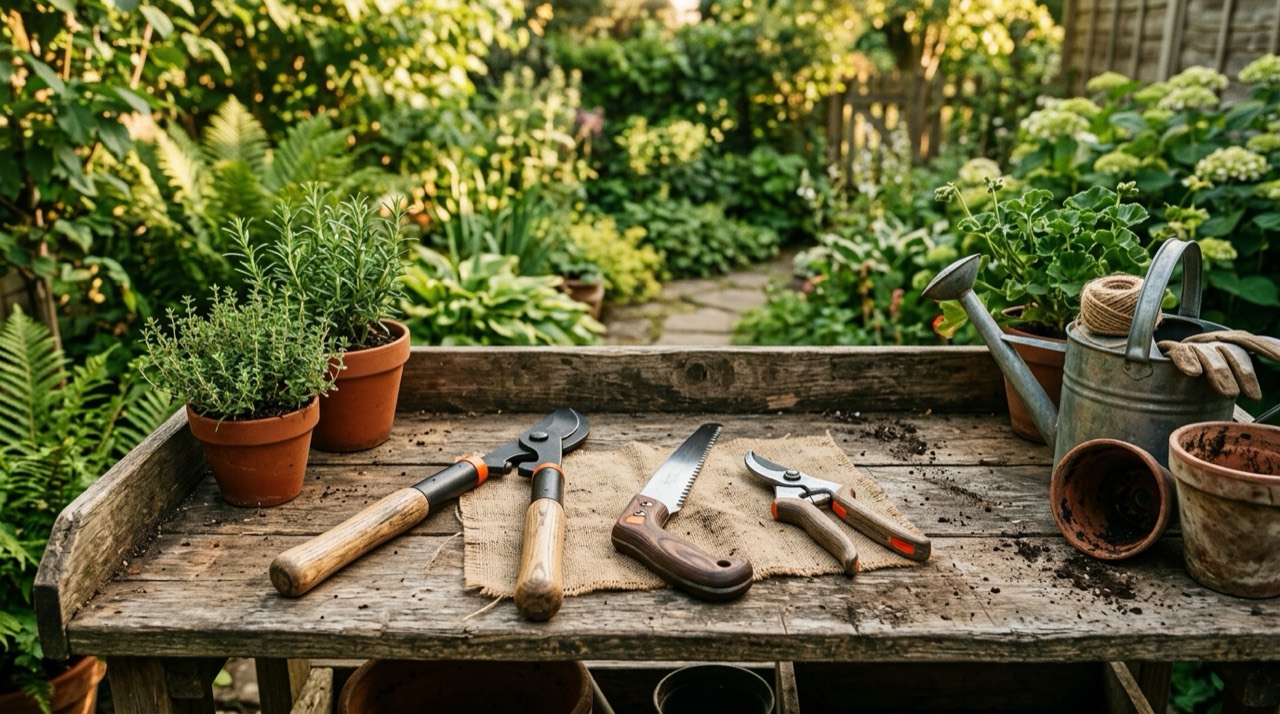
| Loppers / pruning saw | Individual branches and stems | Manual, low | Low |
| Splitting axe / saw | Trunks and firewood-thick wood | Manual, high | Moderate |
A string trimmer beats a machete on open lawn and neat edges, but its line shreds against woody stems that a blade slices cleanly. A brush cutter fitted with a metal blade out-clears a machete on dense, tangled scrub and does it with far less arm work, at the cost of fuel, weight, and price. For selective work — taking out one stem while leaving the plant beside it — loppers and pruning saws give control a swinging blade cannot. The machete's advantage is range and value: one cheap, low-maintenance tool that handles grass, vines, cane, and light brush across mixed ground without fuel, cords, or batteries.
What machete features are worth paying for?
The features that separate a machete you keep for decades from one that fails in a season are a full tang, a secure handle, a decent sheath, and sensible blade weight — not the brand on the blade. Spend where it affects safety and durability, and ignore cosmetic extras.
The machete features that genuinely affect performance and safety are listed below.
- Full tang — the steel runs the full length of the handle, so the blade cannot loosen or fly free under hard chopping; a partial or rat-tail tang is a long-term weak point.
- Handle material and texture — textured rubber or molded polymer grips stay secure in wet or gloved hands, while smooth or lacquered wood turns slippery with sweat.
- A usable sheath — nylon, molded polymer, or welted leather that protects the edge and covers the blade in transport; a flimsy sheath is worth replacing.
- Blade thickness and weight — a thicker, tip-heavy blade chops woody growth; a thinner, lighter blade slices grass and tires you less, so match mass to your vegetation.
- A ground factory edge — most machetes ship blunt, so a blade that arrives with a real edge saves you a sharpening session, though nearly all benefit from a file before first use.
- A saw back — coarse spine teeth help on the occasional thicker limb, but they add snag risk and are no substitute for a proper pruning saw.
How much machete do different jobs need?
Match the blade to the job and you avoid both a tool that is too small to be useful and one too long to control. A suburban yard needs a mid-length blade, acreage rewards reach, trail and camping work rewards a compact blade, and consistently woody scrub rewards a chopping profile.
The blade that fits common clearing situations is set out below.
- Small suburban yard — an 18-inch latin or bolo handles seasonal vines, cane, and overgrown corners without endangering fences and beds; a compact blade suits crowded borders.
- Half-acre and acreage — a longer 20- to 24-inch blade sweeps more ground per stroke on open, low growth, while a brush cutter takes over on dense stands.
- Trail maintenance and bushcraft — a 12- to 14-inch blade or a hatchet or camp axe packs small and stays controllable on narrow tracks.
- Camping and pack carry — a short, sheathed blade earns its weight for clearing tent sites, cutting cordwood-thin kindling, and light trail work.
- Woody scrub and green saplings — a kukri or parang chops thick stems with less effort than a straight blade, and anything past wrist thickness moves to a saw or brush cutter.
How do you swing a machete safely?
Machetes are dangerous and cause serious cuts. Keep the swing arc away from your legs and other people, wear cut-resistant work gloves and eye protection, clear bystanders to more than a full blade-and-arm length, and never chop overhead or while standing on a ladder.
Stand with your feet apart and your weight balanced, and cut at an angle with a relaxed wrist snap rather than a stiff, full-body chop. Aim so a missed or over-travelling stroke ends in the ground or open air, never toward your shin or your off hand. Cut grass and thin brush low and let the blade's speed do the work. Large or leaning trees, limbs above head height, and anything near power lines belong to a trained professional with the right saw — a machete is a clearing tool, not a felling tool.
How do you keep a machete sharp and rust-free?
A machete needs a coarse, durable edge, not a polished razor finish. Touch up the bevel with a flat file or a sharpening stone, wipe carbon steel dry after every job, and coat the blade with light oil before storage to stop rust from taking hold.
Check the handle rivets and re-tighten or re-hang a loose grip before it fails mid-swing, and store the blade in its sheath, edge protected and away from damp. For a full walk-through of every clearing blade in this class, start at the outdoor hand and cutting tools hub, and when you are ready to buy, compare the top picks on our best machetes guide.