


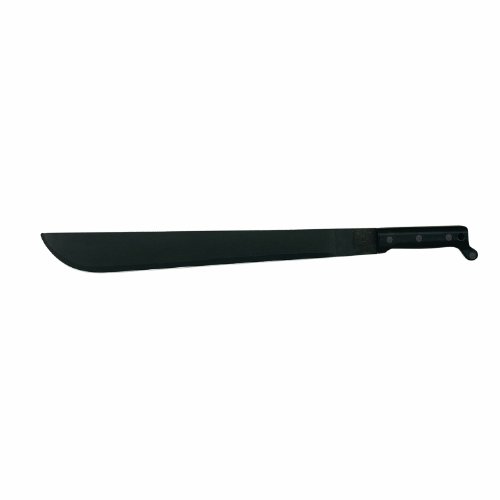


How do you sharpen a machete edge?
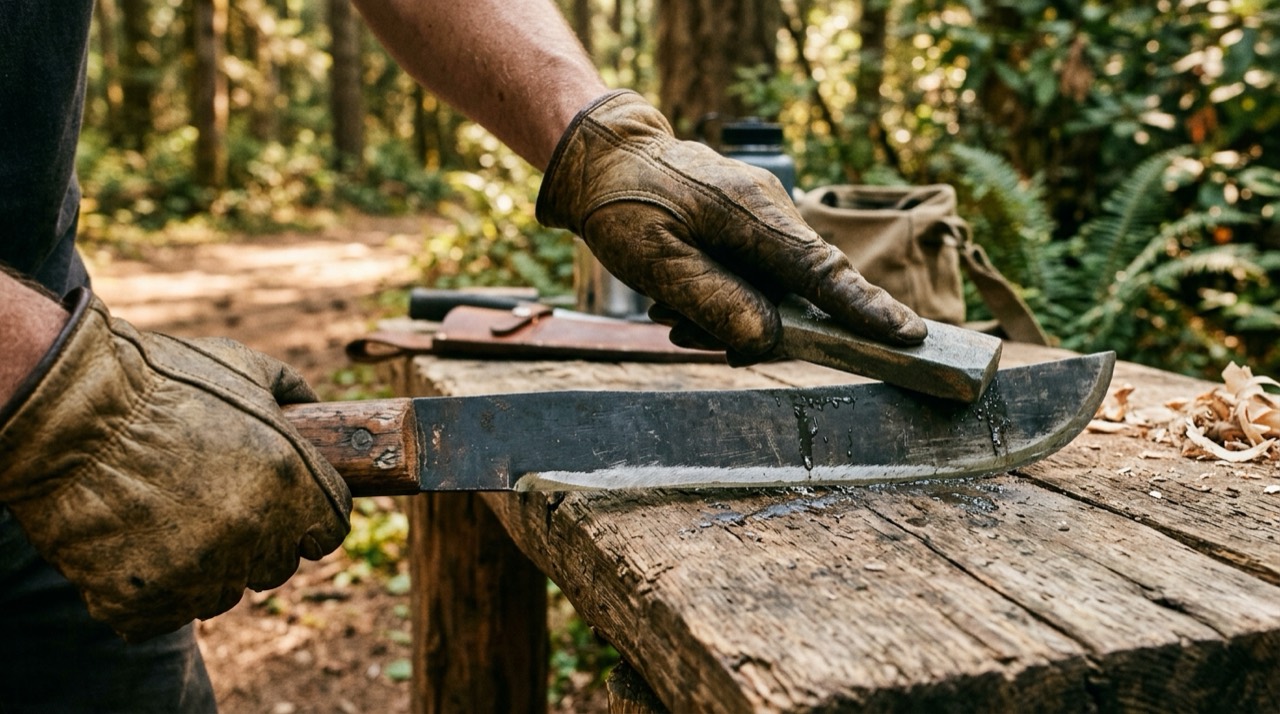
Sharpen a machete with a flat mill file or a coarse stone, working the existing bevel from the handle toward the tip in smooth, even strokes. A machete wants a coarse, toothy edge rather than a mirror polish, so a file or a medium-grit stone is usually all you need.
Follow these steps to restore a working edge:
- Secure the blade flat, clamped or braced against a solid surface, edge facing away.
- Set the file or stone to match the existing bevel angle.
- Push the file across the edge from the base toward the tip in overlapping strokes.
- Work one side evenly, then flip the blade and match your stroke count on the other side.
- Remove the burr with a few light alternating passes, then wipe the blade clean.
For the files and stones that suit these blades, see our sharpening files and tools guide.
What angle should a machete edge be?
A machete edge is ground far more obtusely than a knife, typically around a 20- to 30-degree per-side bevel or a rolled convex edge. That thicker geometry trades some slicing keenness for an edge that survives hard impact against woody stems, hidden stones, and dirt without chipping or rolling.
Because a machete flexes and chops rather than slices thin, chasing a fine, low-angle edge is counterproductive — it dulls and damages almost immediately in clearing work. Keep the bevel coarse and durable, and let blade speed and weight do the cutting. Restore the same angle each time you sharpen so the edge stays consistent along its length. Some owners run a slightly finer edge near the tip for lighter slicing and a thicker, more obtuse edge toward the base for heavy chopping, which lets one blade do both jobs without extra tools.
How do you stop a machete from rusting?
Stop rust on a carbon steel machete by keeping it clean, dry, and lightly oiled. Wipe the blade down after every use to remove sap and moisture, then apply a thin coat of light machine oil, mineral oil, or a purpose-made blade oil before storage.
Carbon steels such as 1075 and 1095 rust quickly when left damp, sap-coated, or stored in a humid shed. If surface rust appears, remove it with fine steel wool or a rust eraser and re-oil the bare metal. A factory powder coat or black-oxide finish slows corrosion but does not protect the sharpened edge, so the edge still needs drying and oil. Sap is as much the enemy as water — it is mildly acidic and traps moisture against the steel — so wiping the blade clean after cutting green growth is as important as drying it. In wet or coastal climates, a stainless blade reduces upkeep at the cost of edge retention.
How do you remove rust that has already formed?
Remove machete rust by working from the mildest abrasive up, then re-oiling the bare metal immediately. Light surface rust wipes off with oil and fine steel wool; heavier pitting needs a rust eraser, emery cloth, or a light pass with a file, followed by a protective coat of oil.
Use these steps to bring a rusty blade back:
- Wipe the blade clean of sap and dirt so you can see the true extent of the rust.
- Rub light surface rust with oiled #0000 steel wool or a rubber rust eraser until the metal shows through.
- For stubborn spots or pitting, step up to emery cloth or a few light file strokes along the bevel.
- Clean off all grit and residue with a dry rag.
- Apply a thin coat of light oil to every bare surface, working it into pitted areas that trap moisture.
Deep pitting weakens a blade over time, so tackle rust while it is still on the surface rather than letting it eat in. A blade that has been left badly rusted through the edge may need the damaged steel filed back to sound metal before it will hold an edge again.
How do you fix a chipped or rolled edge?
Fix a chipped or rolled machete edge by filing the damage out and re-establishing a clean, even bevel. Small rolls straighten with firm file strokes; actual chips need enough metal removed along the whole edge to bring the low points level with the bottom of the chip.
Use a flat mill file for this, since a machete's soft, tough steel files easily. For a rolled edge — where the thin steel has bent to one side — draw the file along the bevel to shave the roll back to true, then re-sharpen normally. For a chip, file down the surrounding edge until the notch disappears, keeping the file at the original bevel angle so the edge stays consistent along its length. Take your time and check progress often, because removing too much steel shortens the blade's working life. Chips usually mean the edge met a stone, wire, or buried metal, so grubbing hazards out of the ground before you clear helps prevent the next one.
How do you care for a wooden or synthetic handle?
Handle care keeps the blade secure and comfortable in use. Check the rivets and tang fit each season, sand and re-oil a dry wooden handle, and clean a synthetic grip with soap and water so it stays tacky and secure.
A loose or cracked handle is a safety hazard, because a blade that shifts or flies loose mid-swing is dangerous. Wooden handles benefit from a wipe of linseed or a dedicated tool-handle oil to stop drying and splitting, while molded polymer and rubber grips only need cleaning to keep their texture. Re-tighten or replace any handle that moves on the tang before the tool goes back into service.
What tools and supplies do you need to maintain a machete?
Machete maintenance needs only a handful of cheap, long-lasting supplies. A flat mill file, a light oil, a few rags, and some fine abrasive cover sharpening, rust prevention, and rust removal for a lifetime of use, which is part of why a machete is so cheap to keep running.
The basic machete-care kit is listed below.
- A flat mill or bastard file for raising and maintaining the working edge and filing out chips.
- A medium or coarse sharpening stone for a finer touch-up when you want one, as covered in the sharpening files and tools guide.
- Light oil — mineral oil, light machine oil, or a dedicated blade oil — to protect carbon steel from rust.
- Fine steel wool or a rubber rust eraser for removing surface rust before it pits.
- Clean rags for wiping sap and moisture off the blade after every job.
- Tool-handle or linseed oil for feeding a dry wooden handle so it does not crack.
How do you care for a machete's sheath?
Care for a machete sheath by keeping it dry and matched to the blade's condition, because a damp or ill-fitting sheath causes as much rust as neglecting the blade. Leather sheaths need occasional conditioning; nylon and polymer sheaths just need to drain and dry.
An unlined leather sheath left wet traps moisture and acids against carbon steel, so never store a damp blade in one — dry both first, and wipe a light coat of leather conditioner onto the sheath now and then to stop it cracking. Nylon and molded polymer sheaths are lower-maintenance but can hold water in the bottom, so shake them out and let them dry after wet work. Whatever the material, the blade goes in clean, dry, and oiled, and the sheath's job is only to protect the edge in storage and transport, not to store a wet tool.
How should you store a machete between jobs?
Store a machete clean, dry, oiled, and sheathed in a low-humidity spot. A sheath protects the edge and prevents accidental cuts, while dry storage keeps carbon steel from rusting between jobs.
Hang the sheathed blade or lay it flat where it cannot fall, and keep it out of reach of children. For heavy clearing seasons, a quick wipe and re-oil every few weeks prevents rust from creeping in during storage. Avoid leaving a machete loose in a damp truck bed, an unlined leather sheath, or a plastic case that traps condensation, since all three hold moisture against the steel and invite rust. A dedicated spot in your outdoor tool storage keeps the blade dry and safely out of the way between jobs. To compare clearing blades and pick your next machete, visit the machete buying guide and the wider hand and cutting tools hub.