
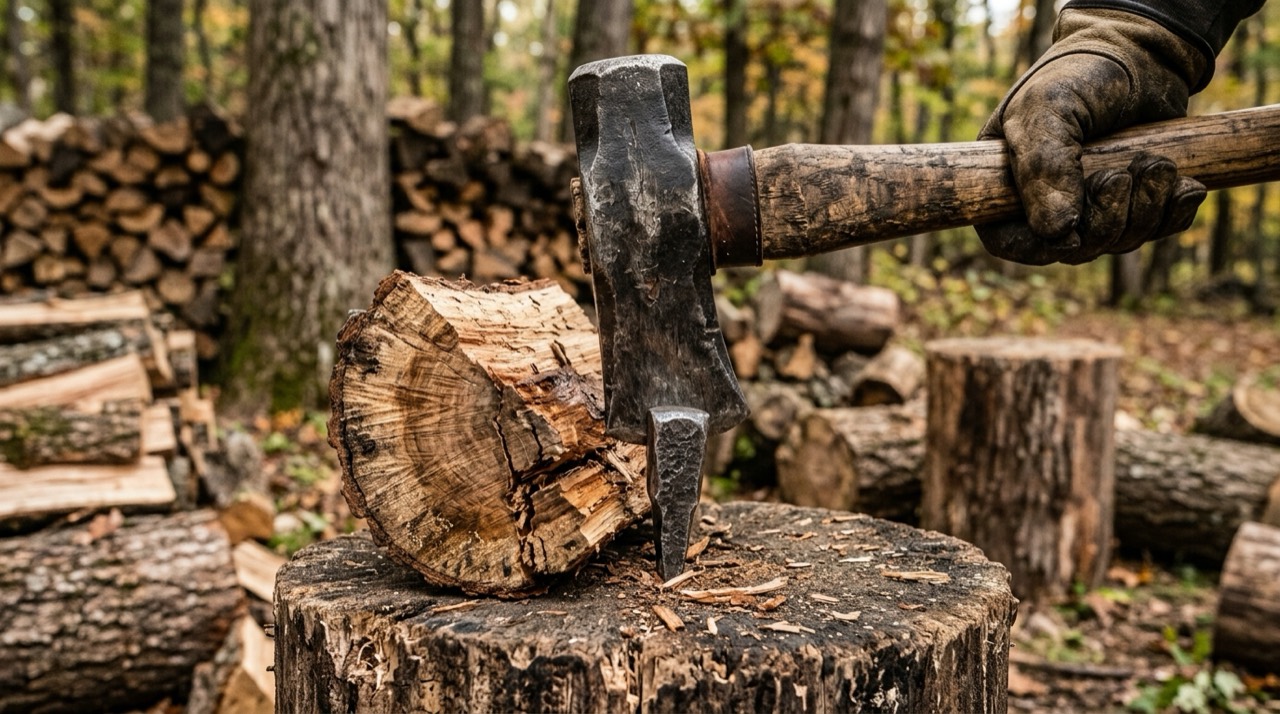


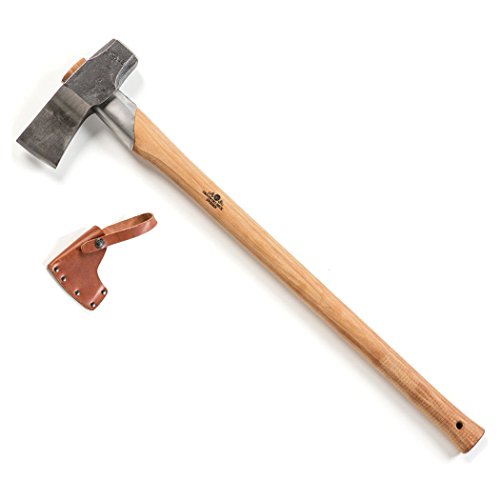
What is a splitting maul, and how does it differ from a splitting axe?
A splitting maul is a heavy, wedge-headed hand tool built to burst wood rounds apart along the grain, using mass and momentum rather than a keen edge. A splitting axe is lighter, with a thinner tapered head that bites and pops smaller, straight-grained rounds faster.
Both tools split with the grain, which is what separates them from a felling or chopping axe that slices across the grain. A maul head usually weighs 6 to 8 pounds, has broad convex cheeks that force the halves apart, and often carries a flat hammer poll for driving steel wedges. A splitting axe head runs 3 to 6 pounds with a slimmer profile, so it accelerates faster and suits smaller, seasoned rounds. If you are still deciding which shape fits your firewood, our splitting axe vs maul comparison breaks the choice down by wood type. For light camp duty and kindling, a hatchet or camp axe is the better tool.
How heavy should a splitting maul or axe be?
Most home firewood splitters are best served by a 6-pound maul or a 4- to 6-pound splitting axe; move up to 8 pounds only for large, knotty hardwood rounds, and only if you can swing that mass accurately for a full session. A heavier head splits stubborn wood in fewer strokes but tires you sooner and lands less precisely.
The weights that suit each job are set out below.
| Head weight | Typical tool | Best for |
|---|---|---|
| 1.25–2.25 lb | Kindling hatchet (Estwing Fireside Friend) | Splitting kindling and small softwood |
| 3–4 lb | Light splitting axe (Fiskars X25) | Small, seasoned, straight-grained rounds |
| 5–6 lb | Splitting axe or light maul (Fiskars X27, Gransfors Bruks) | Everyday firewood and mixed hardwood |
| 8 lb | Heavy maul (Council Tool, Fiskars IsoCore) | Big, green, knotty hardwood rounds |
Accuracy beats brute force. A well-aimed 6-pound strike near an existing crack does more than a wild 8-pound swing that lands off-centre, so pick the heaviest head you can still place on a coin every time.
What handle length and material work best?
A 31- to 36-inch handle suits most adults, giving both swing speed and enough clearance for a missed stroke to pass the round instead of your shin. Taller users and 8-pound mauls favour the longer end of that range; shorter splitters and lighter axes can drop to 28 inches.
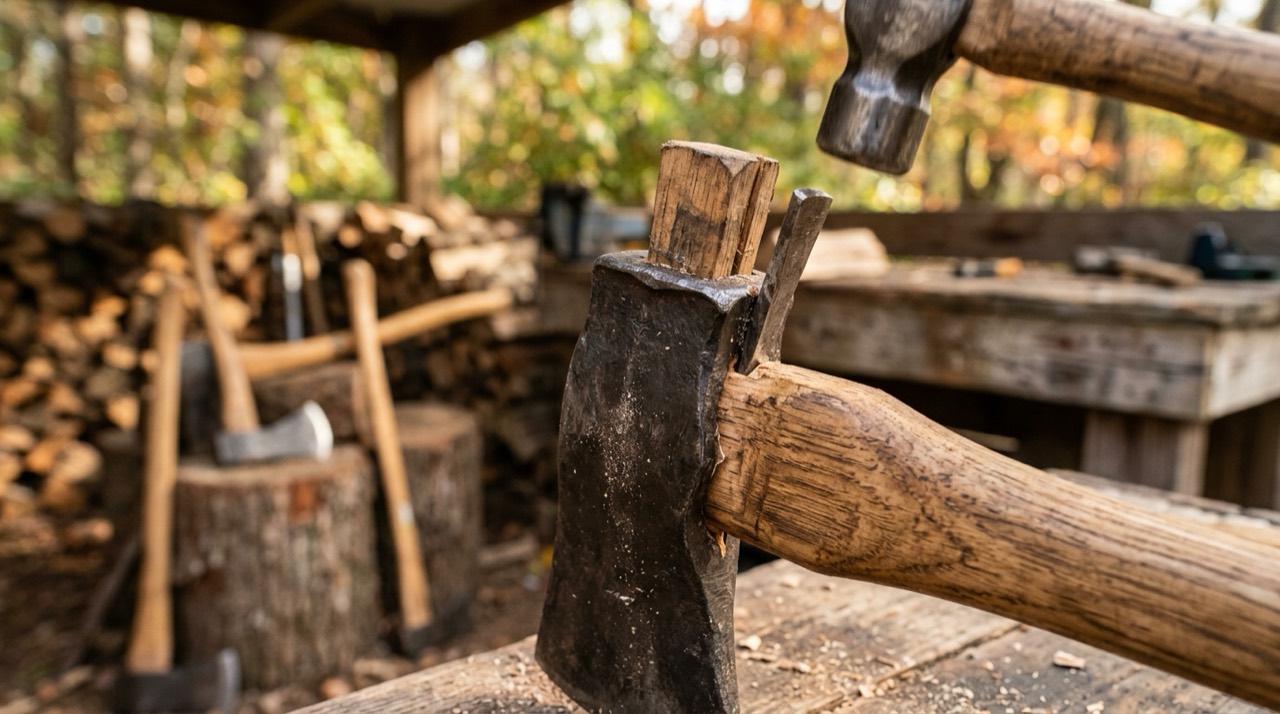
Handle material decides how the tool ages. Hickory is traditional, absorbs shock well, and can be re-hung when it wears, but it snaps if you overstrike and hit the handle against the round. Composite handles such as Fiskars FiberComp and fibreglass shrug off overstrikes and never rot, though a cracked composite handle usually means replacing the whole tool. Keeping the handle protected is its own small skill, covered in our guide to caring for splitting tool handles.
How does the head shape decide whether a maul splits or sticks?
A maul's head shape is what turns downward force into a split: broad convex cheeks widen the crack and shove the two halves apart, while a slimmer splitting-axe face bites deeper and pops smaller rounds. A blunt profile splits; a thin, keen one buries and sticks.
This is why a maul is deliberately blunter than any cutting axe. A razor edge would sink straight into the fibres and jam, leaving you levering a stuck head out of a half-split round. The convex cheeks behind the edge do the real work, acting as a moving wedge that keeps forcing the gap open after the edge has bitten. A splitting axe compromises: its face is thinner than a maul's for faster penetration on manageable rounds, but still far more obtuse than a felling axe. Some mauls and axes flare the cheeks near the eye to pop the halves apart in the last inch of travel. When you shop, judge the head by how quickly the cheeks widen behind the edge, not by how sharp the edge looks.
How do you match the splitting tool to your wood species?
Match the tool to the wood by reading its grain and moisture: straight-grained, seasoned softwoods and clean hardwoods split with a light axe, while stringy, knotty, or green species such as elm and gum demand a maul and often steel wedges. The wood, not the label on the tool, decides how hard the job is.
The rough difficulty of common firewood species is set out below.
| Wood type | Splitting difficulty | Best tool |
|---|---|---|
| Pine, fir, cedar (softwoods) | Easy, especially seasoned | Light splitting axe |
| Oak, ash, maple (straight hardwood) | Moderate | 6 lb maul or splitting axe |
| Birch, cherry | Easy to moderate when seasoned | Splitting axe |
| Elm, sweet gum, sycamore | Very hard, interlocked grain | Maul plus steel wedges |
| Knotty or crotch wood | Hard and unpredictable | Maul and wedges, or a powered splitter |
Moisture matters as much as species. Many woods split more easily green, right after felling, because the fibres have not yet locked together as they dry, though a few, like elm, only get worse. When a species on the hard end of this table makes up most of your pile, skip the fight and reach for a manual or kinetic splitter or an electric log splitter.
How do you split firewood safely with a maul?
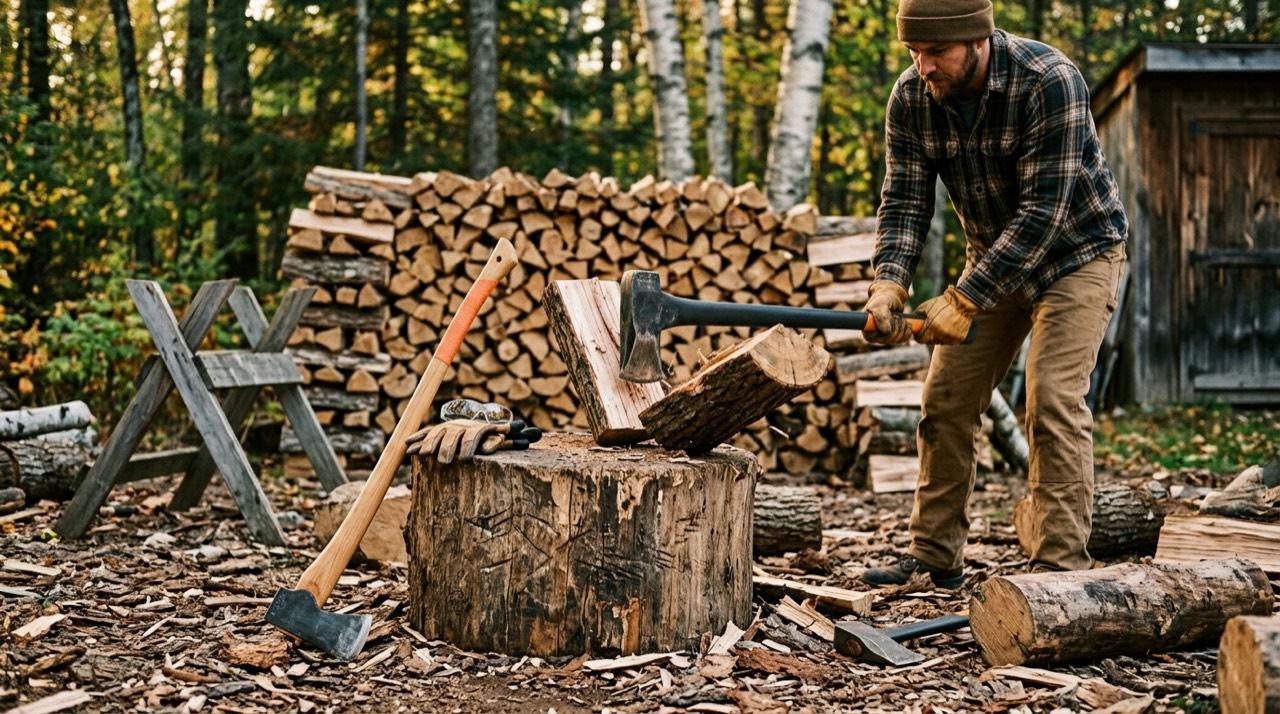
Set the round on a low chopping block or an old car tyre, stand with feet shoulder-width apart, and let the maul's weight fall on a line aimed toward an existing crack near the round's edge, never toward your legs. Safe splitting is mostly stance, aim, and protective gear.
- Wear wrap-around eye protection, sturdy boots, and gloves; add ear protection if you are also running powered tools nearby.
- Place the round on a stable block so the split ends well above the ground and your maul never reaches soil or rock.
- Aim for the edge of a large round and work inward, rather than trying to halve a big piece down the centre.
- Grip near the handle's end, raise the maul overhead, and slide your top hand down as it falls to add speed.
- Let the head do the work; stop before fatigue ruins your aim.
Pair the tool with the right work gloves and eye and hearing protection, and use a stable sawhorse or log stand for cutting rounds to length beforehand.
When are wedges or a powered splitter the better choice?
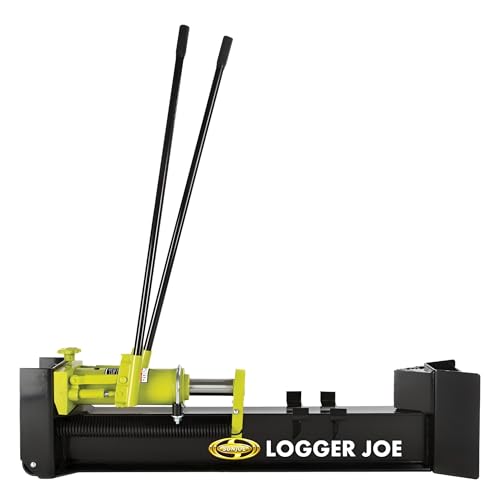
Reach for steel splitting wedges and a sledge when a round swallows your maul without cracking, and step up to a powered log splitter for high volume, twisted grain, or any time swinging aggravates your back or shoulders. Hand tools reward the right wood; machines rescue you from the wrong wood.
Two or three steel wedges plus a maul with a hammer poll will open elm, gum, and other stringy species that a bare axe cannot. Once you are processing several cords a season, a manual or kinetic splitter, an electric log splitter, or a gas hydraulic splitter saves your joints and your weekends.
What accessories make a splitting session faster and safer?
A handful of low-cost accessories do more for your speed and safety than a heavier head: a stable block, a containment tyre, steel wedges, and proper protective gear. Each one removes a step or a risk from every swing.
The accessories worth owning are listed below.
- A low, wide chopping block or a section of hardwood trunk that raises the round so the head never reaches soil or stone.
- An old car tyre laid on the block, which holds the round upright and catches the split pieces so you reset less often.
- Two or three steel splitting wedges and a maul with a flat poll, for the knotty and stringy rounds a bare head cannot open.
- Wrap-around eye protection, sturdy work gloves, and toe-protected boots, plus hearing and eye protection if a chainsaw or splitter is running nearby.
- A sawhorse or log stand for bucking rounds to a consistent, splittable height before you start.
None of these cost much next to the tool itself, and together they turn scattered, stop-start splitting into a steady rhythm.
How do you keep a splitting axe or maul in good working order?
Keep a splitting tool working by maintaining three things: a clean, moderately blunt edge, a sound and protected handle, and dry storage between sessions. A maul asks for far less upkeep than a cutting axe, but neglect still shortens its life.
File the edge back to its original blunt bevel a few times a season to remove dings, using the tools covered in our sharpening files and tools guide; a maul needs a clean, burr-free edge, never a razor one. Wipe a steel head dry and give it a light coat of oil to stop rust, and grind off any mushrooming on a poll before chips can fly. Oil a hickory handle with boiled linseed oil a few times a year and inspect the neck below the head for overstrike cracks. Store the whole tool with an edge guard on, hung or laid flat and dry in your tool storage, alongside your other firewood tools; damp and direct sun both loosen a wooden head. Done as routine rather than rescue, this keeps a single good tool splitting for many seasons.
Which splitting axe or maul should you buy?
Choose a 6-pound Fiskars X27 or a hickory-handled Gransfors Bruks maul for all-round home firewood, an 8-pound Council Tool or Fiskars IsoCore maul for big knotty hardwood, and an Estwing Fireside Friend for kindling. Match the tool to your dominant wood and your own strength.
Our full best splitting axes and mauls roundup ranks current models by use case, and the wood processing pillar covers the firewood tools that make a season of splitting faster and safer.
Whatever you buy, match the head weight to your own strength rather than to the biggest wood you will ever meet, since a tool you can swing accurately for an hour beats one that wins the first three strokes and then wears you out. Keep the edge maintained, the handle protected, and your splitting station clear, and a single good maul or axe will process firewood for many seasons. Felling standing trees, bucking large logs, and any work near power lines or overhead limbs is separate, skilled work best left to trained professionals; these tools are for splitting rounds that are already on the ground.