


How do you sharpen a splitting maul?
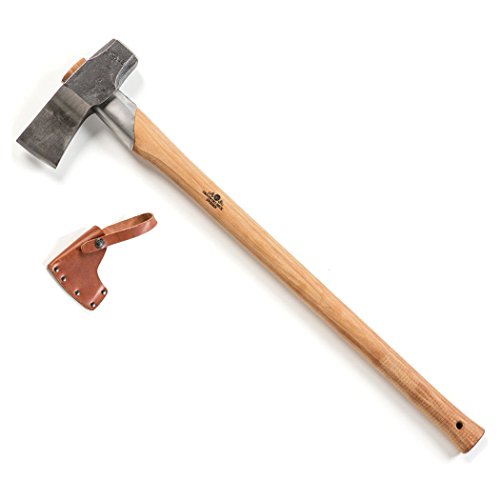
Sharpen a splitting maul by clamping the head, running a coarse mill bastard file along each bevel from heel to toe until the dings are gone, and matching the tool's original factory angle. A maul only needs a clean, burr-free, moderately blunt edge, because a razor edge would bite and stick instead of splitting.
Work in one direction, pushing the file into the edge, and keep the two bevels even so the edge stays centred. A splitting maul edge is far more obtuse than a knife or chopping axe, so resist the urge to thin it; the bluntness is what makes it split rather than slice. Remove the wire burr with a few light passes or a quick pass of a whetstone.
What are the steps to sharpen a splitting maul?
Sharpen a splitting maul in a set order: secure the head, file each bevel back to its original angle, keep the two sides even, then remove the burr. The whole job takes only a few minutes and needs no power tools.
Follow these steps.
- Clamp the head in a vice or against a firm bench so it cannot move while you work.
- Put on cut-resistant gloves and safety glasses, since you are working close to a steel edge.
- Push a coarse mill bastard file along one bevel from heel to toe, matching the tool's original obtuse angle, until the dings disappear.
- Turn the head and file the second bevel with the same number of strokes so the edge stays centred.
- Feel for the wire burr that forms on the back of the edge, then remove it with a few light passes or a quick pass of a whetstone.
- Wipe the head clean and give it a light coat of oil before storing.
Work in one direction, into the edge, and resist thinning the bevel; the bluntness is what makes a maul split rather than stick.
What tools do you need to sharpen a maul?
You need a coarse file, gloves, and a way to hold the head steady. The basic kit is listed below.
- A 10-inch mill bastard file or a dedicated axe file for the main work.
- Cut-resistant gloves and safety glasses, since you are working near a steel edge.
- A vice, clamp, or firm bench to hold the head still.
- Optional coarse and fine whetstones to refine the edge and lift the burr.
The right files are covered in our sharpening files and tools guide, and work gloves keep your hands safe during the job.
How sharp should a splitting maul edge actually be?
A splitting maul edge should be clean and burr-free but distinctly blunt, far more obtuse than a knife or a chopping axe. The edge only needs to start the split; the broad cheeks behind it do the real work of forcing the round apart, so a razor edge would simply bury and jam.
Think of the edge as a starting wedge rather than a cutting blade. If it is chipped, rounded over, or carrying a burr it will glance and stick, so the goal of sharpening is a smooth, even, moderately dull bevel, not a shaving edge. A splitting axe is honed slightly keener because its lighter head leans a little more on the edge biting in, but it too stays more obtuse than any felling or carving axe. When in doubt, match the factory bevel angle rather than trying to improve on it.
How is sharpening a splitting axe different?
Sharpen a splitting axe to a slightly keener edge than a maul, because its lighter head relies a little more on the edge biting in. Use the same file-and-bevel method, but you can refine the axe edge further with a whetstone. Even so, keep it more obtuse than a chopping or carving axe, since its job is still to split. A few sharpenings a season keep both tools working well.
How often should you sharpen, and what goes wrong?
Sharpen a splitting maul a few times a season, or whenever the edge is visibly dinged or has glanced off a rock, and expect the common mistakes to be over-thinning the edge and letting the head rust. A maul asks for far less frequent sharpening than a cutting tool.
Because it wedges rather than slices, a maul tolerates a surprisingly rough edge, so most owners only need to file it two or three times a year plus after any accidental strike on soil or stone. The mistakes to avoid are thinning the bevel toward a keen edge, which makes the tool stick, and skipping the wipe-and-oil that stops a filed edge rusting in storage. Keep the right files to hand, covered in our sharpening files and tools guide, and protect your hands with work gloves while you work.