


How do you use a splitting maul safely?
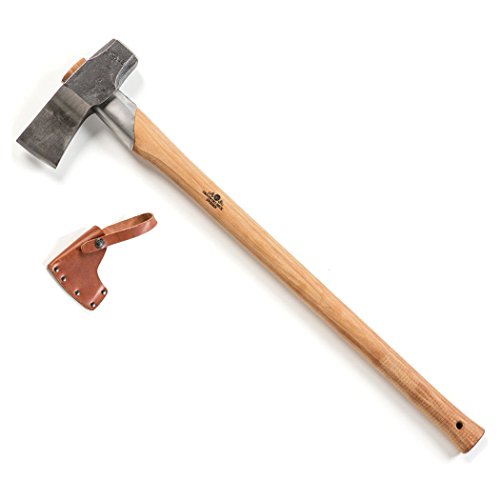
Use a splitting maul by placing the round on a low chopping block, standing with feet shoulder-width apart, gripping the handle near its end, and letting the head fall in a controlled arc while your top hand slides down to add speed. Safe, effective splitting is about aim and body mechanics, not brute strength.
Keep your eyes fixed on the exact spot you want to hit and bend at the knees and hips as the maul comes down so your whole body drives the blow. Aim for the edge of large rounds and any existing crack, working inward, rather than trying to halve a big piece dead centre. If the head buries, rock it loose instead of levering hard sideways, which can break a wooden handle.
How do you aim and read the round before you swing?
Aim for the edge of large rounds and any existing crack in the end grain, working inward in slabs rather than trying to halve a big piece down the centre. Reading the grain before each swing tells you where the wood wants to part and saves a great deal of wasted effort.
Straight, even end grain splits readily from the middle, so small clear rounds often halve in a single centred blow. Large or wild-grained rounds rarely do, and the faster path is to shed manageable slabs from the outer edge, then work toward the middle. Target existing checks and cracks, which the maul only has to open wider, and aim around knots rather than straight through them, since knots deflect the head and stick it. A quick look at the end of each round before you raise the maul turns guesswork into a plan.
What safety gear do you need?
You need eye protection, foot protection, and gloves at a minimum. The essentials are listed below.
- Wrap-around safety glasses to stop flying chips and bark.
- Sturdy boots, ideally with toe protection, in case a piece or the head drops.
- Work gloves for grip and blister protection.
- Hearing and eye protection if powered tools are running nearby.
Set up on firm, level ground and keep a clear zone of at least a maul's length around you, free of people and pets, before every swing.
What common mistakes should you avoid?
Avoid splitting on the ground, swinging when tired, and aiming at the centre of oversized rounds. Splitting without a block sends the maul toward your legs and dulls the edge on soil; tired swings lose accuracy and cause most injuries. For technique on knots and difficult grain, see the splitting axes and mauls guide, and for the tools themselves, the best splitting axes and mauls roundup. Felling and bucking large logs is separate, skilled work best left to trained operators.
How do you split difficult, knotty, or oversized rounds?
Split difficult rounds by working the edges with the maul and switching to steel wedges the moment a round refuses to open. Big, green, knotty, or stringy pieces are not a test of strength; they are a signal to change tactics before you bury and stick the head.
For an oversized round, take off outer slabs all the way around before attempting the core. For knotty or interlocked wood such as elm or gum, start a steel wedge in a surface crack, tap it until it bites, then drive it home with the maul's flat poll; a second wedge further along the crack lets you leapfrog through the piece. If a whole pile fights you like this, it has outgrown hand tools, and a manual or kinetic splitter or an electric log splitter will save your shoulders. For the tools themselves, see the best splitting axes and mauls roundup.
When should you stop and let a machine or a professional take over?
Stop swinging when fatigue starts to spoil your aim, when the wood consistently defeats hand tools, or when the task moves from splitting ground rounds to felling or bucking. Knowing when to put the maul down is part of using it safely.
Tired, inaccurate swings are where handles break and shins get hit, so work in short focused sets and quit for the day when your accuracy drifts. If most of your pile needs wedges or will not open at all, that is the honest signal to bring in a powered splitter rather than grinding through it by hand. And splitting rounds that are already on the ground is a different, far safer job from felling standing trees or bucking large logs near limbs and power lines, which is skilled work best left to trained operators. Pair every session with the right hearing and eye protection when powered tools are running nearby.