
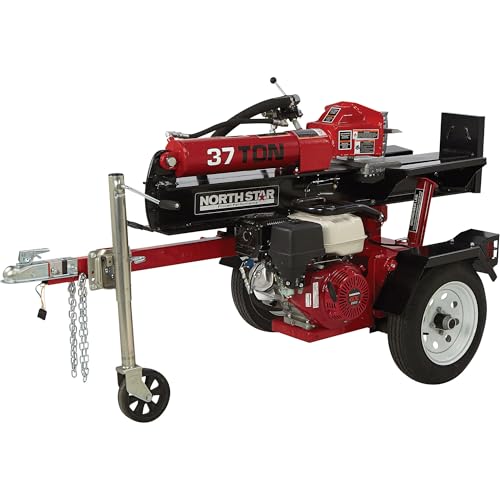
How many tons do you need to split hardwood?
Splitting most seasoned hardwood takes 20 to 25 tons of force, while large, green, or knotty hardwood such as oak, elm, and gum can demand 27 tons or more. Seasoned wood with straight grain splits far more easily than fresh-cut or twisted-grain wood, so the same species can need very different force depending on its moisture and how it grew.Diameter and species drive the number alongside moisture. A clean 12-inch round of seasoned ash or maple yields readily at around 20 tons, but a 24-inch green oak round, or stringy elm and sycamore that resist splitting, can push a machine to 27 to 35 tons. Sizing for your hardest, biggest, and greenest rounds, not the average, is what keeps the ram from stalling mid-split.
For a homeowner splitting mixed seasoned hardwood, a 25-ton machine is a sensible all-round choice, stepping up to 30 tons or more only if you regularly handle big green rounds or notoriously stringy species. Going higher than your wood needs adds weight, cost, and fuel use without a real benefit.
How does seasoning change the tonnage you need?
Seasoning dramatically lowers the force a hardwood round needs, because drying from around 45 percent moisture down to 20 percent or less lets the fibres separate cleanly. The same oak that fights a 25-ton ram when green often splits readily once it has dried for a year, so moisture can matter as much as diameter.If you must split green, size your tonnage up rather than expecting seasoned-wood performance. If you can wait, stacking rounds off the ground under cover for six to twelve months makes them split far more easily and burn better, which is why seasoning is worth the space it takes.
Which hardwood species are hardest to split?
The hardest hardwoods to split are the interlocked and stringy-grained species, which hold together even under high force. The worst offenders owners meet are listed below.- Elm: notoriously stringy and interlocked, resists splitting even seasoned.
- Sycamore and gum: twisted grain that clings together through the round.
- Hickory and hard maple: dense and tough, especially in big rounds.
- Any species through a knot or crotch, where the grain runs in several directions at once.
Straight-grained oak, ash, and softwoods split far more predictably. For the stringiest wood, a higher-tonnage hydraulic machine's sustained, building pressure works through the grain better than a fast but lower-force kinetic ram.
What tonnage suits each diameter of round?
Diameter raises the force needed alongside species and moisture, so bigger rounds call for more tonnage. The rough pairing of round size to splitting force for seasoned hardwood is set out below; add force for green or knotty wood.| Round diameter | Typical force (seasoned hardwood) |
|---|---|
| Up to 12 in | 15-20 tons |
| 12-18 in | 20-25 tons |
| 18-24 in | 25-30 tons |
| 24 in and up | 30 tons and up |
Can you split hardwood with less tonnage by working smarter?
You can stretch a smaller machine by splitting rounds from the outside in rather than driving the wedge through the centre, taking slabs off the edges where the wood yields more easily. Halving a round in the vertical position and then quartering the halves also asks less of the ram than trying to burst a whole large round at once.Letting wood season first, avoiding knotty sections, and cutting rounds a little shorter all reduce the force required. These techniques help, but they do not replace tonnage for genuinely large green rounds, which still need a machine sized to the wood.
How much tonnage do firewood professionals use?
Firewood sellers and heavy users typically run 30-to-37-ton machines, or fast kinetic splitters, because they process large volumes of mixed and often green wood where a homeowner's 25-ton unit would slow them down. The extra force clears knotty and oversized rounds without repositioning, and the heavier build suits long daily sessions.For a homeowner, that much tonnage is usually overkill: a 25-ton machine handles mixed seasoned hardwood, and stepping to 30 tons covers the occasional big green round. Match the machine to your real volume rather than a professional's.
To match specific models to your wood, see our best gas log splitter picks, and for the full spread of tonnage, layout, and engine choices, our gas and hydraulic log splitter guide walks through the decision. If your rounds are small and seasoned, a lighter electric log splitter may be enough. Tonnage figures here are general guidance based on typical wood, not a tested rating for any one machine.