
Electric Log Splitter Vs Gas
Electric Log Splitter Vs Gas, ranked from aggregated owner ratings and reviews, not first-hand testing. Real pros, cons, and who each pick is best for.

Our Top 3 Picks
Quick Comparison
| Product | Best for | Buy | |
|---|---|---|---|
| Champion 27-Ton Gas Log Splitter (100251) | Best Overall | See Amazon | View (paid link) |
| CountyLine 25-Ton Gas Log Splitter | Best Value | See Amazon | View (paid link) |
| Champion 22-Ton Towable Gas Log Splitter | Best Compact | See Amazon | View (paid link) |
| NorthStar 30-Ton Horizontal/Vertical Log Splitter | Best Premium | See Amazon | View (paid link) |
| Boss Industrial 34-Ton Gas Log Splitter | Best Heavy-Duty | See Amazon | View (paid link) |
| YARDMAX YS2865 28-Ton Full-Beam Gas Log Splitter | Editor's Pick | See Amazon | View (paid link) |
Electric or gas log splitter: which should you buy?
Buy a gas log splitter if you split large volumes, hardwood, or green rounds, or work away from power, and buy an electric splitter if you split smaller seasoned wood near an outlet and value quiet, low-maintenance running. The decision follows your wood and your location far more than price alone.The picks above put strong electric and gas splitters side by side so the trade-offs are concrete. The sections below compare the two on the factors owners weigh most, and if you have already settled on petrol, our best gas log splitter picks rank those models on their own.
How do electric and gas splitters compare on power?
Gas splitters lead decisively on force, producing 20 to 37 tons against the 5 to 10 tons typical of electric models. That gap decides what wood each can handle: electric units split seasoned softwood and modest hardwood up to roughly 10 inches, while gas machines break large, green, and knotty hardwood that would stall an electric ram. The table below summarises the split.| Attribute | Gas | Electric |
|---|---|---|
| Splitting force | 20-37 tons | 5-10 tons |
| Best wood | Large, green, knotty hardwood | Seasoned softwood, small hardwood |
| Runtime | Unlimited with fuel | Unlimited on mains power |
| Noise and fumes | Loud, emits exhaust | Quiet, no fumes |
| Maintenance | Engine plus hydraulics | Minimal, motor plus hydraulics |
| Best setting | Outdoors, off-grid, high volume | Garage, patio, near an outlet |
Which is cheaper to own and easier to maintain?
Electric log splitters are cheaper to run and far simpler to maintain, because they have no petrol, oil changes, air filters, or spark plugs, and they start at the push of a button. Gas splitters cost more to feed and service, but they deliver force and runtime that electric cannot, so the higher upkeep buys real capability.Electric units also start reliably after months in storage, whereas a gas engine left with stale fuel is the classic no-start, so that reliability is a real, if unglamorous, advantage for anyone who splits only a few times a year. If low fuss is your top priority and your wood is manageable, our electric log splitter guide covers the field in depth.
Which is better for noise, fumes, and where you split?
Electric splitters win clearly on noise and emissions, running quietly with no exhaust, which lets you split in a garage, on a patio, or early in the morning without disturbing neighbours. Gas splitters are loud enough to need hearing protection and must be run outdoors in open air, because the engine produces carbon monoxide and other exhaust fumes.If you split beside the house or under cover, electric is the safer, more neighbour-friendly choice. If your splitting happens in a paddock or woodlot beyond an extension lead, gas is the only practical option.
When is gas still the right choice?
Gas is still the right choice for high tonnage, large volumes, green or knotty hardwood, and any splitting beyond the reach of mains power. Rural owners and anyone processing multiple cords a year keep buying petrol splitters for exactly these reasons, and no electric model matches a 27-ton gas machine on the worst rounds.If that is your wood and your setting, start with our best gas log splitter picks and the full gas and hydraulic splitter guide. Whichever you choose, budget for work gloves and eye and hearing protection, because the pinch points are identical on both.
How do electric and gas splitters differ on setup and portability?
Electric splitters win on setup and lose on reach: they are lighter, need no fuelling or warm-up, and start at a button, but they are tethered to a power outlet and an extension lead. Gas splitters are heavier and need fuel and a pull-start, yet they go anywhere on a property with no cord to trip over or reach for.A typical electric unit is light enough to wheel out of a shed and plug in on a patio, which suits splitting near the house. A gas machine of 22 tons and up is a substantial wheeled machine that you tow or roll into position, but once fuelled it works in a paddock or woodlot far beyond any outlet. Match the format to where your wood actually is: near mains power favours electric, scattered or off-grid wood favours gas.
Which is safer to operate?
Both splitters share the same crushing pinch point at the wedge, but gas adds a carbon monoxide hazard that electric does not. A petrol engine must never run in a garage or enclosed space, because it produces invisible, odourless carbon monoxide that can be fatal indoors, so gas splitting is strictly an outdoor, open-air job.Electric splitters have no exhaust and can run under cover, but they bring their own risks: a mains cord near a wet, chip-strewn work area, and the same hands-near-wedge danger as any splitter. Whichever you use, keep both hands clear of the moving ram, run the machine as a one-person job, and wear work gloves and eye and hearing protection. Gas engines are loud enough to need ear defenders; electric motors are quiet, but the wedge is just as unforgiving.
What running costs separate electric from gas over the years?
Electric splitters cost far less to run and maintain, because they consume only electricity and have no fuel, oil, filters, or spark plugs to buy and change. Gas splitters carry the recurring cost of petrol, engine oil, hydraulic oil and filters, and occasional engine or seal work — real money, but the price of force and runtime electric cannot match. The recurring costs of each are compared below.| Cost | Gas | Electric |
|---|---|---|
| Fuel or power | Petrol, ongoing | Mains electricity, minimal |
| Engine upkeep | Oil, filters, spark plug | None |
| Hydraulic upkeep | Fluid and filter changes | Fluid checks only |
| Starting after storage | Stale-fuel no-starts common | Reliable push-button |
| Typical repairs | Carburettor, seals, pump | Motor or switch, rare |
Which wood suits electric, and which needs gas?
Electric splitters suit smaller, seasoned, straight-grained wood, while gas is the answer for large, green, or knotty rounds. A 5-to-10-ton electric unit handles seasoned softwood and modest hardwood up to roughly 10 inches, which covers a lot of suburban firewood, but it stalls where a gas machine's 20-plus tons works through.Moisture decides as much as size. Seasoned wood splits far more easily than green, so an electric splitter that copes with dry rounds may bog down in the same species freshly cut. If your wood is mostly dry and moderate, electric is enough; if you cut green hardwood or stringy species like elm and gum, only gas has the sustained force. Our gas and hydraulic log splitter guide covers tonnage in depth.
What size electric splitter replaces a gas one?
No electric splitter fully replaces a big gas machine, but a 7-to-10-ton electric unit covers the seasoned, moderate wood that most households actually burn. The gap is real: electric tops out around 10 tons against 20 to 37 tons on gas, so the substitution works only when your wood stays within the electric machine's limits.Think in terms of your wood rather than a tonnage conversion. If you never split green hardwood or rounds over about a foot across, a strong electric unit does the job quietly and cleanly. If your pile includes big, green, or knotty rounds, no electric model substitutes for a 27-ton gas splitter — the honest answer is to keep the gas machine for those and perhaps add electric for light work near the house.
What mistakes do buyers make choosing between electric and gas?
The common mistake is buying on tonnage or price alone instead of matching the machine to the wood and the setting. The errors that lead to regret are listed below.- Buying a big gas splitter for light, seasoned wood near an outlet, then living with the noise, fumes, and upkeep.
- Buying an electric unit for green hardwood, then watching it stall on rounds it was never sized for.
- Forgetting that gas must be run outdoors in open air, and assuming it can work in a garage.
- Overlooking runtime and reach, since an electric cord will not reach a woodlot and a gas engine needs fuelling.
- Skipping PPE on either machine, when the wedge pinch point is identical and unforgiving.
Is owning both an electric and a gas splitter worth it?
Owning both makes sense for some rural households: a quiet electric unit for quick, light splitting near the house, and a gas machine for the heavy, green, or high-volume work. It is more outlay, but each tool then works in its element rather than being pushed past its limits.For most people, though, one machine chosen around their typical wood is enough. Decide which setting and wood dominate your splitting, buy for that, and rent the other type for the rare exception. If you settle on petrol, our best gas log splitter picks rank the models; if quiet, low-fuss splitting fits your wood, the electric log splitter guide covers the field.
Full Ranking, Reviewed
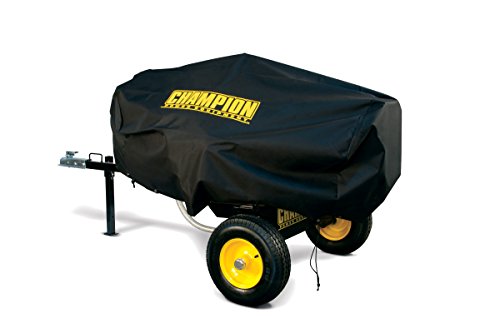
Best for Owners splitting mixed firewood and seasoned hardwood
- 27 tons of splitting force from a ~224cc Champion engine
- Converts between horizontal and vertical positions
- Auto-return valve retracts the ram hands-free
- Towable at low speed with a 2-inch ball coupler
- Strong all-round tonnage for most hardwood
- Horizontal/vertical operation spares your back
- Well-supported brand with available parts
- Heavy to move by hand off the tow ball
- Petrol engine needs seasonal maintenance
Verdict: A versatile mid-size splitter that covers the firewood most owners actually cut, which is why it is a perennial recommendation.
Best for Value-focused buyers splitting seasoned hardwood
- 25 tons of force, commonly with a Kohler or Briggs engine
- Horizontal and vertical splitting positions
- Sold and serviced through Tractor Supply
- Log cradles to catch the split halves
- A lot of tonnage for the price
- Widely available through Tractor Supply
- Convertible layout for heavy rounds
- Fit and finish trails premium brands
- Cycle time is average, not fast
Verdict: A dependable, keenly priced splitter for seasonal firewood, and a favourite for owners who want tonnage without a premium badge.

Best for Smaller properties and lighter, seasoned wood
- 22 tons of force from a compact ~196cc engine
- Lighter and easier to tow than 30-ton machines
- Horizontal/vertical conversion for heavier rounds
- Auto-return ram for quicker cycles
- Easier to move and store than big splitters
- Enough force for most seasoned hardwood
- Lower running cost than larger engines
- Can stall in large green or knotty rounds
- Less suited to high-volume cord work
Verdict: A right-sized splitter for homeowners whose wood is mostly seasoned and moderate, without the bulk of a 30-ton machine.
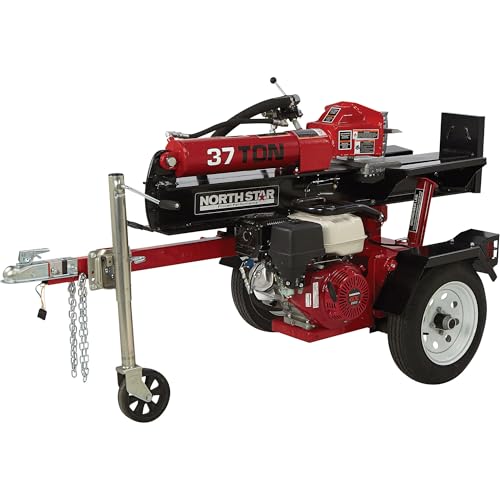
Best for High-volume splitting of large hardwood
- 30 tons of force driven by a Honda GX-series engine
- Heavy-duty beam and cylinder for hard use
- Horizontal and vertical operation
- Large pneumatic tyres for towing on the property
- Premium Honda engine with a strong reputation
- Robust build for years of heavy use
- Handles big, dense hardwood rounds
- Premium price over house-brand splitters
- Heavy and bulky to store
Verdict: A step up in engine quality and durability for owners processing serious volumes of large hardwood every season.
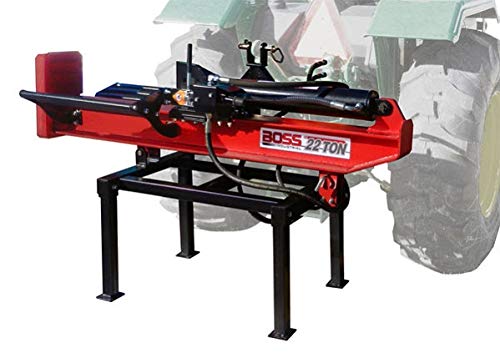
Best for Large, green, or knotty rounds that defeat smaller units
- 34 tons of force for the toughest wood
- Horizontal/vertical operation for heavy rounds
- Two-stage hydraulic pump
- Log cradle wings to hold split halves
- Very high tonnage for stubborn hardwood
- Splits large-diameter and green wood
- Convertible layout reduces lifting
- More splitter than average firewood needs
- Large, heavy, and thirstier to run
Verdict: A high-tonnage machine for anyone regularly fighting big elm, gum, or green oak that stalls a 25-ton splitter.

Best for Heavy firewood cutters who want a reinforced beam
- 28 tons of force with a ~208cc Briggs & Stratton engine
- Full-beam design resists flex under load
- Horizontal and vertical splitting
- Adjustable log cradles and stripper plate
- Strong, rigid beam for demanding work
- Balanced tonnage and cycle time
- Good log-catching cradles
- Heavier than compact 22-ton units
- Petrol upkeep like all gas splitters
Verdict: A well-built 28-ton splitter with a reinforced beam that appeals to owners processing a lot of dense firewood.
Frequently Asked Questions
Is an electric or gas log splitter better for home use?
For most suburban homes with seasoned, moderate wood, an electric log splitter is the better fit: quiet, fume-free, low-maintenance, and safe to use in a garage or on a patio. Gas earns its place only if you split large volumes, big or green hardwood, or work beyond the reach of a power outlet.
How many tons does an electric log splitter have?
Most electric log splitters produce 5 to 10 tons of force, enough for seasoned softwood and modest hardwood up to roughly 10 inches across. That is well short of the 20 to 37 tons a gas splitter delivers, so electric models suit smaller, drier wood rather than large green or knotty rounds.
Can an electric log splitter split oak?
An electric log splitter can split smaller, well-seasoned oak, but it struggles with large-diameter or green oak that needs more force. Seasoned oak up to about 10 inches is manageable on a 7-to-10-ton electric unit, while big or freshly cut oak rounds call for a 25-ton-plus gas splitter instead.
Do electric log splitters need much maintenance?
Electric log splitters need very little maintenance, because they have no petrol engine, spark plug, or air filter. Upkeep is mostly checking the hydraulic fluid level, keeping the ram and wedge clean, and inspecting the cord and hoses. They also start reliably after long storage, unlike a gas engine left with stale fuel.