

What actually produces a log splitter's tonnage?
A gas log splitter's tonnage comes from hydraulics, not the engine directly: the engine turns a pump, the pump pressurises oil, and the oil pushes a piston whose area, multiplied by the pressure, produces the splitting force in tons. That is why a modest 200cc engine can generate 25 tons — the cylinder and pump multiply the force, and the engine mainly keeps the pump turning under load.Rated tonnage is a calculated maximum from the cylinder bore and system pressure, so treat it as a ceiling rather than a figure the machine hits on every stroke. Two splitters with the same engine can carry different tonnage ratings because their cylinders and pumps differ. The powertrain, not the badge on the engine, sets what a splitter can do.
How does the two-stage hydraulic pump work?
The two-stage pump is the heart of an affordable splitter, moving oil in two modes to balance speed and force. In its high-volume, low-pressure stage it advances the ram quickly through open air and easy wood; when resistance rises at the wedge, it automatically shifts to a low-volume, high-pressure stage that delivers full tonnage where it is needed.This automatic shift is why a small engine can split hard wood without stalling, because it never has to supply maximum pressure and maximum speed at once. Gallons-per-minute (GPM) ratings describe how much oil the pump moves, and higher GPM paired with the right cylinder shortens cycle time. When a ram slows or stutters, a failing pump, low fluid, or a clogged filter is usually the cause.
How much does hydraulic system pressure matter?
System pressure, measured in PSI, is the other half of the tonnage equation alongside cylinder size, because force in tons equals the piston area multiplied by the operating pressure. A splitter reaches its rated tonnage only when the pump and relief valve let the design pressure build, and consumer machines commonly run in the region of 2,500 to 3,500 PSI at full load.Pressure also explains why components must be matched. Hoses, seals, and fittings are each rated to a maximum PSI, and the relief valve exists to cap pressure before anything is overstressed. A splitter that has lost tonnage often has a worn pump or a relief valve bleeding off early, not a tired engine. When you compare machines the tonnage rating already bakes in bore and pressure, so you rarely need the raw PSI figure, but it is what turns a spinning engine into splitting force.
Why does cycle time vary between splitters?
Cycle time — the seconds for the ram to extend fully and return — varies with pump GPM, cylinder size, and engine speed, and typically runs 10 to 14 seconds on hydraulic gas splitters. A bigger cylinder needs more oil to fill, which can lengthen the cycle unless the pump moves more GPM to keep up, so tonnage and speed are always a balance.Faster is not automatically better, because a quick cycle gives you less time to load the next log safely. The figures below show how the common splitter types compare on speed.
| Splitter type | Typical cycle time | Trade-off |
|---|---|---|
| Hydraulic gas | 10-14 seconds | Balanced force and speed |
| High-GPM hydraulic | 8-11 seconds | Faster, needs a larger pump and engine |
| Kinetic (flywheel) | 2-3 seconds | Very fast, lower sustained force |
Is a kinetic splitter more powerful than hydraulic?
Kinetic splitters are faster, not more forceful, than hydraulic gas splitters. They store engine energy in spinning flywheels and release it through a rack-and-pinion in a two-to-three-second cycle, which is unbeatable for speed on straight-grained, seasoned wood. Their weakness is stubborn wood, where a hydraulic splitter's sustained, building pressure works through knots and stringy grain that a kinetic ram can bounce off.Choose kinetic for high-speed processing of clean, seasoned rounds, and hydraulic for maximum force on green, knotty, or oversized hardwood. Our manual and kinetic splitter guide covers flywheel machines in depth, while the best gas log splitter picks rank the hydraulic models. For choosing the right tonnage for your wood, start with the gas and hydraulic log splitter guide.
How is a log splitter's tonnage actually calculated?
Tonnage is calculated from the cylinder's piston area and the system's operating pressure: force equals pressure multiplied by area, so a larger bore or a higher pressure yields more tons. This is why the cylinder and pump, not the engine badge, set what a splitter can do, and why the rated figure is a calculated ceiling rather than a measured output.A worked example makes the relationship concrete. A 4-inch-bore cylinder has a piston area of about 12.6 square inches; at a system pressure of 3,000 PSI that produces roughly 37,700 pounds of force, or about 18.8 tons. Raise the bore to 4.5 inches, or the pressure toward 3,500 PSI, and the figure climbs accordingly. When you compare machines the tonnage rating already folds in bore and pressure, so you rarely need the raw numbers — but they are exactly what turns a spinning engine into splitting force.
What engine size do you need to drive the pump?
The engine's job is to keep the hydraulic pump turning under load, so it is rated for sustained power rather than tonnage: consumer gas splitters commonly run 160cc to 300cc engines making a few horsepower, which is ample to feed a two-stage pump. A bigger engine does not add tonnage directly; it sustains pump speed on larger machines and higher-GPM pumps.This is why two splitters with very different tonnage can share a similar engine — the difference lives in the cylinder and pump. What matters most to owners is that the engine starts easily and runs reliably season after season, because the strongest hydraulics are useless behind a motor that will not fire in autumn. An easy-pull recoil and a supported brand engine such as Honda, Briggs & Stratton, Kohler, or Champion are worth more than a few extra cc.
How do cylinder bore and stroke affect performance?
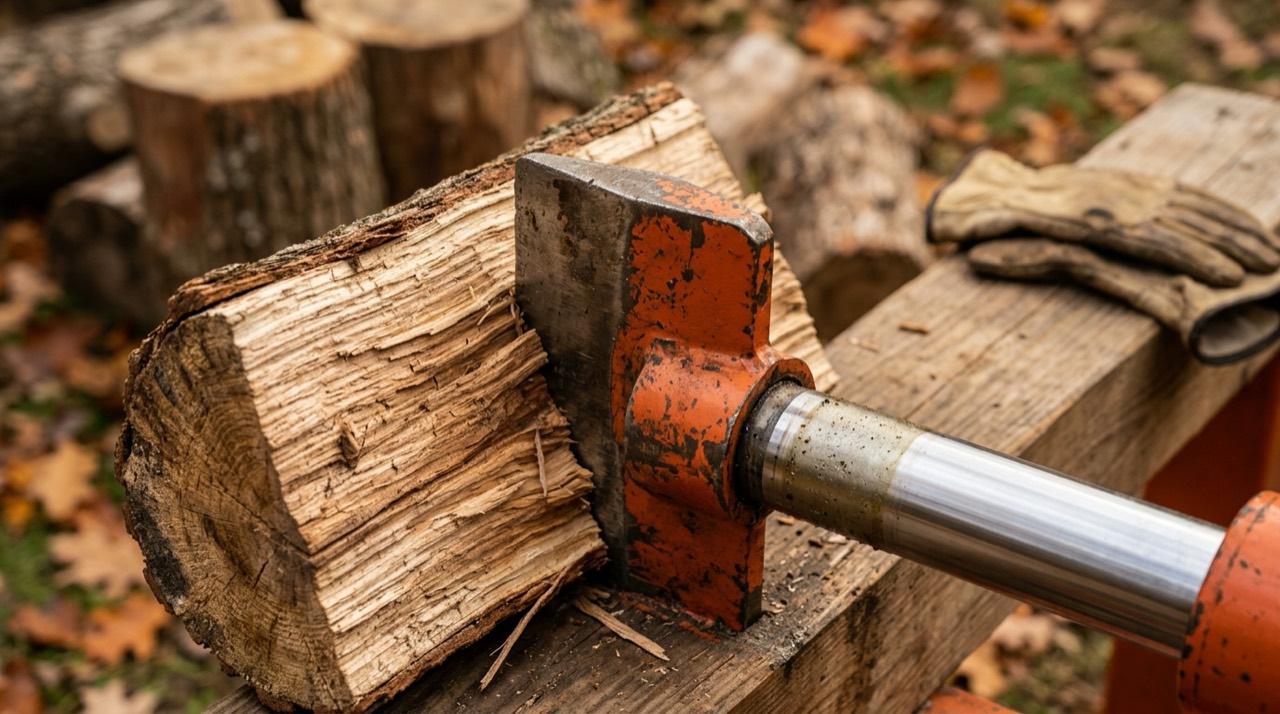
Cylinder bore sets force and stroke sets how far the ram travels, so the two together define both the tonnage and the length of round a splitter handles. A wider bore raises tonnage at a given pressure, while a longer stroke lets the ram push a longer log fully through the wedge but takes more oil to fill, which lengthens the cycle unless the pump moves more GPM.That trade-off is why bigger, longer-stroke cylinders often pair with higher-displacement engines and higher-GPM pumps — each part has to keep up with the others. A balanced machine matches bore, stroke, pump, and engine so that tonnage, log capacity, and cycle time all land where the design intends. An oversized cylinder on an undersized pump simply cycles slowly, which is why the powertrain must be considered as a whole.
How do you keep a splitter producing its full tonnage?
Keep a splitter at full tonnage by keeping the hydraulic system clean, correctly filled, and leak-free, because lost force almost always traces to the hydraulics rather than the engine. A worn pump, a relief valve bleeding off early, low or aerated fluid, or a clogged filter all rob a machine of the pressure that produces its rated tons. The upkeep that protects tonnage is listed below.- Keep the hydraulic fluid at the correct level with the specified anti-wear oil.
- Change the hydraulic filter on schedule, since grit wears pumps and valves and drops pressure.
- Inspect hoses, fittings, and cylinder seals for weeping, which loses pressure under load.
- Watch for a milky reservoir, which means water has entered, or foaming, which means air.
- If tonnage has clearly dropped, suspect the pump or relief valve before blaming the engine.
How does cold weather affect hydraulic performance?
Cold weather thickens hydraulic oil, so a splitter started in freezing conditions moves its ram sluggishly until the fluid warms and thins. This is why the oil grade matters: a lighter anti-wear grade such as AW-32 flows better in the cold, while a heavier AW-46 suits warm-weather work, and running the wrong grade for the season leaves the ram either slow or thin and weak.Let the engine and hydraulics warm for a minute or two before splitting in the cold, and expect the first few cycles to be slower than mid-session. Storing the machine under cover rather than out in the frost also helps it start and run. For how the fluid fits the whole powertrain, the gas and hydraulic log splitter guide puts these parts in context, and lighter work near an outlet may suit an electric log splitter instead.