Chainsaw Chaps, PPE, Bar Oil, Files & Outdoor Tool Storage
The gear that keeps outdoor work safe and tools running — chaps, helmets, gloves, hearing and eye protection, bar and chain oil, files and storage. Authoritative manufacturer specifications, sizing parameters, and sub-category master breakdown.
- 7
- Sub-Categories
- 14
- In-Depth Guides
- 60
- Products Reviewed
- Aug 2026
- Last Reviewed

Recommended Products


Sub-Category Micro Hubs
In-depth technical analyses, material specifications, and comparative evaluation.
Chainsaw Chaps & PPE
Detailed evaluation of anatomical parameters, safety standards, and practical recommendations for chainsaw chaps & ppe.
Work Gloves
Detailed evaluation of anatomical parameters, safety standards, and practical recommendations for work gloves.
Helmets & Face Shields
Detailed evaluation of anatomical parameters, safety standards, and practical recommendations for helmets & face shields.
Hearing & Eye Protection
Detailed evaluation of anatomical parameters, safety standards, and practical recommendations for hearing & eye protection.
Bar Oil, Chain Oil & Fuel
Detailed evaluation of anatomical parameters, safety standards, and practical recommendations for bar oil, chain oil & fuel.
Sharpening Files & Tools
Detailed evaluation of anatomical parameters, safety standards, and practical recommendations for sharpening files & tools.
Outdoor Tool Storage
Detailed evaluation of anatomical parameters, safety standards, and practical recommendations for outdoor tool storage.
This category covers the protective equipment that keeps outdoor work safe and the consumables that keep tools running: chainsaw chaps and PPE, gloves, helmets, hearing and eye protection, bar and chain oil, files and storage. Buy protection to match your most dangerous tool.
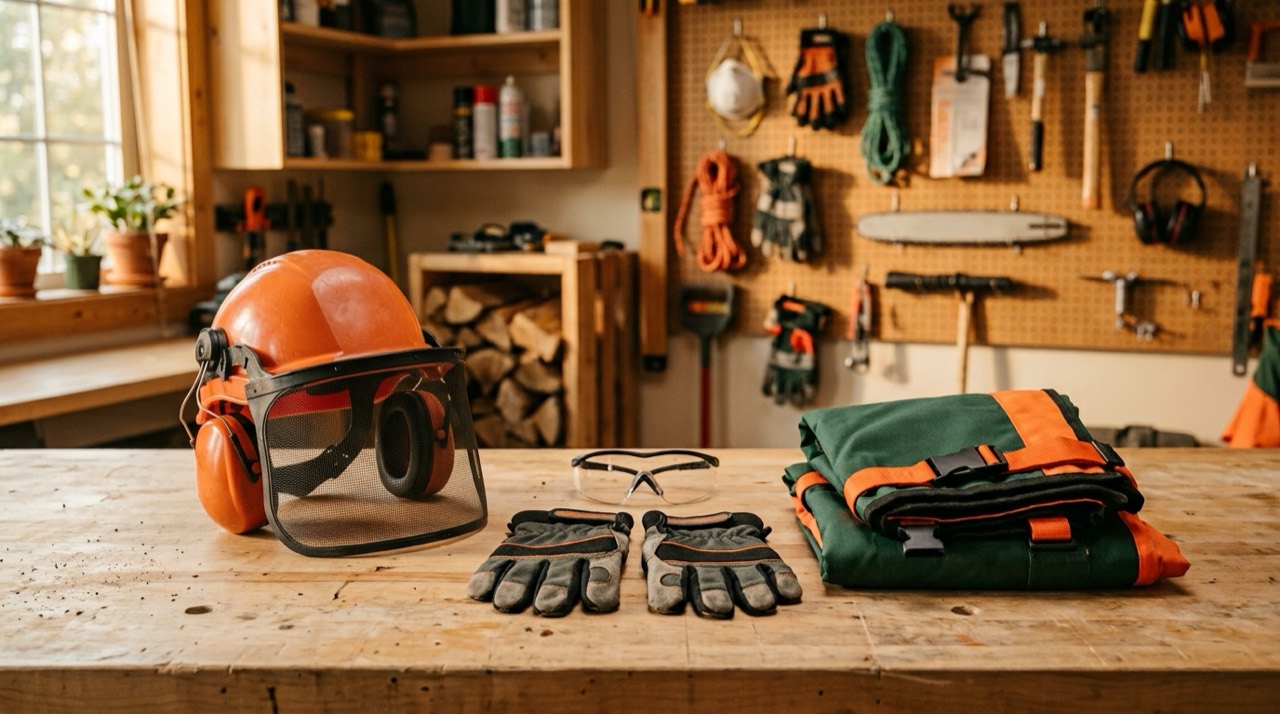
Protective gear is layered by body part and by the tool's specific hazard. For chainsaw work, cut-retardant chaps or trousers are the core item — their loose fibres are designed to clog a moving chain and stall it on contact. A forestry helmet guards against falling limbs and usually combines a hard hat, a mesh face shield and earmuffs in one unit. Hearing and eye protection matters for nearly every powered tool, since blowers, mowers and saws are loud enough to damage hearing over time and all throw debris. The right work gloves add grip and cut resistance and cut the vibration that leads to hand fatigue.
Consumables and storage keep the kit working. Bar oil, chain oil and fuel are the fluids your equipment consumes; sharpening files and tools keep cutting edges keen; and outdoor tool storage protects the investment between jobs.
Different tasks demand different protection. The table lists the minimum kit most guidance recommends for common jobs — treat it as a floor, not a ceiling.
| Task | Essential protection |
|---|---|
| Chainsaw felling / bucking | Chaps, helmet with face + ear, gloves |
| Trimming, brush cutting | Eye protection, gloves, long trousers |
| Leaf blowing | Hearing + eye protection |
| Log splitting | Eye protection, gloves, boots |
| Sharpening / maintenance | Gloves, eye protection |
For chainsaw PPE in particular, look for gear that meets a recognised standard (such as ASTM F1897 for leg protection in the US) — our chainsaw chaps and PPE guide explains what the ratings mean.
Consumables are easy to overlook until a tool stops cutting. Bar and chain oil lubricates the chain as it runs around the guide bar; running a saw dry ruins the bar and chain quickly, so the reservoir gets topped up every time you refuel. That same guide covers two-stroke fuel and the correct oil-to-gas mixing ratios (commonly around 50:1) that gas engines depend on — the wrong mix can cause real engine damage. Sharpening files and tools keep chains, blades and edges cutting: the right round-file diameter for your chain pitch, flat files for depth gauges, and guides that hold a consistent angle. A sharp edge is also a safety feature, because it cuts predictably instead of grabbing or forcing you to push harder.
Storage protects both the tool and the people around it. Outdoor tool storage — cases, wall mounts, racks and cabinets — keeps saws, trimmers and blades dry, organised and, importantly, out of reach of children. Store chainsaws with the bar guard on and fuel handled per the manufacturer's guidance; hang or sheath sharp hand tools; and keep fuel in approved containers away from ignition sources. Batteries last longer stored at a partial charge in a cool, dry place rather than fully drained or baking in a hot shed. A tidy, dry store is the cheapest maintenance you can do — it prevents rust, protects cutting edges, and means the gear is ready and safe the next time you reach for it.
Choose hearing protection by its Noise Reduction Rating (NRR) and by fit, because many outdoor power tools run loud enough to cause permanent hearing damage over time. Earmuffs and foam earplugs commonly carry NRR figures in the low-to-high 20s (decibels); the higher the NRR and the better the seal, the more protection.
Petrol chainsaws, mowers and blowers routinely run at levels where prolonged exposure without protection risks lasting hearing loss, and the damage is cumulative and permanent. That makes hearing protection a habit for every noisy session, not just long ones.
- Earmuffs: quick on and off, easy to share between users, and integrate into a forestry helmet for chainsaw work.
- Foam earplugs: cheap, compact and often the highest-rated, but only if inserted correctly to seal the canal.
- Doubling up: for the loudest gear, wearing plugs under muffs adds protection beyond either alone.
Fit matters as much as the rating — a muff broken by a hat's arm or a poorly rolled plug leaks noise and loses much of its value. Our hearing and eye protection guide pairs the right hearing gear with eye protection, since nearly every powered tool also throws debris.
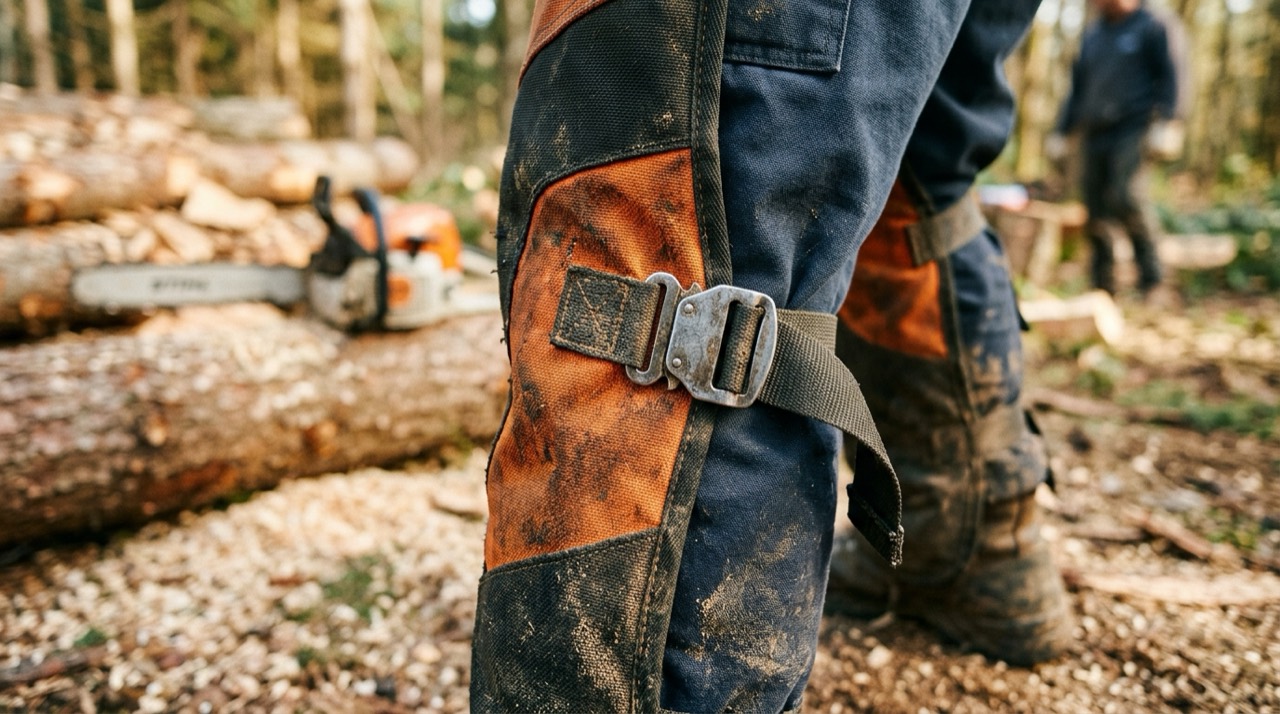
Chainsaw chaps and trousers are rated to recognised standards — such as ASTM F1897 in the US and EN 381 / EN ISO 11393 elsewhere — that verify the loose protective fibres inside will jam and stall a moving chain on contact. The rating tells you the gear was tested to do that reliably; ordinary trousers offer no such protection.
The protection works by design, not padding: on contact the chap's long fibres are pulled out and wrap the drive sprocket, stopping the chain in a fraction of a second. Two things follow from that.
- Coverage style: apron chaps protect the front of the legs and are quick to put on; wrap chaps add protection around the back of the lower leg for extra coverage.
- Rated speed classes: some standards define chain-speed classes, so heavier or professional saws call for higher-rated gear.
Critically, chaps that have taken a chain hit are spent — the fibres have done their one job and the garment must be replaced, not reused. Look for a current standard marking when buying, and treat the rating as a floor. Our chainsaw chaps and PPE guide explains the markings, and a forestry helmet plus cut-resistant gloves complete the core chainsaw kit.
Safety gear and consumables all have a service life, and using them past it quietly removes the protection you think you have. Damaged chaps, scratched eye protection and stale fuel should be replaced on a schedule, not run until they fail.
Knowing when to replace each item is part of keeping the kit trustworthy.
- Chainsaw chaps: replace immediately after any chain contact, and inspect for cuts, oil saturation or worn stitching that reduce protection.
- Eye and hearing protection: swap scratched or hazed lenses that impair vision, and replace foam plugs that no longer spring back to seal.
- Helmets: many manufacturers give hard hats and forestry helmets a service life (often a few years from first use) and a replace-after-impact rule.
- Bar and chain oil / fuel: keep bar oil and two-stroke fuel fresh; mixed two-stroke fuel degrades within weeks to a few months and old fuel causes hard starting and engine trouble.
- Batteries: store packs at a partial charge in a cool, dry place; capacity fades with age and cycles rather than sitting idle fully drained.
Storage is the cheapest maintenance of all. Proper outdoor tool storage keeps blades dry and edges keen, protects gear from UV and damp, and keeps sharp and powered tools out of reach of children. Fresh files and sharpening tools round out a kit that stays ready and, above all, safe the next time you reach for it.