Best Ear Protection For Chainsaw
Best Ear Protection For Chainsaw, ranked from aggregated owner ratings and reviews, not first-hand testing. Real pros, cons, and who each pick is best for.

Our Top 3 Picks
Quick Comparison
| Product | Best for | Buy | |
|---|---|---|---|
| 3M Peltor X5A Over-the-Head Earmuffs | Best Overall | See Amazon | View (paid link) |
| 3M Peltor Optime 105 Earmuffs (H10A) | Best Value | See Amazon | View (paid link) |
| Howard Leight by Honeywell Impact Sport Electronic Earmuff | Editor's Pick | See Amazon | View (paid link) |
| ISOtunes LINK 2.0 Bluetooth Safety Earmuffs | Best Premium | See Amazon | View (paid link) |
| 3M SecureFit 400 Safety Glasses (SF401AF) | Best Compact | See Amazon | View (paid link) |
| DEWALT Concealer DPG82-11 Safety Goggles | Best Heavy-Duty | See Amazon | View (paid link) |
How to Choose the Best Hearing and Eye Protection for Chainsaw Work
The best hearing and eye protection combines a rating that suits your loudest tool, a comfortable seal you will actually keep on, and eyewear certified to ANSI Z87.1. Get those three right and any reputable pick below will keep your ears and eyes safe for years.
Which hearing protection rating and standard matter?
The Noise Reduction Rating (NRR) is the number to compare, but you must derate it before trusting it. A gas chainsaw runs around 106 to 120 dB at your ear, so aim for hearing protection whose labeled NRR, after a realistic 25% to 50% derate, still pulls your exposure well under 85 dBA. In practice that means a labeled NRR in the mid-20s to low-30s for muffs and plugs. Higher-rated foam plugs like the NRR 33 Howard Leight MAX-1 give the most headroom; muffs in the NRR 30 to 31 range cover almost every homeowner job.
Passive, electronic or Bluetooth earmuffs — which type fits your work?
Coverage of the sound decides the type. Passive earmuffs simply block noise and cost the least — ideal if you just need quiet. Electronic muffs use microphones to pass through low-level sound (speech, an approaching vehicle) while compressing loud impulses, so you keep situational awareness on a busy site. Bluetooth muffs add phone calls and audio, handy for long solo sessions, though the safest models still meter your listening volume. Choose passive for pure protection, electronic for awareness, Bluetooth for comms.
Which eye protection standard should you demand?
Eyewear must carry the ANSI Z87.1 mark, and Z87+ for high-impact hazards around saw chains and grinders. Look for the code stamped on both lens and frame, plus an anti-fog coating and wraparound side coverage so sawdust cannot sneak past the temple. A sealed goggle like the DEWALT Concealer adds a foam gasket for dusty work; a light frame like the 3M SecureFit suits all-day general cutting.
Where do foam earplugs and face shields fit in?
Foam earplugs are the budget hearing option and carry the highest ratings — the Howard Leight MAX-1 is rated NRR 33 — but they only work when rolled thin and inserted deep. They also stay cooler than muffs under a helmet in summer, which is why many pros keep a pair for dual protection on the loudest jobs. For the eyes, a mesh or clear face shield on a forestry helmet handles big chips and branches, but the mesh passes fine dust, so keep ANSI Z87.1 glasses on underneath rather than treating the visor as a substitute.
The table below compares each recommended pick by protection type, its published rating or standard, and the buyer it suits best:
| Product | Type | Rating / Standard | Best for |
|---|---|---|---|
| 3M Peltor X5A | Passive earmuff | NRR 31 (published) | Maximum passive noise blocking |
| 3M Peltor Optime 105 (H10A) | Passive earmuff | NRR 30 (published) | Proven value protection |
| Howard Leight Impact Sport | Electronic earmuff | NRR 22 (published) | Hearing speech and warnings |
| ISOtunes LINK 2.0 | Bluetooth earmuff | NRR 25 (published) | Calls and audio on long jobs |
| 3M SecureFit 400 | Safety glasses | ANSI Z87.1 | Lightweight all-day eye cover |
| DEWALT Concealer DPG82-11 | Sealed safety goggle | ANSI Z87.1+ | Dusty, chip-heavy cutting |
How much should you spend on hearing and eye protection?
Spend according to how you work, not on the highest number available, because protection you find comfortable and keep on beats a premium set that lives in the toolbox. Even the cheapest rated options block far more than unprotected ears or fashion sunglasses ever will.
The rough tiers below help set expectations before you shop:
- Foam earplugs are the least expensive hearing option and carry the highest ratings, making them the budget benchmark for pure attenuation.
- Passive earmuffs cost a little more but add convenience — quick on and off, nothing to charge, hard to lose.
- Electronic earmuffs step up in price for hear-through awareness on busy or shared sites.
- Bluetooth safety earmuffs sit at the top because you are also paying for volume-limited audio and calls.
- ANSI Z87.1 safety glasses are inexpensive; a sealed goggle costs a bit more for the dust gasket.
A sensible homeowner kit is a mid-priced passive muff or a bag of foam plugs plus one pair of Z87+ glasses — modest money for permanent protection.
What comfort and features keep protection on all day?
The best protection is the set you never take off, so weigh comfort features as heavily as the rating — a muff that pinches or a lens that fogs gets removed mid-job, and removed gear protects nothing. Clamping force, cushion material, weight and anti-fog all decide whether you last the session.
Watch for these comfort and feature details when you compare:
- Headband clamping force: firm enough to seal, light enough to wear for hours; wide cushions spread the pressure.
- Cushion material and depth: soft, deep cushions that clear your ears seal better and stay cooler than thin, shallow ones.
- Weight and cup profile: lighter, slimmer cups fatigue you less and clear a helmet brim.
- Anti-fog coating and ventilation on lenses: essential for humid, sweaty cutting where a fogged lens tempts you to lift it.
- Self-adjusting or thin temple arms on glasses: they preserve the earmuff seal instead of breaking it.
Comfort is not a luxury here — it is the mechanism that keeps the rated protection on your head.
How do you fit and seal your gear before the saw starts?
Fit everything and test the seal before you pull the starter, because a gap you discover after an hour of cutting is an hour of damage you cannot undo. A ten-second check confirms the rating you paid for is actually reaching your ears and eyes.
Run this quick sequence each time you gear up:
- Roll and insert foam earplugs first if you are using them, holding each until it expands.
- Seat earmuffs so the cushions press flat all the way around, with no hair or clothing under the seal.
- Put slim safety glasses on last so the arms sit under the cushions without lifting them.
- Cup your hands over the muffs and release — if the sound level barely changes, the seal is good.
- Speak aloud; a deep, muffled version of your own voice confirms plugs and muffs are sealing.
If any step fails, fix the fit before starting — a poorly sealed gas chainsaw session undoes even a top-rated muff.
How long do earmuffs, earplugs and safety glasses last?
Treat cushions, plugs and lenses as consumables, because their protection fades with heat, sweat, UV and wear long before the headband or frame breaks. Replacing a worn part is far cheaper than the hearing or sight it protects.
As a practical guide to replacement and care:
- Foam earplugs: replace frequently — daily under heavy use — and discard any that no longer expand slowly and fully.
- Earmuff cushions: swap when they harden, crack or flatten, often within several months of regular use; hardened cushions can shed several decibels of rating.
- Safety glasses: retire once scratches blur vision or dot the lens, since each scratch is also an impact weak point.
- All of it: store in a case out of direct sun and heat with the rest of your tool storage, not on a hot dashboard.
Building cushion and plug refreshes into routine chainsaw maintenance keeps your protection at its rated level instead of quietly slipping below it.
What mistakes do buyers make choosing hearing and eye protection?
The costliest mistakes are chasing the highest rating while ignoring fit, and trusting gear that was never certified in the first place. Both leave you exposed while feeling protected, which is worse than knowing you are unprotected.
Avoid these common errors:
- Buying the biggest NRR but wearing it with a broken seal — a well-fitted mid-rating muff outperforms a gapping high-rating one.
- Reaching for fashion sunglasses instead of ANSI Z87.1 lenses that are tested to survive a flung chip.
- Using music earbuds as "hearing protection" and turning the volume up over the saw.
- Running hardened, years-old cushions or plugs that no longer seal.
- Treating a mesh face shield as complete eye protection when it passes fine dust.
- Forgetting to derate the label, then assuming the printed NRR is what you actually get.
Sidestep those and any reputable pick — paired correctly with chainsaw chaps and work gloves — will keep you safe for years.
How should hearing and eye protection fit together?
Fit is where protection is won or lost, the same way it decides whether chainsaw chaps or work gloves actually protect. Earmuff cushions must sit flat against the skull with no gap from glasses arms or a helmet brim; thin-armed safety glasses help preserve that seal. Foam plugs only work when rolled thin and inserted deep enough to sit flush in the canal. Safety glasses should grip without pinching and clear the muff cups. If you run a forestry helmet with a face shield, pick slim muffs and low-profile glasses that layer cleanly underneath. Test everything together before the saw starts, not after.
Full Ranking, Reviewed

Best for Anyone who wants the highest passive noise blocking for loud gas chainsaws and chippers
- Published Noise Reduction Rating of NRR 31 dB, among the highest for a passive muff
- Twin-cup design with deep, foam-and-liquid-filled ear cushions for a firm seal
- Stainless-steel headband wires that resist bending out of shape over time
- Over-the-head style that fits over a beanie and lifts on and off between cuts
- Class-leading published NRR for demanding, all-day cutting
- Solid seal and durable build reported by long-term owners
- Simple passive design with nothing to charge or break
- Bulky cups can feel heavy and warm in summer
- The high clamping force is tiring for some users over long sessions
Verdict: Based on published specs and owner feedback, the strongest all-round passive muff for the loudest saw and chipper work.

Best for Homeowners who want proven, high-rated hearing protection at a modest price
- Published Noise Reduction Rating of NRR 30 dB from a widely trusted line
- Dual-layer cup design tuned to cut high-frequency saw and small-engine noise
- Soft, wide sealing rings that spread pressure for longer comfort
- Simple over-the-head band with no electronics to maintain
- Very high published NRR for the money
- Long track record and easy-to-find replacement cushions
- Comfortable clamp for most head sizes
- Passive only, so no pass-through for speech or warnings
- Large cups can interfere with some helmet brims
Verdict: A long-proven NRR 30 muff that delivers near-top protection for a fraction of premium prices — the value benchmark.
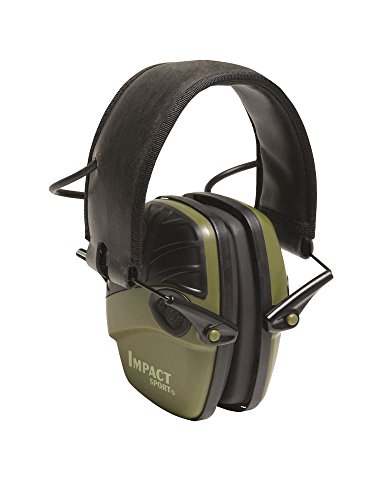
Best for Users who need to hear speech, warnings or an approaching vehicle while cutting
- Published Noise Reduction Rating of NRR 22 dB with active sound management
- Directional microphones that pass through low-level sound and compress loud impulses
- Automatic shut-off after four hours to preserve the two AAA batteries
- Low-profile cups and an audio input jack for external devices
- Keeps situational awareness on busy or shared work sites
- Slim cups clear a rifle stock and many helmet designs
- Instant compression of sudden loud noises rather than constant muffling
- Lower published NRR than heavy passive muffs
- Relies on batteries and a working circuit for full function
Verdict: Based on published specs and owner feedback, the pick when awareness matters — it blocks the saw yet lets you hear a shout or engine.
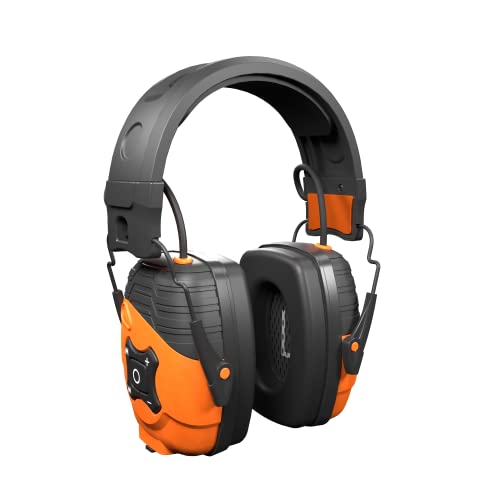
Best for Solo workers who want calls, audio and a volume-limited seal on long jobs
- Published Noise Reduction Rating of NRR 25 dB with Bluetooth streaming
- SafeMax volume limiting that caps output to help keep listening under 85 dB
- Long published battery life rated for a full workday of use per charge
- Noise-cancelling boom microphone for clearer hands-free calls
- Combines certified hearing protection with phone and audio
- Built-in volume limiting addresses the risk of loud earbuds
- Comfortable cushions suited to extended wear
- Costs well above passive muffs
- Bluetooth features add charging and pairing to your routine
Verdict: The premium choice for anyone who wants comms and audio without the hearing risk of ordinary earbuds under a saw.

Best for All-day general cutting where you want light, low-profile ANSI Z87.1 eye cover
- Certified to ANSI Z87.1 for impact-rated eye protection
- 3M Pressure Diffusion Temple that self-adjusts to different head sizes
- Anti-fog coated polycarbonate lens with wraparound side coverage
- Very light frame designed to sit comfortably under earmuffs
- Slim arms preserve the earmuff seal
- Self-adjusting temples fit a wide range of faces
- Anti-fog lens holds up in humid, sweaty conditions
- Open frame lets fine dust past in very dusty work
- Lighter build feels less rugged than a sealed goggle
Verdict: Based on published specs and owner feedback, the comfortable everyday Z87.1 glasses that pair cleanly with any muff.
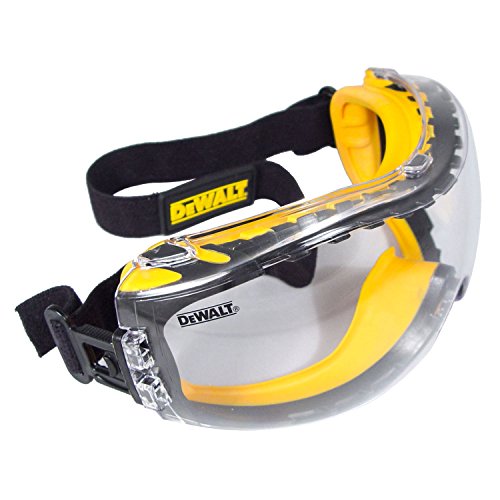
Best for Dusty, chip-heavy cutting and grinding where a full seal beats open glasses
- Certified to ANSI Z87.1+ for high-impact eye protection
- Removable soft foam gasket that seals out dust, chips and debris
- Dual-mold rubber frame with a soft, non-slip fit
- Anti-fog coated polycarbonate lens with an elastic head strap or temple arms
- Foam gasket blocks the fine dust open glasses miss
- High-impact Z87+ rating suits saw and grinder work
- Comfortable, grippy frame stays put during exertion
- Sealed design fogs more readily than open glasses
- Bulkier profile is warmer for long summer sessions
Verdict: The sealed goggle to reach for when sawdust and grinding grit are heavy — high-impact protection with a proper dust seal.
Frequently Asked Questions
What NRR do I need for a chainsaw?
Aim for hearing protection whose labeled NRR, after a realistic 25% to 50% derate, still keeps your exposure under 85 dBA. Because a gas chainsaw runs around 106 to 120 dB, a muff in the NRR 30 to 31 range or foam plugs around NRR 33 give safe headroom for most homeowner cutting.
Are electronic earmuffs worth it for chainsaw use?
Electronic earmuffs are worth it when you need to hear speech, warnings or traffic while cutting. They pass through low-level sound and compress loud impulses, so you keep situational awareness without losing protection. If you only want maximum quiet, a cheaper passive muff with a higher NRR does the job.
Do my safety glasses have to be ANSI Z87.1 rated?
Yes. Only ANSI Z87.1 (ideally Z87+) eyewear is tested to survive the impact of a flung chip or kickback debris. The code is moulded into the lens and frame. Fashion sunglasses and unmarked glasses can shatter into your eye and offer no verified protection for wood cutting.
Can I wear regular earbuds instead of hearing protection?
No. Ordinary music earbuds are not certified hearing protection and often tempt you to raise the volume above the tool, adding to the damage. Use rated earmuffs or earplugs, or purpose-built Bluetooth safety muffs like the ISOtunes LINK 2.0 that limit output while sealing out noise.