


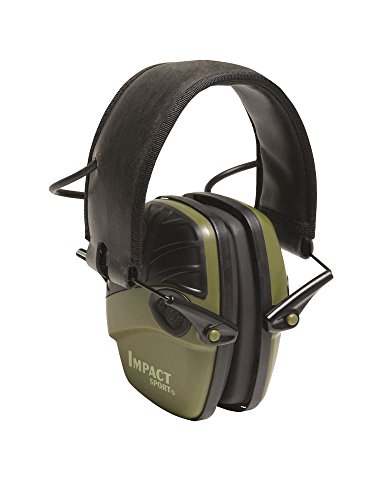

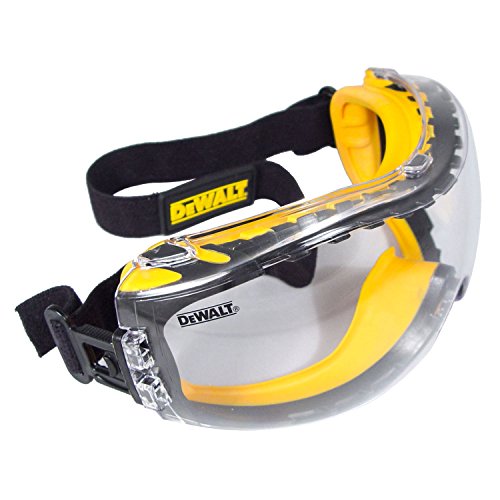
How loud is a chainsaw compared with other outdoor tools?
A gas chainsaw produces roughly 106 to 120 dB at the operator's ear, placing it among the loudest tools in the yard. Because the decibel scale is logarithmic, that is not "a bit louder" than a conversation — it carries thousands of times more sound energy, and it damages hearing in minutes without protection.
Why decibels are deceptive
Decibels do not add up the way ordinary numbers do. The scale is logarithmic, so every 10 dB increase represents a tenfold jump in sound intensity, and every 3 dB roughly doubles it. A 90 dB mower is not marginally louder than an 80 dB one — it is ten times more intense. This is also why cheap tricks like turning down the throttle barely help: shaving a few decibels off a 115 dB saw still leaves you deep in the danger zone. The only reliable defence is a physical barrier between the noise and your eardrum.
Typical noise levels of common power tools
The published figures below show why nearly every petrol tool needs hearing protection. Values are approximate operator-ear levels drawn from manufacturer data and owner reports, not lab measurements:
| Tool | Typical level at the ear | Hearing protection |
|---|---|---|
| Petrol chainsaw | About 106 to 120 dB | Always required |
| Petrol backpack blower | About 95 to 106 dB | Always required |
| Wood chipper | About 100 to 115 dB | Always required |
| Petrol lawn mower | About 90 to 100 dB | Strongly recommended |
| Battery chainsaw | About 90 to 100 dB | Recommended |
| Normal conversation | About 60 dB | Not needed |
The loudest machines — the gas chainsaws and wood chippers — demand the most headroom, while even a quieter battery chainsaw still crosses the threshold where prolonged exposure matters.
How long can you safely run a chainsaw without protection?
You can safely run an unprotected chainsaw for essentially no time at all. Hearing damage risk climbs sharply above 85 dB, and the safe exposure time halves for roughly every 3 dB over that level, so a 115 dB saw exceeds a full day's safe dose within seconds.
OSHA allows 8 hours at 90 dBA, but only about 15 minutes at 100 dBA and mere seconds beyond 110 dBA under its exchange-rate math. NIOSH uses a stricter 3 dB exchange rate and an 85 dBA reference, which cuts those times further. Because a chainsaw sits well above 100 dB, any meaningful cutting session without protection risks permanent, cumulative loss. Unlike a cut or a bruise, noise-induced hearing loss does not heal — the damage banks silently until you notice you cannot follow conversation in a noisy room.
What are the warning signs of noise damage?
The early signs of noise damage are ringing in the ears (tinnitus) and a muffled, "cotton-wool" feeling after using loud tools. A temporary threshold shift — where hearing dips for hours after exposure and then recovers — is a red flag that you were under-protected and are stacking permanent damage over time.
Tinnitus that lingers, trouble hearing high-pitched voices, and needing the TV louder than others prefer all point to accumulated harm. The insidious part is how gradual it is: most people who lose hearing to power tools never had a single painful moment, just years of "it was only for a few minutes" sessions. Treat every ring in your ears after cutting as a warning that your protection, fit or exposure time needs to change.
How do OSHA and NIOSH exposure limits actually work?
OSHA and NIOSH both cap your noise dose over a working day, but they use different maths. OSHA's permissible limit is 90 dBA averaged over 8 hours with a 5 dB exchange rate, while NIOSH recommends a stricter 85 dBA with a 3 dB exchange rate — the more protective standard for your ears.
An exchange rate is how much the safe time changes for each step in level. Under NIOSH's 3 dB rate, every 3 dB louder halves the safe time; under OSHA's more lenient 5 dB rate, it takes 5 dB to halve it. That is why the two agencies quote very different safe times for the same tool, as the table shows:
| Level at the ear | NIOSH safe time (3 dB rule) | OSHA safe time (5 dB rule) |
|---|---|---|
| 85 dBA | 8 hours | 16 hours |
| 90 dBA | About 2.5 hours | 8 hours |
| 100 dBA | 15 minutes | 2 hours |
| 106 dBA | Under 4 minutes | About 1 hour |
| 115 dBA | Under 30 seconds | 15 minutes |
Because a petrol chainsaw sits well above 100 dB, even OSHA's lenient clock runs out fast, and NIOSH's runs out in seconds. The lesson is the same either way: unprotected cutting spends a whole day's safe dose almost immediately, so the derated rating of your muffs or plugs is what buys those hours back.
Why is a two-stroke chainsaw engine so loud?
A chainsaw is loud because a small, high-revving two-stroke engine fires on every revolution, spins to around 13,000 rpm, and vents exhaust through a short, compact muffler that trades silence for light weight. Add the chain tearing through wood and you get a broadband, high-pitched roar.
Two-stroke engines fire twice as often per revolution as the four-stroke engine in a typical petrol lawn mower, and the exhaust port opens abruptly, releasing a sharp pressure pulse each cycle. Packaging all that into a handheld tool leaves no room for the long, baffled muffler a car uses, so more sound escapes. The noise is also weighted toward high frequencies — exactly the range human hearing is most easily damaged in, and the range a good seal blocks best. A battery chainsaw removes the combustion noise entirely, leaving mainly the quieter whir of the motor and the chain, which is why it runs roughly 15 to 25 dB lower. Keeping the muffler intact and the chain sharp as part of routine chainsaw maintenance also stops a saw growing louder and more strained than it needs to be.
How far away is a chainsaw still dangerously loud?
A chainsaw stays hazardous well beyond the person holding it, because sound falls off only gradually with distance. In open air, each doubling of distance drops the level by about 6 dB, so a 115 dB saw is still near 95 dB a few metres away — loud enough to harm a bystander or groundworker.
Work through the numbers and the risk to helpers becomes clear: from roughly 1 metre at 115 dB, you are near 109 dB at 2 metres, 103 dB at 4 metres, and about 97 dB at 8 metres. All of those still sit above the 85 dB threshold where sustained exposure damages hearing. That is why anyone assisting a feller — holding a rope, dragging brush, or simply watching nearby — needs their own hearing protection, not just the operator. Reflective surfaces such as walls or dense timber can keep levels higher than the open-air estimate, so treat "far enough away" with caution and issue muffs or plugs to everyone in the work zone, alongside eye protection and a safety helmet where debris can reach them.
What does chainsaw hearing loss look like on a hearing test?
Noise-induced hearing loss shows up on an audiogram as a distinctive dip, or notch, in the high frequencies around 3,000 to 6,000 Hz — most often near 4,000 Hz — while lower pitches stay near normal at first. That notch is the fingerprint of tool and machinery noise.
Because the damage starts in the high frequencies, the first thing people lose is clarity rather than volume: consonants such as s, f and t blur, so speech sounds mumbled — especially in a noisy room — even though vowels and general loudness still seem fine. Tinnitus, a ringing or hissing, often accompanies the notch. Left unchecked, the dip widens and deepens over years of exposure until it drags down the frequencies that carry everyday conversation. A baseline audiogram is valuable precisely because it captures that early notch while you can still change your habits; comparing later tests against it shows whether your protection and exposure are holding the line or slipping. Unlike a temporary muffled feeling that recovers overnight, a notch on the chart does not reverse, which is why prevention with a well-sealed muff or plug is the only real cure.
When should you double up on hearing protection?
Double up — wearing foam earplugs under earmuffs — for the loudest, longest jobs such as felling with a big saw or a full day of chipping. Combining a plug and a muff adds roughly 5 dB of real protection over either one alone, not the sum of both ratings.
Dual protection is standard practice for professional fallers and mill crews working near screaming two-stroke engines for hours. It also buys a margin when a muff seal is compromised by glasses arms or a helmet brim. You do not need it for a ten-minute pruning cut, but for sustained exposure to the very loudest tools it is the simplest way to add headroom. Pair it with eye protection and a forestry safety helmet for a complete head-zone setup.