


What is a hedge trimmer, and which type suits your garden?
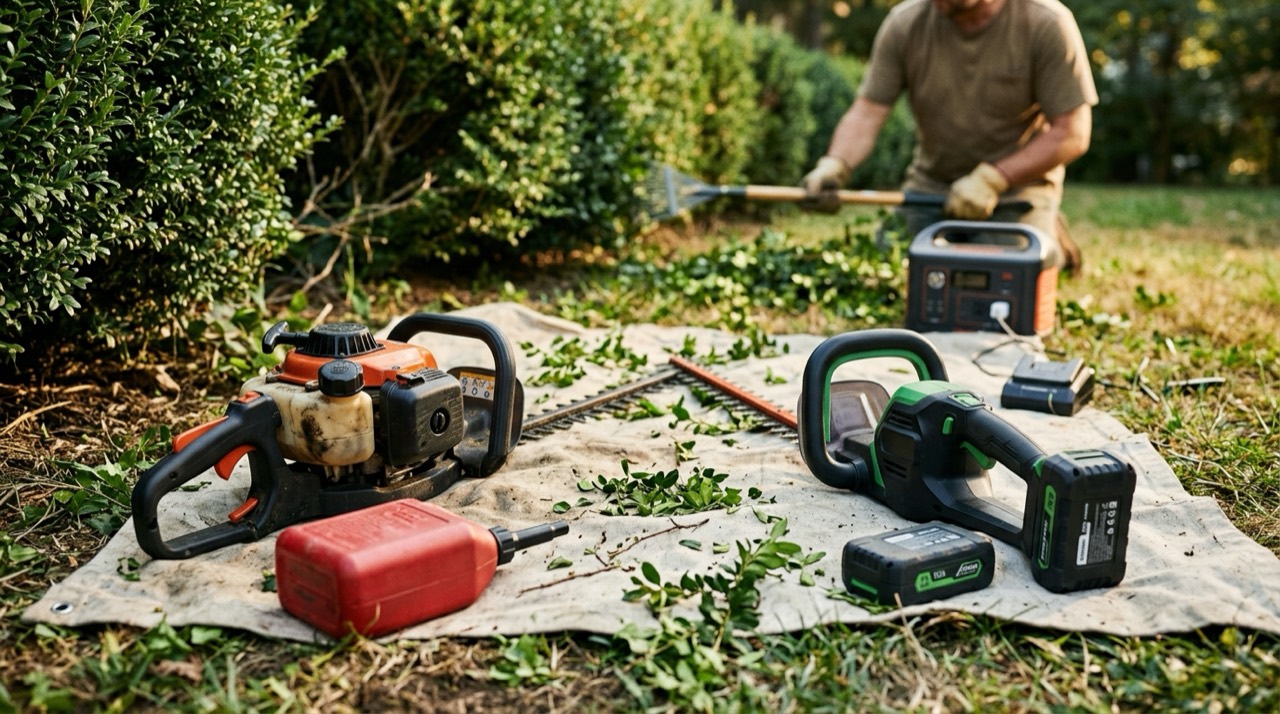
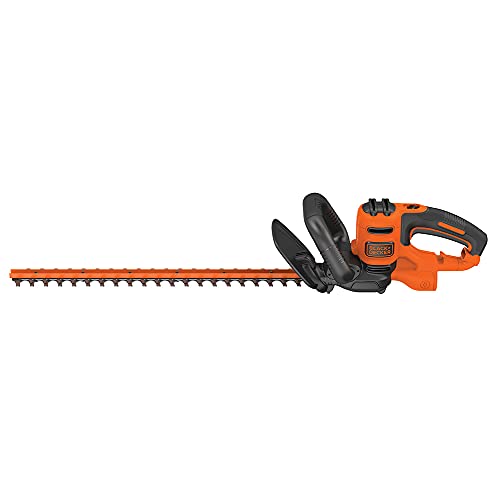
A hedge trimmer is a powered tool with a long, toothed reciprocating blade that shears soft, leafy hedge growth quickly and leaves a clean, even face. It suits anyone shaping formal hedges, box, privet, laurel, or shrub borders who wants a tidy finish in a fraction of the time hand shears take.Hedge trimmers come in four broad types: corded electric for light work near the house, battery for cord-free cutting on small-to-medium hedges, gas for long runs and tough woody growth, and pole hedge trimmers for tall or wide hedges you cannot reach from the ground. Most homeowners are best served by a battery model today, while professionals and owners of large, overgrown hedges still reach for gas. This guide sits inside our wider trimmers, edgers and blowers hub, and once you have settled on a type, our best hedge trimmer picks narrow the field to proven models.
What blade length do you need for your hedges?
Blade length sets how much hedge you cut per pass and how far you can reach, so match it to your hedges rather than buying the longest bar: 16 to 18 inches suits small, detailed shrubs, 20 to 22 inches is the all-round homeowner choice, and 24 to 26 inches speeds up long or tall formal hedges. A longer blade cuts faster but is heavier and harder to control.Bigger is not always better, because a long blade puts more weight out in front of your hands and tires your arms on detailed work. The table below maps typical blade lengths to the hedges they suit so you can size a trimmer before you shop.
| Blade length | Best for | Trade-off |
|---|---|---|
| 16-18 in | Small shrubs, topiary, tight spaces | Slower on long runs |
| 20-22 in | All-round suburban hedges | The sensible default |
| 24-26 in | Long or tall formal hedges | Heavier, needs two firm hands |
| Pole trimmer | Tall hedges above head height | Reach over cutting finesse |
Match the blade to the hedge you cut most often, and step up in length only when a longer run or taller face is slowing you down.
How thick a branch can a hedge trimmer actually cut?
Cutting capacity, set by the gap between the blade teeth, is the diameter of the thickest stem a hedge trimmer can safely cut: most homeowner trimmers handle soft growth up to about 3/8 to 3/4 inch, while professional gas models with a wider tooth gap reach roughly 1 inch. Push a trimmer into thicker wood and it jams, stalls, or damages the blade.Tooth gap, not motor power, is the real limit here, and manufacturers publish it as the cutting capacity in millimetres or inches. Hedge trimmers are designed for green, leafy regrowth, not woody branches, so anything thicker than about a finger belongs to a different tool. For the occasional thick stem, reach for loppers or a pruning saw; for a whole overgrown hedge full of thumb-thick wood, a brush cutter will serve you far better than forcing a hedge trimmer through stems it was never built to cut.
Gas, battery, or corded: which power type is best?
Battery hedge trimmers now suit most homeowners, offering quiet, cord-free cutting with almost no maintenance, while corded electric models are the cheapest for small hedges near a power point, and gas trimmers still lead for long runs, thick growth, and all-day professional use. The right power source depends on hedge size, how far it sits from an outlet, and how much noise and upkeep you will tolerate.Each type earns its place: corded is light and never runs flat but tethers you to an extension lead; battery frees you from the cord but is capped by runtime; gas offers unlimited runtime and the most power at the cost of noise, fumes, and servicing. Our best hedge trimmer picks compare specific gas, battery, and corded models side by side. Many owners also share one battery platform across their string trimmer, mower, and leaf blower to spread the cost of packs across the whole yard kit.
Do you need a pole hedge trimmer for tall hedges?
A pole hedge trimmer puts the cutting head on an extension shaft so you can trim the top and far face of a tall hedge from the ground, with no ladder. It is the safer choice for any hedge above shoulder height, and an articulating head lets you cut flat tops and awkward angles a standard trimmer could never reach.Height, not width, is what pushes you toward a pole trimmer, because reaching over-shoulder work from the ground removes the biggest hazard in hedge cutting: balancing a running blade at the top of a ladder. For branches too thick and high for any hedge trimmer, a pole saw is the right tool instead. Very tall hedges near power lines are a job for a professional, not a homeowner on a ladder.
How do you cut a hedge for a clean, even finish?
Cut a hedge from the bottom upward with the blade held flat against the face, working in slow, sweeping passes, and shape the sides so the base sits slightly wider than the top. That gentle taper, known as a batter, lets light reach the lower growth and stops the bottom of the hedge going thin and bare over the years.The steps below produce a level, even hedge face with a standard handheld trimmer.
- Cut the two vertical sides first, sweeping upward from the base so the trimmings fall clear of the face you have yet to cut.
- Keep the blade flat and tilted a few degrees into the hedge, moving in smooth arcs rather than jabbing or pushing the tip in hard.
- Cut the top last, and for a formal square top stretch a string line between two stakes at the finished height to guide the blade level.
- Step back often to check the line and face from a few paces away before taking off any more.
- Rake up and remove the clippings so they do not smother the lawn or shelter slugs and pests against the base.
Let the reciprocating teeth do the cutting at a steady walking pace rather than forcing the machine, which only tears the growth and strains the motor. For rounded or informal flowering hedges, follow the natural shape instead of a flat top, and finish tight corners and detail with a pair of garden and hedge shears for control the powered blade cannot match.
When is the best time of year to trim a hedge?
Most established formal hedges are best trimmed in late spring and again in mid to late summer, once each flush of soft growth has firmed up but before it turns woody. Crisp formal hedges such as box or privet may need two or three light cuts across the season, while informal flowering hedges are trimmed once, just after they finish blooming.Timing protects both the hedge and local wildlife, so a few seasonal rules are worth following. In its first two or three years a young hedge needs formative pruning to thicken up, which is harder and more frequent than the maintenance trims an established hedge needs. Many regions protect nesting birds through spring and early summer, so check the hedge for active nests and, where the law requires it, hold off until nesting season ends. Avoid heavy cutting in hard frost, drought, or fierce heat, when a stressed plant recovers slowly, and keep late-autumn cuts light so tender new growth is not caught by early frosts. Trimming little and often through the season also keeps regrowth soft and within the tool’s cutting capacity, which is far kinder to the blade than letting a hedge run to thick, woody stems.
What are the most common hedge-trimming mistakes?
The most common hedge-trimming mistakes are shaping the top wider than the base, forcing the blade through stems thicker than its cutting capacity, trimming with a dull or sap-caked blade, and trying to renovate a badly overgrown hedge in a single hard cut. Each one leaves either a damaged tool or a hedge that grows back patchy and bare at the bottom.The pitfalls below are the ones that most often spoil a hedge or shorten a trimmer’s life.
- Cutting straight or top-heavy sides, which shades out the lower branches until the base of the hedge thins and goes woody.
- Pushing the blade into thumb-thick woody stems, a job for loppers, a pruning saw, or a brush cutter rather than a hedge trimmer.
- Working with a blunt, resin-clogged blade that tears rather than slices, leaving a browned, ragged face and straining the motor.
- Renovating a wildly overgrown hedge in one go instead of reducing it over two or three seasons so it can regenerate.
- Skipping eye and ear protection, when flying twigs and blade noise are exactly what hearing and eye protection exists to guard against.
- Reaching over-shoulder work off a ladder, when a pole hedge trimmer or a pole saw keeps both feet safely on the ground.
How do you look after a hedge trimmer, and what should you spend?
A hedge trimmer lasts for years on very little care: clean sap off the blades after every use, keep them lightly oiled, and store the tool dry with the blade cover fitted. On price, expect a corded model at the budget end, a mid-range cordless trimmer in the middle, and a premium cordless or gas machine at the top, with the battery the costliest part of any cordless kit.Regular upkeep is mostly about the blade, and the short routine below keeps any trimmer cutting cleanly.
- Wipe sap and debris off the blades after each session, using a resin solvent for sticky build-up.
- Add a light coat of blade or machine oil before storage so the teeth do not rust or gum up.
- Sharpen the teeth occasionally to the factory angle, or hand the job to a shop; the right sharpening files and tools make a light touch-up quick.
- Store the trimmer dry and out of reach with the blade cover on, ideally in a locked shed or tool storage unit.
- For gas trimmers, add fuel stabiliser or drain the tank before long storage, and keep the air filter and spark plug clean.
Cost of ownership runs past the sticker price. A corded trimmer has almost no running cost, a cordless one adds the price of spare or replacement batteries every few years, and a gas trimmer carries ongoing fuel and servicing. Buying into a battery platform you already own, or one that also runs your string trimmer and leaf blower, spreads that battery cost across the whole yard kit.
How do you use a hedge trimmer safely?
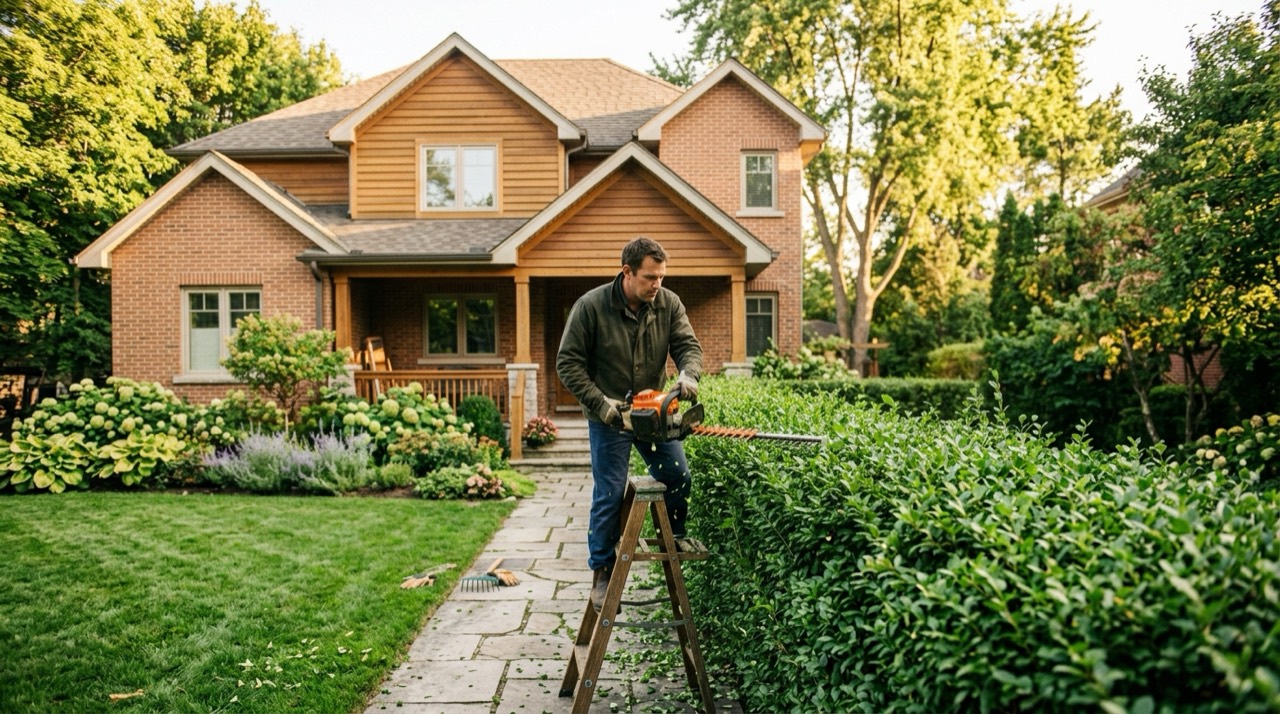
Using a hedge trimmer safely starts with a firm two-handed grip on both handles at all times, which is why most trimmers use a two-hand safety switch that only runs when both hands are in place. Never steady the hedge with your free hand near the blade, and never cut above shoulder height with a standard trimmer.Wear cut-resistant work gloves, eye and hearing protection, long sleeves, and sturdy closed shoes, since flying twigs and accidental blade contact cause most hedge-trimming injuries. Keep an extension cord behind you and on an RCD for corded models, check the hedge for hidden wires, fences, and nesting birds before you start, and keep the blade clear of the ground to avoid throwing stones. Overhead work, tall hedges near power lines, and anything needing a ladder are best left to a professional. This guide is general information, not a substitute for the tool's manual or professional training.