

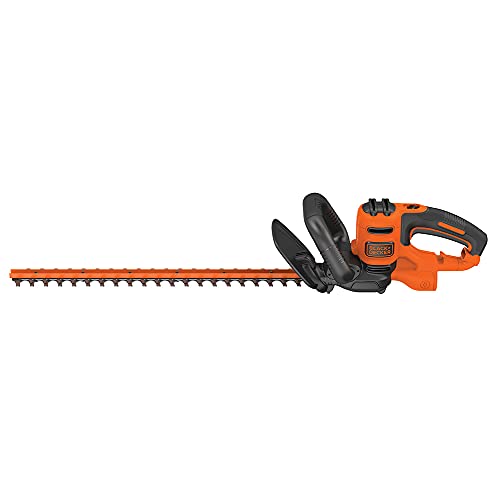


What is a pole hedge trimmer, and when do you need one?
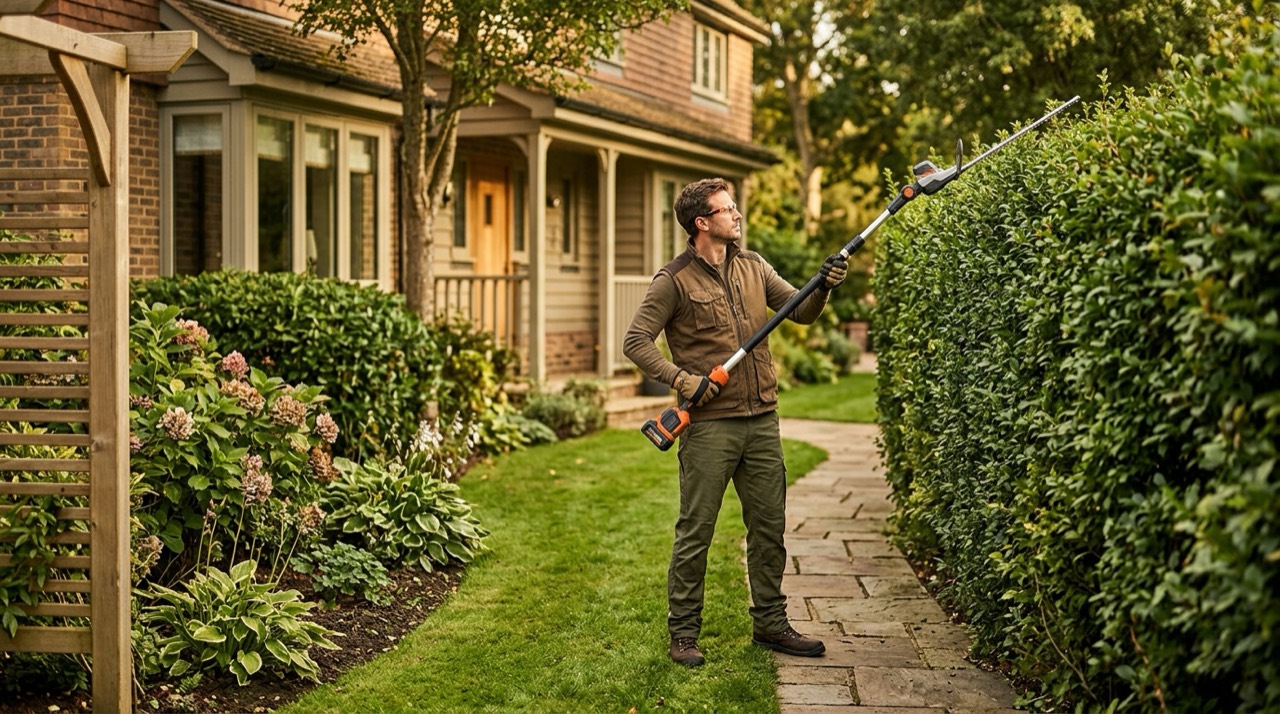
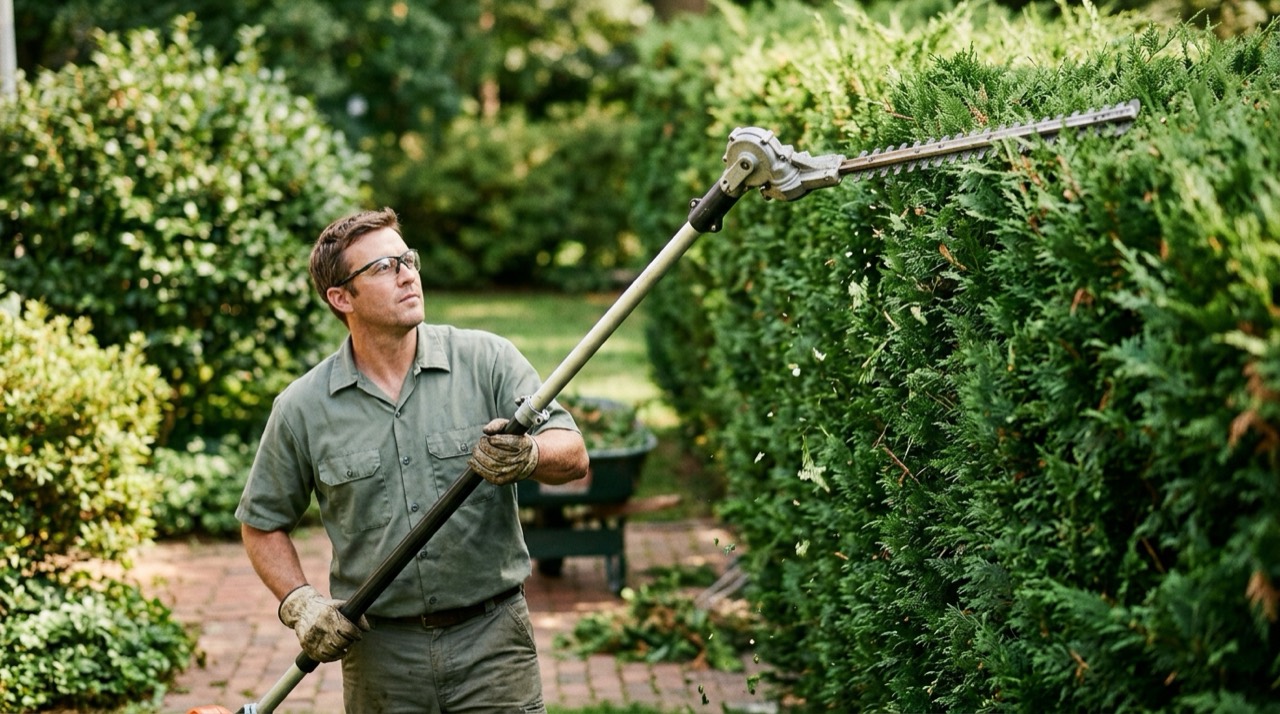
A pole hedge trimmer is a hedge trimmer whose cutting head sits on the end of an extension shaft, letting you trim the top and far face of a tall hedge while standing safely on the ground. You need one whenever a hedge rises above shoulder height, because it removes the real danger of hedge cutting: balancing a running blade at the top of a ladder.Pole trimmers come in two forms. Dedicated pole hedge trimmers are single-purpose tools built only for reaching tall hedges, while attachment systems put a hedge head on a shared powerhead that also runs a string trimmer, edger, and other implements. Popular examples include the EGO Power+ Multi-Head system, Stihl's HLA cordless pole trimmers, and Ryobi's Expand-It range. A dedicated tool is simpler and often better balanced, whereas an attachment system saves money and storage space if you already own a compatible powerhead. This angle sits alongside our main hedge trimmer guide; if height is your problem rather than blade length, a pole trimmer is usually the answer.
How much reach does a pole hedge trimmer give you?
A pole hedge trimmer typically adds 3 to 6 feet of reach over a handheld model, which, combined with your own arm span, lets most people trim hedges up to roughly 10 to 12 feet tall from the ground. Fixed-length poles keep weight and cost down, while telescoping shafts adjust to the hedge and your height.Reach is the whole point of a pole trimmer, but longer is not automatically better, because a fully extended pole is heavier and harder to hold steady out in front of you. The table below shows how shaft type maps to typical use so you can match reach to your hedges.
| Shaft type | Typical reach | Best for |
|---|---|---|
| Short fixed pole | +3-4 ft | Slightly tall hedges, lighter weight |
| Telescoping pole | +4-6 ft | Varied hedge heights, one adjustable tool |
| Multi-tool attachment | Varies by powerhead | Owners of an existing tool system |
Choose the shortest pole that comfortably clears your tallest hedge, since every extra foot of reach adds weight your arms must control.
Why does an articulating head matter on a pole trimmer?
An articulating head, one that pivots through a range of angles, is what lets a pole hedge trimmer cut a flat hedge top and reach over the front face to the far side, rather than only trimming at whatever angle the fixed shaft points. Most quality pole trimmers offer several locking positions from straight ahead to sharply downturned.Head angle is the feature that turns reach into a clean finish, because a tall hedge needs its top cut flat and level, which is impossible with a rigid head held overhead. Look for a head that locks firmly at each position so it does not creep under load, and a blade in the 18 to 24 inch range that balances cutting speed against the weight you hold aloft. A well-angled head also lets you trim the underside of a wide hedge that overhangs a border, and reach the far face of a hedge too deep to cut from one side.
Power source matters on a pole trimmer just as it does on a handheld one. Cordless pole trimmers dominate this category because their light batteries keep the weight low when it is held out at arm's length, and they run quietly without trailing a cord overhead. Petrol pole trimmers exist for professional, all-day work but are heavy to hold aloft, so most homeowners are best served by a battery model matched to the same platform as their other yard tools.
How do you choose between a fixed pole, a telescoping pole, and an attachment system?
Choose a fixed pole for the lightest, simplest tool when your hedges are a similar height, a telescoping pole when hedge heights vary and you want one adjustable tool, and an attachment system when you already own a compatible powerhead and want to spread its cost across several tools. Each trades a little of one thing for another.The comparison below lines up the three forms on what matters when you are holding a blade out at arm’s length.
| Form | Strength | Trade-off |
|---|---|---|
| Fixed pole | Lightest, best balanced, fewest parts | One reach only |
| Telescoping pole | Adjusts to hedge and user height | Heavier, a joint that can flex |
| Attachment system | Shares one powerhead across tools | Balance and reach vary by head |
A dedicated fixed-length pole trimmer is usually the best-balanced and most reliable if reaching tall hedges is all you need. A telescoping model earns its extra weight when you cut hedges of different heights and want to carry one tool instead of two. An attachment head on a system such as the EGO Power+ Multi-Head, Ryobi Expand-It, or Stihl KombiSystem makes most sense when the powerhead already lives in your shed for a string trimmer or edger, and the hedge head is an occasional add-on.
What weight and balance should you expect overhead?
Expect a pole hedge trimmer to feel noticeably heavier than its bare weight suggests, because the mass sits out on the end of a shaft where leverage multiplies the strain on your arms and shoulders. A tool that weighs only a few kilos on the bench becomes tiring within minutes when held level above head height, which is why balance matters as much as raw weight.Managing that load is what keeps overhead trimming safe and tidy. Cordless pole trimmers dominate precisely because a light battery keeps weight low and close to your hands rather than hung out on the head, and a well-designed shaft puts the balance point where your leading hand naturally grips. A padded shoulder strap or harness, offered with many models, transfers weight off your arms and lets you work longer with steadier control. Keep the head moving in smooth, unhurried passes, take frequent breaks before your arms tire, and stop the moment your grip or footing feels less than solid, since a wandering blade overhead is both a poor cut and a real hazard.
How do you cut a tall hedge top level from the ground?
Cut a tall hedge top level from the ground by setting the articulating head flat, standing back far enough to see the whole top line, and sweeping the trimmer across in slow, overlapping passes rather than reaching in at an angle. Working to a reference line keeps a long top straight when you cannot see it from directly above.The steps below give a level top and a clean far face without a ladder.
- Set and lock the head to the angle the cut needs: flat for the top, tilted for the front face or the far side.
- Stand back a pace so the whole hedge line is in view, with both hands on the tool and feet planted.
- Sweep the head across the top in smooth, overlapping passes, letting the blade skim the surface rather than digging in.
- For a long formal top, run a string line between stakes at the finished height and trim just above it as a guide.
- Move along the hedge in sections, stepping back to check the line from a distance before advancing.
Cut the top a touch narrower than the face below it so the finished hedge keeps a slight taper, the same batter principle that stops the base going bare. For branches too thick and high for any hedge trimmer, switch to a pole saw, which is built to cut wood a hedge trimmer cannot.
What maintenance does a pole hedge trimmer need?
A pole hedge trimmer needs the same blade care as a handheld model plus attention to the shaft, gearbox, and head joint that a standard trimmer does not have. Keep the blade clean and oiled, and check the parts that carry the load out to the head before each session.The upkeep points below keep a pole trimmer safe and smooth to use.
- Clean sap off the blade after each use and add a light oil, exactly as you would a handheld trimmer.
- Check that the articulating head locks firmly at each position and does not creep under load; tighten or service it if it slips.
- Keep telescoping shaft clamps clean and firm so the pole cannot collapse or twist while raised.
- Grease the gearbox at the head at the interval the manual sets, as it drives the blade far from the motor.
- Store the tool with the blade cover fitted, ideally hung in a shed or tool storage unit so the long shaft is supported and out of the way.
How do you use a pole hedge trimmer safely?
Using a pole hedge trimmer safely means keeping both hands on the tool, planting your feet firmly, and never working directly beneath the blade, because cut material and the trimmer's own weight come down toward you. Wear a helmet or hard hat with a face shield for overhead work, along with eye and hearing protection and cut-resistant gloves.Overhead cutting tires your arms quickly, so take breaks, keep the head moving smoothly, and stop if you lose a firm two-handed grip. Never use a pole hedge trimmer near overhead power lines, and never combine one with a ladder, since a raised, unstable platform plus a running blade is among the most dangerous things a homeowner can attempt. For very tall hedges, hedges tangled with thick branches, or anything close to power lines, hire a professional. For thick, high branches beyond any hedge trimmer's capacity, a pole saw is the correct tool. This is general guidance, not a substitute for the tool's manual or professional training.