

What is the best hedge trimmer?
The best hedge trimmer is the one that matches your hedge size and power needs, not the model with the biggest motor or the longest bar. For most suburban gardens up to a long boundary hedge, a 22 to 24 inch battery trimmer with dual-action blades hits the sweet spot of power, quiet running, and low maintenance.In that class, the cordless models owners and reviewers return to most are the EGO Power+ HT2411, praised for its long 24-inch blade and strong 56V platform, and the DeWalt 20V MAX, a light and well-balanced trimmer for anyone already on DeWalt batteries. Heavy or daily users often step up to the Milwaukee M18 FUEL for its pro-grade power.
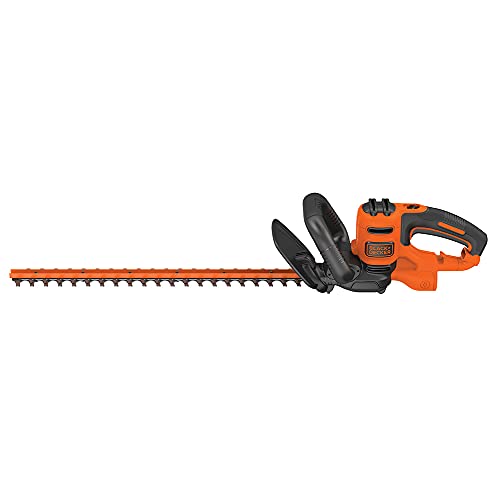
Your hedges may point elsewhere. Long, woody, or professional-scale hedges still favour a gas trimmer such as the Stihl HS 45 or the lighter, easy-start Husqvarna 122HD60, whose unlimited runtime outlasts any battery. A small hedge close to a power point is served just as well by a cheap, light corded model like the Black+Decker BEHTS400.
How do you decide which hedge trimmer is best for you?
Decide by working through three questions in order: how big and how woody are your hedges, how far do they sit from a power point, and which battery brand, if any, do you already own. Those answers point to a power type and blade length far more reliably than any single model name does.Blade length follows hedge size, with 20 to 22 inches covering most suburban hedges and 24 to 26 inches earning its keep on long formal runs. Power type follows scale and distance: corded for a small hedge near a socket, cordless for the everyday garden, and gas for long or professional work. Existing batteries then settle the brand, because the pack is the costly part of any cordless kit. Run those three filters and the field of models narrows to a short, sensible shortlist rather than an overwhelming wall of choice.
Which hedge trimmer is best for a small, medium, or large hedge?
The best hedge trimmer scales with the hedge: a light corded model for a small hedge, an all-round cordless trimmer for a medium garden, and a long-bladed cordless or gas machine for a large or woody boundary. Matching the tool to the size of the job avoids both overspending and running short of power.The pairings below map hedge size to the class of trimmer that usually fits best.
- A small hedge near a socket: a cheap, light corded trimmer such as the Black+Decker BEHTS400 does the whole job.
- A typical suburban garden with several hedges: an all-round 22 to 24 inch cordless trimmer like the EGO Power+ HT2411 or DeWalt DCHT820P1 is the default.
- A large, long, or woody boundary: a longer cordless trimmer or a gas machine such as the Stihl HS 45 keeps up without constant battery swaps.
- Tall hedges above shoulder height: reach matters more than model, so a pole hedge trimmer is the answer rather than a longer handheld blade.
How should you read best hedge trimmer recommendations?
Read any best hedge trimmer list, including this one, as a guide to the right class of tool for a given garden rather than a verdict that one machine beats all others. Recommendations here rest on manufacturer specifications and the balance of owner feedback, not on first-hand lab testing, and the honest aim is to steer you to the right type and size.Treat headline specs as typical published figures that can shift by model year, and confirm the current blade length, cutting capacity, and battery details on the exact variant before you buy. Weigh a brand’s service and parts network alongside the spec sheet, since a trimmer you can get a blade or a part for years later is worth more than a slightly better number today. Where your hedge sits outside what any hedge trimmer should tackle, the right answer is a different tool rather than a bigger trimmer.
Because the battery is the expensive part of any cordless kit, picking a brand whose packs also run your string trimmer and leaf blower stretches your money furthest. Our best hedge trimmer picks rank these models by use case, and the full hedge trimmer guide explains blade length and cutting capacity in more depth. Recommendations here are based on manufacturer specs and aggregated owner feedback, not first-hand lab testing.