


How should you store chainsaws and outdoor power tools?
Store outdoor power tools clean, dry, drained of fuel, and locked away from children — a chainsaw belongs in a hard case or bar scabbard, while trimmers, blowers, and mowers hang on wall racks or sit in a sealed shed or cabinet. Match the storage to the hazard each tool carries.
Outdoor kit fails in storage for predictable reasons: bar oil weeps onto shelves, stale fuel gums carburetors, chains rust, and sharp bars or blades sit within a child's reach. The right storage solves all four at once. This guide covers chainsaw cases and scabbards first, because a chainsaw is the most dangerous tool in most sheds, then the racks, cabinets, and sheds that hold the rest of your outdoor safety gear and accessories.
Why does a chainsaw need its own case or scabbard?
A chainsaw needs a case or scabbard because its bar and chain stay razor-sharp and oily even when the saw is switched off. A molded case contains oil drips, guards the chain from knocks, and keeps the cutting edge covered so nobody brushes against it in the garage or truck bed.
You have three levels of chainsaw protection. A hard carrying case fully encloses the powerhead and bar, and usually has a slot for bar oil and a scrench. A bar scabbard, or bar guard, is a lightweight sleeve that covers just the bar and chain for quick transport. A soft padded bag sits between the two. Our best chainsaw case picks compare the leading hard cases and scabbards, and the chainsaw bar guide explains how to match a scabbard to your bar length.
What are the main types of outdoor tool storage?
Outdoor tool storage falls into four families, ordered here from the smallest footprint to the largest:
- Cases and scabbards — molded cases and bar covers that protect a single tool such as a chainsaw or hedge trimmer in transit.
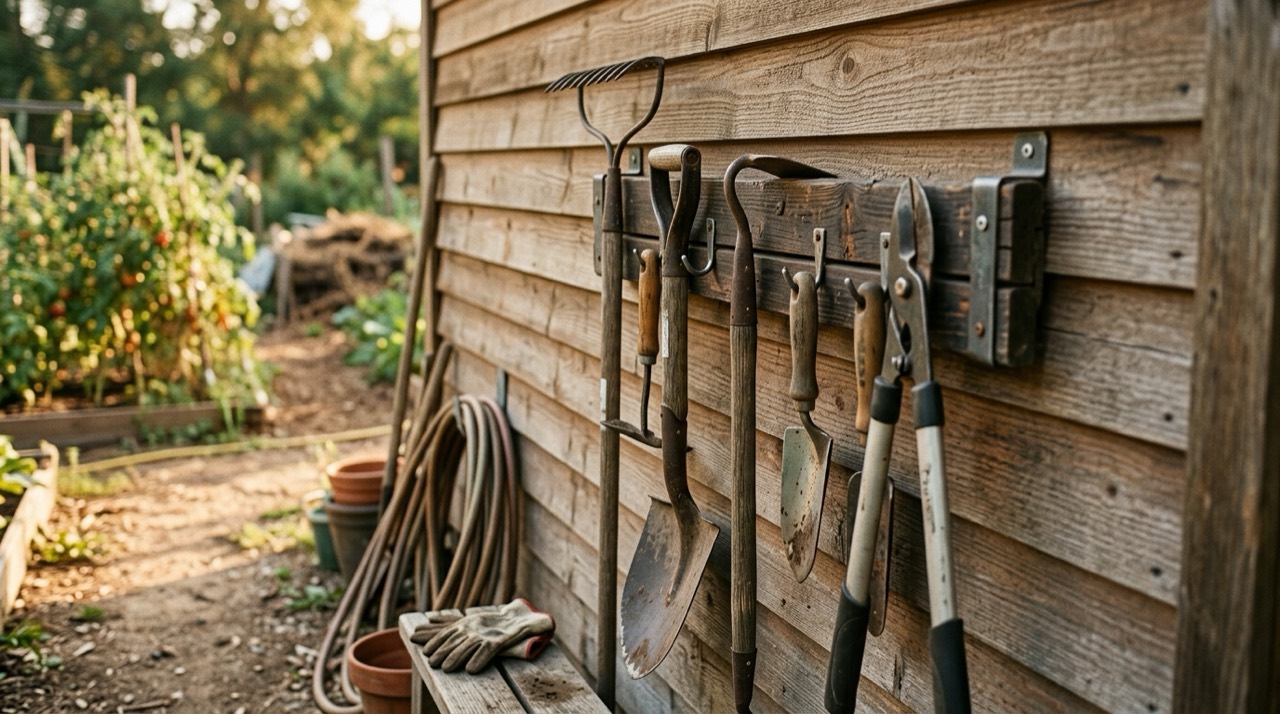
- Wall racks and rail systems — hooks and rails (Rubbermaid FastTrack, Gladiator GearWall, Milwaukee PACKOUT wall plates) that hang string trimmers, blowers, and pole tools off the floor.
- Vertical cabinets — lockable resin cabinets from Suncast, Keter, and Rubbermaid for smaller yards and garages.
- Storage sheds — walk-in or lean-to resin and metal sheds from Keter, Suncast, Rubbermaid, and Lifetime for mowers, splitters, and the full kit.
Hang what you can, cabinet what you can't hang, and shed what won't fit a cabinet.
How do you store fuel and bar oil safely?
Store fuel and bar oil in sealed, labeled containers on a low shelf, away from the house, ignition sources, and children. Gas-powered saws, trimmers, and blowers should be run dry or dosed with fuel stabilizer before long storage so the fuel can't varnish inside the carburetor.
Keep two-stroke mix, fresh gas, and bar and chain oil in their own containers, never decanted into drink bottles. A small metal cabinet, or a dedicated shelf in a detached shed, keeps flammable liquids out of living space. Wipe up spills at once — bar oil is slippery and stains — and store the saw itself with the bar pointing down so residual oil drains into the case, not across your shelf.
How do you keep saws and blades away from children?
Keep saws and blades away from children by storing every cutting tool latched, locked, or high on a wall — never leaning in an open corner. A chainsaw in a latched hard case, loppers on a high hook, and a mower in a locked shed all put the cutting edge out of small hands.
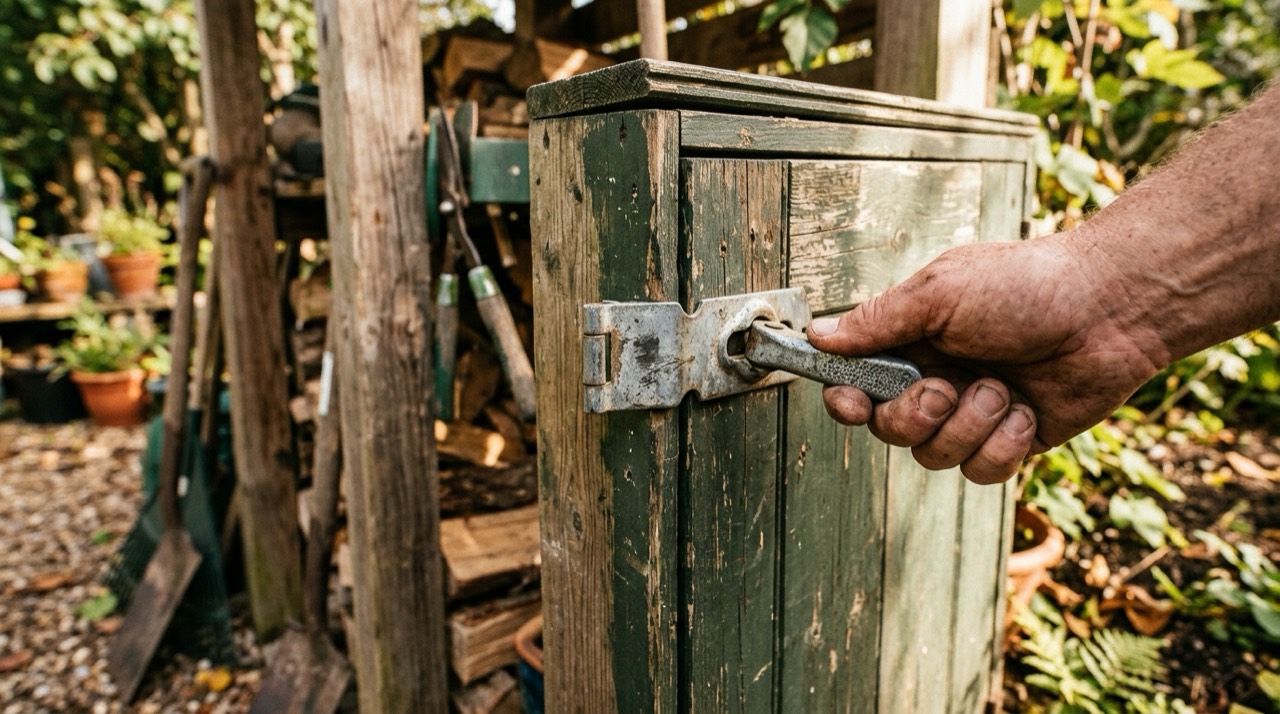
Latching matters more than height alone. Choose cases with positive latches, cabinets and sheds with a hasp for a padlock, and wall hooks mounted above shoulder height for the sharpest tools. Batteries and spark-plug leads should live separately from the tool so a powered saw can't be started. This is general guidance, not a substitute for supervision — treat any powered cutting tool as live until the battery or plug lead is removed.
Where should you store batteries and their chargers?
Store lithium batteries and chargers indoors at room temperature, off the concrete, and away from damp and extreme heat or cold. Cold garages sap battery capacity and condensation corrodes terminals, so a shelf inside the house beats an unheated shed for battery chainsaw and cordless trimmer packs.
Charge packs to around half before a long idle period, take them off the charger once full, and never store a swollen or damaged pack indoors. A dedicated battery shelf, or a Milwaukee PACKOUT organizer, keeps packs, chargers, and adapters together and visible so nothing is left flat all winter.
How do you protect stored tools from rust and weather?
Protect tools from rust by drying them, wiping bare metal with a light oil film, and storing them in a dry, ventilated space off the floor. Moisture is the enemy: a sealed but unventilated shed can sweat, so airflow and a raised shelf matter as much as a roof overhead.
Clean grass and sap off decks and blades before storage, since packed debris traps moisture against steel. A wipe of light machine oil on bars, blades, and exposed metal, plus a breathable cover on stored mowers and splitters, carries most tools through a wet off-season — the lawn mower maintenance guide covers the seasonal lay-up in detail.
How much storage space do outdoor power tools need?
Most homeowner kits fit on one wall rack plus a locking cabinet; you only need a shed once a mower, log splitter, or ride-on joins the collection. A chainsaw case takes roughly two feet of shelf, and a string trimmer wants about six feet of clear wall to hang.
Size the storage to the tools you actually own, not the ones you might buy. A small suburban kit — a saw, a string trimmer, a blower, and a push mower — lives happily on a single stud wall with a graduated hook rail and a narrow resin cabinet for fuel and oil. An acreage kit with a riding mower, a gas log splitter, and seasonal firewood tools needs a walk-in shed with a clear drive-in path. As a rule of thumb, allow a two-foot square of floor for every wheeled machine, a foot of wall per hand tool, and a locked, ventilated box for anything that holds fuel.
What are the most common outdoor-tool storage mistakes?
The costliest storage mistakes are leaving fuel in the tank, standing tools on a bare slab, and propping sharp tools in an open corner where children can reach them. Each one shortens a tool's life or puts someone at risk, and each is easy to design out.
The recurring errors owners make when storing outdoor power equipment are listed below, with the fix for each:
- Leaving untreated pump gas in the tank, which varnishes the carburetor — run the tool dry or add stabilizer before any lay-up longer than a month.
- Standing mowers and splitters on a bare concrete floor, which wicks damp up into the deck and rusts it — raise them on a pallet or shelf.
- Storing lithium packs in an unheated shed, where cold saps capacity and condensation corrodes terminals — bring battery chainsaw and cordless packs indoors.
- Leaning a chainsaw, loppers, or a hedge trimmer in an open corner within a child's reach — latch every cutting tool in a case or hang it high.
- Skipping the clean-down, so packed grass and sap trap moisture against blades — brush decks and bars clean before they go away.
- Overloading a wall hook past its rated weight, which pulls the fixing out of the drywall — mount rails into studs and respect the stated limit.
How do you store outdoor tools in a small space?
In a small garage or apartment, go vertical and modular: hang tools on a stud wall, stack a modular tool box for the saw and its packs, and keep the single fuel can in a sealed, ventilated cabinet away from living space. Height and enclosure matter more than floor area.
Renters and small-garage owners face two constraints — limited wall they can drill and a rule against storing much fuel indoors. A mini chainsaw or battery saw sidesteps the fuel problem entirely and stores in a single stackable box, so cordless kit suits tight spaces best. Where you cannot fix a rail into studs, a free-standing lockable resin cabinet holds the sharp and powered tools behind a latch, and a slim over-door hook rack lifts long-handled tools clear of the floor. Keep the one permitted fuel can in a metal box by an outside wall, never under a bed or beside a water heater.
When should you lock tools away rather than just store them high?
Lock cutting and powered tools away whenever children, visitors, or shared access are part of the household; height alone stops a toddler but not a curious older child. A padlocked cabinet or shed hasp, plus batteries and spark-plug leads stored separately, is the reliable barrier.
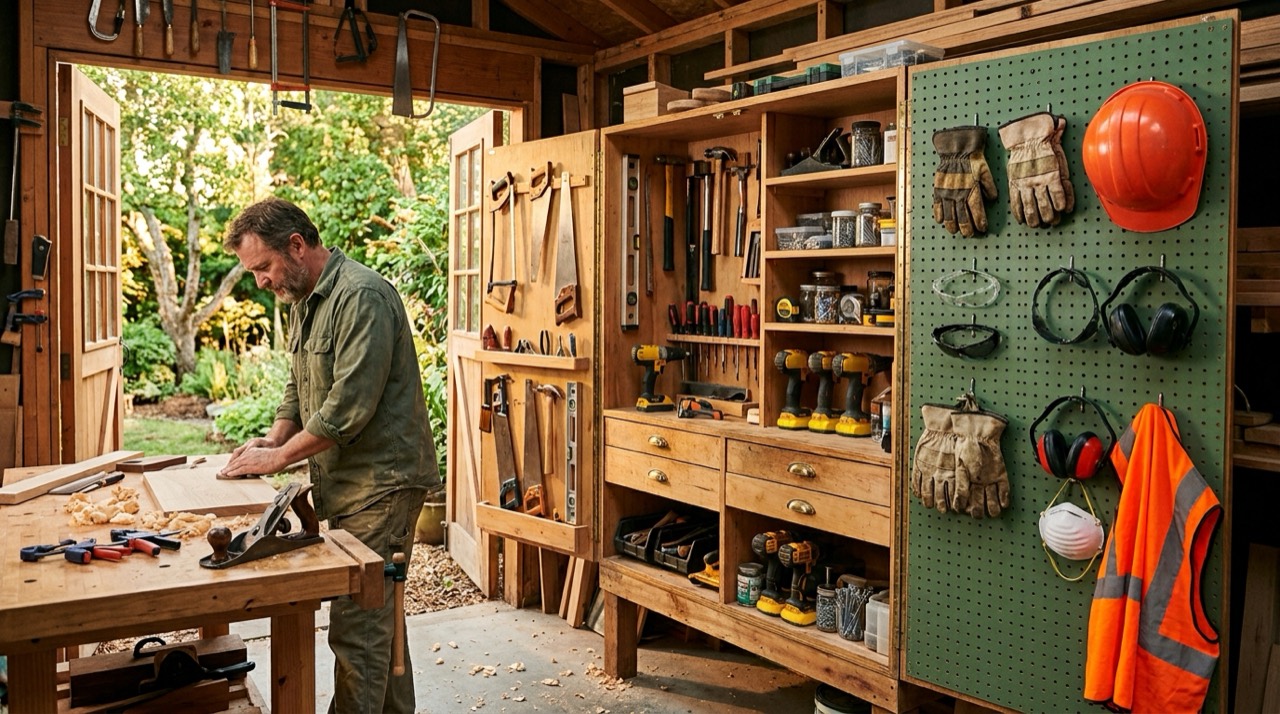
Out-of-reach storage and locked storage solve different problems. A hook above shoulder height keeps a bar or blade away from a small child who cannot climb, and it is enough for a low-traffic garage with no young visitors. A lock becomes necessary once an older child, a guest, or a shared driveway enters the picture, because reach is no longer the only variable. Treat the most dangerous items — the chainsaw, the splitting axe, the hedge trimmer — as the ones that must be latched or padlocked, and store the work gloves and eye protection you want close to hand on the open racks.