

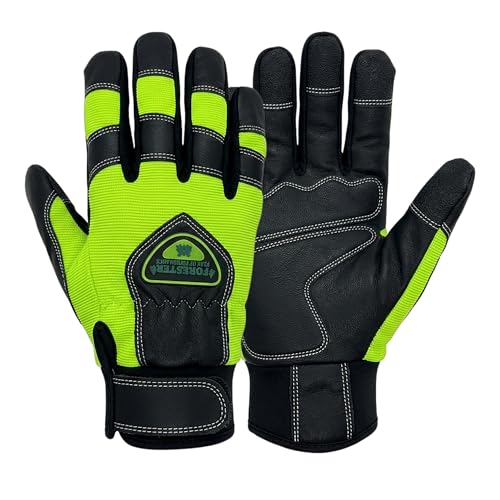
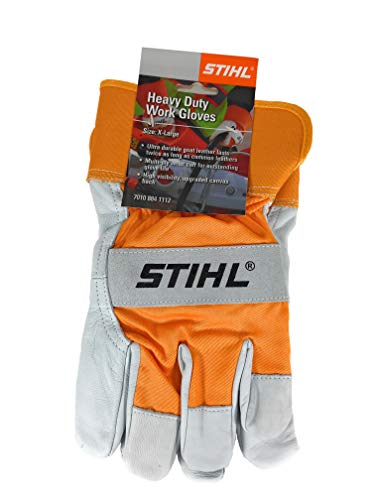
What matters most in work gloves for chainsaw and outdoor power-tool work?
Grip, hazard-matched protection, and fit decide whether a work glove keeps you safe or just gets in the way. Chainsaw work needs certified saw protection on the left hand; splitting and hauling need abrasion and impact resistance; pruning needs dexterity and a snug palm. No single pair does everything.Because the right glove is defined by the tool in your hand, this guide separates the two jobs most outdoor users face. For running a saw, see the chainsaw glove roundup; for general yard, workshop and splitting tasks, see the best gloves for work. Gloves are one layer of protection — they sit alongside chainsaw chaps and leg protection, a helmet and face shield, and hearing and eye protection, never a replacement for safe technique.
How do you match a glove to the outdoor job?
Match the glove to the single hazard that dominates the task, then confirm it still lets you work. A glove chosen for the wrong risk — thin nitrile for splitting, or stiff leather for fine pruning — either fails to protect or gets pulled off, which protects nothing. Name the main hazard first: cutting a moving chain, a sharp static blade, impact and crushing, abrasion from rough stock, or vibration on long sessions.The table below pairs the common outdoor jobs with the glove that suits them, so you can build a small kit rather than hunt for one do-everything pair.
| Job | Main hazard | Glove type | Why it fits |
|---|---|---|---|
| Running a chainsaw | Moving chain, kickback | Certified chainsaw glove (left-hand pad) | Saw-clogging fibre jams the chain and trips the brake |
| Splitting and stacking firewood | Impact, abrasion, splinters | Leather or impact glove | Padding and hide shrug off knocks and rough bark |
| Handling loose chains, files, sheet metal | Static blade cut | Cut-rated glove (A4+/EN C+) | Cut fibres resist a slicing edge the palm would meet |
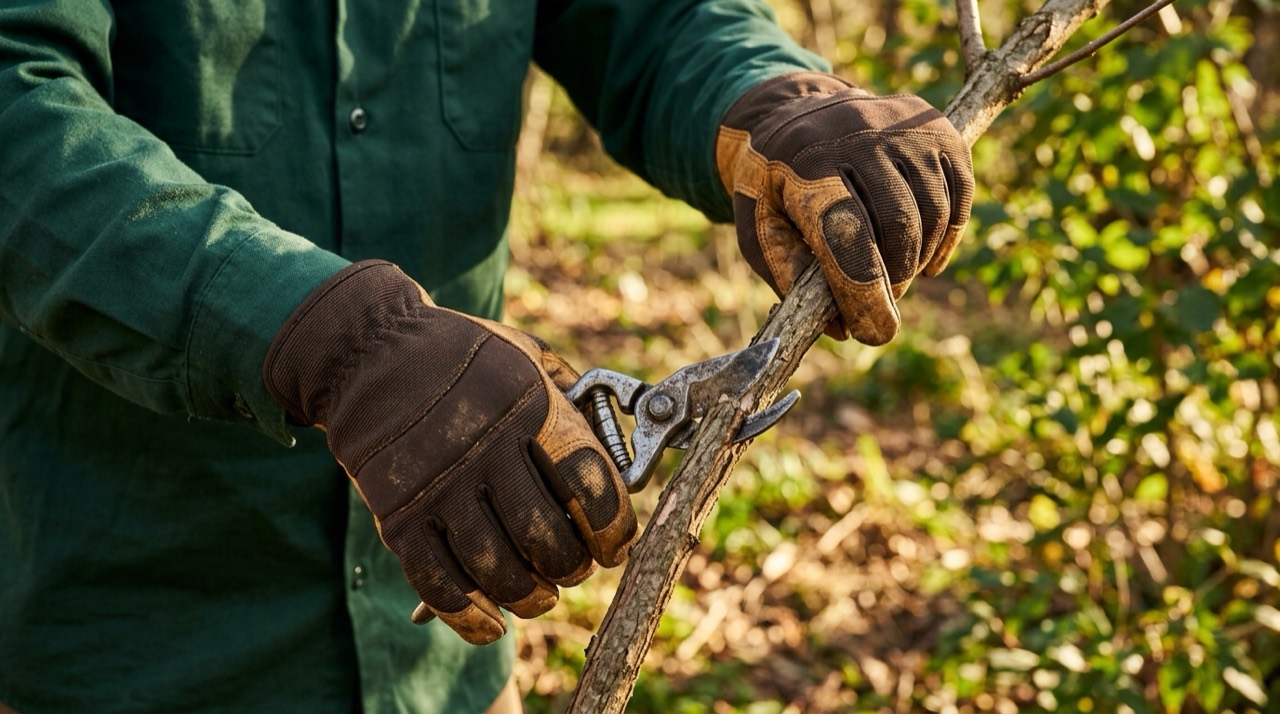
| Pruning and secateur work | Thorns, fine cuts, dexterity loss | Coated knit or thin nitrile | Snug palm keeps feel for hand pruners |
| Long trimmer or blower sessions | Vibration, fatigue | Padded anti-vibration glove | Cushioning eases mid/high-frequency buzz and cold |
The pattern is clear once the hazard is named: heavy work wants leather or impact protection, sharp work wants a cut rating, saw work wants certification, and detail work wants dexterity. Two or three focused pairs cover almost every outdoor task better than a single compromise glove.
Which cut-resistance rating should you read — ANSI/ISEA 105 or EN 388?
Read whichever standard is printed on the cuff, then match the level to the hazard. North American gloves carry an ANSI/ISEA 105 cut level from A1 to A9; European and most chainsaw-brand gloves carry an EN 388 shield with a four-digit code plus letters. Both rank cut resistance from light to extreme.The two systems measure force differently, so the numbers do not convert one-to-one, but the ladder is easy to read. ANSI/ISEA 105-2016 rates blade cut in grams of steel needed to slice through the fabric on a TDM-100 tester; EN 388:2016 combines an older rotating-blade "coup" test with an ISO 13997 straight-blade cut level graded A to F. When a fabric is sharp enough to blunt the coup blade, the letter grade becomes the figure to trust. The table below lines up the common ratings against typical outdoor jobs.
| Task | ANSI/ISEA 105 | EN 388 cut | Typical glove |
|---|---|---|---|
| Light pruning, planting | A1–A2 | A–B | Coated knit garden glove |
| General yard and tool handling | A2–A3 | B–C | Nitrile-dipped work glove |
| Handling blades, sheet metal, firewood | A4–A5 | C–D | Kevlar or HPPE-lined glove |
| Butchery-level cut hazard | A6–A9 | E–F | High-performance cut sleeve/glove |
For most homeowners doing tool maintenance, sharpening and firewood work, an A4/level-C glove is a sensible floor. Handling loose chains, files and splitting wedges is where cut ratings earn their keep — pair them with the right sharpening files and tools. One caution worth repeating: a high cut level says nothing about a moving chainsaw chain, which slices faster and harder than any static blade the test uses, so a cut rating never substitutes for a certified chainsaw glove.
Do chainsaw gloves actually stop a moving chain?
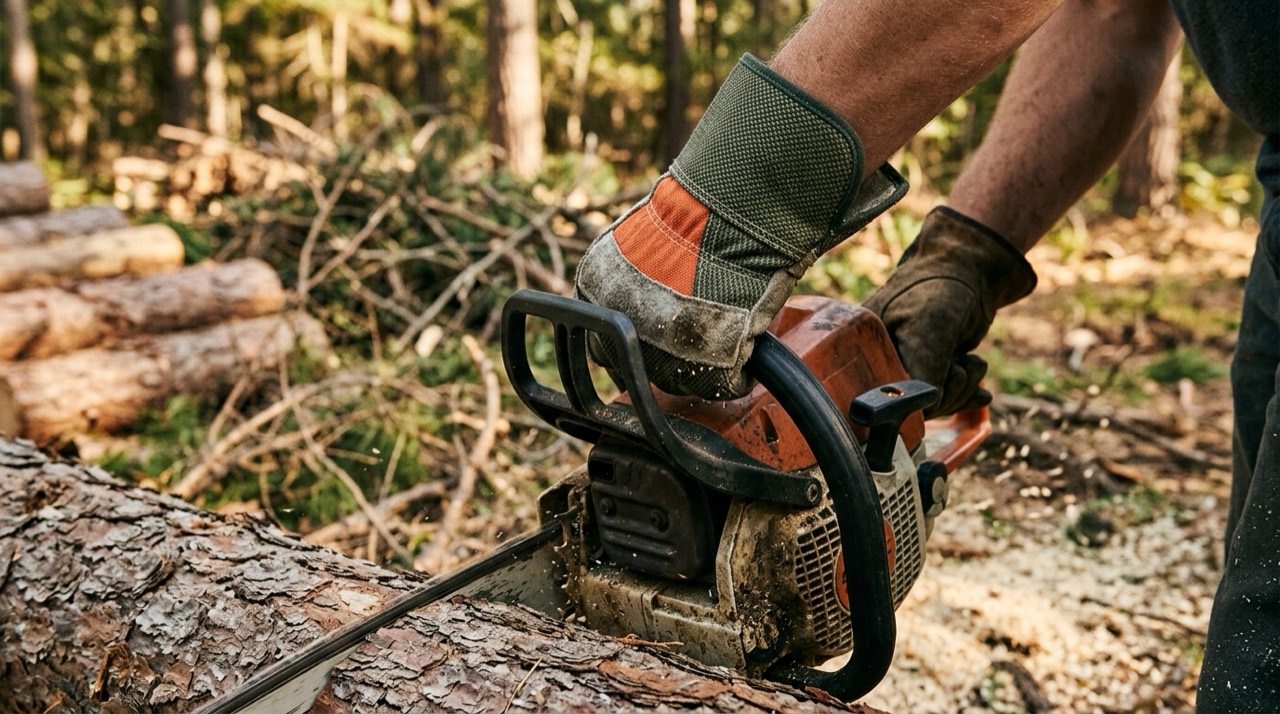
Chainsaw gloves slow or jam a chain on the back of the left hand; they do not guarantee it stops. Certified chainsaw gloves use a saw-clogging fibre layer, tested to EN ISO 11393-4, that is designed to tangle the chain and force the brake to engage before the drive links reach skin.Protection is fitted to the back of the left hand because that is the hand nearest the bar during kickback and one-handed slips. Coverage is graded by chain speed — Class 0 (16 m/s), Class 1 (20 m/s), and Class 2 (24 m/s) — with most consumer gloves rated Class 0 or 1. The palms are ordinary leather or synthetic, so gloves protect against the most common back-of-hand contact, not a full grab of a running chain. They complement, never replace, the chain brake, correct stance and a properly tensioned chain covered in chainsaw maintenance. The fibre pad is also single-use: any real contact spends it, so a struck glove is retired even if the outer shell looks fine.
What glove materials give the best grip and durability?
Coated palms give the best grip for power-tool work, and the coating should match the conditions. Nitrile resists oil and abrasion and grips dry-to-oily surfaces; latex grips hard in the wet but degrades around fuel; polyurethane gives fine-touch grip for detailed work; and full-grain leather resists heat and rough bark for splitting and hauling.The shell fabric matters as much as the coating. Nylon and HPPE knit shells flex and breathe for all-day wear, while goatskin and cowhide leather shrug off splinters and abrasion when you are stacking wood or swinging a splitting axe or maul. For refuelling and bar-oil handling, an oil-repellent palm keeps a slick grip on the saw — the same reason a tidy bar oil and fuel routine matters. Reserve thin PU gloves for pruning and assembly, not for heavy log work. Leather rewards a little care: worked with a leather conditioner and dried slowly, a good hide pair outlasts several cheap synthetic ones, though it runs warmer in summer and takes longer to dry after rain.
Do anti-vibration gloves reduce hand-arm vibration?
Anti-vibration gloves reduce some higher-frequency vibration but do little for the low-frequency energy a chainsaw produces. Gloves certified to ISO 10819 must cut vibration in the mid and high bands, yet the standard itself shows they barely touch the low frequencies that drive hand-arm vibration syndrome (HAVS).Treat anti-vibration gloves as one control, not a cure. The biggest reductions come from the tool and the technique: anti-vibration mounts on the saw, a sharp chain that cuts without forcing, a relaxed grip, and rotating tasks so no single session runs too long. Padded gloves add comfort and warmth — cold hands transmit vibration worse — but if numbness or tingling persists after use, that is a medical warning sign, not a glove-shopping problem.
How many pairs of work gloves does an outdoor user need?
Most outdoor users are best served by two or three focused pairs rather than one compromise glove. A single "do-everything" pair is always a little wrong for every job, whereas a small kit means the right glove is always to hand and each pair lasts longer because it is not asked to do work it was never built for.A sensible starter kit is short. The list below covers the great majority of home outdoor work.
- A certified chainsaw glove, worn only when a saw is running, sized to your left hand for the protective pad.
- A leather or impact glove for splitting, hauling and stacking, where knocks and rough bark do the damage.
- A thin coated glove for pruning, planting and detail tasks, kept for feel rather than armour.
- Optionally, a cut-rated glove if you service chains, sharpen blades or handle sheet metal often.
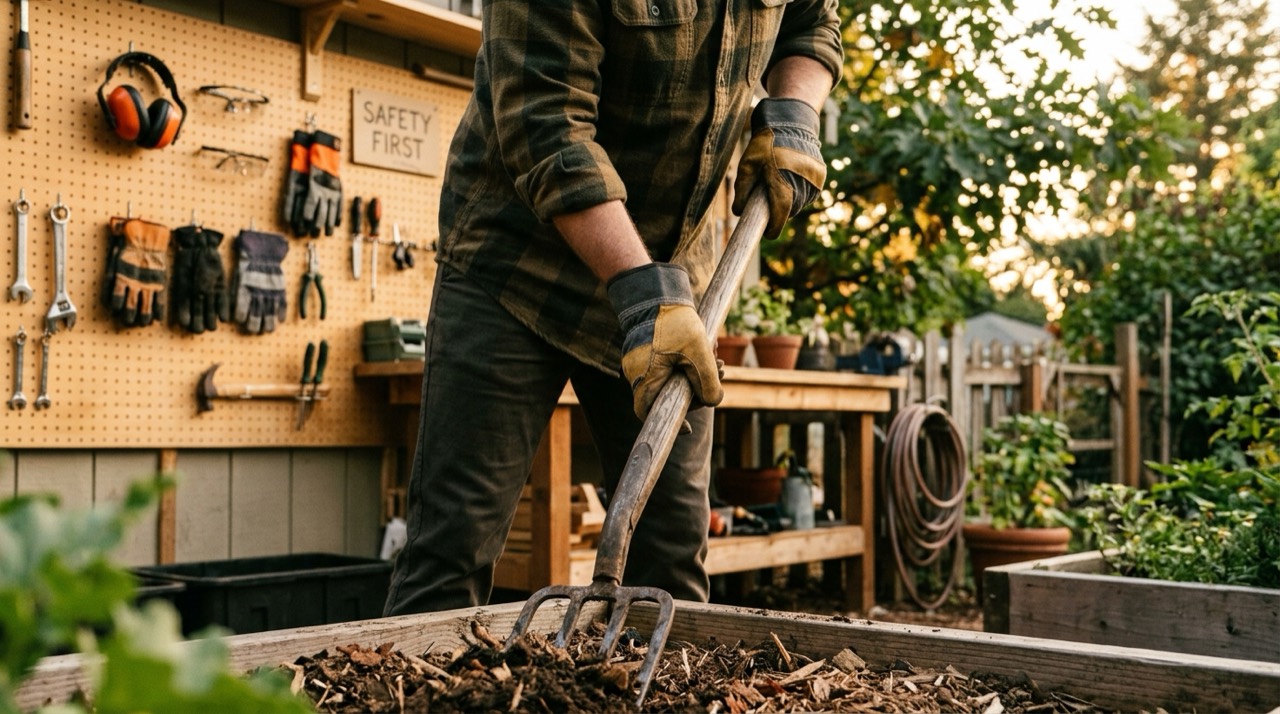
Buying focused pairs rarely costs much more than one premium all-rounder, and each protects better in its lane. Store the set together with the rest of your safety gear so the correct glove is the easy choice, not the one you skip because it is in the shed.
What are the most common work-glove mistakes?
The most common mistakes are treating any glove as chainsaw-proof, sizing up for comfort, and wearing gloves past their life. Each quietly removes the protection you paid for, and each is easy to avoid once you know to look for it. The list below covers the errors that most often lead to an injury or a ruined glove.- Assuming a comfortable leather or cut glove protects against a chainsaw — only a glove certified to EN ISO 11393-4 does.
- Buying a size too big so the fingertips flop, which kills dexterity and lets the glove snag in moving parts.
- Keeping cut or chainsaw gloves in service after the coating cracks, seams split, or the protective pad takes any contact.
- Wearing loose-cuffed gloves near rotating tools, where a caught glove pulls the hand toward the hazard.
- Machine-washing and tumble-drying grip gloves, which hardens leather and degrades the coating and protective fibre.
Avoid all five and a modest glove will outperform an expensive one used carelessly. When a task needs feel more than armour — feeding a chipper by hand, for example — the safer answer is sometimes a different technique, not a thinner glove.
How should work gloves fit, and when should you replace them?
Work gloves should fit snug with no loose fingertip material, because slack fabric kills dexterity and can snag in moving parts. Measure around the palm at the knuckles to find your size, then flex your hand — the glove should follow without bunching at the palm or gaping at the cuff. If you cut in winter, size to allow a thin liner without losing feel, rather than jumping a whole size.Replace gloves the moment protection is compromised. Retire cut-resistant and chainsaw gloves when the shell is worn shiny, the coating is cracked, seams are splitting, or (for chainsaw gloves) the protective pad has taken any saw contact — the fibre only works once. Wash grip coatings gently and air-dry away from direct heat, store them dry and flat so they keep their shape, and keep a labelled spare pair with the rest of your safety kit. Rotating between two pairs lets each dry fully between sessions, which keeps leather supple and the fit true for longer. A cheap glove replaced on time protects better than a premium glove worn past its life.