Best Gloves For Work
Best Gloves For Work, ranked from aggregated owner ratings and reviews, not first-hand testing. Real pros, cons, and who each pick is best for.

Our Top 3 Picks
Quick Comparison
| Product | Best for | Buy | |
|---|---|---|---|
| Husqvarna Technical Chainsaw Gloves | Best Overall | See Amazon | View (paid link) |
| Stihl Dynamic Protect MS Gloves | Best Premium | See Amazon | View (paid link) |
| Portwest A290 Chainsaw Safety Glove | Best Value | See Amazon | View (paid link) |
| Husqvarna Classic Chainsaw Gloves | Best for Beginners | See Amazon | View (paid link) |
| Oregon Fiordland Chainsaw Safety Gloves | Best Heavy-Duty | See Amazon | View (paid link) |
| Husqvarna Functional Chainsaw Gloves | Editor's Pick | See Amazon | View (paid link) |
How to choose work gloves for the job
Choose work gloves by matching the glove to the main hazard, then checking dexterity and fit. Impact and abrasion call for padded, leather or reinforced gloves; sharp edges call for a cut rating; long tool sessions call for grip and, sometimes, vibration damping. A glove that fights your dominant hazard beats a comfortable all-rounder.Match the glove to the hazard
Name the hazard before you shop. Impact from splitting, demolition and heavy tools needs thermoplastic knuckle guards and padding; abrasion from wood, rope and rough stock needs leather or a tough synthetic shell; blades, sheet metal and loose chains need a cut rating; and sustained power-tool use adds a vibration and comfort factor. Most yard and workshop users want one impact/abrasion glove and one cut-rated pair. Naming the hazard first also stops you over-buying — a demolition-grade gauntlet is wasted on potting seedlings, and a thin garden glove is dangerous around a splitting maul.What do cut levels A1–A9 and EN 388 mean for general work?
Cut level tells you how much force the fabric resists before a blade slices through. ANSI/ISEA 105 grades cut from A1 (light) to A9 (extreme); EN 388:2016 shows a four-digit code plus an ISO 13997 letter from A to F. For general handling an A2–A3 (EN B–C) glove is plenty; step up to A4–A5 (EN C–D) for blades, metal edges and firewood. Details are in the work gloves guide. Read the letter grade rather than the older coup-test digit whenever both appear, because the letter comes from the straight-blade test that better reflects a real slicing edge.How much dexterity do you actually need?
Dexterity should match the task, because over-armouring your hands makes fine work slower and less safe. Thin polyurethane or nitrile-dipped gloves let you handle fasteners and pruning cuts; mid-weight impact gloves suit tool work and assembly; heavy leather is for hauling, splitting and rough stock where feel matters less. Buy for the job you do most, and keep a second, lighter pair for detail work. A quick test at the point of buying: if you cannot pick a single screw off a bench through the glove, it is too clumsy for detail tasks and belongs in the heavy-work drawer.What grip coating handles oil, water and fine work?
Grip comes down to the palm coating, and each type has a job. Nitrile grips dry-to-oily surfaces and resists abrasion, making it the safe default for tool and yard work; latex bites hardest in the wet but breaks down around fuel; polyurethane gives fine-touch grip for fasteners and detail; and bare leather grips rough stock and shrugs off heat. Pick the coating for your wettest, oiliest or most delicate task rather than the average one, because that is where a glove either holds or slips. Sandy or muddy conditions favour a textured or sandy-nitrile finish that sheds grit, while a smooth PU palm is happier indoors on clean parts.How do you size and care for work gloves?
Size work gloves by measuring around the palm at the knuckles and matching the maker's chart, then flexing your hand to confirm nothing bunches or gapes. Care is simple and pays back in glove life. The steps below keep a pair in service longer.- Measure the palm and pick the snugger size if you fall between numbers, so fingertips are not left slack.
- Wash grip gloves gently in cool water; skip the machine and the tumble dryer, which harden leather and degrade coatings.
- Air-dry flat, away from radiators and direct sun, so the shape and coating survive.
- Condition leather occasionally to keep it supple, and store all gloves dry so they do not stiffen or grow mould.
- Retire any pair once the coating cracks, seams split, or a cut-rated shell is worn through — worn protection is no protection.
Is one pair of work gloves enough?
Most users are better served by two focused pairs than one compromise glove. A mid-weight impact glove covers the bulk of tool and yard work, while a second pair — cut-rated for blades or thin for detail — handles the jobs the first pair does badly. Two purpose-built gloves usually cost little more than a single premium do-everything pair, and each protects better in its lane.How do the top work-glove picks differ?
The picks differ by the hazard each is built for, so read them against your own tasks rather than against each other. The Mechanix Wear M-Pact leads for all-round tool work, with thermoplastic knuckle guards and a padded palm that handle knocks while keeping real dexterity. The Ironclad General Utility is the everyday value pick, a washable synthetic glove for general handling without a dedicated impact or cut rating. The Ironclad Ranchworx is the heavy-leather choice, built from full-grain hide with reinforced seams for hauling, fencing and splitting. The Youngstown Anti-Vibe XT adds a padded anti-vibration palm for long power-tool sessions, best treated as a comfort control rather than a HAVS cure. The Mechanix Wear FastFit is the low-bulk, slip-on glove for detail and quick jobs where feel beats armour, and the Milwaukee Cut Level 5 fills the cut-protection gap with a high cut-level knit and a grippy nitrile palm for blades and sharp stock. Between them they cover impact, abrasion, vibration, dexterity and cut, which is why most users end up with two of them rather than one.How long do work gloves last, and what do they cost to own?
Work-glove life depends on the material and the work, so judge cost by use rather than by the sticker. A thin synthetic glove used hard may last weeks, while a full-leather pair worked and conditioned can run a year or more. Leather costs more up front but resists abrasion and heat and rewards care, so its cost per use on heavy tasks is often lower than a cheap synthetic replaced repeatedly. Coated knit and impact gloves sit in between: durable enough for daily tool work, but the coating eventually cracks and the fit softens. The practical rule is to buy the material that matches your heaviest regular task, keep a lighter pair for detail work so the main pair is not worn out on jobs it need not do, and retire any glove once its protection is compromised rather than squeezing out a few more uses.What mistakes should you avoid when buying work gloves?
The frequent mistakes are buying one glove for every job, over-armouring for the task, and skipping the size chart. The list below covers what to watch for.- Choosing a single do-everything glove, when two focused pairs protect better and often cost about the same.
- Buying heavy leather or a stiff cut glove for detail work, then taking it off, which protects nothing.
- Assuming a comfortable work glove doubles as chainsaw protection; only an EN ISO 11393-4 glove does.
- Guessing the size instead of measuring the palm and reading the maker's chart.
- Machine-washing and tumble-drying, which hardens leather and degrades coatings and cut fibres.
Match the glove to the hazard, size it properly, and keep it clean and dry, and a mid-priced pair will outlast and out-protect an expensive one used carelessly.
The shortlist below covers the common outdoor and workshop hazards, from impact to cut to vibration.
| Glove | Best for | Main protection | Notable feature |
|---|---|---|---|
| Mechanix Wear M-Pact | All-round tool work | Impact (TPR knuckles) | Padded palm, secure fit |
| Ironclad General Utility | Everyday value | Abrasion | Reinforced synthetic palm |
| Ironclad Ranchworx | Heavy leather work | Abrasion, durability | Full leather, reinforced seams |
| Youngstown Anti-Vibe XT | Long power-tool sessions | Vibration comfort | Padded anti-vibration palm |
| Mechanix Wear FastFit | Detailed, quick tasks | Grip, dexterity | Slip-on, low-bulk fit |
| Milwaukee Cut Level 5 | Blades and sharp stock | Cut resistance | High cut-level knit |
None of these are certified chainsaw gloves — for running a saw, use the chainsaw glove roundup instead. Pair a cut-rated glove with the right sharpening files and tools when you service equipment, and reach for leather when swinging a splitting axe or stacking firewood. The safest glove is still the one that fits and matches the hazard in front of you.
Full Ranking, Reviewed

Best for Homeowners and part-time users who want proven left-hand saw protection with everyday comfort
- Saw-protection layer on the back of the left hand, certified to EN ISO 11393-4
- Goatskin leather palm for grip on an oily saw handle
- Breathable stretch back panel and hook-and-loop cuff for a snug fit
- Pre-curved fingers to reduce hand fatigue on longer cuts
- Trusted saw brand with wide, well-documented sizing
- Balanced weight for all-day homeowner use
- Left-hand protection to a current chainsaw standard
- Palm is unlined, so it runs cold in winter
- Priced above bare-minimum certified gloves
Verdict: Based on published specs and owner feedback, the best-balanced chainsaw glove for most users — protective, grippy and easy to size.
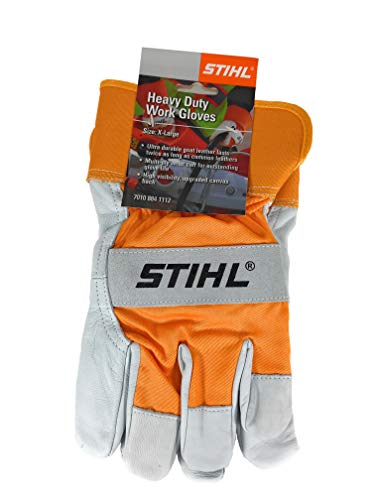
Best for Frequent and semi-professional users who run a saw most weeks
- Left-hand saw protection published as Class 1 (20 m/s)
- Reinforced palm and finger overlays for durability
- Secure adjustable cuff that keeps the glove from shifting
- Ergonomic cut that supports a relaxed grip
- Robust build aimed at regular cutting
- Higher-speed class suits mid-size Stihl saws
- Strong palm reinforcement wears well
- Premium price versus homeowner gloves
- Heavier feel than a summer-weight glove
Verdict: A durable, higher-class chainsaw glove for people who cut often and want reinforcement where it counts.
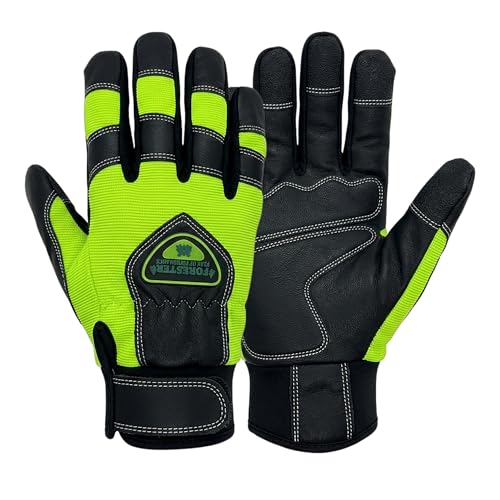
Best for Buyers assembling a first saw kit on a tight budget
- Left-hand chainsaw protection to a recognised chainsaw-glove standard
- Synthetic-and-leather palm for basic oil grip
- Elasticated wrist for quick on and off
- Widely stocked in a full size run
- Low cost for a certified chainsaw glove
- Easy to find and replace
- Light enough for occasional use
- Less palm reinforcement than premium gloves
- Basic comfort features only
Verdict: A no-frills certified chainsaw glove that gets left-hand protection onto occasional users without stretching the budget.

Best for First-time saw owners who want simple, correctly-sized protection
- Left-hand saw-protection back panel to EN ISO 11393-4
- Straightforward leather-and-fabric construction
- Adjustable cuff for a secure entry-level fit
- Clear Husqvarna size chart to get the fit right first time
- Approachable price for a brand-name glove
- Simple design is easy to size and use
- Same left-hand protection principle as pricier lines
- Fewer comfort and reinforcement features
- Not built for daily professional cutting
Verdict: An easy, affordable entry point that puts proper left-hand protection on a new saw owner without over-buying.

Best for Cold, wet-weather cutting where dry hands matter
- Left-hand saw protection with a waterproof, insulated build
- Weatherproof outer shell for rain and cold
- Warm lining to keep hands functional in winter
- Reinforced palm for grip in slick conditions
- Keeps hands warm and dry in poor weather
- Solid grip when the saw and wood are wet
- Durable outer for rough winter work
- Bulkier and warmer than summer gloves
- Insulation is overkill in mild climates
Verdict: The pick for winter and wet-weather cutting, trading summer breathability for warmth, waterproofing and grip.
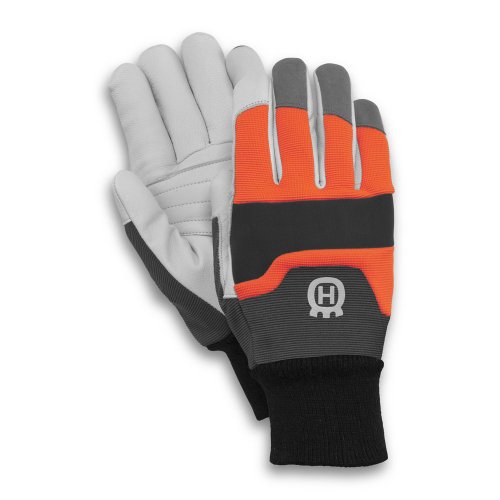
Best for Heavy homeowner use that sits between the Classic and Technical lines
- Left-hand saw protection published as Class 1 (20 m/s)
- Padded knuckle area for added back-of-hand comfort
- Durable palm material for regular firewood sessions
- Snug adjustable cuff for a secure hold
- More protection class and padding than the Classic
- Comfortable for longer firewood days
- Good value within the Husqvarna range
- Warmer than the basic Classic glove
- Still not a professional daily-use glove
Verdict: A sensible step up for busy homeowners who want a higher class and a little more padding without paying for the top line.
Frequently Asked Questions
What is the best all-round work glove?
For most outdoor and workshop users, an impact glove with thermoplastic knuckle guards and a padded palm, such as the Mechanix Wear M-Pact, is the best single all-rounder. It protects against knocks, grips well and keeps dexterity. Add a separate cut-rated pair for blades and a leather pair for heavy hauling.
Do I need impact gloves or cut-resistant gloves?
Match the glove to your main hazard. Impact gloves with knuckle guards suit tool work, demolition and heavy handles; cut-resistant gloves suit blades, sheet metal and loose chains. They protect against different things, so many users keep both. A glove can offer impact and cut protection together, but usually at higher cost and bulk.
Are leather or synthetic work gloves better?
Leather resists abrasion, heat and rough stock, making it the choice for hauling, fencing and splitting; synthetic gloves are lighter, more dexterous, machine-washable and often cheaper. Neither is simply better — pick leather for heavy, hot or rough work and synthetic for detailed, all-day tasks, and keep a pair of each if your jobs vary.