Best Chainsaw Gloves
Best Chainsaw Gloves, ranked from aggregated owner ratings and reviews, not first-hand testing. Real pros, cons, and who each pick is best for.

Our Top 3 Picks
Quick Comparison
| Product | Best for | Buy | |
|---|---|---|---|
| Husqvarna Technical Chainsaw Gloves | Best Overall | See Amazon | View (paid link) |
| Stihl Dynamic Protect MS Gloves | Best Premium | See Amazon | View (paid link) |
| Portwest A290 Chainsaw Safety Glove | Best Value | See Amazon | View (paid link) |
| Husqvarna Classic Chainsaw Gloves | Best for Beginners | See Amazon | View (paid link) |
| Oregon Fiordland Chainsaw Safety Gloves | Best Heavy-Duty | See Amazon | View (paid link) |
| Husqvarna Functional Chainsaw Gloves | Editor's Pick | See Amazon | View (paid link) |
How to choose chainsaw gloves
Choose chainsaw gloves by protection class, fit and palm grip, in that order. You need certified saw protection on the back of the left hand, a class that matches your saw's chain speed, and a palm that grips a slick, oily handle without tiring your hand. Everything else is comfort.Which hand actually needs the chainsaw protection?
The left hand needs the protection, so certified gloves put the saw-clogging pad on the back of the left glove only. That hand rides the front handle closest to the bar, where kickback and slips do the damage. Design A gloves (left-hand protection) suit almost all users; Design B, with protection on both hands, exists for specialist work but costs and weighs more. Because the pad sits on one hand, sizing the left glove correctly matters most — a loose left glove shifts the very panel meant to protect you, so fit that hand first and let the right follow.What protection class do you need?
Match the glove class to your saw's chain speed. Chainsaw gloves are tested to EN ISO 11393-4 (which replaced EN 381-7) at three speeds: Class 0 (16 m/s), Class 1 (20 m/s), and Class 2 (24 m/s). Homeowner and mid-size saws are covered by Class 0 or Class 1; only high-speed professional saws call for Class 2. Higher classes add bulk, so buy the class you need, not the highest number. Chain speed rises with engine size and drive-sprocket teeth, so a big-bore gas chainsaw run flat out sits at the top of its class range, while a compact battery chainsaw usually sits comfortably inside Class 0. If you are unsure, size the class to your fastest saw rather than your slowest.What should the palm and grip be made of?
Pick a palm that stays grippy when the handle is coated in bar oil and sweat. Goatskin and reinforced synthetic palms resist oil and give a secure hold; a pre-curved finger cut reduces hand fatigue on long cuts. Breathable back panels and a hook-and-loop cuff keep the glove snug so it never shifts mid-cut. Reserve unlined summer gloves for warm days and insulated versions for winter felling. An oil-repellent palm also keeps its grip through a refuel, which is one less reason to fumble the saw during the bar oil and fuel routine.Do you need cold-weather or wet-weather chainsaw gloves?
Choose weatherproof, insulated chainsaw gloves only if you cut in cold or wet conditions, because that warmth costs breathability and dexterity in summer. Waterproof gloves hold grip on a wet saw and keep hands warm, and warm hands transmit vibration less than cold ones. Unlined gloves stay cooler and more nimble for warm-weather work, so many regular users keep one light pair and one winter pair rather than forcing a single all-season glove to do both jobs badly.How do you size chainsaw gloves correctly?
Size chainsaw gloves by measuring around your palm at the knuckles, excluding the thumb, and matching that to the maker's numeric chart, then flexing your hand to check nothing bunches or gapes. A correct glove wraps the palm snugly, reaches the fingertips without cramping them, and holds its cuff closed. The steps below get the fit right first time.- Wrap a tape measure around the fullest part of your palm and note the measurement in the units your brand's chart uses.
- Compare against the size chart rather than guessing — brands run differently, so a "large" in one line is not a large in another.
- Between sizes, favour the snugger option; slack fingertips lose dexterity and can snag.
- Try the glove with the grip you actually use on the saw, and if you cut in winter allow only enough room for a thin liner.
- Confirm the cuff closes firmly so the glove cannot slide during a cut.
A glove that shifts on the hand moves the protective pad out of position, so fit is a safety feature, not just comfort.
How do you care for chainsaw gloves so they last?
Care for chainsaw gloves by hand-washing them gently in cool water, air-drying them flat away from direct heat, and inspecting them before every session. Direct heat hardens the leather palm and can degrade the protective fibre, while a quick pre-use check catches wear before it becomes a failure. Look at the palm for wear-through, the seams for splitting, and the protective back panel for any sign of saw contact — a single strike means replacement, because the fibre works only once.How do the top chainsaw glove picks differ?
The main picks differ in protection class, weather protection and price, not in whether they protect the left hand. All carry a certified saw-clogging pad, so the choice comes down to how often you cut and in what conditions. The Husqvarna Technical is the balanced all-rounder, pairing a goatskin palm with a breathable stretch back that suits most homeowners for everyday cutting. The Stihl Dynamic Protect MS steps up to a published Class 1 (20 m/s) rating with a reinforced palm, which earns its keep for people who run a mid-size saw most weeks. The Portwest A290 strips the choice back to a low-cost certified glove for a first kit, trading comfort features for price. The Husqvarna Classic is the simple entry point for a first saw owner, the Husqvarna Functional adds a higher class and knuckle padding for heavier homeowner use, and the Oregon Fiordland is the specialist, with a waterproof, insulated build for cold, wet felling where dry hands matter more than summer breathability. Read down the list by your own use: hours per week, saw size, and whether you cut in the wet.How much should you spend on chainsaw gloves?
Spend enough to get a certified glove in the right class and a fit that stays put, and no more than your hours justify. A certified budget glove such as the Portwest A290 protects on the same single-use fibre principle as a premium pair; the extra money buys durability, palm quality, weatherproofing and comfort, not a different kind of safety. For a homeowner who cuts a few times a season, a mid-range Husqvarna Classic or Functional is ample. For someone cutting most weeks, a tougher Stihl or Technical glove lasts longer and stays comfortable through long sessions, which lowers the real cost per use. The false economy is buying below certification — an uncertified "chainsaw" glove or a plain leather pair is no bargain, because it offers no protection against a moving chain.What mistakes should you avoid when buying chainsaw gloves?
The common mistakes are buying on price alone, ignoring the class, and getting the size wrong. Each undermines protection you are paying for, and each is easy to sidestep. The list below covers the ones that matter.- Buying an uncertified glove because it looks similar — only a glove marked to EN ISO 11393-4 (or the older EN 381-7) has the saw-clogging pad.
- Ignoring the protection class and running a fast saw in a Class 0 glove, when the chain speed calls for Class 1.
- Sizing the glove too big for comfort, which lets the left-hand pad shift out of position during a cut.
- Keeping a glove in service after any saw contact, when the single-use fibre is already spent.
- Choosing one all-season glove, when a light summer pair and an insulated winter pair each do their season better.
Avoid these and even a modest certified glove does its job. Match the class to your saw, size the left glove first, and retire it the moment it takes a strike.
The picks below span homeowner to professional use. All carry left-hand saw protection; they differ mainly in class, weather protection and price.
| Glove | Best for | Protection (typical) | Notable feature |
|---|---|---|---|
| Husqvarna Technical | All-round saw use | EN ISO 11393-4, left hand | Goatskin palm, saw-protection back |
| Stihl Dynamic Protect MS | Frequent/pro use | Class 1 (20 m/s), left hand | Reinforced palm, secure cuff |
| Portwest A290 | Budget saw kits | EN 381-7 style, left hand | Low-cost certified option |
| Husqvarna Classic | First saw owners | EN ISO 11393-4, left hand | Simple, well-sized entry glove |
| Oregon Fiordland | Cold and wet work | Left-hand protection | Waterproof, insulated build |
| Husqvarna Functional | Heavy homeowner use | Class 1 (20 m/s), left hand | Padded knuckle, durable palm |
Remember the limits: these gloves are rated to slow a chain on the back of one hand, not to let you grab a running saw. Wear them with chainsaw chaps and full PPE, keep the chain brake and tension right per your chainsaw maintenance routine, and leave felling of large or leaning trees, and any top-handle or arborist saw work at height, to trained professionals. For general, non-saw yard tasks, our best gloves for work roundup is the better fit, and the wider work gloves guide explains cut ratings in plain terms.
Full Ranking, Reviewed

Best for Homeowners and part-time users who want proven left-hand saw protection with everyday comfort
- Saw-protection layer on the back of the left hand, certified to EN ISO 11393-4
- Goatskin leather palm for grip on an oily saw handle
- Breathable stretch back panel and hook-and-loop cuff for a snug fit
- Pre-curved fingers to reduce hand fatigue on longer cuts
- Trusted saw brand with wide, well-documented sizing
- Balanced weight for all-day homeowner use
- Left-hand protection to a current chainsaw standard
- Palm is unlined, so it runs cold in winter
- Priced above bare-minimum certified gloves
Verdict: Based on published specs and owner feedback, the best-balanced chainsaw glove for most users — protective, grippy and easy to size.
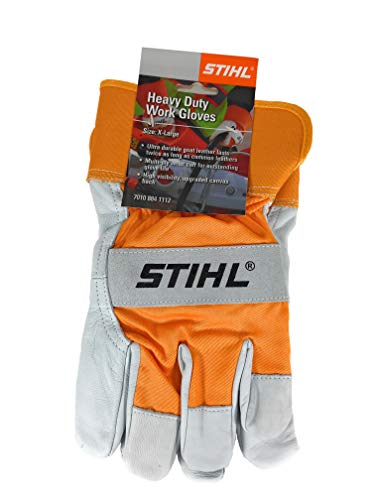
Best for Frequent and semi-professional users who run a saw most weeks
- Left-hand saw protection published as Class 1 (20 m/s)
- Reinforced palm and finger overlays for durability
- Secure adjustable cuff that keeps the glove from shifting
- Ergonomic cut that supports a relaxed grip
- Robust build aimed at regular cutting
- Higher-speed class suits mid-size Stihl saws
- Strong palm reinforcement wears well
- Premium price versus homeowner gloves
- Heavier feel than a summer-weight glove
Verdict: A durable, higher-class chainsaw glove for people who cut often and want reinforcement where it counts.
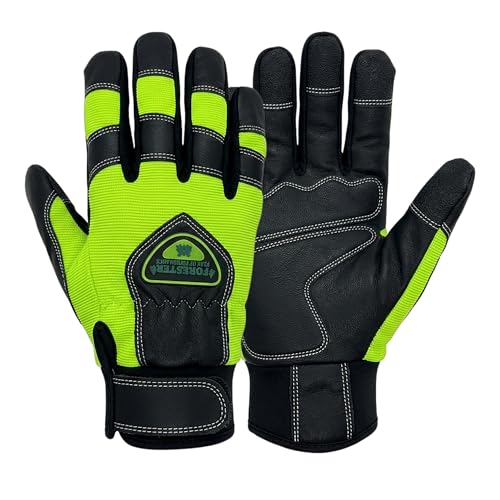
Best for Buyers assembling a first saw kit on a tight budget
- Left-hand chainsaw protection to a recognised chainsaw-glove standard
- Synthetic-and-leather palm for basic oil grip
- Elasticated wrist for quick on and off
- Widely stocked in a full size run
- Low cost for a certified chainsaw glove
- Easy to find and replace
- Light enough for occasional use
- Less palm reinforcement than premium gloves
- Basic comfort features only
Verdict: A no-frills certified chainsaw glove that gets left-hand protection onto occasional users without stretching the budget.

Best for First-time saw owners who want simple, correctly-sized protection
- Left-hand saw-protection back panel to EN ISO 11393-4
- Straightforward leather-and-fabric construction
- Adjustable cuff for a secure entry-level fit
- Clear Husqvarna size chart to get the fit right first time
- Approachable price for a brand-name glove
- Simple design is easy to size and use
- Same left-hand protection principle as pricier lines
- Fewer comfort and reinforcement features
- Not built for daily professional cutting
Verdict: An easy, affordable entry point that puts proper left-hand protection on a new saw owner without over-buying.

Best for Cold, wet-weather cutting where dry hands matter
- Left-hand saw protection with a waterproof, insulated build
- Weatherproof outer shell for rain and cold
- Warm lining to keep hands functional in winter
- Reinforced palm for grip in slick conditions
- Keeps hands warm and dry in poor weather
- Solid grip when the saw and wood are wet
- Durable outer for rough winter work
- Bulkier and warmer than summer gloves
- Insulation is overkill in mild climates
Verdict: The pick for winter and wet-weather cutting, trading summer breathability for warmth, waterproofing and grip.
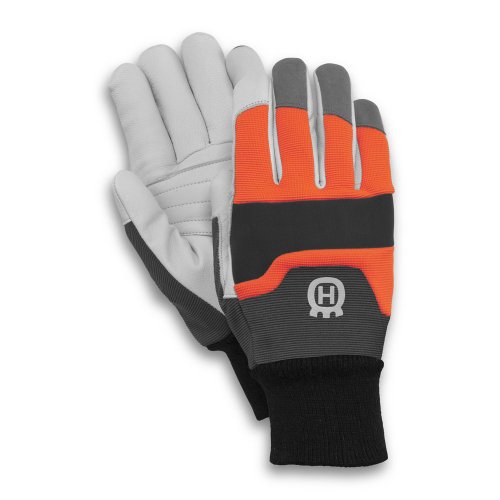
Best for Heavy homeowner use that sits between the Classic and Technical lines
- Left-hand saw protection published as Class 1 (20 m/s)
- Padded knuckle area for added back-of-hand comfort
- Durable palm material for regular firewood sessions
- Snug adjustable cuff for a secure hold
- More protection class and padding than the Classic
- Comfortable for longer firewood days
- Good value within the Husqvarna range
- Warmer than the basic Classic glove
- Still not a professional daily-use glove
Verdict: A sensible step up for busy homeowners who want a higher class and a little more padding without paying for the top line.
Frequently Asked Questions
Do chainsaw gloves need protection on both hands?
Most chainsaw gloves protect only the back of the left hand, which is the hand nearest the bar and most exposed in a kickback or slip. These Design A gloves suit almost all users. Design B gloves protect both hands and exist for specialist work, but they cost more and add bulk few users need.
What is the difference between EN 381-7 and EN ISO 11393-4?
EN ISO 11393-4 is the current international standard for chainsaw-glove hand protection; EN 381-7 is the older European standard it replaced. Both grade protection by chain speed into classes, and both test a saw-clogging layer. Gloves may still be marked with either reference during the changeover — the class number is what matters most.
Can chainsaw gloves be washed?
Yes, but wash chainsaw gloves gently by hand in cool water, and never machine-wash or tumble-dry them. Harsh washing and direct heat can degrade the leather palm and the protective fibre. Air-dry them flat, away from radiators. If a glove has taken any saw contact, retire it — the protective layer works only once.
Are chainsaw gloves required by law?
Requirements vary by country and by whether the work is professional. Many occupational-safety frameworks require certified chainsaw PPE, including hand protection, for paid cutting; home users are usually advised rather than mandated. Regardless of the rules where you live, certified gloves are cheap insurance against a common and serious injury.