


What are garden and hedge shears?
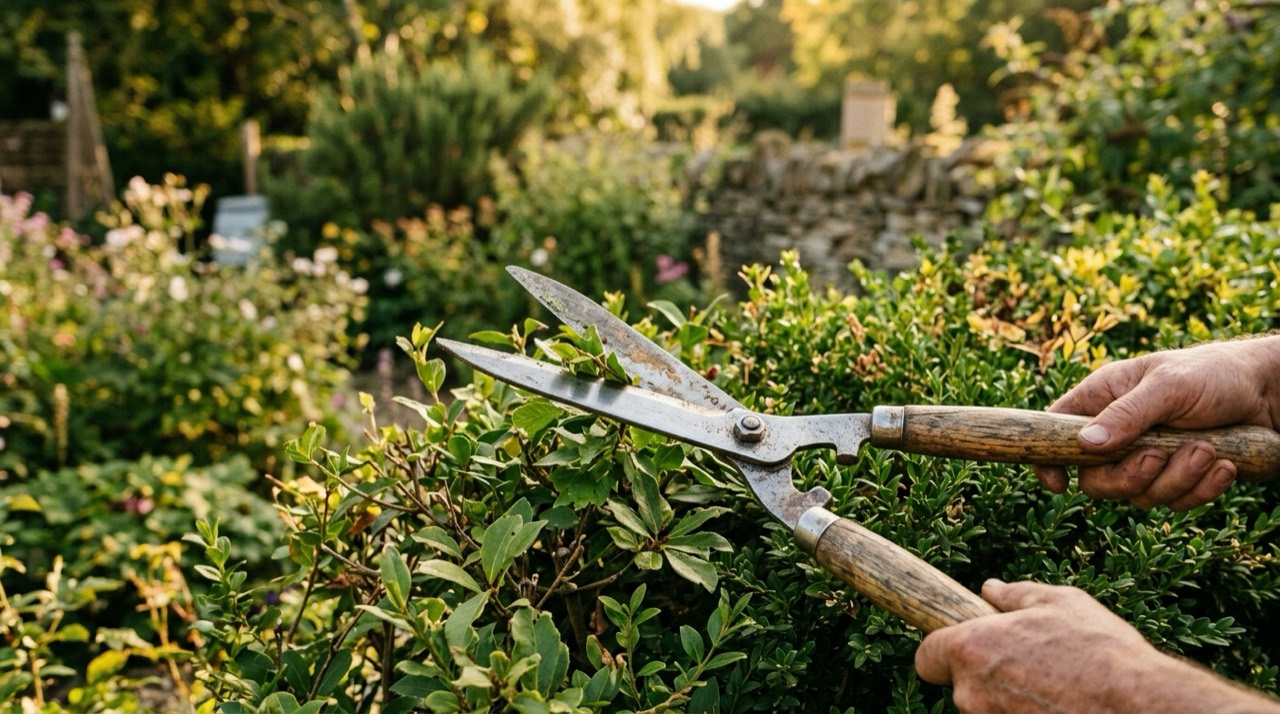
Garden and hedge shears are long-bladed, two-handed hand tools that trim, shape, and tidy hedges, topiary, and soft leafy growth using muscle rather than a motor. They cut with a scissor action, run silently, and give you fine control over every stroke — which is why gardeners keep them even when a powered trimmer sits in the shed.The category actually covers two related tools. Long-handled hedge shears have blades around 8–10 inches on handles roughly two feet long, swung with both hands to face off a hedge. Single-hand shears — grass shears, sheep-type shears, and small topiary snips — fit in one hand for edging and detail. This guide focuses on the two-handed shears most people mean by "garden and hedge shears," and points you to the right tool when a job calls for something else.
The table below sums up the common shear types and what each one is built to cut.
| Shear type | Best at | Typical blade | Powered by |
|---|---|---|---|
| Long-handled hedge shears | Facing hedges, topiary, box | 8–10 in | Both hands |
| Grass / edging shears | Lawn edges, tufts a mower misses | 4–5 in | One hand |
| Topiary / sheep shears | Fine shaping, small box balls | 3–6 in | One hand |
| Powered hedge trimmer | Long runs, thick annual regrowth | 16–24 in bar | Battery, corded, or petrol |
Garden shears or a hedge trimmer — which do you need?
Manual shears suit small-to-medium hedges, topiary, and anyone who wants a quiet, precise cut with no fuel or charging. A powered hedge trimmer wins on long boundary runs and thick yearly regrowth, where the reciprocating blade saves your shoulders real work. Many gardens want both.Choose shears when precision, control, and clean single cuts matter more than speed: shaping box balls, sharpening the top line of a formal hedge, or nipping soft growth between bigger trims. Choose a machine when you face metres of privet or leylandii twice a year. If you searched for "electric hedge shears," you almost certainly want the powered category — see the powered hedge trimmers guide for corded, battery, and petrol options. This page stays on the manual shears that do the shaping and finishing a machine cannot.
How long should hedge shear blades be?
Blade length trades reach and speed against control. Most all-round hedge shears carry blades around 8 to 10 inches: long enough to cover ground on a run, short enough to steer through a curve. Shorter blades near 7 inches shape topiary and box cleanly; longer blades near 10 inches clear flat runs faster.Longer blades cover more hedge per stroke but flex and wander on tight shapes, so formal detail work favours the shorter end. If you mostly face straight boundary hedges, lean long; if you shape box balls, cones, and cloud-pruned forms, lean short. A wavy or serrated section near the pivot on some models grips twigs so they cut instead of sliding out — handy on springy growth.
Do geared hedge shears cut with less effort?
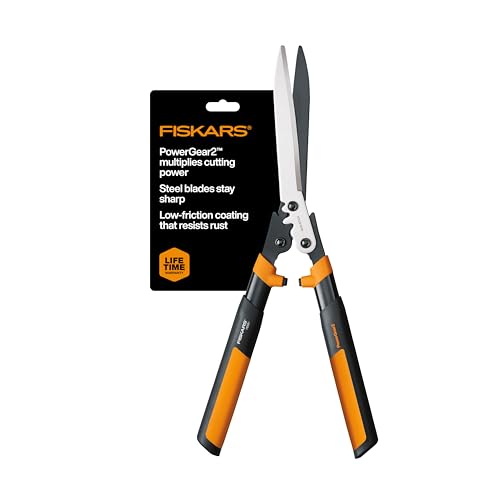
Geared hedge shears — Fiskars calls its version PowerGear — add a small gear at the pivot that multiplies your hand force right where a twig resists most. On thicker stems the difference is real: the shears close through growth that would stall a plain pivot, so your forearms tire less over an afternoon.The trade-off is a little more weight and mechanism to keep clean. For light, soft hedges a simple non-geared shear is lighter and perfectly capable. For thicker, woodier growth or long sessions, gearing earns its keep. You can compare geared and plain models side by side in the best hedge shears round-up.
How much should hedge shears weigh?
Weight decides how long you can trim before your arms give out, especially on overhead work. Most two-handed hedge shears land between about 2 and 3.5 pounds. Lighter aluminium-handled shears near 2 pounds suit overhead runs and smaller hands; heavier forged models feel more planted on thick growth.Balance matters as much as raw weight. A shear that carries its mass toward the handles feels lighter in use than the scales suggest, because you swing from the grips. Try to hold a pair before buying, and if you trim above shoulder height often, prioritise a lighter, well-balanced pair over sheer cutting muscle.
What are the parts of a pair of hedge shears?
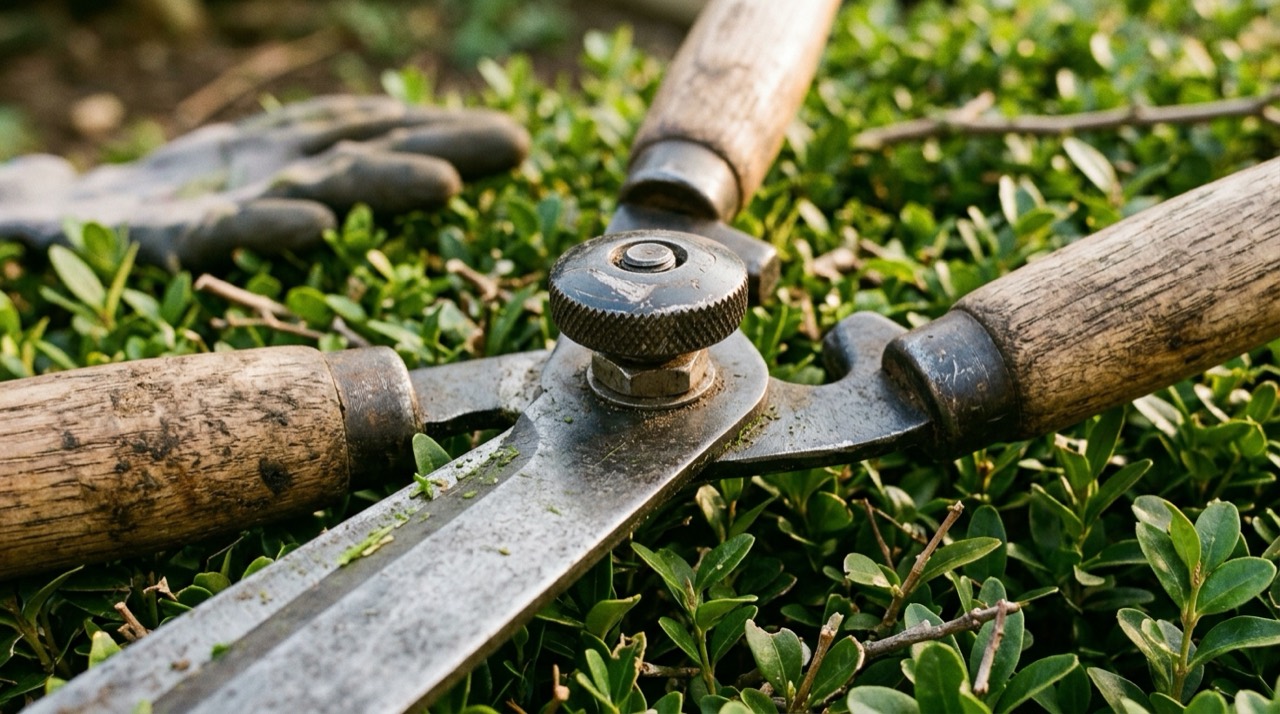
A pair of hedge shears has a handful of parts worth naming before you buy, adjust, or sharpen a set: the blades, their bevelled edges, the pivot, the limb notch, the bumpers, and the handles. Each one shapes how the shears cut and how you look after them.The main parts of two-handed hedge shears are set out below.
- Blades — two long steel arms that pass each other in a scissor action to slice growth.
- Bevelled edge — the angled outer grind that is honed; the flat inner face is left flat so the blades pass tightly.
- Pivot bolt — the adjustable joint that sets how firmly the blades meet; too loose folds growth, too tight binds.
- Limb notch — the wide cut-out near the pivot that grips and shears the thickest twig in a single pass.
- Shock bumpers — rubber stops that cushion the jolt at the end of each stroke and spare your wrists.
- Handles — set the reach, weight, and balance you feel over a long trimming session.
What should you look for in hedge shear handles?
Look for handles that balance reach, weight, and grip: light aluminium or fibreglass-cored handles for overhead work, solid wood for a planted feel, and telescopic handles when hedges run tall. Cushioned grips and shock bumpers decide comfort over a long session more than raw length does.Wooden handles, as on the Okatsune shears, feel warm and damp-tolerant but need occasional oiling and can swell in wet weather; tubular aluminium keeps weight low for the strength; fibreglass-cored handles resist weather and flex under load. Telescopic handles extend reach for tall or wide hedges but shift the balance forward and add weight, so keep them retracted for detail work and extended only when you genuinely need the reach. If you trim above shoulder height often, a manual pole pruner is safer than stretching from a step.
Which brands make the best hedge shears?
A handful of brands dominate quality manual shears. Fiskars leads on geared, coated, everyday shears; Corona and Spear & Jackson cover dependable mid-range and telescopic models; Bahco builds tough forged shears for heavy use; and Japanese makers Okatsune and ARS set the standard for keen, precise blades on topiary and formal hedges.Names aside, the things that separate a good shear from a poor one are blade steel, a solid adjustable pivot, and comfortable handles — details covered pick by pick in the best garden and hedge shears guide. For hand-held pruning of stems too thick for shears, step up to loppers or reach for bypass hand pruners on individual shoots.
When should you reach for loppers or a pruning saw instead?
Reach for loppers or a pruning saw once a stem is thicker than roughly a pencil. Hedge shears are built for soft leafy growth and thin twigs; forcing them through woody stems springs the blades, tires your hands, and leaves crushed, ragged cuts that heal slowly.Match the tool to the stem. Bypass hand pruners take single green shoots up to about half an inch; loppers handle branches up to roughly an inch and a half thanks to their long handles; and a pruning saw or bow saw cuts anything thicker. Trying to shear a branch you should be sawing is the fastest way to knock a pair of shears out of alignment. Keep shears for the shape and the finish, and let the right tool take the thick wood.
When is the best time to trim a hedge with shears?
Trim most hedges in late spring and again in mid-to-late summer, once the main growth flush has firmed up, and avoid cutting in freezing weather. Sensible timing keeps shapes crisp, protects tender new growth from frost, and lets you work with the plant rather than against it.Formal evergreens like box and yew take a light shaping two or three times through the growing season to hold a sharp line, while informal hedges need only one or two cuts a year. Check for nesting birds before you start in spring and early summer, and hold off on hard cutting during a heatwave or drought, when a stressed hedge browns off at every cut. Little and often with clean, sharp shears beats one heavy hack, and it is exactly the work manual shears do best.
How do you cut a hedge safely with shears?
Hedge shears are sharp, spring-loaded cutting tools, so treat them with the same care as any blade. Keep both hands on the grips and behind the blades, wear eye protection against flicking twigs, and pull on a pair of work gloves for grip and to save your hands from blisters and sap.The bigger risk is the ladder, not the blade. Never overreach from a step or lean into a tall hedge with shears in hand — reposition instead, or use a manual pole pruner for height. Cut with the hedge, working bottom to top and slightly wider at the base so light reaches the whole face. This guide is general information, not a substitute for hands-on training.
How do you keep garden shears cutting cleanly?
Clean, dry, and lightly oil the blades after every session, and hone the edge when cuts start to tear rather than slice. Sap and moisture are the enemies: wiped-off blades resist rust and stay sharp far longer, and a drop of oil on the pivot keeps the action smooth.A quick pass with a mill file or whetstone restores a keen edge in minutes — the step-by-step is in the sharpening files and tools guide and the FAQs below. Adjust the pivot bolt so the blades meet with a slight scissor drag along their length; too loose and they fold growth instead of cutting it. Looked after, a good pair of shears lasts decades.
How should you store garden shears?
Store garden shears clean, dry, and lightly oiled, hung by the handles or laid flat where the blades cannot rust or nick. A few minutes at the end of a session — a wipe, a hone if needed, a drop of oil, and a dry home — is what carries a good pair through decades of use.Wipe off sap and moisture, hone the edge if cuts have started to tear, then coat the steel with a thin film of oil before you put the shears away. Hang them on a rack or peg rather than dropping them in a damp shed corner, and keep the blades closed or sheathed so nobody meets the edge by accident. A dedicated spot in your outdoor tool storage keeps shears off the floor and away from the damp that pits steel.
What are the most common hedge-shear mistakes?
The most common hedge-shear mistakes are letting the blades go dull, ignoring the pivot, cutting stems too thick for shears, and overreaching from a ladder. Each one either spoils the cut or risks an injury, and every one of them is easy to avoid once you know to watch for it.The mistakes that spoil a trim or damage a tool are listed below.
- Cutting with dull blades, which fold and tear growth instead of slicing it and brown off the hedge face.
- Leaving the pivot too loose, so the blades skip over twigs, or too tight, so they bind and tire your hands.
- Forcing shears through woody stems that belong to loppers or a pruning saw, springing the blades out of true.
- Putting shears away wet and dirty, so sap gums the pivot and rust pits the edge over winter.
- Overreaching from a step or ladder rather than repositioning or using a pole tool for height.