


How thick a branch can loppers cut?
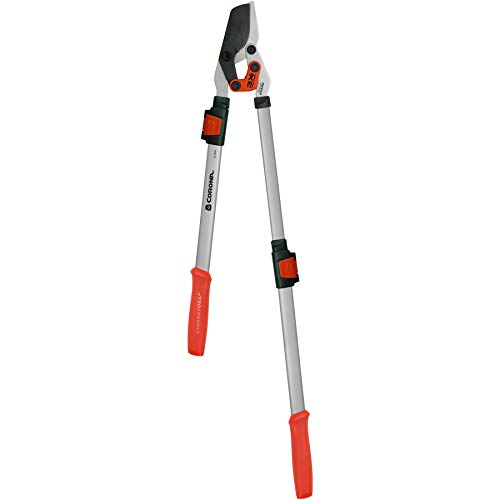
Loppers cut branches from about half an inch up to roughly two inches thick, set by the head size and the cutting mechanism. A basic single-pivot lopper manages green wood to about an inch, while a geared, compound, or ratchet model routes more force to the blade and reaches nearer two inches. The figure on the packaging is a limit, not a target.
Wood condition matters as much as diameter. Green wood cuts more easily than seasoned hardwood at the same thickness, and an anvil lopper often feels stronger on dry deadwood because its crushing action and supporting plate drive through brittle fibres.
Does the wood type change the maximum?
Yes: the same lopper cuts a thicker green softwood branch than it can manage in seasoned hardwood, so the rated capacity assumes easy-cutting wood. Density and moisture decide how hard the fibres resist the blade, which is why a two-inch rating is a best case rather than a guarantee across every species.
The way wood condition shifts the real limit is set out below.
- Green softwood: cuts easiest, so the tool can reach or approach its full rating.
- Green hardwood: denser fibres mean the practical limit sits below the rated figure.
- Seasoned hardwood: dry and tough, often best left to a saw well before two inches.
- Dead, brittle wood: an anvil head splits it more readily than a bypass blade of the same size.
Read the resistance in the first firm squeeze rather than trusting the number, and drop to a saw whenever the head stalls.
How does the mechanism affect capacity?
The mechanism decides how much of the cutting force reaches the blade, so a geared or ratchet head cuts a thicker branch than a single pivot of the same blade size. A single-pivot lopper delivers only your raw grip, a compound or geared head multiplies it through extra linkages, and a ratchet head builds force in stages and holds it between squeezes. That is why two loppers with a similar blade can carry different capacity ratings, and why a ratchet anvil suits hard, dry wood and limited grip alike.
What happens if you cut a branch that is too thick?
Forcing an oversized branch springs or bends the blades, twists the head out of alignment, and on a bypass lopper opens a gap so it never cuts cleanly again. If the head will not close with a firm, controlled squeeze, stop. The branch is telling you to switch tools rather than push harder, and a sprung blade usually cannot be filed true again.
What should you use for thicker branches?
For branches past about two inches, use a pruning saw at ground level or a manual pole pruner or pole saw overhead. On a heavier limb, the three-cut method keeps the bark from tearing as it falls. To pick a lopper that cuts to its rated capacity with less effort, see the best loppers roundup and the loppers guide.
A worked example: cutting a two-inch branch
Say you are facing a two-inch living branch on a fruit tree. A geared bypass lopper rated to about two inches, such as a compound or PowerGear model, is the right tool, because the branch is at the top of the range and needs the mechanical advantage to cut cleanly. Position the branch as deep in the throat of the head as it will go, where the leverage is greatest, spread your hands wide on the handles, and close the cut in one firm, controlled squeeze rather than sawing the tool back and forth. If the head stalls halfway, the branch is denser or drier than a two-inch rating assumes, and the safe move is to finish it with a saw rather than forcing the lopper and springing the blade.
How do you cut at the rated limit without damage?
Cut at the rated limit by using the full length of the handles for leverage, seating the branch deep in the head, and stopping the instant the head resists a firm squeeze. Working at capacity is where blades spring and heads twist, so technique matters more here than on an easy cut.
The habits that protect the tool at its limit are listed below.
- Seat the branch at the base of the throat, not near the tips, so the blade cuts where the leverage is strongest.
- Spread your hands to the ends of the handles for maximum mechanical advantage.
- Close in one steady squeeze; never twist or wrench a partly cut branch.
- Stop and switch to a pruning saw the moment the head will not close with firm, controlled pressure.
A keen edge does much of this work for you, so a well-maintained lopper reaches its rated capacity far more reliably than a dull one.

