


What does lawn mower maintenance actually involve?
Lawn mower maintenance is the routine of changing the oil, keeping the blade sharp and balanced, cleaning or replacing the air filter, using fresh stabilised fuel, and checking the spark plug so the mower starts on the first pull and cuts cleanly. Most of it takes minutes and prevents the failures that put mowers in the repair shop.Stale fuel and a dull blade cause the two biggest headaches, a mower that will not start in spring and a lawn that looks torn instead of cut, and both are easy to prevent. This guide sits inside our lawn mowers hub and covers gas, battery, and corded machines, while the oils, blades, filters, and stabilisers that make the routine easy are gathered in our best lawn mower maintenance picks. Before any work on the blade or underside, always disconnect the spark plug wire so the engine cannot start.
What tools and supplies do you need for basic mower maintenance?
Basic lawn mower maintenance needs only a small kit that fits on one shelf: a socket set, the right engine oil, a drain pan, a blade sharpener or file, a blade balancer, and the correct spare air filter and spark plug for your engine. None of it is specialist, and most of it you buy once and reuse for years.The items below cover almost every routine job on a walk-behind mower:
- A socket or spanner to fit the blade bolt, plus a block of wood to lock the blade.
- The correct engine oil and a low drain pan, or an oil-extraction bottle.
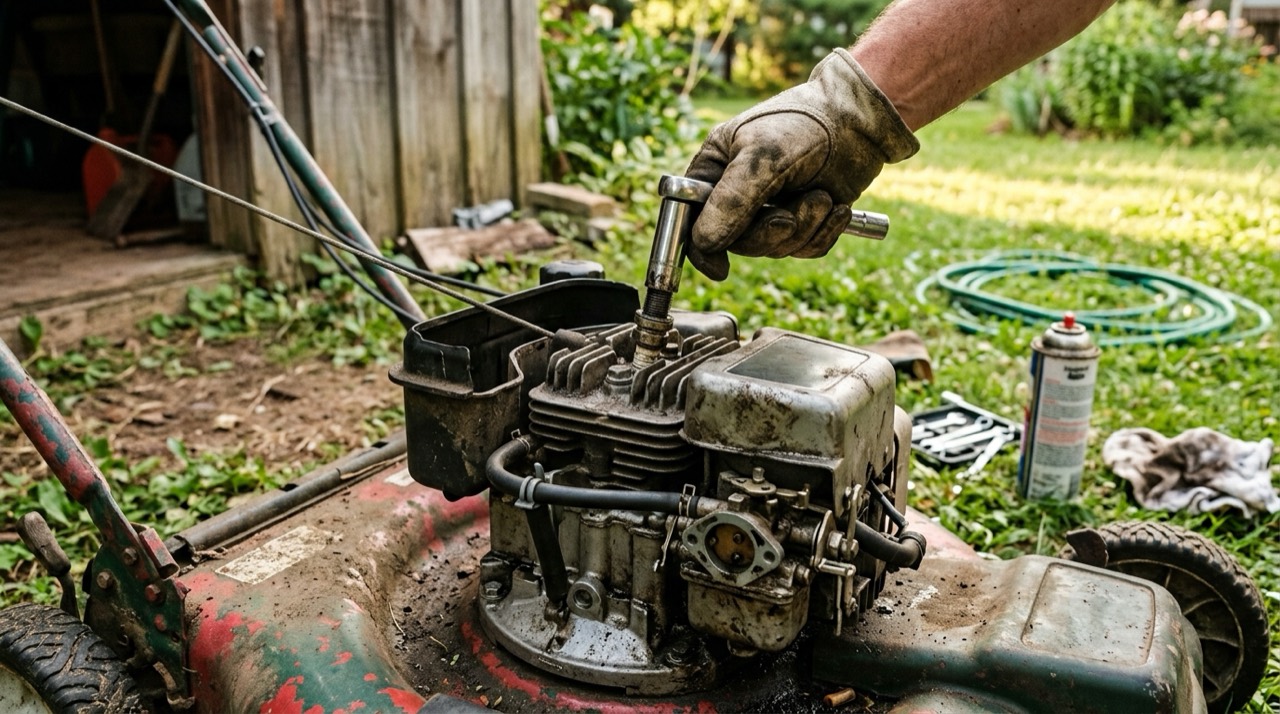
- A spark plug socket and a feeler gauge to set the plug gap.
- A hand file, carbide sharpener, or drill-mounted stone for the blade edge.
- A cone balancer, or a simple nail, for checking blade balance.
- Fresh fuel, a fuel stabiliser, and the right replacement air filter for your model.
- Stout gloves and eye protection, kept with the kit so they are always to hand.
Riding and zero-turn owners add a grease gun for the deck spindles and steering, plus an oil filter to suit the engine. Match every consumable to the model number stamped on the engine shroud, because filters, plugs, and blades are all fitment-specific.
How often should you change lawn mower oil, and how?
Change the oil in a gas mower at least once a season or about every 50 running hours, and change it after the first 5 to 8 hours on a brand-new engine to flush out break-in debris. Fresh oil is the cheapest protection a small engine has, and old, dirty oil is a common cause of hard starting and premature wear.Most walk-behind engines use SAE 30 in warm weather or a 10W-30 for varying temperatures, and hold roughly 15 to 18 ounces, but always check your manual for the grade and amount. The basic change goes like this:
- Run the engine a minute to warm the oil, then stop it and disconnect the spark plug wire.
- Drain the old oil through the drain plug, or tip the mower with the air filter and carburettor side up.
- Refill slowly with the correct grade to the full mark on the dipstick, without overfilling.
- Wipe up spills, reconnect the plug, and recycle the used oil at a service station or recycling centre.
Riding and zero-turn mowers hold more oil and often have an oil filter to change too; our riding mowers guide covers their heavier service needs, and zero-turn mowers add hydrostatic transmission checks on top.
How do you sharpen and balance a mower blade safely?
Sharpen a mower blade when the grass looks torn or frayed at the tips rather than cleanly cut, usually after about 25 hours of mowing or a few times a season. A sharp, balanced blade cuts cleaner, stresses the lawn less, and lets the engine run without vibration.Safety comes first: disconnect the spark plug wire and drain or empty the fuel before tipping the mower, so it cannot start and does not leak petrol into the air filter. Then work in order:
- Tip the mower with the air filter side up, and wedge the blade with a block of wood.
- Mark the blade's down-facing side so it goes back the same way, then unbolt it.
- File or grind the existing bevel to a butter-knife edge, sharp but not razor-thin, which chips.
- Balance the blade on a nail or blade balancer, and grind the heavy end until it sits level.
- Refit the blade the right way up, tighten the bolt firmly, and reconnect the plug.
The full step-by-step method is in the blade-sharpening cluster further down this page, and sharpening tools are compared in our sharpening files and tools guide.
How do you clean a lawn mower air filter and spark plug?
Clean or replace the air filter every 25 hours, and more often in dusty conditions, because a clogged filter starves the engine of air, makes it run rich, and causes bogging and hard starting. Paper filters should be tapped clean or replaced, while foam filters can be washed in warm soapy water, dried fully, and lightly re-oiled if the type calls for it.Check the spark plug once a season. Pull the plug, look for heavy black or oily deposits, clean the electrode with a wire brush, and set the gap to the manual's figure, typically around 0.030 inch. Replace a plug with a worn electrode or cracked porcelain, because plugs are cheap, and a fresh filter and plug together cure a large share of no-start and rough-running complaints. Keep one spare filter and plug on the shelf so a routine service never waits on a parts run.
What fuel care keeps a mower starting?
Fresh fuel keeps a mower starting, because petrol begins to degrade within about 30 days and the ethanol in pump fuel absorbs moisture and gums up the carburettor. Buy fuel in quantities you will use within a month, and add a fuel stabiliser to any petrol that may sit longer, especially before winter.For a mower used only occasionally, ethanol-free fuel or a canned pre-mix avoids most carburettor trouble. Never store a mower for months on untreated pump fuel; either run the tank dry, or fill with stabilised fuel and run the engine a few minutes so the treated fuel reaches the carburettor. Battery and corded mowers skip all fuel care entirely, one reason our battery lawn mowers guide appeals to low-maintenance buyers. The oils, stabilisers, and canned fuel worth keeping on hand are gathered in our bar oil, chain oil, and fuel guide.
What maintenance does a battery or electric mower need?
Battery and corded electric mowers skip the oil, fuel, filter, and spark-plug work, but they still need a sharp, balanced blade and a clean deck, exactly like a gas mower. The cutting blade wears and dulls regardless of what turns it.Battery packs should be stored at a partial charge in a cool, dry place, never left flat or baking in a hot shed for months, and keep the motor vents and deck underside clear of packed clippings. Always remove the battery or safety key before tipping the mower or touching the blade. If you are weighing lower upkeep against petrol power, our electric lawn mowers guide covers the trade-offs.
How do you look after the deck, wheels, and self-propel drive?
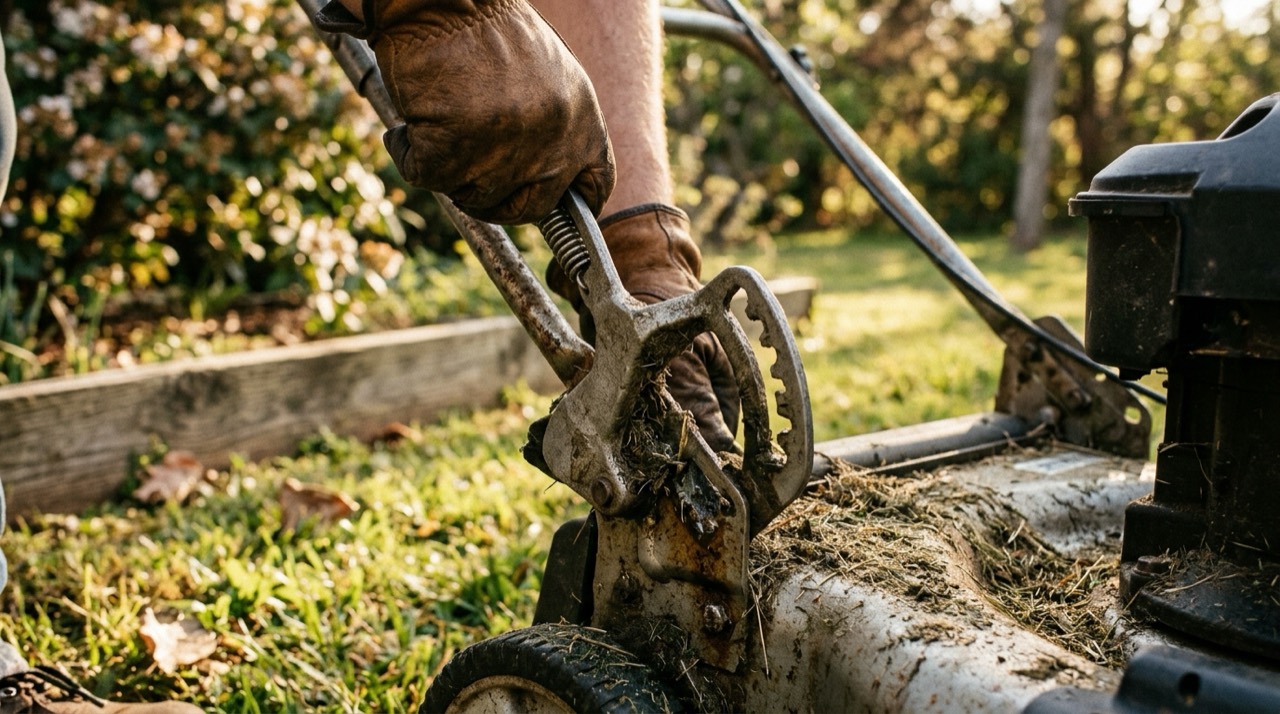
The mower deck, wheels, and self-propel drive need cleaning and the occasional adjustment, because packed clippings hold moisture that rusts the deck, and a clogged deck ruins airflow and cut quality. Scrape the underside after mowing, and keep the moving parts clean and lightly lubricated.Work through these checks every few weeks in the mowing season:
- Scrape caked grass off the deck underside with a plastic or wooden scraper, only with the spark plug wire disconnected.
- Check the wheels for play and grit, and add a drop of light oil to the axle bushes if they squeak or drag.
- On a self-propelled mower, inspect the drive belt and cable, and adjust the drive cable if the wheels slip or drag.
- Clear the motor and battery cooling vents on electric mowers so the machine does not overheat.
- Rinse or wipe the deck top, then dry it, so trapped clippings do not hold damp against the metal.
A clean deck also cuts better, because the blade relies on the airflow under an unobstructed deck to lift the grass upright before it cuts. Owners choosing between petrol and low-upkeep machines can compare the trade-offs in our gas lawn mowers and battery lawn mowers guides.
What does a seasonal lawn mower maintenance schedule look like?
A seasonal maintenance schedule spreads the jobs so nothing is forgotten: quick checks every use, filter and blade checks every 25 hours, and a full service once a year. Following a schedule is what keeps a mower reliable, rather than fixing it only once it has failed.The table below sets out a typical schedule for a gas walk-behind mower; battery and corded mowers follow the same blade and deck rows but skip the oil, fuel, filter, and plug rows.
| Interval | Job |
|---|---|
| Every use | Clear the deck, check the blade for damage, check the oil level |
| Every 25 hours | Clean or replace the air filter, check the blade edge |
| Every 50 hours or yearly | Change the oil, sharpen and balance the blade |
| Yearly | Fit a fresh spark plug, replace the air filter, service the drive |
| Before storage | Stabilise or drain the fuel, change the oil, clean and sharpen |
Log the running hours roughly, since an hour meter is rare on a walk-behind mower and counting mows is close enough. The full before-storage routine is walked through in the FAQ below.
How should you store a lawn mower over winter?
Store a mower clean, with a sharp blade, fresh oil, and either an empty or stabilised fuel tank, in a dry place away from children and ignition sources. Stale fuel left in the carburettor over winter is the single biggest reason a mower will not start in spring.Either run the tank dry, or fill with stabilised fuel and run the engine so the treated mix reaches the carburettor; then change the oil, clean the underside, sharpen the blade, and store any battery at a partial charge indoors. The off-season steps are walked through in the FAQ below, and clean, dry storage options are in our outdoor tool storage guide.
What are the most common lawn mower maintenance mistakes?
The most common maintenance mistakes are leaving stale fuel in the tank over winter, mowing on a dull blade, running the engine on old or low oil, and reaching under the deck without disconnecting the spark plug wire. Each is easy to avoid, and each shortens a mower's life or risks injury.Watch for these specific errors:
- Storing the mower on untreated pump fuel, which varnishes the carburettor and causes spring no-starts.
- Grinding a razor-thin blade edge that chips within one mow instead of a durable butter-knife edge.
- Skipping the blade balance check, which lets vibration wear the crankshaft bearings.
- Tipping the mower with the air filter side down, so oil or fuel floods the filter and carburettor.
- Overfilling the crankcase, which makes the engine smoke and run poorly, and is as harmful as running it low.
- Working under the deck with the spark plug wire still connected, so the engine can fire unexpectedly.
When does a lawn mower problem need a professional?
Some mower work belongs to a small-engine technician, not a driveway service. Internal carburettor rebuilds, a seized or smoking engine, transmission and drive faults on self-propelled and riding mowers, and electrical faults on riders need the right tools and diagnosis, and a badly reassembled mower is unsafe.Always disconnect the spark plug wire before reaching under the deck, wear stout gloves and eye protection, and keep hands and feet clear of the blade whenever the engine can run. This guide is general information based on manufacturer schedules and owner experience, not a substitute for your mower's manual or professional servicing.