


What are loppers, and what can they cut?
Loppers are long-handled pruning tools that cut branches from about half an inch up to roughly two inches thick, using two long handles for leverage that hand pruners cannot supply. They bridge the gap between hand pruners for finger-thick stems and a pruning saw for anything larger.
Every lopper pairs a cutting head with two handles, usually 15 to 32 inches long. The head is either bypass (two curved blades that pass like scissors) or anvil (one blade closing onto a flat plate), and that choice shapes almost everything else. Cutting capacity depends on the head size and the mechanism: a basic single-pivot lopper manages green wood to about an inch, while a good geared or compound model cuts closer to two inches. Push past the rated capacity and you risk springing the blades or twisting the head, so once a branch resists, move to a saw. Overhead limbs are a separate job for a manual pole pruner or a pole saw.
Bypass or anvil loppers: which type should you buy?
Bypass loppers suit living plants and anvil loppers suit dead wood. Bypass blades slice cleanly past each other like scissors, leaving a tight wound that heals well, which makes them the default for pruning healthy trees, shrubs, and roses. Anvil loppers crush the branch against a flat plate, powering through dry deadwood but bruising live stems and inviting dieback.
Most gardeners are best served by a bypass lopper as their one tool, because live pruning is the more common and more delicate job, and a clean bypass cut close to the branch collar heals faster. Keep an anvil lopper for the woodpile, storm cleanup, and brittle dead branches where crushing does no harm and the flat plate stops a hard branch rolling off the blade. A full head-to-head lives on our anvil vs bypass loppers comparison, and ratchet models sit inside the anvil family for anyone with limited grip.
How long should lopper handles be?
Handle length trades reach and power against weight and control. Short 15- to 18-inch loppers are light and precise for shrubs and roses in tight beds; mid-length 24- to 28-inch handles are the everyday all-rounder; long 30- to 32-inch handles add reach and leverage for thicker branches but tire your arms and lose accuracy in dense growth.
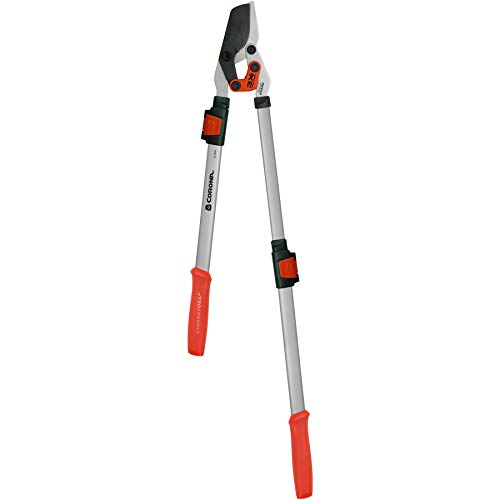
Handle material decides how that length feels. Aluminum handles keep a long lopper light, tubular steel adds strength at some weight cost, and Fiskars uses hardened composite to stay light and rigid. Telescoping handles that extend to around 37 inches give ladder-free reach on the highest branches a lopper can safely tackle; beyond that height, switch to a pole pruner. Whatever the length, hold the tool with both hands wide apart so the leverage actually reaches the cut.
What cutting mechanism gives you the most power?
Compound-action and ratchet mechanisms multiply your grip so thick branches cut with less effort. A single-pivot lopper is simplest and lightest but relies on raw hand strength. A compound or geared head, such as Fiskars PowerGear or Corona DualLINK, routes force through extra linkages so the same squeeze cuts a fatter branch. A ratchet head cuts in stages, biting deeper with each squeeze.
The mechanisms, from simplest to most force-multiplying, are listed below.
- Single pivot: one bolt, lightest weight, best for thin green wood and quick jobs.
- Compound or geared: added linkages multiply force for thick live branches with less fatigue.
- Ratchet: cuts in steps and locks between squeezes, ideal for limited grip or hard deadwood.
Match the mechanism to your hands and your wood: geared bypass for a lot of live pruning, ratchet anvil if grip strength or arthritis is a factor.
How do loppers compare to other pruning tools?
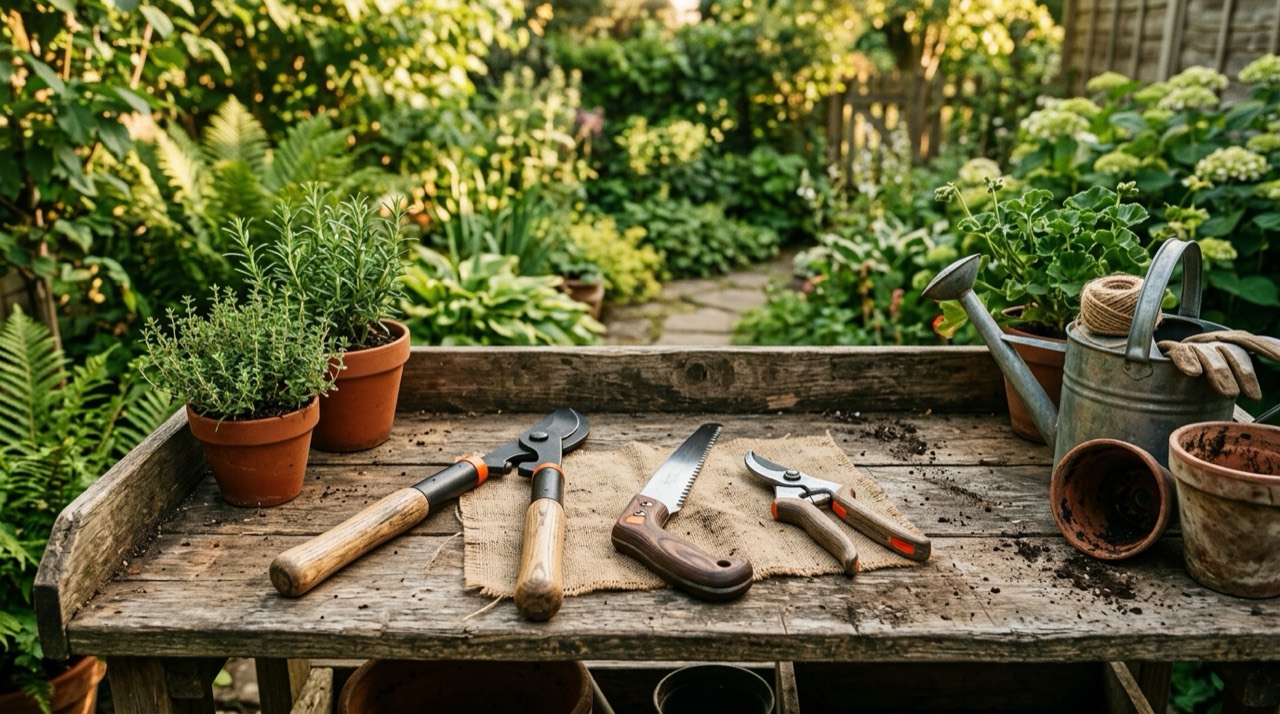
Loppers fill the middle of the pruning range, cutting wood too thick for hand pruners yet thinner than a saw is needed for. Matching the tool to the branch diameter is the single biggest factor in a clean cut, because every tool has a band where it works well and a point past which it tears, sticks, or strains.
The table below maps common branch sizes to the tool that handles them best.
| Branch diameter | Right tool | Why |
|---|---|---|
| Under 1/2 in, soft stems | Hand pruners | Precise one-hand cuts on twigs and roses |
| 1/2 to 2 in | Loppers | Two-handed leverage for a clean severing cut |
| 2 to 4 in at ground level | Pruning saw or bow saw | Teeth cut where blades would stall |
| Overhead limbs | Manual pole pruner or pole saw | Reach without a ladder |
| Formal hedge faces | Garden and hedge shears or a hedge trimmer | Shearing many soft shoots at once |
The boundaries overlap in practice. Green softwood cuts more easily than seasoned hardwood of the same diameter, so a lopper that sails through a two-inch willow shoot may stall on a one-and-a-half-inch dry oak branch. Read the wood, not just the ruler: if the head will not close with one firm squeeze, drop down a tool rather than forcing it.
What features separate a lasting lopper from a throwaway?
Build quality shows in the blade steel, the coating, the pivot, and whether wear parts can be replaced, not in the sticker price alone. A lopper is a simple tool, so a few well-made components decide whether it stays sharp and tight for a decade or loosens and rusts within a season.
The features worth checking before you buy are listed below.
- Blade steel: hardened high-carbon or SK-5 steel holds a working edge far longer than soft stamped steel.
- Coating: a non-stick, low-friction finish sheds sap and slows rust, so the blade drags less through each cut.
- Pivot bolt: an adjustable bolt lets you keep bypass blades meeting cleanly for years instead of a riveted joint you cannot tighten.
- Handle material: aluminum stays light on long handles, tubular steel adds strength, composite resists corrosion entirely.
- Grips and bumpers: cushioned grips and shock-absorbing bumpers spare your hands and wrists on repeated cuts.
- Replaceable parts: swappable blades and springs, as on a Felco, turn a disposable tool into one you rebuild.
A serviceable lopper costs more up front but is cheaper over years of use, because you replace a blade rather than the whole tool. Store it dry and keep the edge maintained with the right sharpening files and tools and even a mid-priced model outlasts a neglected premium one.
How do you cut safely with loppers?
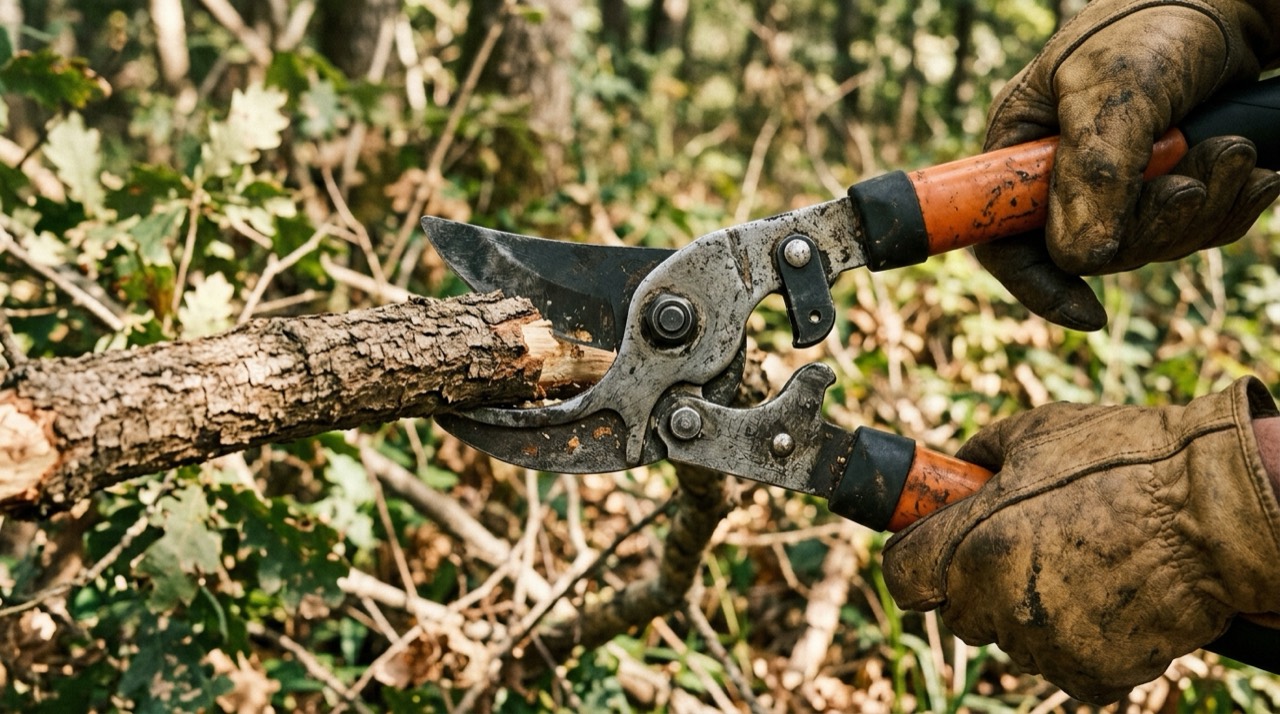
Position the branch deep in the throat of the head, keep your free hand and body clear of the closing blades, and let the leverage do the work rather than twisting or wrenching a stuck cut. Loppers are pinch and laceration hazards, and forcing a cut is where blades spring and slips happen.
Sensible habits keep the tool and your hands intact.
- Wear work gloves and eye protection, since twigs snap back and chips fly.
- Cut within the tool's rated capacity; if the branch will not close, use a pruning saw instead of forcing.
- Keep both hands on the handles and never steady the branch inside the blade path.
- Watch for spring-back on bent or tensioned limbs, which can whip when released.
Large, high, or leaning limbs, and any work near power lines, belong to a trained arborist. This guide is general information, not a substitute for professional training.
What mistakes do people make with loppers?
The most common lopper mistakes are forcing an oversized branch, using an anvil head on live wood, and letting a dull blade tear instead of slice. Each shortens the life of the tool, the plant, or both, and each is easy to avoid once you know the warning signs.
The mistakes that cause the most damage are set out below.
- Forcing a too-thick branch: springs or bends the blade and, on a bypass head, opens a permanent gap. Switch to a saw the moment the head resists.
- Anvil on live stems: crushes and bruises the wound so it heals slowly and may die back. Keep anvil heads for dead wood.
- Twisting a stuck cut: wrenches the pivot out of true. Back the blade out and reposition instead.
- Skipping maintenance: dried sap and rust turn a clean slicer into a crusher within weeks.
- Cutting flush to the trunk: removes the branch collar the tree needs to seal the wound, as the pruning technique sections explain.
Slowing down for the first firm squeeze, then reading whether the head wants to close, prevents most of these in one habit.
How do you keep loppers cutting well?
Wipe the blades after every use, oil the pivot, and touch up the bevel whenever the cut starts to tear, so the tool stays sharp and tight between deeper services. Loppers need little care, but a few minutes of routine upkeep is the difference between a tool that lasts years and one that seizes and rusts in a shed.
A basic routine covers most of it: clean off sap and rust, add a drop of light oil to the pivot and blade, tighten the pivot bolt until the head is firm but smooth, and store the loppers dry and closed. Sharpening a bypass head means filing only the beveled outer face, while an anvil head is sharpened on both bevels; the full step-by-step lives in our sharpening and maintenance guidance, and the files themselves are covered under sharpening files and tools. Somewhere dry and out of the weather, as set out in our outdoor tool storage guide, protects the edge and pivot far longer than a damp garage.
Which loppers suit your kind of garden?
Match the lopper to the work you actually do, not the biggest branch you can imagine. A courtyard of roses, a mixed suburban garden, and a rural block of deadwood each reward a different tool, and buying for a job you rarely do leaves you with a heavy lopper that lives in the shed.
The pairings below cover the common cases.
- Small courtyard or rose bed: a short 18-inch bypass lopper for control in tight, thorny growth.
- Mixed suburban garden: a mid-length geared bypass lopper as the one do-everything tool.
- Orchard or fruit trees: a bypass lopper for clean cuts that heal, plus hand pruners for finish work.
- Rural block with deadwood: an anvil or ratchet lopper for brittle wood, backed by firewood tools for the pile.
- Tall shrubs and light canopy: a telescoping geared bypass lopper, stepping up to a pole pruner above head height.
Which loppers should you buy?
Buy a geared bypass lopper as your one all-round tool, add a ratchet or anvil lopper for dead wood, and choose a telescoping model if you often reach into a canopy. A quality bypass lopper handles the bulk of live pruning cleanly, and an anvil sidekick clears the brittle wood that would only bruise on a bypass head.
Our best loppers roundup ranks current models by use case, the anvil vs bypass comparison settles the type question, and the outdoor hand and cutting tools pillar covers the hand pruners, garden and hedge shears, and pruning saws that round out a pruning kit.